Ecommerce Twisted Handle Paper Bags Material Thickness Guide
Choosing the right paper thickness for ecommerce twisted handle bags is mostly a matching exercise: the bag needs to fit the product, the packing flow, the shipping method, and the brand presentation. Too light, and the bag can crease, split, or fail at the handle. Too heavy, and you may add cost, lose foldability, and end up with a bag that feels more rigid than the order needs.
In practice, thickness affects stiffness, puncture resistance, handle pull strength, and how the bag behaves in packing. But the paper sheet is only one part of the spec. The handle attachment, base construction, glue system, print coverage, and storage conditions all influence performance. If you want a broader view of formats and sourcing choices, see our paper bags guide and custom packaging options.
What material thickness means for ecommerce twisted handle paper bags
"Thickness" is usually discussed as either gsm or caliper. Gsm measures paper weight per square meter; caliper measures physical thickness. They are related, but not identical, because fiber mix, coating, and compression change how a sheet feels and performs. Two papers with similar gsm can behave differently in folding, stiffness, and glue hold.
For ecommerce buyers, the real question is how the bag behaves in use. Does it stand up in packing? Does the mouth open cleanly? Does the handle stay anchored when the bag is lifted? Does the bottom seam hold when the order includes a box, jar, or bundle? Those are the practical indicators that matter more than the terminology on a spec sheet.
As a general rule, lighter papers are easier to fold, cheaper to ship, and better for smaller items. Heavier papers usually improve rigidity and resistance to edge crush. Most ecommerce programs land in a middle range because they need a bag that looks polished, survives fulfillment, and still stays economical. The best choice is usually the lightest structure that still passes real-use testing.
Paper grade matters too. A recycled kraft sheet can feel bulkier than a coated white sheet at the same gsm. A coated surface may improve print clarity but can change fold memory and glue performance. That is why sample testing is essential: a bag that looks thin on paper may be strong enough in practice, while a heavier one can still fail if the handle or base is poorly engineered.
Common paper grades and typical thickness ranges
Twisted handle bags are usually made from kraft paper, white kraft, recycled paper, or specialty coated papers. The right range depends on what the bag carries, how it is handled, and whether the goal is low cost, premium presentation, or a more durable reusable feel.
90-120 gsm. This lighter range is often used for small accessories, cards, samples, and low-mass orders. It folds easily and keeps unit cost down, but it can show creasing and usually needs a well-reinforced handle area. It is best when the contents are light and not sharp-edged.
120-170 gsm. This is a common ecommerce starting point because it balances stiffness, cost, and flexibility. It works well for apparel, beauty products, small home goods, and boxed gifts. With a decent top fold, reliable glue, and a sound bottom seam, this range covers many mainstream uses.
170-220 gsm. Brands choose this range when they want more rigidity, better dent resistance, or extra margin for heavier contents. It is often used for premium presentation, products with corners, or orders that see more handling. The trade-off is higher cost and less flexibility during packing.
220-300 gsm or more. This heavy-duty range is usually reserved for special applications. It can improve stiffness and perceived quality, but it is often more bag than an ecommerce order needs. If performance is the problem, construction upgrades such as reinforcement patches or better adhesives may be more efficient than simply adding weight.
Recycled content can change how a bag behaves in humidity and storage. That does not make it worse; it just means you should test it in the same environment where the bags will be packed and shipped. If stock sits for long periods, moisture response and glue stability matter almost as much as nominal gsm.
Coated or heavily printed papers also deserve attention. Surface treatments can improve appearance and color density, but they may change crease behavior and bond strength. If the artwork includes large color areas or fine text, check the sample under production conditions, not just on a digital proof.
How to choose the right thickness for your product
The simplest way to choose a bag thickness is to start with the full load, not just the item weight. Add inserts, tissue, cartons, labels, and the movement that happens during picking, packing, and delivery. A bag that performs on a bench can still fail once it is used at speed in a real fulfillment line.
For very light items such as accessories, cards, or small textile pieces, 90-120 gsm may be enough if the handle is reinforced and the product has no sharp corners. If the order is fragile or likely to be stacked tightly, moving up a step can prevent creasing and improve customer perception.
For light-to-medium ecommerce orders, such as folded garments, cosmetics, and boxed consumables, 120-170 gsm is often the most practical range. It is a useful middle ground because it supports a wide mix of items without pushing material cost too high. If the bag is part of the unboxing experience, this range also tends to feel more substantial in hand.
For heavier or awkward products, such as rigid boxes or multi-item bundles, 170-220 gsm usually gives more margin. But weight alone should not decide it. A tall, narrow bag and a short, wide bag carrying the same load will stress the handles and base differently. Dimensions and gusset depth matter just as much as paper weight.
It also helps to think in terms of failure mode. If the handle fails, more paper body thickness may not fix it. If the bottom splits, the base construction is the first place to look. If the bag looks wrinkled after packing but still holds, the paper may simply be too light for the presentation standard you want.
For buyers managing multiple SKUs, it can help to define acceptable, preferred, and out-of-range use cases. That makes it easier to set a single spec without overbuying heavier paper for every order. It also makes MOQ discussions clearer, because you can match the bag grade to the order profile instead of forcing one bag to fit all products.
Fulfillment method matters as well. Manual packing can usually handle more variability, while automated or semi-automated lines benefit from more consistent stiffness and opening behavior. If the bag needs to stand up, feed smoothly, or open quickly, a slightly heavier and more stable grade may improve throughput enough to justify the extra cost.
Twisted handle, base, and print considerations
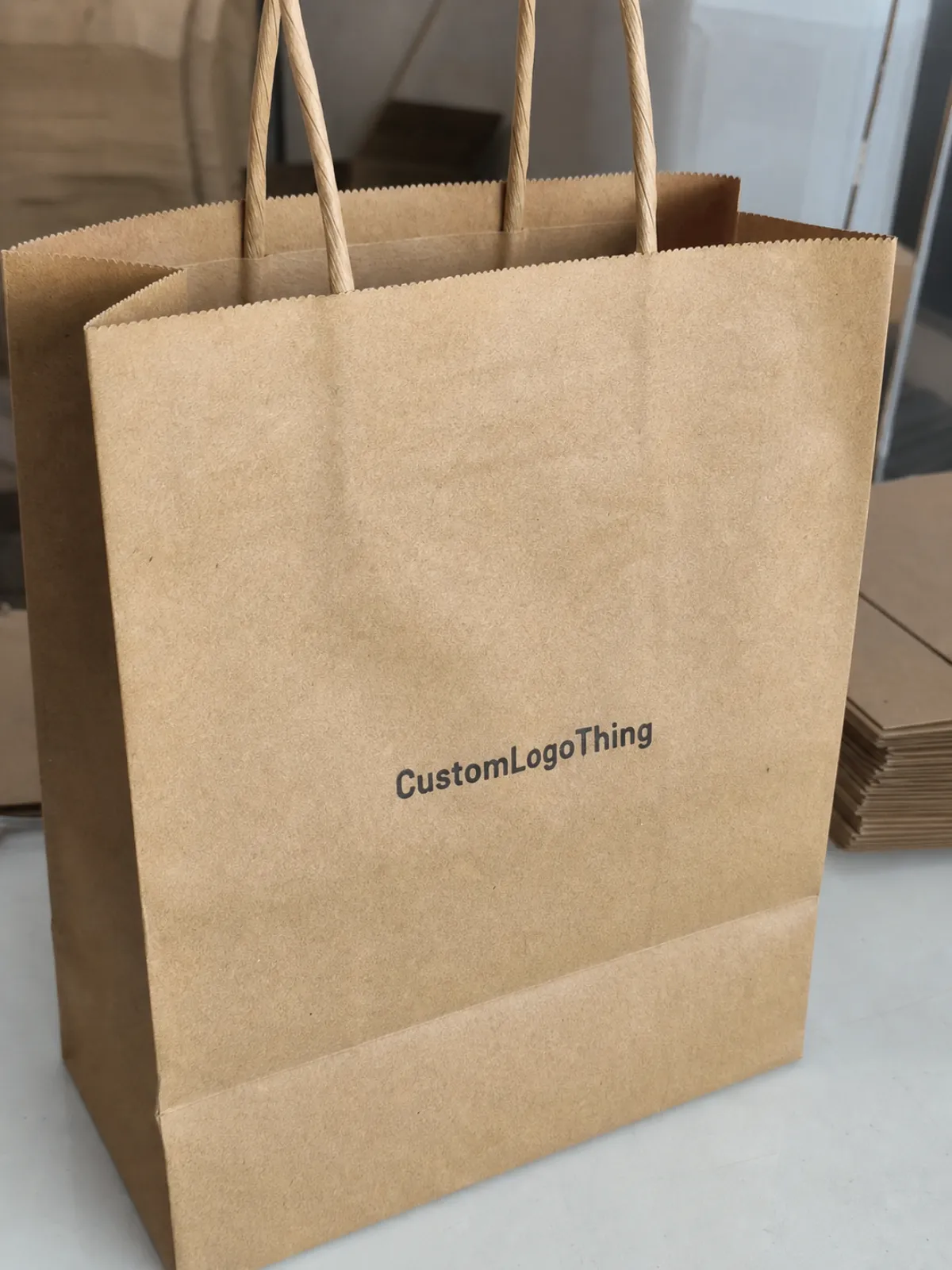
The handle is often the first weak point, so thickness should always be evaluated with handle construction. Twisted paper handles are popular because they are comfortable to carry and look cleaner than some alternatives, but the attachment area takes concentrated stress when the bag is lifted from the top.
Many bag makers use a reinforcement patch, a folded top edge, or a wider glue pattern to spread the load. That reinforcement can matter more than a small change in gsm. In other words, a well-built 140 gsm bag can outperform a poorly built 170 gsm bag if the handle anchoring is stronger and the adhesive coverage is more consistent.
The base deserves equal attention. A pasted or folded bottom may be sufficient for many ecommerce uses, but the seam design should match the contents. Boxy products usually benefit from a wider base panel and more stable geometry, while softer products can often use a simpler structure. The right base reduces shifting, helps packing speed, and lowers the chance of split seams.
Printing changes the equation too. Thinner paper can show more surface distortion after heavy ink coverage, while heavier sheets can better support dense color fields. Still, heavier does not always mean better printing. Recycled or textured sheets may need adjusted press settings to avoid mottling, washboarding, or cracking at score lines.
Finishes such as matte coating or water-based varnish can improve scuff resistance, but they also affect folding and cost. For ecommerce, durability usually matters more than decorative effects that chip in transit. If the bag will be stacked or inserted into parcels, surface rub resistance is worth checking early, before committing to a large run.
Adhesive performance is another hidden variable. Glue can behave differently depending on absorbency, coating, and humidity. A bag stored in a hot or damp warehouse may not behave exactly like the sample approved in a controlled room. This is why a production trial is more useful than a visual approval alone, especially when lead time is tight and there is little room for rework.
If sustainability is part of the buying decision, the most responsible choice is usually the lightest structure that still performs safely. A bag that fails and must be replaced creates waste too. For that reason, thickness should support the real use case, not simply aim for the heaviest or most impressive option.
Testing, quality control, and common failure points
Before approving bags for production, test them in conditions that resemble actual use. A sample that survives one lift in a showroom may not survive repeated pick-and-pack cycles, stacking, or transit vibration. Real testing does not need to be complicated: fill the bag with representative products, lift it by the handles, set it down repeatedly, and inspect the seams, folds, and glue lines.
A basic inspection should confirm consistent color, neat gusset folds, centered handle placement, and a straight, fully bonded bottom seam. If the bag is printed, check that artwork remains readable after folding and does not crack badly at the score lines. These checks catch many of the issues that later become complaints or returns.
It is also smart to test more than one order profile. A bag that works for a single folded sweater may not work for two items plus an insert card. A sample that feels sturdy when empty may sag once the product is inside. The most useful test set usually includes a light load, a typical load, and a near-max load.
Common failure points include handle pullout, bottom split, side seam burst, and crease cracking at the top fold. Handle pullout often points to weak glue coverage or insufficient reinforcement. Bottom split usually means the seam or base panel is undersized for the load. Side seam burst can indicate that the paper is too light, or that the gusset dimensions are too tight for the product shape.
Storage conditions also affect performance. Paper bags do best when stored flat in a dry, clean area away from moisture. If they absorb humidity, they can lose stiffness or change dimension slightly, which affects packing speed and glue behavior. Rotating inventory and keeping cartons off the floor are simple ways to reduce risk.
For repeat orders, document a practical spec sheet with gsm, paper grade, handle type, adhesive requirements, dimensions, print limits, and expected test outcomes. That makes supplier comparisons easier and helps you avoid surprises when switching mills or adjusting the design. It also gives you a clear basis for discussing MOQ, lead time, and inspection criteria before production starts.
If you are choosing between two thickness options, compare them with the actual product rather than assumptions. Put the real item in each version, close the bag the way it will be used, and evaluate lifting, stacking, and opening. In many cases, the right answer becomes obvious once the bag is treated like a package instead of a flat material sample.
FAQ
What gsm is best for ecommerce twisted Handle Paper Bags?
There is no single best gsm. Many ecommerce programs start around 120-170 gsm for general use. Lighter items may work in the 90-120 gsm range, while heavier or more premium applications often move to 170-220 gsm.
Are thicker paper bags always stronger?
Not always. Higher gsm often improves stiffness and puncture resistance, but overall strength also depends on handle attachment, bottom seam quality, paper fiber, glue coverage, and bag proportions. A well-built midweight bag can outperform a heavier but poorly constructed one.
Should I choose kraft paper or white paper for ecommerce bags?
Kraft paper is often preferred for a natural look, practical strength, and cost control. White paper can be a better fit when print clarity or a cleaner premium look matters more. The best choice depends on the design and the customer experience you want.
Can Twisted Handle Paper Bags replace shipping boxes?
Sometimes, but only for suitable products. They work well for light to medium items when presentation matters and the contents do not need rigid edge protection. For fragile, heavy, or highly compressible products, a box or rigid mailer is usually safer.
How do I reduce handle failures without making the bag much thicker?
Reinforce the handle attachment area, improve adhesive coverage, and use a stronger top fold. Those construction changes often improve performance more efficiently than moving to a much heavier sheet.
Do recycled paper bags perform differently from virgin fiber bags?
They can. Recycled papers may feel different, respond differently to moisture, and show slightly more variation, but many perform very well when properly specified. Testing both options under the same load and storage conditions is the safest way to compare them.
Final selection checklist
When narrowing down a thickness spec, review the full use case rather than chasing a single number. Start with product weight, then factor in shape, packing method, carrying distance, storage conditions, and branding goals. If the bag will be reused or seen in a premium context, you may want more stiffness and a cleaner print surface. If the main priority is efficient fulfillment, a lighter but well-reinforced build may be enough.
A strong final spec should answer five questions: How heavy is the load? How sharp or bulky is the product? How secure is the handle attachment? How well does the bag hold its shape during packing and transit? And does the selected material support the brand without wasting paper? Once those points are clear, thickness becomes much easier to choose with confidence.
For most ecommerce programs, the best result comes from testing a small range of realistic options rather than defaulting to the heaviest sheet. A thoughtful material choice, paired with good handle reinforcement and a sensible base structure, usually delivers the best mix of appearance, reliability, cost, and lead-time stability.