Buyer Fit Snapshot
| Best fit | packaging buyers who need clearer specs, stronger internal paths, and repeatable quote decisions where brand print, material, artwork control, and repeat-order consistency matter. |
|---|---|
| Quote inputs | Share finished size, material target, print colors, finish, packing count, annual reorder estimate, and delivery region. |
| Proofing check | Approve dieline scale, logo placement, barcode or warning zones, color tolerance, and any recyclable or compostable wording before bulk production. |
| Main risk | Vague material claims, crowded artwork, or missing packing details can create delays even when the unit price looks attractive. |
Fast answer: Edge Protectors Wholesale: Pricing, Specs & Lead Time should be specified like a repeatable production item. The safest quote includes material, print method, finish, artwork proof, carton packing, and reorder notes in one written spec.
What to confirm before approving the packaging proof
Check the product dimensions against the actual filled item, not only the sales mockup. Ask for tolerance on folds, seals, hang holes, label areas, and retail display edges. If the package carries a logo, QR code, warning copy, or legal claim, reserve that space before decorative graphics fill the panel.
How to compare quotes without losing quality
Compare board or film grade, print process, finish, sampling route, tooling charges, carton quantity, and freight assumptions side by side. A lower quote is only useful if the supplier can repeat the same color, closure quality, and packing count on the next order.
Buying Edge Protectors Wholesale can look like a small procurement decision until a single crushed corner triggers rework, a claim, or a rejected pallet. A load may survive the trip and still arrive with dented edges, strap marks, or split carton corners that cost time long after the freight bill has cleared. The product itself is simple. The financial effect is not.
That is why experienced buyers treat edge protection as part of the load design, not an accessory added at the packing table. The right protector distributes pressure, keeps strap tension from biting into one weak point, and helps stacked pallets hold their shape during transit. The wrong one is cheaper only on paper. In practice, it can create a cycle of avoidable losses that shows up in labor, returns, and customer complaints.
The decision is rarely about whether edge protectors work. They do. The real question is which material, thickness, profile, and order quantity fit the shipment without adding waste. A distributor shipping mixed cartons has different needs from a furniture importer or a contract packer running export pallets. Those differences matter, and they should shape the quote.
Why Edge Protectors Wholesale Pays Off Fast
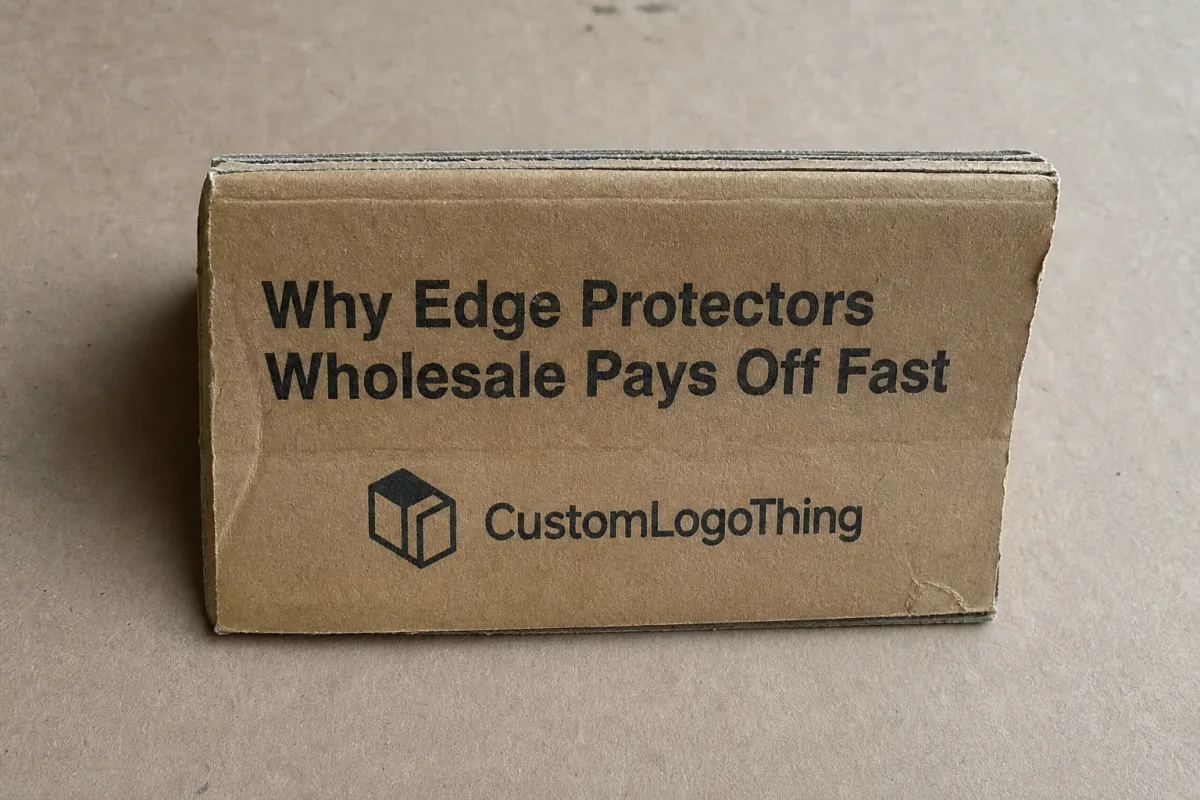
Edge protection solves several problems at once. A carton corner may look sound on the line, then fail after stretch wrap tension, forklift handling, or stack compression starts working on it. A pallet may pass a casual visual check and still be vulnerable when it sits two or three high in a warehouse or rides for days in a trailer. The damage often shows up late, but the cause is usually simple: too much force on too little surface area.
That is why Edge Protectors Wholesale purchases often return value faster than buyers expect. They lower the visible damage rate, and they also reduce the hidden cost behind the damage. Sorting, repacking, relabeling, chargebacks, and customer service time can outweigh the material cost very quickly. A 1% damage rate on a large order sounds minor until that 1% includes premium products, urgent replacements, or export freight that cannot easily be reshipped.
Consider a run of 5,000 units with 50 damaged pieces. The material loss is only part of the problem. If those 50 units need inspection, rework, or replacement freight, the total cost rises fast. A few bad corners can generate a surprisingly large share of claims because the same load profile repeats across every pallet in the shipment.
Wholesale buying improves the economics in three ways. Unit pricing usually drops as volume increases. Standard sizes make it easier to serve multiple SKUs without emergency buying. Replenishment becomes predictable, which helps the warehouse team keep the line moving instead of waiting for a last-minute spot order.
That practical value shows up in everyday shipping environments:
- Warehouse and dock operations where pallets are moved repeatedly and corners take a beating.
- Strapped loads that need force distributed across a wider surface.
- Export shipments where long transit windows and multiple handoffs increase compression risk.
- Furniture and appliance loads where finish quality matters as much as structure.
- Printed cartons and retail packs where presentation affects customer perception and receiving acceptance.
- Building materials and bundled goods where stack stability and containment matter more than cosmetic perfection.
The commercial case is straightforward: fewer claims, cleaner stacking, better strap performance, less rework, and more predictable receiving. A supplier that understands those outcomes will ask about the load first, not just the product code.
“The lowest piece price is not the cheapest option if the pallet still ends up in a claims file.”
For many operations, the savings only become visible after the packaging program stops treating edge protection as an afterthought. The cost was already there. It was just hiding in another part of the budget.
Edge Protector Product Details: Materials, Shapes, and Uses
Edge protectors are rigid or semi-rigid packaging components used to reinforce corners and long edges during storage, transport, and stacking. Their job is mechanical. They spread pressure, reduce deformation, and help the load keep its shape under strap tension, shrink wrap, or pallet compression.
Material choice matters because loads fail in different ways. A light carton under banding pressure does not need the same board construction as a dense export pallet sitting in a hot trailer for several days. Buyers usually compare four common constructions: paperboard, laminated paperboard, recycled fiberboard, and heavy-duty multi-ply designs. Each has a place, and each has a tradeoff.
Common Material Types
Paperboard edge protectors are often the baseline choice for light to medium loads. They are cost-effective, easy to handle, and suitable for many warehouse and retail applications. They perform well when the main issue is strap pressure or corner scuffing rather than severe compression.
Laminated paperboard adds strength and better shape retention. The layered construction helps the protector resist crushing and stay straight when pallets sit under load or move through warmer transport conditions. For buyers comparing price with performance, this is often the middle ground.
Recycled fiberboard is a common option for general-purpose protection and sustainability-driven programs. It can support recycling goals while still giving the load enough edge support for many freight lanes. In facilities that already separate fiber, the disposal process is usually simpler than with mixed-material alternatives.
Heavy-duty multi-ply constructions are used for dense, tall, or export-bound shipments. If the load sees stronger strap tension, higher stacking pressure, or longer dwell times, multi-ply board often gives buyers the margin they need. It is not always necessary. When a shipment fails, though, under-specification usually costs more than paying for the stronger grade.
Shapes and Formats That Buyers Actually Use
L-shaped corner pieces are the most familiar form. They protect the vertical corners of cartons, crates, and palletized goods, and they help spread strap force over a larger area. One profile can serve multiple package types if the leg lengths are chosen carefully.
Flat edge boards are used when the goal is to protect a long edge rather than a corner. These are common on long cartons, panels, boards, and bundled product stacks. They also help keep loads aligned under banding.
Custom-cut lengths work best for repeat programs with unusual pallet heights or carton dimensions. They reduce waste and remove the need for warehouse staff to trim or improvise. That may sound minor, but it adds up quickly when a team uses thousands of pieces every week.
Pre-formed styles are helpful where line speed matters. If the packaging team needs a protector that sits consistently on the load without manual adjustment, a pre-formed profile can cut handling time and improve placement accuracy.
Compatibility matters too. Edge protectors are often paired with polypropylene strapping, stretch wrap, corrugated cartons, pallet tops, and export crates. A good specification should account for the full package, not just the protector itself. A piece that looks strong on a workbench can still fail if it is too short for the strap path or too narrow for the corner geometry.
There is also a practical sustainability angle. Paper-based protectors are often easier to fit into recycling streams than mixed-material systems, especially in facilities already sorting fiber. Local rules still matter, and contamination can change disposal options, but paper-based construction often simplifies the end-of-life process.
For broader industry context on packaging materials and design choices, packaging industry resources can be useful. If your products are validated for transit performance, the test methods published by the International Safe Transit Association help define the stresses protection needs to survive.
Edge Protectors Wholesale Pricing, MOQ, and Quote Drivers
The price of Edge Protectors Wholesale depends on more than the unit cost shown on a quote. Size, thickness, material grade, order volume, and whether the order is stock or custom all affect the final number. So do packing method, freight terms, and the schedule required to get the product on your dock. A low piece price can turn out to be expensive once setup, freight, and delay risk are included.
MOQ is usually tied to production efficiency. Larger runs spread setup costs over more pieces, which lowers the per-unit price. Smaller runs can still make sense for a test program or a niche load, but the economics change quickly when custom cuts or special packing are involved. Many buyers are balancing two costs at once: unit price and inventory carrying cost. The best order quantity is not always the largest one. It is the one that keeps production supplied without tying up too much cash in stock.
These are the quote drivers buyers should expect to see:
- Dimensions such as leg size, overall length, and corner angle.
- Thickness and board construction, especially for heavy or export loads.
- Length tolerance if the pieces must fit automated or semi-automated packing steps.
- Print or labeling for branding, SKU identification, or handling instructions.
- Coatings or adhesives when moisture resistance or extra surface stability is needed.
- Special cuts for notches, pre-scored fold points, or nonstandard profiles.
- Bundling and packing method because how the pieces are stacked affects freight cube and warehouse handling.
- Destination freight terms since shipping to a dock, a distribution center, or an export point changes landed cost.
Standard sizes usually move faster and cost less because the tooling and production setup already exist. Custom profiles generally cost more upfront, but they can reduce waste and improve fit enough to justify the difference. That is especially true if standard stock leaves too much exposed edge or the load geometry is irregular. A 10% material premium can still be economical if it prevents even one damaged pallet.
| Option | Typical Use | Estimated Unit Price | Typical MOQ | Lead Time |
|---|---|---|---|---|
| Standard paperboard corner protector | Light to medium cartons, general warehouse shipping | $0.18-$0.32 each | 1,000-3,000 pieces | Often 7-12 business days |
| Laminated or recycled multi-ply protector | Heavier pallets, longer transit, strap pressure | $0.24-$0.45 each | 2,000-5,000 pieces | Often 10-15 business days |
| Custom size or printed protector | Repeat programs, branded loads, unusual dimensions | $0.30-$0.60 each | 5,000+ pieces | Often 12-20 business days |
Those figures are directional, not universal. A buyer with simple dimensions and a strong forecast may do better. A buyer with a custom cut, moisture-resistance requirement, or tight ship window may pay more. Freight can also swing landed cost enough to change the order strategy. The smart comparison is not piece price alone. Compare damage reduction, labor savings, freight cube efficiency, and chargeback exposure side by side.
When reviewing a quote, look for clarity on the following items:
- Unit price and whether it changes by tier.
- Setup charges for custom cutting, tooling, or print.
- Sample charges and whether they are credited back on order.
- Packing method so you know how the pieces will arrive.
- Lead time from approval to shipment.
- Shipping terms and responsibility for freight.
A quote that spells out every line item usually saves time later. The cheapest number on the first page is not always the cheapest order once freight and delays are counted.
Process, Timeline, and Lead Time for Bulk Orders
The buying process should feel predictable. If a supplier makes it slow or unclear, the packaging program suffers. A practical bulk order starts with dimensions and use case, moves to a quote, then sample or spec confirmation if needed, and then production. Straightforward orders can move quickly. Unusual loads or custom products deserve a slower review because the cost of a wrong fit is far higher than the cost of a sample check.
The fastest orders are usually the ones where the buyer provides complete information on day one. That means exact dimensions, target quantity, delivery address, required ship date, and a photo or sketch of the pallet, crate, or carton. The photo matters more than many teams expect. It tells the supplier whether the protector is guarding a sharp corner, a long exposed edge, or a stacked carton face under strap pressure. One clear image can prevent days of back-and-forth.
Typical Timeline Stages
Quote turnaround is often one to three business days for standard requests and a bit longer for custom profiles. If dimensions are incomplete, that timeline stretches immediately. That is usually the first avoidable delay.
Sample or spec confirmation may take another day or several days, depending on whether the buyer needs physical verification. For new programs, this stage is often where the best savings appear. A small change to leg length or thickness can improve fit enough to justify the whole order.
Production scheduling depends on plant capacity and material availability. A routine run can often be scheduled quickly, but a large order or a printed run may need a dedicated window. If the order needs coordinated packaging or kitting, expect more planning time.
Manufacturing and packing are usually the most stable parts of the schedule once the spec is locked. The product itself is straightforward, but packing discipline matters. Uniform stacks, squared corners, and consistent bundle counts reduce errors on arrival.
Outbound freight booking should not be treated as a small administrative step. A product can finish on time and still arrive late if the freight booking is not aligned with the required delivery window. For buyers with dock appointments, that part deserves real attention.
Lead time shifts based on five main variables: order size, customization level, current plant capacity, material availability, and whether print or special handling is required. Repeat orders usually move faster because the supplier already knows the spec. First orders take longer because the fit, packing format, and delivery assumptions have to be confirmed.
A single technical approver helps. If procurement, operations, and receiving each send separate feedback, the order can stall between departments. Assign one person to approve dimensions, artwork, and delivery timing. That decision often saves more time than a rush fee ever could.
Practical rule: if the supplier has to guess about the load, the timeline usually slips. If the supplier has photos, dimensions, and a clean spec sheet, the order tends to move faster and with fewer corrections.
For buyers who want packaging decisions tied to transit performance, ISTA testing frameworks are a useful reference point. For sustainability and fiber sourcing, organizations such as the Forest Stewardship Council can matter if customers require certified material or traceability.
Specifications That Matter: Sizes, Strength, and Print
Most quoting problems begin with vague specs. A buyer says “we need edge protection,” and the supplier has to infer the rest. That is rarely efficient. The spec sheet should state the length, leg size, thickness, angle, board grade, moisture resistance, and the pressure the protector needs to hold under. Without those details, the quote may be quick, but it is not especially useful.
Dimensions are the first filter. If the protector is too short, the corner remains exposed and the strap can still crush the load. If it is too long or too heavy, the component adds cost and bulk without improving performance. In a busy warehouse, even a small increase in piece size can affect pallet count, packing speed, and freight cube. Buyers should not default to the largest possible profile. The right size is the one that covers the load cleanly with enough margin for handling variation.
Strength and Consistency
Strength gets described in several ways, and the terminology can blur. For buyers, the useful questions are simple: how much compression can the protector hold, how does it behave under strap tension, and will it stay straight when a stack sits for days rather than hours? Those answers matter more than a generic “heavy duty” label.
Consistency matters just as much as strength. A protector that varies in cut length or arrives with uneven edges slows the warehouse team. If the packaging crew has to sort, flip, or reject pieces mid-line, labor costs rise immediately. Repeatable dimensions and squared edges support throughput, especially on programs where thousands of pieces are used every week.
Moisture resistance can matter in export lanes, cold-chain-adjacent warehouses, and humid climates. Paper-based products are still common in those settings, but the grade needs to be chosen carefully. The protector should retain enough stiffness to keep doing its job after transport conditions change. Buyers should ask for expected performance under storage and transit conditions, not just the nominal board type.
Print and Identification
Print is not always necessary, but it can add value. A simple printed SKU, handling note, or customer-specific brand mark can help with traceability in large distribution centers. It also makes it easier to separate programs when multiple clients share the same warehouse footprint. That matters in B2B shipping, where a small identification error can send the wrong load into the wrong lane.
Special requirements by industry should be spelled out early. Export shipments may need better compression resistance. Furniture and appliance loads often need longer edge coverage. Bundled products and mixed-load pallets may need a protector that works with irregular strap paths. Printed cartons may need a cleaner surface so the package looks intact on receipt. The better the supplier understands the application, the fewer compromises you will have to make later.
A practical spec sheet might include:
- Overall length and corner leg length
- Thickness in millimeters or inches
- Material type and ply count
- Moisture or coating requirements
- Print content, if any
- Quantity per case or bundle
- Load type and strap method
- Delivery date and destination
That may seem detailed. It is. But details are what turn a generic packaging item into a product that actually protects margin.
What a Reliable Supplier Should Provide
Buyers do not stay with a supplier because of marketing language. They stay because the product arrives on spec, the price makes sense, and the communication is clear enough that the internal team does not have to chase updates. That is the standard worth applying to edge protectors wholesale sourcing as well.
A dependable wholesale program should provide consistent thickness, clean cuts, squared edges, and packaging that holds up through inbound handling. Those details sound small, but they determine whether the warehouse team can use the product efficiently. When board variation is too high, the line slows down. When the edges are rough, straps can sit unevenly. When the count per bundle is inconsistent, reordering becomes guesswork. Good manufacturing prevents those problems before they begin.
There is also a procurement angle. Buyers need documentation that is easy to review, samples that arrive quickly, and reorders that follow the same spec without a fresh negotiation every time. That is especially true for teams managing multiple SKUs and multiple shipping destinations. A clear purchase history is not a luxury. It is part of the operating system.
From a commercial point of view, the best supplier is the one that can satisfy three constraints at once: specification, price, and timeline. A low quote with a long delay can cost more than a slightly higher quote that keeps shipping on schedule. A fast lead time with poor protection can cost even more. The objective is not to win a single line item. It is to protect the shipment, reduce handling labor, and keep inventory flow steady.
Our Wholesale Programs are built around that idea. The goal is to match the edge protector to the actual shipment, not to force the shipment into a generic product shape. That distinction matters on palletized freight, export loads, and any package that gets stacked, strapped, or rehandled multiple times before arrival.
Quality control matters here. If the supplier checks thickness, cut accuracy, and bundle count before shipment, the buyer spends less time fixing avoidable problems. Less rework. Fewer surprises. Better receiving performance. Those are the metrics that matter when the product exists to prevent damage in the first place.
Put plainly: if your current supplier only talks about price, you are probably not seeing the full value of the product. Good edge protection is a process product. The board matters, but so do repeatability, packing, and response time.
Next Steps for a Faster Edge Protectors Wholesale Order
If you want a faster quote, start with the load itself. Measure the edge you are trying to protect, count the average pallet load, define the target quantity, and decide whether a standard or custom size makes more sense. That upfront work saves time later and usually improves pricing because the supplier can quote against a real specification instead of a rough description.
For the cleanest quote request, send these details together:
- Dimensions, including length and leg size
- Material preference and thickness target
- Quantity and reorder expectation
- Delivery location and timing needs
- Photo or sketch of the carton, pallet, or crate
- Any print, labeling, or moisture requirements
If the load is new or especially fragile, ask for a sample or spec confirmation before committing to the full run. That is a low-risk way to confirm fit and avoid a mistake that would otherwise show up after production. For buyers comparing suppliers, evaluate price per piece, freight, lead time, and damage reduction together. A slightly higher material cost can still be the better commercial decision if it lowers returns and keeps the dock moving.
There is a simple operating lesson here. Packaging decisions should support operations, not sit apart from them. Once the spec is locked, move forward with edge protectors wholesale so production, freight, and inventory planning stay aligned. That is how you reduce claims, stabilize unit cost, and keep the shipment on track from packing table to receiving dock.
What details do I need for an edge protectors wholesale quote?
Provide length, leg size, thickness, material preference, quantity, delivery zip code, and whether the order is standard or custom. A photo or sketch of the pallet, carton, or crate helps the supplier confirm fit and understand the load conditions. If timing matters, include your required ship date so the quote reflects a realistic lead time rather than a generic estimate.
How do edge protectors wholesale pricing and MOQ usually work?
Pricing usually drops as volume rises because setup and production costs are spread across more units. MOQ depends on the size, custom cuts, printing, and packing format of the order. Standard sizes often have lower MOQ and faster pricing than fully custom profiles, which is why buyers with repeat shipping lanes often save money by standardizing early.
Which material is best for heavy shipments?
Heavy shipments usually need a thicker, higher-compression paperboard or multi-ply construction. The right choice depends on strap tension, stack height, and how much edge pressure the load will see. If the load is export-bound or warehouse-stacked, ask for compression guidance instead of choosing by price alone, because a light spec can become expensive after the first damaged pallet.
How long does production usually take for edge protectors wholesale orders?
Lead time depends on order size, customization, current plant load, and whether samples or artwork approval are needed. Standard sizes typically move faster than custom dimensions or printed orders. A complete spec sheet at the start usually shortens the overall process and makes the schedule more reliable from approval to shipment.
Can edge protectors be customized for different carton or pallet sizes?
Yes, they can be cut to match carton heights, pallet lengths, and unusual shipping formats. Custom sizing helps reduce waste and improves protection when standard stock sizes do not fit well. Share exact dimensions early so the design is built around the load, not adjusted after production starts, and you will usually get a better fit with less handling frustration. That is the point of edge protectors wholesale done properly: the protection matches the shipment, not the other way around.


