Electronics Pom Pom Beanies Unit Cost Review: The Buyer Math
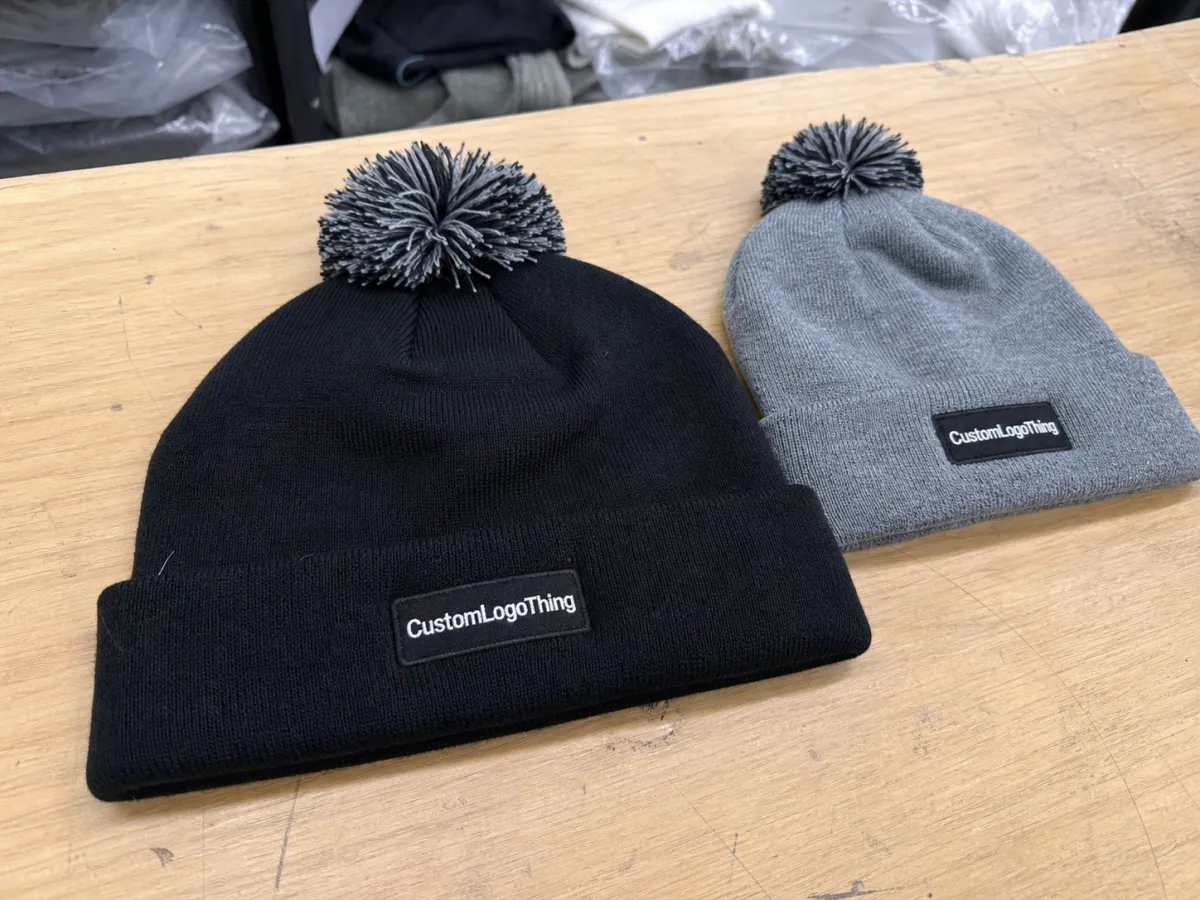
A branded beanie can cost less than a single paid click in a competitive electronics category. That is the commercial reason to run an electronics pom pom Beanies Unit Cost Review before treating winter apparel as “just merchandise.” A paid search click for device accessories, repair services, telecom offers, gaming hardware, or smart-home products can disappear in seconds; a well-made knit beanie can stay on a customer’s head, a service desk hook, or a field technician’s uniform for months.
That does not make every pom pom beanie a smart purchase. It makes the math worth checking. Electronics brands use them in warranty mailers, product launch kits, service counters, dealer giveaways, cold-weather retail activations, and employee field kits because the item is visible, useful, and more substantial than a sticker sheet or pen. A 9-inch cuffed acrylic beanie with a clean logo may not feel luxurious, but it does feel like a real object. That matters when the core product is a cable, charger, screen protector, router, battery pack, or other technical item with little emotional texture.
Unit cost is not one number. It is a chain of decisions: yarn choice, knit structure, pom type, logo method, label package, individual packing, carton count, freight mode, quantity break, and timeline. Add a faux leather patch, a retail hang tag, and individual poly bagging, and the cost per piece can move quickly. Remove a physical pre-production sample to save time, and the risk moves instead.
Buyer rule: choose the beanie spec first, then calculate decoration, packaging, MOQ, timeline, and shipping. A cheap quote with missing setup charges is not a cheap order.
For Custom Logo Things buyers, the practical sequence is straightforward: define the use case, choose the construction, confirm how the logo will reproduce, compare quantity breaks, and approve the quote only after the assumptions are visible. That is a purchasing review, not a fashion trend discussion.
Product Fit for Electronics Launches, Service Teams, and Dealer Kits
A custom knit pom pom beanie fits a specific slice of electronics marketing: brands that want a tactile, cold-weather item with enough surface area for identity. Good candidates include gaming hardware launches, phone accessory brands, repair networks, telecom installers, electronics retailers, device insurance programs, smart-home teams, and field crews who work outdoors or travel between customer sites.
The pom pom detail has to earn its place. It makes sense when the program has seasonal timing, a retail-style presentation, or a more casual brand voice. Product drops, holiday fulfillment bundles, ski-market activations, employee uniform refreshes, loyalty kits, and influencer seeding boxes can justify the extra volume and visual character. A plain cuff beanie may suit a utility crew better. A pom pom style works harder for a winter launch kit that needs to photograph well and feel giftable.
There are weak fits. Ultra-formal corporate programs, hot-climate campaigns, and events requiring year-round wear may be better served by caps, tech pouches, microfiber cloths, cable organizers, or packaging inserts. Not every audience wants a pom. Not every timeline allows knitted customization.
Practical apparel tends to create repeated impressions because people keep it, but that claim should not be stretched into magic. A scratchy, undersized, or awkwardly branded beanie can sit in a drawer like any other failed promotional item. Compared with stickers, lanyards, and plastic pens, though, winter apparel has a stronger chance of public use when the fabric weight, cuff height, decoration scale, and color choice are right.
Packaging can change the read of the whole item. Custom Logo Things can configure beanies in clear or frosted branded poly bags, kraft sleeves, belly bands, rigid gift boxes, or bundled mailer kits with cables, screen wipes, stickers, warranty cards, or instruction inserts. A modest belly band can sometimes lift perceived value more than a small yarn upgrade, especially if the beanie sits beside a charger, headset, or smart device accessory. That is the sort of tradeoff electronics buyers should measure rather than guessing at it later.
The better way to view the item is as a brand artifact. Electronics often feel precise, cold, and interchangeable. A warm beanie adds human contact without asking the product packaging to do all the emotional work.
Beanie Specs That Change Comfort, Durability, and Brand Perception
The spec sheet decides whether a buyer gets a useful winter item or a weak giveaway with a pom attached. Acrylic is the budget workhorse: durable, color-friendly, and often suitable for bulk pricing programs. Recycled polyester can support a sustainability message, particularly when paired with recycled-content packaging or FSC-certified paperboard from suppliers aligned with FSC sourcing principles. Wool blends add warmth and a more premium handfeel, although they can raise cost and care complexity. Cotton blends feel soft but usually provide less cold-weather insulation.
Knit construction matters just as much. Rib knit gives stretch and a familiar retail look. Cable knit adds texture but can make small logos harder to read. Jacquard knit can build graphics directly into the beanie, which works for bold icons, stripes, and geometric brand patterns, not tiny technical marks. Cuffed construction gives a clean logo panel. Double-layer designs feel heavier and warmer, with a clear jump in perceived value and packing volume.
Pom choices change both appearance and logistics. A single-color yarn pom is usually the simplest. Two-tone poms can echo brand colors without changing the whole beanie. Faux fur poms feel more retail but add cost, volume, and sometimes extra care requirements. Oversized poms photograph well but reduce carton efficiency. Removable poms can help with washing and premium positioning, though the attachment must be tested because loose parts create complaints.
Decoration is where electronics logos often struggle. Flat embroidery works for simplified marks, short names, and clean icons. Woven labels are better for small text, sharp edges, and compact lockups. Faux leather patches suit premium kits, especially for matte black, brown, gray, or debossed looks. Jacquard knit-in graphics can create a bold all-over pattern. Printed hang tags carry technical copy, warranty messaging, QR codes, or launch details without forcing too much information onto the beanie itself.
Fine lines, gradients, tiny registration marks, and metallic RGB effects rarely translate directly into thread. A logo that looks crisp on a device box can blur on knit fabric at 55 mm wide. Before the Unit Cost Review turns into a purchase order, buyers should ask for actual logo scale on the cuff, stitch-count estimates for embroidery, and a legibility check for woven labels.
- Cuff height: common adult cuff zones often sit around 2.5 to 3.5 inches, depending on style.
- Sizing: adult unisex works for most programs; youth sizing needs separate confirmation.
- Color: Pantone matching has tolerance limits, especially in yarn and thread.
- Labels: inside seam labels, care labels, retail barcodes, and hang tags each add handling.
- Packaging: individual bags, kraft sleeves, or kit-ready packing should be specified before quoting.
Material language should stay honest. “Eco” claims need backup. “Premium” should show up in handfeel, decoration quality, weight, and packaging, not only in the quote description. For electronics buyers working under brand-compliance rules, that distinction matters because legal, retail, and sustainability teams may all review the same item before it ships.
Unit Cost, Pricing, and MOQ Variables Buyers Should Check
Unit cost moves fastest when several variables change at once. Quantity, yarn type, decoration method, label count, packaging format, sampling, freight, and rush requirements all pull on the same number. A buyer comparing two quotes without checking those inputs is not comparing price. They are comparing assumptions.
A clean pricing framework looks like this: base beanie cost plus logo decoration plus labels and packaging plus sampling plus shipping plus any rush, compliance, or retailer routing requirements. Setup charges and artwork digitizing may be minor on a 2,500-unit order but painful on 100 units. Tooling fees for patches, custom labels, or special fixtures can also distort the first run if they are not separated from the repeat-order cost.
MOQ deserves plain language. Decorated stock-style beanies may support lower minimums, especially with embroidery or standard patches. Custom knit-in patterns, custom-dyed yarn, faux fur poms, private labels, and retail packaging usually push minimums higher because the supplier has to commit materials, machine time, and packing labor. There are exceptions, but the buyer should budget for higher minimums whenever the spec moves away from existing blanks and standard trims.
| Option | Typical Spec | Likely MOQ Pattern | Cost Behavior | Best Use |
|---|---|---|---|---|
| Budget | Acrylic cuff beanie, yarn pom, flat embroidery, individual poly bag | Lower minimums may be possible | Lower cost per piece; setup charges matter more on small runs | Service desks, dealer giveaways, warranty mailers |
| Mid-range | Rib knit or double-layer acrylic, woven label or faux leather patch, hang tag | Moderate MOQ depending on label and patch type | Better perceived value with controlled decoration cost | Launch kits, employee apparel, loyalty bundles |
| Premium | Custom jacquard or wool-blend beanie, faux fur pom, retail packaging | Higher MOQ is typical | Higher unit cost but stronger shelf and gift presentation | Retail drops, influencer seeding, premium device bundles |
For planning, ask for price breaks at 100, 250, 500, 1,000, and 2,500 units. The curve can be revealing. A program that looks expensive at 250 units may become sensible at 500 because setup charges spread out. Another program may show only a small drop after 1,000 units because the premium patch, packaging, or freight is carrying most of the cost.
Typical branded beanie programs can range from a few dollars per piece for a simple decorated stock style at higher quantities to considerably more for custom knit, specialty trims, retail packaging, rush handling, or complex freight. Exact pricing changes with season, material availability, labor, exchange rates, and routing requirements, so the useful number is the quoted landed cost for the spec you actually intend to buy. FOB pricing may look clean on a spreadsheet, but it can hide duties, domestic freight, carton relabeling, and fulfillment requirements.
Cheap quotes are often cheap because something is missing: digitizing, color matching, carton labeling, duties, last-mile delivery, retail barcode handling, or a pre-production sample. From a buyer’s point of view, shaving $0.12 from yarn weight may be less valuable than adding a kraft sleeve that makes the beanie feel like a gift beside an electronics accessory.
Custom Logo Things can quote good, better, and premium options side by side. That matters because the final decision should show visible tradeoffs, not one lonely number in a spreadsheet.
Process and Timeline From Artwork Review to Packed Cartons
The production path is predictable if the buyer supplies the right information early. Inquiry. Use-case review. Spec selection. Artwork cleanup. Quote. Digital proof. Sample or pre-production approval. Bulk production. Quality control. Packing. Shipment. Miss one step and the schedule usually pays for it.
Start with vector logo files, Pantone colors, target quantity, required delivery date, shipping destination, packaging requirements, and any retailer, event, or fulfillment-center rules. If cartons need specific labels or inner-pack counts, say it before the quote. If the order is going into a multi-item electronics kit, provide the kitting sequence and dimensional limits. A beanie is soft, but it still occupies cube, and that cube matters when it shares a box with cables, inserts, warranty cards, or rigid retail cartons.
Proofing is not decoration theater. It is a technical check. Embroidery files need stitch-count review because dense logos can pucker on knit. Woven labels need text legibility checks because tiny characters can fill in. Knit-in graphics need simplification because yarn is not a printer. A clean digital proof should show logo scale on the cuff, placement from the edge, thread or label colors, and any hang tag or packaging layout.
Sampling choices depend on risk. A virtual proof is faster and often acceptable for a simple embroidered beanie reorder. A physical sample gives better confidence on color, fit, pom size, and handfeel. A pre-production sample is the safer choice for larger retail orders, employee uniform programs, or any run with custom-dyed yarn, jacquard graphics, or retail packaging.
Timeline varies. Simple decorated stock-style beanies move faster. Custom knit patterns, dyed yarn, retail tags, special packaging, and ocean freight add days or weeks. Domestic decoration can often support tighter calendars than fully custom overseas production, but the available colors, knit structures, and pom choices may be narrower. That tradeoff should be visible in the quote, not discovered after the purchase order is issued.
Common delay triggers are painfully ordinary: late artwork revisions, unclear shipping addresses, missing purchase approvals, internal disputes over brand color, and last-minute packaging changes. Lock the spec and artwork before issuing the purchase order. It protects the schedule and the quoted cost per piece.
For transit and packing assumptions, buyers handling retail or parcel distribution may also want to reference testing concepts from ISTA, especially if beanies are packed into kits with electronics accessories that can crush, snag, or shift during shipment. A soft item can still damage presentation if it rubs against printed cartons, pushes inserts out of position, or traps moisture in poor packaging.
Quality Checks That Prevent Expensive Beanie Mistakes
Quality control is risk management. A failed beanie is visible on customers, employees, technicians, and social posts. Unlike a hidden insert card, apparel becomes part of the brand image the moment someone wears it.
Inspection should cover yarn handfeel, stretch recovery, cuff height, logo placement, embroidery density, pom attachment strength, label alignment, loose threads, color consistency, and packaging condition. A 3 mm placement shift may not matter on a stress ball. On a cuff logo, it can look sloppy in every photo.
Electronics brands bring specific reproduction risks. Tiny logos blur. Metallic artwork becomes flat thread. Bright RGB colors need Pantone conversion before production, and even then, yarn and embroidery thread do not behave like a backlit screen. If a mark contains a small icon plus a long product line name, simplify it or move the detail to a woven label, patch, or hang tag.
Fit testing is another practical check. Adult unisex does not mean universal comfort. A beanie that feels overly tight can turn into dead inventory even if the logo is perfect. Stretch recovery after wear matters too; a loose cuff can sag, while a stiff cuff can feel cheap. For employee programs, ask whether the same style works for repair crews, counter staff, installers, and office teams, because those groups may wear the item in very different conditions.
Packaging deserves its own inspection line. Barcode readability, carton markings, inner-pack counts, hang tag placement, suffocation warnings on poly bags, and damage resistance during freight all affect delivery success. Retailers and fulfillment centers care about carton data, not just nice embroidery. If cartons are going to multiple offices, dealer locations, or event venues, confirm the split-pack instructions before production packing begins.
Pre-shipment inspection is cheaper than post-delivery discovery. Sorting 1,000 beanies after arrival, replacing mislabeled cartons, or repacking goods for a launch deadline can erase the savings from a low bid. Custom Logo Things helps buyers catch these issues while the order is still fixable, which is the only moment quality control really earns its keep.
Getting an Accurate Beanie Quote Without Rework
A reliable quote starts with a short checklist. Quantity. Deadline. Vector logo file. Decoration preference. Color target. Packaging format. Shipping address. Add the intended use: giveaway, retail item, employee uniform piece, warranty insert, dealer kit, or bundled accessory component. Each answer changes the right spec.
Buyers should request two or three quote versions instead of one. A budget acrylic embroidered option gives a baseline. A mid-range woven-label or patch option shows what better perceived value costs. A premium retail-packaged version helps teams judge whether the gift experience supports the electronics product being sold. The spread is often more useful than the cheapest number.
- Send vector artwork and any simplified logo lockup approved for embroidery or labels.
- Confirm target quantity and ask for bulk pricing at nearby breaks.
- State whether the beanie ships alone, in a kit, or to a fulfillment center.
- Choose the decoration route before approving packaging design.
- Ask for a proof showing logo scale on the cuff, not just artwork floating on a blank page.
- Approve carton labels and packing instructions early for retailers, events, or multiple office drops.
The strongest buyer move is to decide what the beanie must do before debating pennies. If it has to make a $29 accessory bundle feel giftable, packaging may deserve more budget. If it is for field technicians, fit, warmth, and embroidery durability may matter more. If it is for a retail shelf, barcode handling and hang tag presentation are not optional extras.
Custom Logo Things can turn the request into a clean side-by-side quote with the MOQ, setup charges, decoration method, packaging, and freight assumptions visible. A good review ends with confirmed specs, visible tradeoffs, and a quote that matches the real use case.
FAQ
What affects electronics pom pom beanies unit cost the most?
The biggest cost drivers are order quantity, yarn material, decoration method, pom pom type, number of labels, packaging format, sampling needs, and shipping method. A simple embroidered acrylic beanie usually prices differently from a custom Jacquard Knit Beanie with a faux fur pom, woven label, retail tag, and branded packaging.
What MOQ should I expect for custom electronics pom pom beanies?
MOQ depends on the spec. Decorated stock-style beanies may support lower minimums, while custom knit patterns, custom-dyed yarn, and retail packaging typically require higher quantities. Ask for price breaks at several quantities so you can compare the real savings before committing to a larger run.
Can small electronics logos be embroidered clearly on pom pom beanies?
Yes, within limits. Very fine text, thin lines, gradients, and tiny icons may need simplification for clean embroidery. For complex marks, woven labels, patches, or a simplified logo lockup can produce a sharper result than forcing every detail into thread.
How long does production take for branded pom pom beanies?
Timeline depends on artwork approval, sampling, material choice, decoration complexity, packaging, quantity, and freight mode. Simple decorated styles move faster, while custom knit designs, special yarn colors, and retail-ready packaging add time.
What should I send to get a reliable pom pom beanie quote?
Send vector artwork, target quantity, delivery deadline, shipping destination, color requirements, preferred decoration method, packaging needs, and whether the beanie is for retail, employees, events, or kits. If specs are not final, ask for good, better, and premium quote options to compare cost against perceived value.


