Book Pom Pom Beanies Unit Cost Review: What Buyers Should Notice First
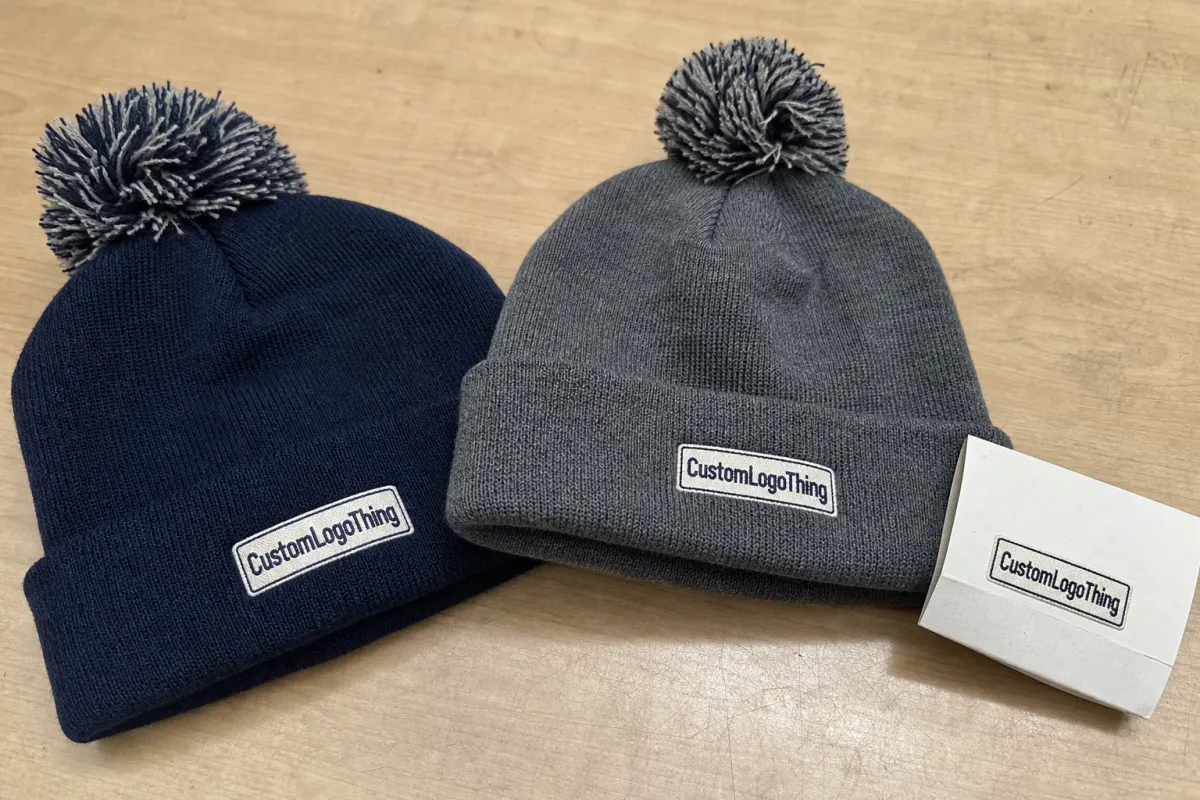
A book pom pom Beanies Unit Cost Review should begin before anyone asks for “your best price.” The real buying problem is more specific: choosing winter promo merchandise that feels wearable, photographs cleanly in launch emails or unboxing inserts, arrives before the deadline, and still fits a fixed cost per piece.
Pom Pom Beanies look simple from a distance. They are not complicated in the way technical outerwear is complicated, but they do have more moving parts than a flat cuff knit cap. The pom adds material, finishing labor, height, carton volume, and a small but noticeable risk of compression during packing. A plain cuff beanie stacks tightly. A pom pom style takes up more room, draws more attention, and changes how the hat presents on a table, shelf, or event display.
That trade-off is often worth it. Pom Pom Beanies read as winter instantly, and they stand out in crowd photos, holiday kits, ski lodge merchandise, campus store assortments, brewery winter drops, fan gear, and charity walk apparel. For a brand manager, that stronger seasonal silhouette can justify a higher unit cost. For procurement, the number still needs to be explained.
The mistake is comparing only the base knit price. Logo method, yarn weight, cuff depth, label type, artwork color count, individual polybagging, barcode stickers, hangtags, and carton cube can all change the landed cost. A low quote that excludes setup charges, freight, sample fees, or special packing is not a clean comparison. It is an incomplete scope.
Custom Logo Things approaches the order from the specification outward. That means helping buyers book the right beanie for the audience and deadline, not automatically pushing the most expensive construction. Procurement teams, brand managers, event planners, campus shops, outdoor retailers, and nonprofit fundraisers all benefit from a tighter quote pack: fewer revisions, fewer hidden add-ons, and fewer budget conversations after the design has already been circulated internally.
Cost control starts with definition. If two suppliers quote different yarns, decoration methods, carton counts, and packing formats, the lower unit price may only prove that the scope is thinner.
Product Details That Change Perceived Value
A branded pom pom beanie has more decision points than many buyers expect. The main parts are the crown, cuff, pom, top seam, side seams, logo area, trim, inside label, and packaging presentation. Adjust one of those details and the product can shift from basic giveaway to retail-ready winter accessory.
Single-layer acrylic is common for budget-friendly promotional orders because it is warm enough for general use, takes color well, and keeps bulk pricing approachable. Double-layer acrylic adds structure and a heavier hand feel, which often helps the beanie photograph better and feel less disposable. Wool blends can feel more premium, though they may raise material cost and require more care-label discipline. Recycled polyester blends appeal to sustainability-minded campaigns, especially when fiber content is documented accurately. Fleece lining improves comfort in colder conditions, but it adds thickness, labor, and packing volume.
The pom changes the personality of the hat immediately. A tonal yarn pom feels coordinated and safe. A contrast pom creates better visibility for events and team merchandise. A multicolor pom can echo school, club, or sponsor colors. Faux fur gives a boutique winterwear impression, but it changes the cost structure and may require extra confirmation around attachment method, care instructions, and whether the pom is removable. Oversized novelty poms are memorable, but they are harder to pack efficiently and can raise freight costs more than expected.
Cuff depth deserves a deliberate decision. A 2.5-inch cuff can work for a small woven label or subtle side placement. A 3.25-inch to 3.5-inch cuff gives more room for embroidery or a 2-inch wide patch. That extra space improves logo readability from several feet away, which helps with staff kits, donor gifts, and outdoor events where the logo needs to show in photos. A deeper cuff can also increase knit material usage and slightly change fit.
Color strategy is another practical lever. Stock yarn colors are faster, cheaper, and easier to sample. Custom-dyed yarn can create a closer brand match, but it usually requires larger commitments, longer development time, and tighter approval discipline. If a buyer needs 300 beanies in a red close to a brand color for a charity walk in three weeks, a stock yarn may be the honest recommendation. If a retailer is building a repeatable winter assortment, custom yarn becomes easier to justify.
Use case should lead the specification. A staff winter kit may prioritize consistent logo placement, durability, and a neutral color that employees will actually wear. A college bookstore may care about hangtag presentation, barcode labeling, shelf appeal, and margin. A charity walk may need strong color recognition, predictable delivery, and a price point that protects fundraising goals. A brewery drop may benefit from a leatherette or woven patch that pairs well with workwear-inspired branding.
Better matching reduces waste. Buyers sometimes over-specify because wool content, faux fur, or gift packaging sounds more premium on paper. Recipients often judge the beanie more directly: Is it warm enough, does it fit, is the color wearable, and would they use it after the event?
Specifications to Confirm Before You Request a Quote
A reliable quote needs a complete input set. Before asking Custom Logo Things for a book pom pom Beanies Unit Cost Review, gather the fundamentals: quantity, yarn material, knit pattern, beanie size, cuff style, pom pom type, logo method, logo size, number of decoration locations, packaging requirement, ship-to location, and in-hand deadline.
Decoration method deserves close attention because it affects both cost and appearance. Direct embroidery is durable, familiar, and strong for simple marks with bold lettering. It struggles with tiny type, gradients, thin outlines, distressed textures, and high stitch density on stretchy knit fabric. Woven patches handle fine detail better and create a retail-style finish. Leatherette patches can make sense for outdoor, lodge, brewery, or workwear-inspired branding. PVC patches are useful for weather-resistant branding, though they can feel heavier on a soft cuff. Woven labels keep the look understated, especially for boutique merchandise or employee apparel kits.
Use measurements instead of adjectives. Ask for cuff height in inches. Define patch width, often 1.75 to 2.5 inches for front placement on many beanies. Confirm estimated stitch count for embroidery, since logo size and fill area affect both price and stitch behavior. Ask about yarn gauge if texture matters; a chunky rib knit has a different look and stretch profile than a tighter fine-gauge acrylic. Confirm beanie weight if warmth and freight estimates are part of the decision. Ask for carton pack count, such as 100 or 144 pieces per master carton, because pom height affects cube.
Artwork can quietly raise cost. A logo with five thread colors, small registration marks, and dense fills may require revisions, a larger patch, or a different decoration method. On knit fabric, stitch tension matters. Too much thread in a small area can pucker the cuff or distort the artwork after stretching. A cleaner mark often looks more expensive than a complicated one forced into the wrong process.
Size also needs a clear decision. Adult, youth, and unisex labels are not interchangeable just because knit fabric stretches. A youth fundraising event, a university bookstore, and a corporate winter kit do not all need the same fit. Sampling helps, especially if the beanie has fleece lining, a structured cuff, or a larger patch that affects stretch at the front.
Compliance is not glamorous, but it protects the order. Fiber content labels, country of origin, care labels, and retail barcode stickers may be needed depending on how the beanies will be distributed. For paper hangtags, branded sleeves, or retail cards, buyers may also ask about FSC-certified materials through the Forest Stewardship Council. Sustainability claims should stay specific and verifiable; vague language creates more risk than value.
Specifications are a cost-control tool. A complete spec reduces quote ambiguity and prevents the familiar pattern where a low initial price becomes a higher revised price once artwork, labels, packing, and delivery details are finally added.
Unit Cost, Pricing Tiers, and MOQ Variables
Unit cost is usually driven by quantity, material, decoration method, artwork complexity, pom type, packaging, and shipping method. The math is straightforward. Higher quantities spread setup charges, sample work, machine preparation, and administrative handling across more pieces. Low quantities carry a heavier per-unit burden because the supplier still has to review art, prepare decoration, schedule production, inspect goods, and pack cartons.
MOQ means minimum order quantity. Stock-color beanies with standard decoration generally have lower MOQ requirements than fully custom knit patterns, jacquard designs, custom-dyed yarn, or specialty trims. A stock acrylic beanie with a woven patch may be practical at a few hundred pieces. A custom knit pattern with dyed yarn and a detachable faux fur pom may require a much larger run because material sourcing and production setup become more involved.
A responsible quote should show what is included: product cost, decoration, setup charges or tooling fees if relevant, sample fee if any, packaging, freight estimate, duty considerations for imported goods if applicable, and timeline assumptions. If those items are missing, the buyer does not yet have a usable cost per piece.
| Option | Typical Specification | Cost Impact | Best Fit |
|---|---|---|---|
| Budget stock style | Stock acrylic yarn, standard cuff, tonal pom, simple embroidery or woven label | Lower unit cost and lower development burden | Giveaways, staff handouts, short-deadline events |
| Mid-range branded style | Double-layer acrylic, contrast pom, woven or embroidered patch, basic retail packing | Moderate cost per piece with stronger perceived value | Campus shops, charity walks, employee winter kits |
| Premium retail-ready style | Custom color, upgraded patch, faux fur or detachable pom, hangtag, barcode sticker | Higher unit cost, possible higher MOQ, longer timeline | Ski lodge merchandise, boutique drops, fan merchandise, holiday gifting |
Several levers can lower the final number without making the product feel cheap. Replacing a complex embroidered logo with a woven patch may reduce stitch issues and improve clarity. Choosing stock yarn can cut development time. Reducing packaging from individual gift boxes to belly bands or master polybags can lower material cost and freight volume. Consolidating ship-to locations often reduces logistics handling.
Ask for good-better-best options. That single request can reveal the difference between a basic promo beanie and a retail-grade winter accessory. It also gives decision makers a cleaner view of trade-offs: pay more for a sharper patch, save by using stock yarn, or protect the date with a simpler decoration method.
The lowest unit price is not always the lowest campaign cost. Missed delivery dates, unclear artwork, weak pom attachment, or labels that fail retail requirements can create rework that erases the savings. A unit cost review should treat landed cost and usability as the real target, not the cheapest line on a spreadsheet.
Production Process and Lead Time From Sample to Delivery
The production path usually follows a clear sequence: quote review, artwork check, material selection, digital proof, sample or pre-production approval, bulk knitting or blank sourcing, decoration, quality control, packing, and shipment. Each step can move quickly when the specification is clean. Each step can stall when decisions remain open.
Lead time stretches for predictable reasons. Custom yarn dyeing adds development and approval time. Complex patches need their own production schedule before they can be applied to beanies. Holiday season capacity tightens. Overseas freight can shift depending on routing and customs clearance. Incomplete artwork causes back-and-forth. A delayed proof approval can burn several business days without any production work starting.
Separate sample timeline, production timeline, and transit timeline. They are not the same. A factory completion date means the goods are packed or ready to ship. It does not mean the beanies are in hand, checked into a warehouse, sorted by location, or ready for an event table on Friday morning.
Build the calendar backward from the in-hand date. Set internal deadlines for logo approval, sample review, purchase order release, freight method selection, and final delivery buffer. A winter campaign with 2,500 units going to multiple destinations should not use the same planning logic as a 150-piece local staff order.
Rush orders are possible in some cases, but the facts matter. Stock colors, existing trims, simplified decoration, and air freight can compress the schedule. Rush fees or freight premiums can also raise the effective unit cost quickly. If the order is already under price pressure, a rushed timeline may be the most expensive decision in the file.
Quality control should focus on practical checkpoints before shipment: logo placement, color matching, stitching tension, pom attachment strength, label accuracy, carton counts, and packaging requirements. For heavier multi-carton shipments or retail programs, buyers can reference procedures from the International Safe Transit Association. Not every beanie order needs formal transit testing, but carton compression and packing format should not be ignored, especially with bulky poms or gift-ready packaging.
Timeline control is a procurement advantage. Lock the specification early and the buyer has more room to protect budget, avoid air freight, review samples, and make calm decisions instead of approving the fastest available substitute.
Common Buying Mistakes That Inflate Beanie Costs
The first mistake is comparing quotes that are not built on the same specifications. One supplier may quote direct embroidery, another may quote a woven patch, and a third may exclude decoration setup entirely. The buyer sees three prices. In practice, they are three different products.
The second mistake is approving artwork that is too detailed for the chosen method. Tiny type, distressed textures, gradients, and thin linework often fail on knit fabric. The fix might be a simplified logo, larger decoration area, woven patch, or leatherette patch. Those changes are manageable if caught early and expensive if caught after proof approval.
The third mistake is underestimating freight. Pom Pom Beanies occupy more carton volume than flat knit caps because they do not compress as neatly. Even a modest increase in carton cube can matter when shipping hundreds or thousands of units. Freight becomes especially sensitive when orders split across many destinations.
The fourth mistake is selecting premium material because it sounds better rather than because the end user will notice. A wool blend may suit a retail lodge program. For a one-day outdoor giveaway where recipients care about warmth, color, and logo readability, double-layer acrylic may deliver better value.
The fifth mistake is ordering too close to the event. Rush production and air freight can erase savings from a lower product price. A buyer might save $0.40 per beanie on the quoted item, then spend more than that on expedited shipping because the purchase order was released late.
The sixth mistake is skipping sample approval on high-visibility programs. Retail drops, influencer kits, donor gifts, and executive holiday boxes deserve more control. A digital proof is useful, but it cannot show hand feel, actual cuff stretch, pom fullness, or how a patch sits on rib knit.
A better comparison weighs warmth, wearability, branding clarity, packaging experience, delivery certainty, and total landed cost. Unit price matters. It just does not deserve to be the only number in the decision.
Next Steps to Book the Right Pom Pom Beanie Order
Before contacting Custom Logo Things, prepare the core order details. The tighter the brief, the faster the quote becomes useful. A good buyer packet includes target quantity, delivery date, ship-to ZIP code or country, logo file, preferred colors, decoration preference, budget range, and whether the beanies are for retail, giveaway, staff use, donor gifts, or event resale.
- Quantity: Include the ideal order size and any likely reorder plan.
- Deadline: Provide the in-hand date, not only the event date.
- Artwork: Send vector files when available, preferably AI, EPS, or clean PDF.
- Color direction: State whether stock yarn colors are acceptable or brand matching is required.
- Decoration: Identify embroidery, woven patch, leatherette patch, PVC patch, or label preference.
- Packaging: Confirm bulk pack, individual polybag, hangtag, barcode sticker, or gift-ready presentation.
Ask for two or three quote versions. A budget stock style can show the floor. A mid-range branded option can balance warmth, logo clarity, and cost. A premium retail-ready option can include upgraded patching, hangtags, barcode stickers, or a specialty pom. Good-better-best quoting keeps internal conversations grounded in actual trade-offs rather than personal preference.
Approval responsibility also needs to be assigned before production starts. Who signs off on the proof? Who reviews the sample? Who approves freight if the cost changes? Who receives tracking details? These questions sound administrative, but they prevent delays during the narrow window between proof approval and production scheduling.
Request photos or a production sample when brand color accuracy, logo scale, or retail finish is critical. For a simple staff giveaway, a digital proof and stock sample may be enough. For a bookstore drop or influencer kit, the buyer should see the physical relationship between cuff height, patch size, pom fullness, and packaging.
Once specs are supplied, Custom Logo Things can review artwork, flag cost risks, recommend materials, compare decoration options, and map the production timeline to the event date. That is the point of a fact-led supplier relationship: fewer assumptions, clearer pricing tiers, and a better chance that the product arriving in cartons matches the product approved on paper.
A focused book pom pom beanies unit cost review gives buyers a cleaner path from quote to production because it turns vague merchandise ideas into measurable specifications, pricing tiers, and delivery decisions.
FAQ
What affects the unit cost when I book pom pom beanies?
Quantity, yarn material, pom style, decoration method, logo complexity, packaging, and freight method are the main cost drivers. A complete specification helps prevent quote revisions and makes supplier comparisons more accurate, especially when setup charges, sample fees, and shipping assumptions are included from the start.
What MOQ should I expect for custom pom pom beanies?
MOQ depends on whether you choose stock beanies with decoration or fully custom knit construction. Stock-color options generally allow lower minimums, while custom yarn, custom patterns, specialty trims, or detachable faux fur poms often require larger production runs.
How long does the pom pom beanie production process usually take?
The timeline includes artwork review, proofing, sample approval if needed, bulk production, decoration, quality control, packing, and transit. Lead time is shorter when buyers use stock yarn colors, simple decoration, and fast proof approval. Custom yarn, complex patches, and split shipments usually add time.
Is embroidery or a patch better for branded pom pom beanies?
Direct embroidery is durable and familiar, but fine details can be difficult on knit fabric. Woven, leatherette, PVC, or embroidered patches can improve logo clarity and create a more retail-style finish. The better choice depends on artwork detail, budget, quantity, and the intended use of the beanie.
How do I get the most accurate book pom pom beanies unit cost review?
Send quantity, deadline, destination, artwork, color preferences, material preference, decoration choice, and packaging requirements. Ask for good-better-best pricing so you can compare cost, quality, MOQ, bulk pricing, and delivery trade-offs before ordering.


