For buyers ordering electronics promo hats, the electronics unstructured dad hats Digital Proof Checklist is where artwork becomes a production decision. That matters more on unstructured caps than on firm, reinforced styles because soft crowns move, relax, and collapse differently. A logo that looks balanced on a screen can land too high, too wide, or too crowded once it is embroidered, patched, or printed on the actual blank.
Proofing should not be treated as a formality. The useful questions are usually about whether the logo still reads at hat scale, whether the seam will interfere with the mark, and whether the decoration method matches the order spec before anything enters the queue.
What the electronics unstructured dad hats digital proof checklist actually catches
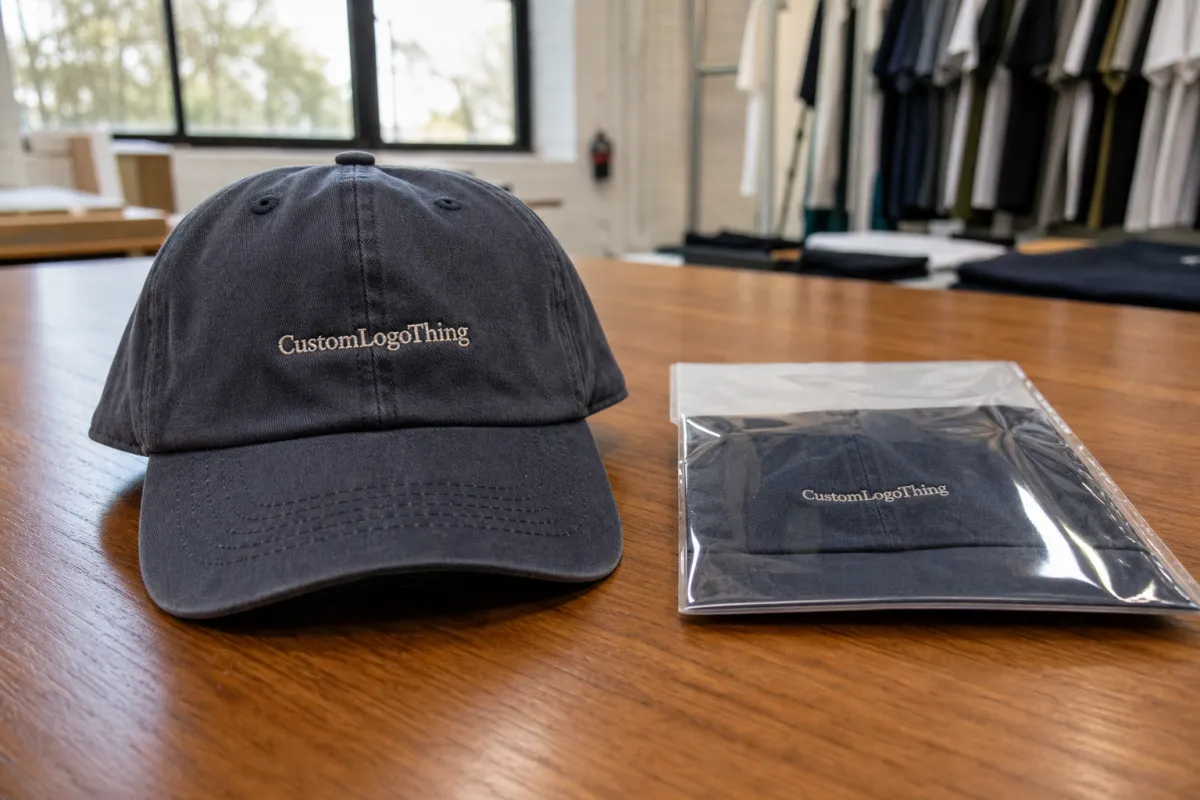
The point of the checklist is practical: catch the small decisions that shape the finished hat. A proof should show the logo on a soft front panel, not just floating on a blank screen. It should make the scale obvious and show how the decoration behaves when the crown falls naturally instead of standing upright like a structured cap.
That difference matters for trade shows, distributor kits, field uniforms, and launch giveaways, where people are close enough to notice if the logo sits too low, too close to the seam, or stretched across too much surface. A polished mockup can hide those issues. A good proof exposes them early, before a run of 250 or 500 units turns a small mistake into a costly one.
A useful proof answers the real production questions: placement, size, method, and the way the blank behaves under decoration.
Electronics brands usually want a clean mark with enough contrast to read from a short distance. That can become tricky when the artwork includes a fine circuit line, a narrow tagline, or a tiny icon that looks sharp on a laptop but collapses during digitizing. The proof should state plainly whether those details will stay intact or be simplified for production. That affects stitch quality, patch legibility, and whether the hat still looks like the brand approved it.
Use this stage to separate appearance questions from production questions. Appearance questions ask whether the hat looks right. Production questions ask whether the artwork can be built cleanly across a seam, whether the patch border is thick enough to hold detail, and whether the thread count supports the line weight. Both matter, but only one can be fixed after approval.
Strong buyers also ask for the same proof language every time. “Front centered, 2.25 inches wide, embroidery, white thread on navy cap” is usable. “Make it pop” is not. The more specific the review notes, the less room there is for interpretation later.
How the digital proof is built from your artwork file
A reliable proof usually starts with vector artwork. Clean paths give the decorator a stable base for scaling, digitizing, or laying out a patch. That does not guarantee a good result, but it reduces the chance that thin lines, awkward spacing, or jagged corners will need cleanup at the last minute. When a file arrives as a low-resolution JPEG, the proof phase often becomes a rescue operation before it becomes an approval step.
The proof should identify the hat color, decoration method, logo size, and placement in plain language. If the job uses embroidery, it should also show thread colors and, when relevant, note stitch count or digitizing direction. For patches, the proof should show shape, border style, attachment method, and any edge treatment. Buyers should never have to guess whether the quote covers a merrow border, a satin border, or a laser-cut edge.
When the logo is small or wraps near a side panel, ask for more than one view. A straight-on front image can hide the seam line. An angled or side view often catches problems that become obvious only after the first sample comes back. That is especially true on unstructured hats, where the crown does not hold a rigid shape and the decoration may appear to drift once the fabric relaxes.
- Artwork size: confirm width and height in inches or millimeters.
- Placement: confirm the center point relative to seam, eyelet, or panel line.
- Decoration method: embroidery, woven patch, leather patch, or print.
- Color callout: thread numbers, patch materials, or Pantone reference targets.
- Notes: minimum detail, seam interference, and any simplification required for production.
If revisions are needed, keep them in one place and tie them to a proof version number. Mixed notes are one of the fastest ways to stall an order. One stakeholder approves the size, another asks for a color shift, and nobody can tell which instruction is current.
For buyers comparing suppliers, it helps to confirm which decoration methods the shop actually handles in-house and which ones are outsourced. Our Manufacturing Capabilities page is a useful reference point for checking whether embroidery, patch work, and mixed decoration styles are supported without a lot of back-and-forth.
Fabric, structure, and decoration details that change the proof
Unstructured hats behave differently across fabrics. A washed cotton twill cap will drape more softly than a firmer canvas blank. Brushed cotton can mute color compared with a smoother surface. Even when the artwork stays identical, the finished impression can shift because the blank itself changes the way the decoration sits and catches light.
Crown depth and brim curve matter too. A low crown gives a more casual profile, while a slightly deeper crown can provide more room for the logo without crowding the front panel. Closure style changes the feel as well. A fabric strap with a metal buckle reads differently from a self-fabric slide closure. For internal staff orders, that may be a small detail. For client gifts or retail-facing programs, it can be part of the brand signal.
Decoration method changes the proofing lens. Embroidery needs enough space for clean stitch movement and enough contrast to keep small text readable. Woven patches can hold finer artwork, but the border and attachment method still need to be checked. Leather patches feel premium, though tiny elements can disappear in the material grain. Printed transfers handle gradients and multicolor art better, but the edge finish and wash durability deserve closer review. Each method has a different failure point, and the proof should call that out instead of hiding it behind a polished mockup.
| Decoration option | Typical setup fee | Typical add-on at 500 pieces | Best use case | Proof focus |
|---|---|---|---|---|
| Embroidery | $35-$65 | $0.80-$2.50 per hat | Clean logos, short text, durable branding | Stitch count, small details, seam placement |
| Woven patch | $50-$90 | $1.10-$3.00 per hat | Fine detail and compact artwork | Border style, edge quality, patch shape |
| Leather patch | $45-$85 | $1.50-$4.00 per hat | Premium gift kits and retail-style programs | Deboss depth, color contrast, attachment method |
| Printed transfer | $25-$50 | $0.70-$1.80 per hat | Gradients, multicolor art, lower-volume runs | Color shift, film edge, wash expectations |
Color deserves a realistic discussion. Screen images rarely match fabric under warehouse lighting, retail lighting, and daylight at the same time. If exact match is important, ask for Pantone targets or at least a defined close-match range. That one line can prevent a lot of avoidable disagreement later, especially on electronics programs where the brand palette is already locked to packaging, web assets, or event signage.
Packaging can affect the job too. A hat that passes proofing can still arrive with a crushed crown or scuffed patch if the shipping spec is too light for the route it takes. For programs that ship with inserts or folded collateral, some buyers ask for materials aligned with FSC-certified paper. Others look at ISTA test methods to reduce damage risk in transit. Those standards do not change the decoration itself, but they help protect the final presentation.
Process and turnaround: from proof review to production
A clean proof process usually follows a simple order: request, artwork review, digital proof, revision if needed, final approval, then production scheduling. The sequence sounds straightforward. The calendar is not. Even a small change to placement, stitch direction, or patch material can move the job behind other queued work, especially if the shop has to re-digitize embroidery or remake a patch plate.
The checklist helps because it keeps the review in the same order every time. That prevents vague feedback from taking over the conversation. Phrases like “make it cleaner” or “give it more energy” may help in an internal brand meeting, but they are weak approval notes. Production teams need measurable direction: width, height, thread color, border type, and exact placement.
Lead time depends on order size, decoration complexity, and the factory schedule on the day the proof is approved. A straightforward embroidered run may move into production within 12-15 business days after approval. Patch-heavy programs can take longer, especially if artwork revisions, sourcing, or sampling are involved. If the job is tied to a launch date, build in buffer time rather than assuming proof approval and ship date will stay fixed.
- Choose one internal approver before the proof arrives.
- Review the proof against the purchase order, not memory.
- Send all changes in one reply whenever possible.
- Ask for a revised proof if placement, color, or method changes.
- Approve only after the final version matches the written spec.
If the order supports a sales event or product launch, publish the approval deadline internally and outside the purchasing inbox. Missed approvals do more than delay production. They can create rush fees, split shipments, or a reduced decoration choice if materials are no longer available in time. None of those outcomes helps a brand that is trying to look deliberate.
Pricing, MOQ, and unit cost for custom dad hats
Pricing on custom dad hats usually combines blank cost, setup effort, decoration method, and packing requirements. A simple unstructured cotton twill cap may be affordable on its own, but the decorated piece is a different calculation. If the order needs multiple thread colors, a woven patch, a special closure, or custom labeling, the decoration can matter more than the hat body.
MOQ changes the math quickly. Setup costs are spread across the run, so a 50-piece order and a 500-piece order rarely land at the same unit price, even if the cap style is identical. In many programs, a buyer may see a 20-40 percent drop in unit cost as quantity rises, especially when the artwork is simple and the same decoration repeats across the whole batch.
Typical ranges help set expectations, though they are never fixed:
- Small runs: 25-100 pieces are workable, but the unit cost usually stays high.
- Mid runs: 250-500 pieces often give a better setup-to-price balance.
- Larger runs: 1,000+ pieces usually lower the decorated unit cost more clearly.
If a sample charge or proof fee applies, ask whether it is credited back on the final order. Some programs absorb that expense when production moves forward. Others keep it separate. Finance teams care about the difference, and procurement teams should compare quotes on the same basis or the numbers will mislead them.
The best comparison is always apples to apples. Compare the same cap style, the same closure, the same decoration method, and the same artwork treatment. A 100 percent cotton dad hat with simple embroidery should not be measured against a washed twill cap with a leather patch and custom back label. They are different products, even if they sit in the same promotional bucket.
For buyers working from an electronics Unstructured Dad Hats Digital Proof checklist, price and proof should be reviewed together. Otherwise, it is easy to approve a premium decoration method and then act surprised when the unit cost reflects it.
Common proof mistakes that trigger delays or reprints
The most expensive mistake is approving artwork before checking the small details. Spelling, punctuation, and tagline length can change the look once the logo is reduced to hat size. A line of text that appears crisp on a wide artboard can turn muddy on a 2.25-inch patch or a compact embroidery field.
Another common miss is assuming the proof already accounts for seams and crown curves. It often does not, at least not fully. On unstructured hats, the front panel relaxes in a way that can pull the eye away from the center point. If the logo sits too close to the seam, the decorator may need to shift placement or simplify the build so the finished piece looks balanced rather than forced.
Color language also causes trouble. “Navy” can mean different things across blanks, threads, patches, and screens. A proof may look close enough visually while the written spec calls for something else. That mismatch should be resolved before approval, because an order can be technically correct and still miss the visual target.
Saving the approved proof with the purchase order, decoration notes, and receiving checklist is not glamorous, but it pays off. That file becomes the reference point if a reorder needs to match the original job or if an inspection issue comes up later. It also gives everyone the same source of truth, which matters more than people expect once the production timeline starts moving.
For shipping-sensitive programs, confirm carton counts, polybag requirements, and outer-pack labeling before approval. A hat can be decorated correctly and still arrive with avoidable wear if the packing spec is too light for the route it travels. Small choices in packing often decide whether the final presentation feels sharp or sloppy.
Before signing off, run the checklist one more time: artwork size, placement, color callouts, decoration method, turnaround, and the exact hat spec. That last pass usually catches the mistake that would have turned into a reprint, a delay, or a long email chain after the goods were already in motion.
What should an electronics unstructured dad hats digital proof checklist include?
It should cover artwork size, placement, orientation on the crown, hat color, closure type, decoration method, and any notes tied to thread, patch, or print details. If the design has small text or seam-sensitive placement, those notes should be visible on the proof too.
Do digital proofs for unstructured dad hats show exact colors?
Usually they show the intended color, but screen rendering can shift what you see. If matching matters closely, ask for Pantone references, material callouts, or a physical sample. Treat the proof as a production guide, not a finished photo.
How long does it take to approve a digital proof for custom dad hats?
Simple proofs can move quickly if the artwork is clean and the spec is clear. Revisions add time, especially when placement, wording, or colors need adjustment. A single decision-maker almost always shortens the review cycle.
How does MOQ affect pricing on electronics promo hats?
Higher MOQ usually lowers the unit cost because setup is spread across more hats. Smaller runs can cost more per piece even if the blank is the same, and decoration complexity often matters more than the cap price on low-quantity orders.
What is the biggest mistake buyers make with proof approval?
They approve a mockup without checking small text, scale, or how the logo balances on a soft crown. They also skip the final comparison against the written order spec, which is where many avoidable misses are caught.