A good candle unstructured dad hats Digital Proof Checklist prevents the expensive kind of surprise: the one that does not show up until the carton is open and the hats are already packed for a launch. Artwork can look clean on a laptop screen and still print the wrong message once it is translated into thread, patch material, or label placement. Unstructured dad hats are especially unforgiving in that way because the soft crown changes proportion, and a logo that reads balanced in a flat mockup can sit oddly low or feel too large on the actual blank.
For candle brands, the hat often carries more weight than a simple giveaway. It may sit in a gift bundle, appear in a retail display, or travel inside a subscription box beside glass, wax, and inserts that already have their own fragility. That makes proof approval less about aesthetics and more about production control. The goal is not to approve something that looks close enough. The goal is to approve the exact combination the factory can reproduce consistently.
A proof is not decoration. It is the production instruction sheet with a visual face.
The strongest buyers treat the proof like a contract for dimensions, placement, and finish. They do not rely on memory, and they do not assume a supplier will infer the missing details. That discipline is what keeps reorders from drifting.
What a candle unstructured dad hats digital proof checklist should catch
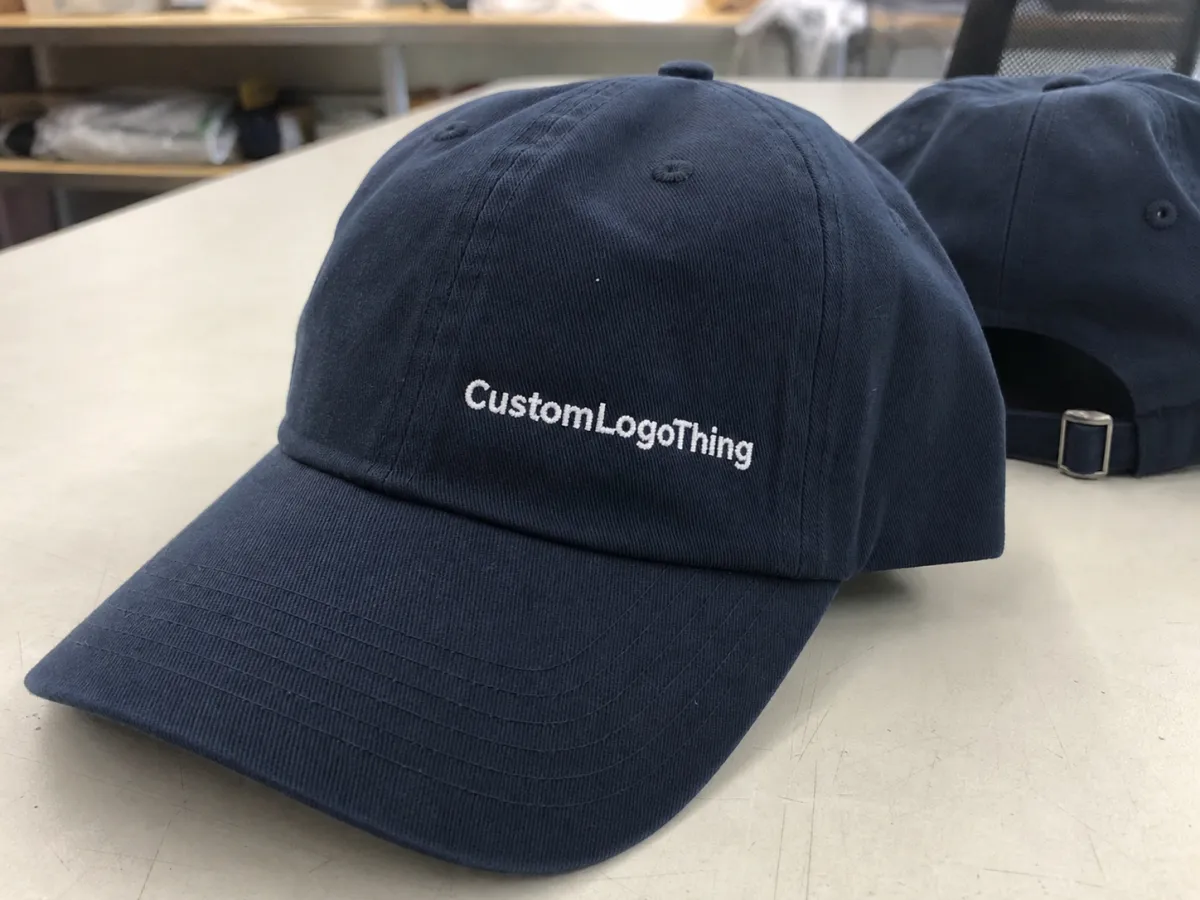
The biggest hat issues are usually small, not dramatic. A logo can be technically centered and still feel too low because the crown is shallow. A thread color can match the brand palette in daylight and still look muddy on a washed navy blank. A closure can shift the profile enough that the hat reads more casual than intended. A thorough checklist catches those mismatches before anyone signs off.
Start with the exact blank. Unstructured Dad Hats are not all the same, and that matters more than most first-time buyers expect. A 6-panel cotton twill cap with a self-fabric strap behaves differently from a garment-washed cap with a metal buckle. Crown depth, panel shape, and brim curve all affect how the decoration sits. If the supplier’s proof uses a generic cap outline, ask for a mockup that matches the specified blank.
Then confirm the production details that determine how the final hat looks in hand: logo size, stitch count, front placement, side or back decoration, thread colors, and any seam interference. If the artwork crosses a panel seam, the sewout may need to be shifted or simplified so the machine can stitch cleanly. Fine lines that look elegant in vector form often need thickening once they meet thread tension and fabric movement.
Use the checklist for reorders as well. Consistency is easier to maintain when the approved proof becomes the reference for future runs. Without that record, each reorder becomes a new discussion about the same cap.
What should appear on the proof
The proof should show the hat color, decoration location, approximate final dimensions, thread colors, and the method of decoration. If the logo has been simplified, resized, or moved to avoid a seam, that change should be obvious. A good proof answers the practical questions before production starts.
Look for notes about the decoration type too. Flat embroidery, puff embroidery, woven patch, leather patch, or woven label each has different constraints. The visual mockup matters, but the production notes matter more.
How the digital proof approval process works
The process usually starts with artwork intake. The supplier checks whether the file is vector, whether text has been outlined, and whether the logo can be digitized without losing legibility. If the art is a low-resolution raster file, the shop may still be able to work with it, but proofing tends to take longer because portions of the design may need to be rebuilt before stitch mapping begins.
Next comes the digital proof. This is the first time the buyer sees the logo translated onto the actual hat style, with approximate size, placement, and decoration notes. A useful proof names the decoration method directly: center-front embroidery, left-panel placement, sewn patch, or label application. A vague mockup is easy to approve and difficult to produce accurately.
The best approval process is specific about version control. Record which file was approved, the date, and who signed off. If there are multiple decision makers, one person should own the final response. Otherwise, revisions get scattered across email threads, and the approved version can drift away from the one the shop actually makes.
If something looks off, ask for the correction before approval. A quarter-inch placement change or a thread color adjustment is simple in the mockup stage. After digitizing, sample stitching, and production scheduling, the same change can ripple into delays. That is why proof review is less about being agreeable and more about being exact.
Good proofing usually answers three questions with no guesswork: What hat is being decorated? Where does the branding sit? What exactly will be stitched or attached?
Good approval habits
- Review the proof at actual size, not only on a phone.
- Check closure type, panel alignment, and decoration notes line by line.
- Keep one person responsible for final sign-off.
- Save the approved proof with the quote and purchase order.
- Ask for a revised mockup if any seam, stitch, or size detail is unclear.
If the order includes retail packaging, shipper cartons, or subscription inserts, it helps to think one step ahead. The International Safe Transit Association publishes widely used packaging test methods, and ISTA is a practical reference for understanding how cartons and packed goods handle vibration, compression, and distribution stress. That is not decoration work, but it matters once the hats are moving through a real fulfillment chain.
Fit, fabric, and decoration specs that change the final hat
Unstructured Dad Hats are popular because they feel easy, broken-in, and less stiff than a structured cap. That softness is part of the appeal, but it also changes the way decoration behaves. The same logo that looks crisp on a firm blank can sink slightly into a softer crown unless the backing, stitch density, and thread direction are chosen with the fabric in mind.
Crown depth is one of the most overlooked variables. A shallow crown frames a logo differently than a deeper one, and a lower-profile hat can make a front mark appear wider or more compact than expected. Brim curve matters too. A flatter bill reads more relaxed, while a pre-curved bill can make the whole silhouette feel smaller and more casual. The proof should reflect the actual profile, not a generic hat drawing.
Fabric choice has a direct effect on production quality. Cotton twill is common because it is predictable and holds embroidery well. Garment-washed cotton gives a softer retail look, but that wash can make fabric response less uniform from blank to blank. Brushed twill may feel premium, though the nap can alter how thread sheen reads under light. Blends can be fine, but they introduce another variable if the buyer expects the same result as a pure cotton cap.
Decoration method deserves equal attention. Flat embroidery is the simplest and usually the most economical. Puff embroidery creates height, but it is less forgiving on small text. Patches can hide some stitching limitations and give the hat a stronger retail feel, though they add setup and material cost. Woven labels and side labels work well when the brand wants a subtler finish. None of these choices is automatically better. The right one depends on the artwork, the hat profile, and the budget.
Small text is where many proofs fail quietly. Anything under about 0.2 inches in letter height can become hard to read once it is translated into thread, especially on a soft crown. Thin lines, tight counters, and tiny symbols often need simplification. Buyers who catch that during proofing save themselves from a box of hats that look technically correct and visually weak.
Material finish also changes the final perception of quality. A washed, relaxed hat looks authentic, but it can also show slight color variation more readily than a firmer chino twill cap. If the brand wants a premium retail impression, it may be worth comparing a softer blank with a slightly more structured one before production begins. The right blank often matters more than an extra embroidery color.
Specs that deserve a red pen
- Hat profile: unstructured, low-profile, or mid-profile.
- Fabric: cotton twill, garment-washed cotton, brushed twill, or blend.
- Decoration: flat embroidery, puff embroidery, patch, woven label, or sewn-on badge.
- Placement: center front, side panel, rear arch, or under-brim.
- Closure: strap, buckle, snap, or hook-and-loop.
Cost and pricing factors for candle hat orders
Hat pricing is shaped by more than quantity. The blank, the decoration method, stitch count, digitizing, revision count, packaging, and freight all influence the landed number. A clean one-color logo on a basic cotton dad hat is inexpensive relative to a multi-color patch with small type, but even the simple version can become costly if the order is tiny or rush timing is involved.
For a run of roughly 300 to 500 units, a basic embroidered dad hat often falls somewhere around $6.50 to $12.50 per unit, depending on the blank quality and decoration complexity. That is a practical range, not a promise. A custom patch, woven label, or special finish can move the number upward. Digitizing commonly lands in the $35 to $85 range for standard logos, with more complex artwork costing more. Samples, if requested, can add another line item.
Low minimums deserve a careful read. They look attractive because the commitment is smaller, but the unit cost usually rises as setup is spread across fewer hats. Some quotes include proof revisions and digitizing. Others treat those as separate charges. A quote that looks cheaper upfront may not stay cheaper once the full scope is added back in.
There is also a difference between price and value. A slightly more expensive blank that holds embroidery well can save money by reducing revisions, rejected samples, or quality complaints after delivery. For candle brands, especially those bundling hats with other products, a reliable finish usually matters more than shaving a dollar off the unit cost.
The cleanest way to compare suppliers is to standardize the request: same blank style, same logo file, same decoration method, same delivery timeline, and same packaging expectations. If those variables are not matched, the quotes are not really comparable.
| Option | Typical use | Setup impact | Cost tendency |
|---|---|---|---|
| Flat embroidery on front panel | Simple logo, clean brand mark | Low | Lowest per unit |
| Multi-color embroidery | Detailed logo with several thread changes | Moderate | Mid-range |
| Custom sewn patch | Retail-ready look, more texture | Moderate to high | Mid to higher |
| Woven label or side label | Subtle branding, restrained finish | Low to moderate | Usually efficient add-on |
If budget pressure is real, simplify the art before cutting the quality of the blank. Clean embroidery on a good cap almost always looks better than complicated decoration on a weak one.
Lead time, production steps, and shipping milestones
A typical order moves through artwork review, proof approval, digitizing, sample confirmation if needed, production, finishing, packing, and shipment. For a standard run with clean artwork and quick approval, production often takes 12 to 15 business days. More intricate logos, custom patch work, or special labels can stretch that window. Rush orders can compress the schedule, but they often increase price and reduce flexibility on revisions.
The slowest part is often not the machines. It is the gap between proof issue and proof approval. If multiple people need to comment, the schedule can stall for days even when the factory is ready. That delay matters because production often cannot begin until digitizing is locked and the decoration method is confirmed.
For launch tied orders, build extra room into the calendar. Seasonal candle bundles, wholesale introductions, and event kits frequently involve several approval layers. A supplier can be efficient and still be blocked by internal decision making on the buyer side. Asking for milestone updates keeps the schedule honest. A useful update should say when art review is complete, when digitizing is complete, when production begins, and when packing is finished.
Shipping is another point where small planning errors become expensive. If hats are packed too loosely, they can lose shape in transit. If cartons are overfilled, crowns can crush. If the outer carton is too large for the contents, you pay for dead space and increase handling risk. Even simple goods benefit from disciplined packing. A hat may be soft, but the finished presentation should not feel soft.
Milestones worth tracking
- Artwork received and checked.
- Proof issued with exact decoration notes.
- Approval recorded and digitizing locked.
- Production and finishing complete.
- Cartons packed, labeled, and shipped.
Common mistakes to avoid before approving the proof
Do not approve a proof that uses the wrong blank profile. A logo can be the right size and still look wrong if the cap is taller, firmer, or more curved than the one you intended to order. That mismatch is common because mockups often flatten the personality of the hat into a tidy image that hides the actual shape.
Do not trust screen color alone. Fabric texture, thread sheen, and ambient light all alter how a color reads. Warm neutrals, washed black, olive, and natural cotton are especially prone to shifting in appearance between screen and hand. If color is critical, ask for Pantone references, thread charts, or a sample before full production.
Do not skip placement notes. A front logo that looks centered on a mockup can still sit too high or too low on the real crown because seam placement changes from blank to blank. Side and rear details need the same level of attention. A small offset can make the hat feel balanced or awkward.
Do not let several people approve different versions. One person should own the final response. Otherwise, you risk stitching the wrong file because comments were spread across email, Slack, and forwarded screenshots. The cleanest process is often the least social one.
Do not assume a sample automatically reflects the production run. Some factories sample with slightly different material lots or thread batches. That is normal, but it means the approved sample should be treated as a reference, not a guarantee that every single unit will match it perfectly.
Most proof failures are communication failures wearing a design problem’s clothing.
Reading the proof against the spec sheet line by line is the safest habit. Blank style, closure, hat color, decoration method, thread colors, quantity, and packaging should all match. The more exact the comparison, the fewer expensive corrections later.
Next steps before you place the order
Gather the source files first. Vector artwork is best, followed by clear font references, color references, quantity estimates, and the exact hat style. If the logo contains fine type or thin strokes, flag that early. What looks elegant in a brand deck may not hold up in stitching on a soft crown.
Ask for the supplier’s revision limit, sample policy, and production schedule in writing. Those details are part of the buying decision, not administrative noise. If the quote includes free proof revisions but charges separately for a sewn sample, that can still be a fair setup as long as it is disclosed before approval.
Review the proof at actual size. A phone screen can compress the details just enough to hide a problem that will be obvious on a desk. Place the mockup beside the spec sheet and confirm the spacing, logo scale, and decoration notes. That extra minute is cheap protection for a run that may already be tied to packaging, retail timing, or a seasonal launch.
Save the approved proof, quote, PO, and notes together so the candle unstructured dad hats Digital Proof Checklist becomes a repeatable reference instead of a one-time judgment call. That habit makes reorders cleaner, shortens approval time, and keeps the final hats more consistent from one run to the next.
Frequently Asked Questions
What should a candle unstructured dad hats digital proof checklist include?
It should confirm the exact hat style, color, closure, crown shape, logo placement, logo size, thread colors, stitch type, and any finishing notes such as patches or labels. The approved version should stay attached to the quote so future reorders follow the same standard.
How long does a digital proof for unstructured dad hats usually take?
Simple artwork can move quickly, but complex logos, low-resolution files, or multiple revision rounds will slow things down. The buyer’s response time matters too, because even a fast supplier cannot move the job forward if approval is delayed.
What affects the price of custom candle dad hats the most?
Decoration complexity, stitch count, thread changes, blank quality, and the number of units are the biggest drivers. Low quantities usually carry a higher unit cost, and add-ons like custom patches, woven labels, or rush service can change the final quote quickly.
Can I trust a digital proof if the hat color looks slightly different on screen?
You can trust the proof for layout, placement, and general decoration logic, but not for perfect color matching. A screen cannot fully show fabric texture, thread sheen, or how the hat will read under different lighting, so ask for swatches or a sample if color is critical.
What files should I send to speed up the proof process?
Send vector artwork if you have it, plus font notes, color references, quantity estimates, and the exact hat style you want. If the logo has fine type or thin lines, mention that early so the art team can flag readability issues before the proof is built.
The value of a candle unstructured dad hats Digital Proof Checklist is simple: it keeps the order grounded in the actual hat, the actual decoration method, and the actual production path, so the final piece looks right the first time and stays right on later runs.


