The wedding trucker caps Digital Proof Checklist sounds like paperwork until a tiny mockup mistake becomes a real event problem. A logo that looks centered on a laptop can land a little high on a structured foam front, or sit too close to the seam once the cap is actually sewn and curved. That kind of shift is easy to miss on screen and obvious in photos.
Wedding orders are less forgiving than general promo runs because the content is personal. Names, dates, and role titles do not leave much room for approximation. A misspelled couple name or a late date change turns a simple proof into a costly correction, especially if the order is already in the production queue.
That is why a good proof review works less like a design preference and more like a risk filter. It catches placement errors, color mismatches, decoration-method problems, and timeline drift before a cap is cut, stitched, or packed. The savings are not only financial. It also avoids the last-minute scramble that happens when a wedding date moves faster than production can.
Wedding trucker caps digital proof checklist: what catches errors early
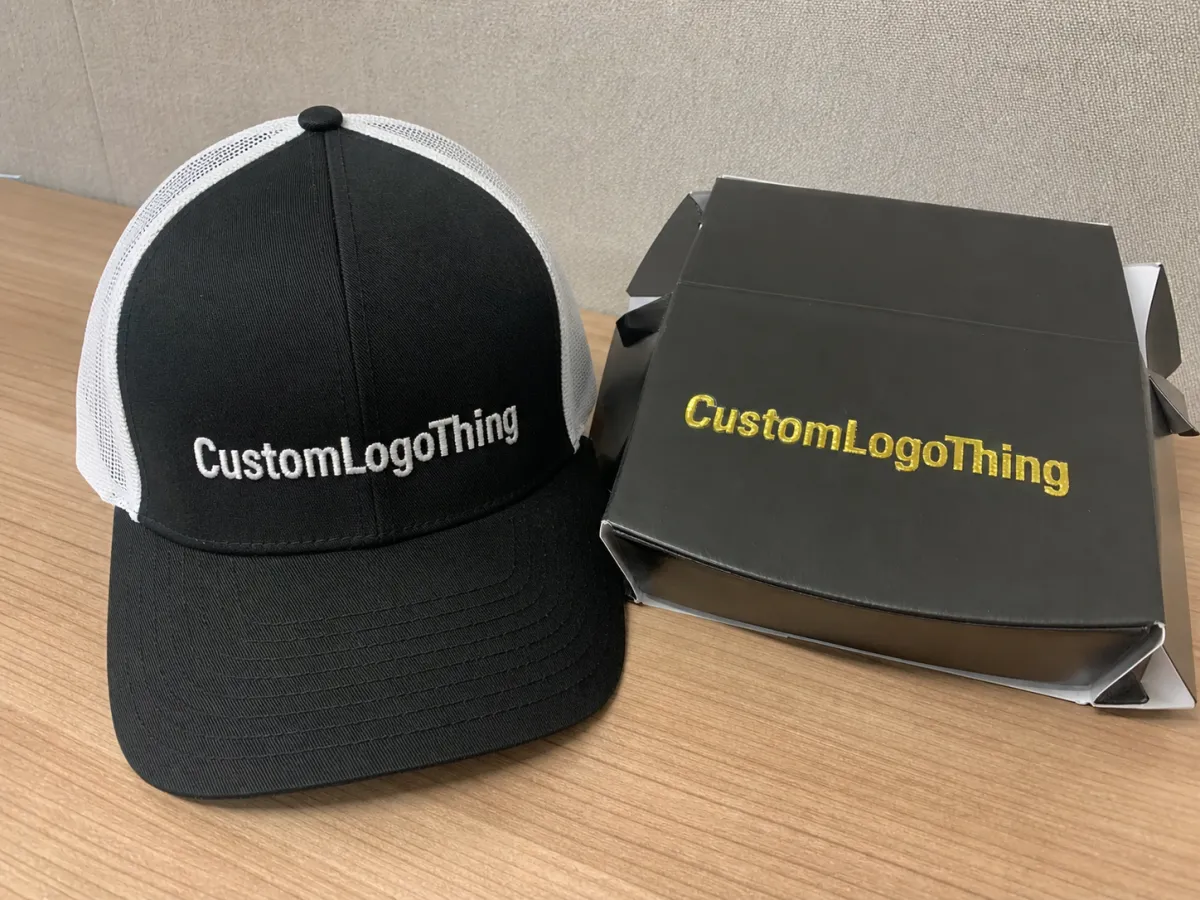
The first problem most buyers notice is placement. A front-panel logo that looks balanced in a PDF can feel slightly left, too low, or compressed once it sits on a curved foam crown. Flat screens hide a lot. A cap worn by someone walking, turning, and posing does not.
Wedding pieces are especially unforgiving because the message matters. A corporate cap can survive a loose slogan. A wedding cap has to carry exact spelling, exact date, and usually a tone that feels celebratory rather than promotional. One wrong character is enough to make the whole order feel careless.
There are a few recurring proof traps that show up again and again. A center seam can split artwork. A mesh back can make a large mark feel too heavy. A low-profile fit can force the design lower than the buyer expects, which changes how it reads in group photos. Small text that looks readable on a monitor may disappear once embroidery, foam texture, or distance enters the picture.
“If the proof barely works on a screen, it usually works worse on a cap. The screen is the easiest part.”
The practical part of the review is simple: check what will be visible from three feet away, then check what will still be legible in a candid photo. That is the difference between a proof that looks finished and a cap that actually holds up during a reception, rehearsal dinner, or welcome event.
One missed revision can cost more than the design fix itself. Reprints, expediting, and reshipping are the obvious costs. The less visible cost is schedule pressure. Even a single extra proof round can push an order out of a production slot, and wedding dates do not move to accommodate a factory queue.
Proof process, timeline, and turnaround from upload to approval
A clean proof process should feel predictable. Upload the artwork, let the vendor review the file, receive a digital mockup, request changes if needed, approve the final layout, then release the order to production. Each step is straightforward. Each step can also slow down if the source file is weak or the instructions are vague.
- Artwork upload: Send the best available source file, preferably vector art or a high-resolution transparent file.
- Vendor review: The producer checks legibility, placement, decoration method, and size limits.
- Digital mockup: The design is placed on the exact cap style, color, and decoration area.
- Revision cycle: The buyer confirms spelling, spacing, color, and any move or resize request.
- Final approval: The proof is signed off in writing and sent to production.
Turnaround depends on three things more than anything else: file quality, decoration method, and revision count. Simple printed layouts can often move in one business day if the artwork is ready. Embroidery usually takes longer because thread color, stitch count, and small text limits need more review. If the design includes multiple names, layered artwork, or mixed decoration locations, expect the proof stage to stretch.
Ambiguous instructions slow everything down. “Make it nicer” is not a production note. “Bride squad in white thread on a black foam front, centered just above the seam” is. Clear copy usually removes one revision cycle, sometimes two. It also helps to specify the role set up front: bride, groom, maid of honor, best man, family crew, or whatever the cap needs to say.
For wedding timing, the smart move is to approve earlier than you think you need to. A practical window is 7-10 business days before the event when the order is simple and the art is clean. Add more cushion if the job includes embroidery, multiple versions, split shipments, or packaging extras. Rush production is useful, but it cannot rescue a wrong proof.
Packaging and transit can matter too. Standards from groups like ISTA are a useful reminder that shipping is part of the quality chain, not an afterthought. If the order includes printed inserts, tags, or presentation packs, paper sources such as FSC can matter as well.
Cost, pricing, and MOQ: where proof edits change the quote
Proof edits can change the price faster than buyers expect. The mockup itself may be included, but extra revisions, special placement requests, added decoration locations, or last-minute copy changes can alter the quote. Moving a logo from the front center to a side panel is not a small adjustment. It usually means a different setup, different positioning, and sometimes a different cost structure.
MOQ, or minimum order quantity, is another common surprise. A wedding party of 18 may want matching hats, but a supplier might price 24 or 48 pieces more efficiently because the setup cost is spread across more units. That does not mean smaller orders are impossible. It means the unit price often climbs when the run size falls below the vendor’s break point.
| Proof choice | Typical use | Price impact | Time impact |
|---|---|---|---|
| Single layout, no revisions | Clean logo, exact copy, one decoration location | Usually stays close to base quote | Fastest path to production |
| Minor revision | Small move, spelling correction, or color tweak | Often included, sometimes one extra round | May add 1-2 business days |
| Material or placement change | Side hit, back hit, or larger front art | Often increases unit cost | Usually needs a new mockup |
| Rush proof and rush production | Short wedding timeline | Commonly adds a surcharge | Compresses the review window |
The quoted price and the final bill are not always the same thing. Upgraded shipping, thread changes, art cleanup, and a new proof after a major revision can all add expense. The cleaner approach is to ask for a revised quote any time the proof changes in a meaningful way. That keeps the buyer comparing real numbers instead of assuming the original total still applies.
This is where the wedding trucker caps Digital Proof Checklist earns its keep. It stops a buyer from approving a layout that looks fine visually but quietly shifts the job into a more expensive category. With wedding orders, that matters because the budget is usually set before the guest list stops changing.
Typical decorated wedding trucker caps often land in the high single digits to the low twenties per piece, depending on quantity, decoration type, artwork complexity, and packaging. Blank caps are much less, but blank pricing does not tell the full story. Digitizing, setup, special thread matching, or individually packed presentation can move the total more than the hat itself.
Artwork specs that matter most on foam fronts and mesh backs
The best proof starts with the right file. Vector art is the cleanest path for logos because it scales without soft edges or pixel blur. If the design includes type, the font should be outlined or supplied with the file so nothing substitutes unexpectedly. Thin script, hairline strokes, and delicate serifs can look elegant on screen and fail quickly once embroidery or foam texture enters the job.
Construction matters just as much as the art. Structured foam fronts can carry bold graphics well, but they do not forgive tiny detail. Mesh backs keep the cap visually lighter, which means a heavy logo can feel top-heavy if it is too large or too low. A center seam can also split artwork in ways that are not obvious until the proof is placed on the actual cap shape.
There is also the viewing-distance problem. Guests will see these caps in mirrors, group shots, and across a reception room. A design has to work close up and from several feet away. That is why a mark that reads well on a 27-inch monitor can still be too small in a candid photo. For wedding merch, clarity beats ornament.
Color is another trap. Screen brightness, thread charts, and print renders all tell slightly different stories. PMS references help when exact color matching matters, but thread and ink still behave differently from digital artwork. The proof should be judged against the production method, not against a laptop display in bright room light.
Cap style matters too. A higher crown gives more room for art and often reads better in photos. A lower-profile cap can feel sharper and more modern, but it leaves less room for big lettering. If the order uses foam fronts, assume the decoration field is more limited than the flat artwork file suggests. The proof should show that limitation honestly, not hide it.
If the order includes presentation packaging, paper-stock choices matter there as well. FSC-certified paper can be a sensible option for tags, inserts, and boxes. It will not change the cap itself, but it can change how the full package is received.
Step-by-step checklist for approving wedding cap proofs
Use the checklist in the same order a production manager would. That is the easiest way to catch mistakes before they become expensive.
- Read every word out loud. Check the couple names, venue name, date, and any role-based wording such as bride crew or groom squad.
- Confirm the cap style. Make sure the proof shows the actual front shape, crown height, closure, and color you ordered.
- Check placement first. Verify centering, distance from the seam, and whether the logo sits high or low on the front panel.
- Measure the scale. Make sure the logo is large enough to read in photos but not so large that it overwhelms the cap.
- Match the decoration method. Embroidery, print, and patch applications do not read the same, even when the mockup looks close.
- Review colors against notes. Confirm thread color, ink color, backing color, and any contrast concerns.
- Inspect revisions line by line. Do not assume a requested change was made just because the proof looks different.
- Save the final approval. Keep the approved PDF, quote, and revision notes together in one folder.
Order matters here. Spelling and date errors are the first thing to catch, but layout usually comes second. A logo can be technically correct and still look wrong if it sits too close to the brim or too far toward one side. Wedding guests may never say why it feels off. They just notice it.
Another useful step is to compare the proof against the event plan. If the caps go in welcome bags, the design should read cleanly from above. If they are meant for photos, contrast matters more than intricate detail. If they will be worn through a long reception, comfort and fit matter because the hat stays on heads for hours, not minutes.
Read the proof notes as carefully as the art. A layout can look close enough to pass while the notes still describe a different decoration method, cap color, or finish. That is where approval mistakes happen: the visual looks right, but the build instructions do not match the order.
Common mistakes that delay wedding cap approval
The classics still cause the most trouble. A typo gets approved because everyone is looking at the logo and nobody is reading the date. A date changes after the first proof, but nobody flags the revision. A cap that is too small to read in photos gets accepted because it looks fine on screen. Each one is avoidable, and each one shows up often enough to be predictable.
Vague feedback also creates delays. “Move it a little” sounds harmless, but production teams cannot guess what “a little” means. Left, right, up, down, bigger, smaller, more contrast, less text, different thread? Every unclear note can trigger another proof round. In a wedding timeline, another round is not free.
Color confusion is subtler. A thread sample viewed in daylight and a mockup viewed on a phone at night are not comparable references. The eye adjusts for lighting in ways a screen cannot. If color accuracy matters, compare the proof under similar lighting and ask for thread references or material swatches before approval.
Rushed signoff creates its own problems. One person checks the proof quickly, assumes a planner or sibling will catch issues, and the order moves forward. That is risky. Wedding caps deserve a second set of eyes because the content is personal and the schedule is tight. A two-minute review now is better than a two-day correction later.
Another overlooked issue is assuming that every proof revision carries the same meaning. A cap can look nearly identical after a change while the production note underneath has shifted the order in a material way. If the notes say embroidery and the buyer assumes print, the mockup may still pass visual inspection while the actual build is wrong.
Expert tips before you release the order
The strongest habit is a two-person review. One person checks factual accuracy: spelling, date, names, order count, cap color, and ship window. The other checks visual logic: centering, scale, spacing, and whether the art still looks right on the cap style shown in the mockup. Two different eyes catch different mistakes.
Keep the paper trail clean. Save the approved proof, the quote, and the revision notes in one place. If production questions come up later, you will not be searching through email threads to reconstruct what was agreed. That is especially useful with wedding orders, where multiple people often weigh in before final approval.
It also helps to set a hard approval deadline several business days ahead of the latest acceptable ship date. That cushion is not extra time for indecision. It is the space that allows one correction without putting the event at risk. A wedding date is fixed. Production schedules are not.
If you are comparing vendors, ask how they handle art setup, revisions, packaging, and final signoff. Clear suppliers answer in specifics: how many proof rounds are included, what file types they want, what adds to the cost, and how long production usually takes after approval. That tells you more than a polished sales page ever will.
For buyers who need one production path from mockup to shipment, the point is not to overcomplicate the order. It is to reduce preventable errors. That is what a careful wedding trucker caps Digital Proof Checklist does: it protects the design, the budget, and the event date in one pass.
What should I check first in a wedding trucker caps digital proof?
Start with spelling, the event date, and the exact names or roles printed on the cap. Then confirm the logo size and placement on the actual cap style shown in the mockup. Finally, read the proof notes to make sure the decoration method matches what you ordered.
How long does proof approval usually take for wedding trucker caps?
Simple proofs can move quickly if the artwork is clean and the buyer responds the same day. Embroidery, multiple revisions, or unclear instructions usually add at least one more review cycle. Build approval time into the schedule before production starts so the wedding date stays safe.
Can the digital proof show the exact thread color for wedding caps?
A screen mockup is directional, not a perfect match for physical thread. Ask for thread references or PMS guidance if exact color matters. If possible, review the proof under lighting similar to the event or packaging photo setup.
What changes usually increase pricing on a wedding cap proof order?
Extra revisions, rush production, and upgraded shipping are the most common add-ons. Special placement requests or extra decoration locations can also raise the unit cost. A small order may cost more per cap if the MOQ is not fully met.
What if my wedding date is close and I still need to approve the proof?
Approve only when the artwork, spelling, and ship date are confirmed in writing. Ask the vendor whether stock, production time, and shipping windows still support the event. If the timeline is tight, keep revisions minimal and request the final proof right after each change.


