Electronics Woven Label Beanies Material Sample Guide
Most buyers start with the knit body, but the label usually decides whether a beanie feels finished or merely produced. That is why an electronics woven label Beanies Material Sample guide should begin with the physical sample, not the mockup. The sample shows how fine brand detail holds up in real light, how the cuff sits under tension, and whether the logo still reads after the fabric stretches. Screens hide those variables. Production does not.
For electronics brands, the stakes are a little different from a generic apparel run. Logos often rely on tight geometry, small text, restrained colors, and a very specific sense of precision. A beanie can be warm and functional, but if the label looks fuzzy, the whole piece feels off. Buyers usually discover that only after touching the sample.
That matters for retail launches, service uniforms, employee kits, and event giveaways. Each use case tolerates a different balance of comfort, visual polish, and cost. A conference piece may need speed and controlled spend. A retail piece may need sharper construction and stricter color matching. A workwear item may care more about warmth and wearability than about a perfect edge finish. The sample is where those tradeoffs become visible.
What to check first in a sample review
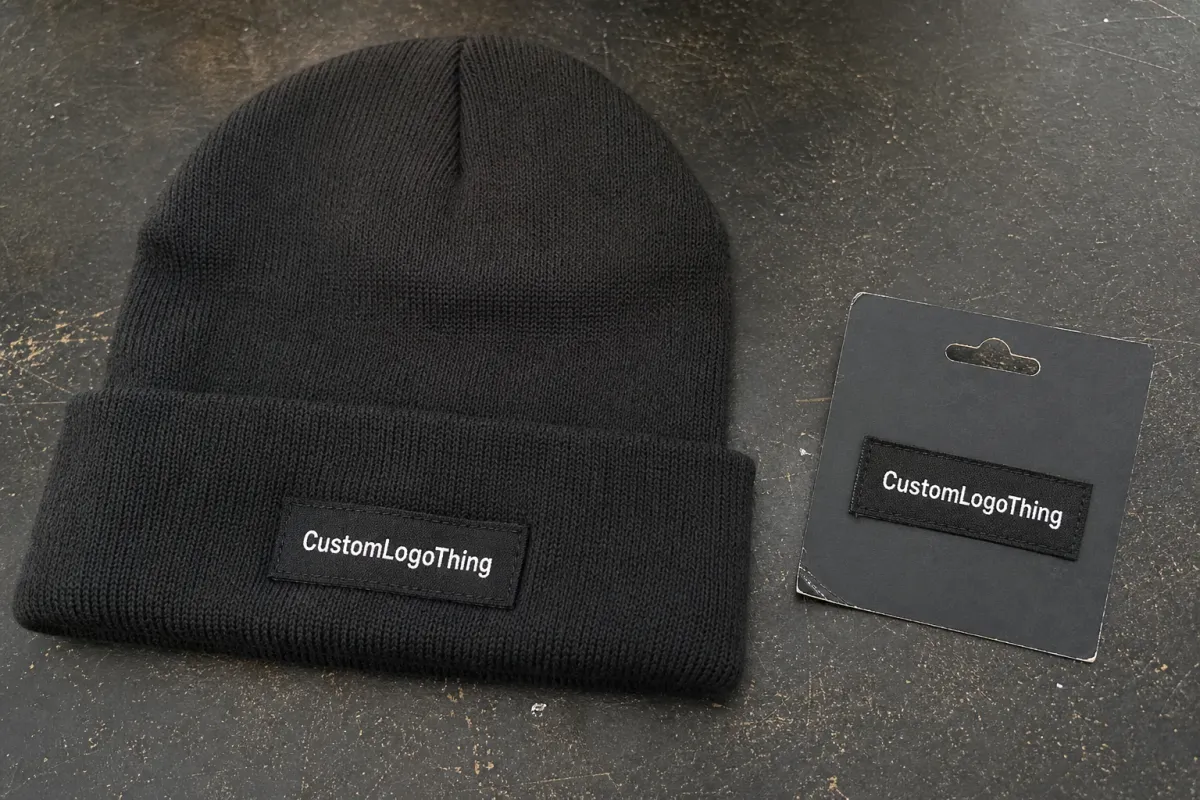
A material sample is a test piece, not a promise. It may be a swatch, a partially finished beanie, or a pre-production cap that shows the yarn, knit density, label hand, and color tone under actual lighting. That physical version is valuable because it reduces avoidable disagreement between sourcing, merchandising, operations, and brand review. Everyone can point to the same object instead of arguing over adjectives.
In practice, the first pass should answer a few blunt questions. Does the beanie feel too tight or too loose? Does the label sit flat, or does it curl at the edges? Does the brand mark still read cleanly at arm's length? Does the color stay within the expected family under daylight and office LEDs? Those checks sound basic, but they catch most approval problems early.
It also helps to look at the sample in context. A branded beanie rarely ships alone. It may sit beside a jacket patch, a device box insert, or a wider product bundle. A sample that looks acceptable on a desk may feel mismatched once it is placed next to the rest of the program. That is why buyer teams often check the beanie against the other branded items before approving bulk.
If the packaging is part of the experience, review that at the same time. Kraft paper sleeves, recycled inserts, and corrugated cardboard mailers are not decoration; they shape the first impression. For some programs, a simple internal review kit is enough. For others, the sample needs to reflect the presentation standard closely enough to avoid surprises later.
One useful rule: do not separate the product from the use case. A winter staff beanie, a retail accessory, and a promotional giveaway are not the same object just because they share a logo. The sample should answer the exact question the order is trying to solve.
How samples reveal fit, hand feel, and label clarity
Woven labels behave differently on knit fabric than they do on flat paper or woven apparel panels. A smooth gauge usually preserves tiny text better. A looser knit can create a slight wave near the label, which makes a crisp logo feel less exact. That is not automatically a defect. Some products benefit from a softer, more relaxed appearance. But if the brand depends on a precise wordmark or small icon, the sample has to prove that the label still reads cleanly.
Hand feel deserves equal attention. Buyers should check softness, stretch recovery, seam pressure, and whether the label edge scratches the skin. Turn the beanie inside out. Press the label against the cuff. Pull the knit and let it recover. Wear it for ten minutes, not ten seconds. If the label feels harsh in a short test, it usually becomes more noticeable after repeated use.
Color is another place where the sample can contradict the render. Electronics brands often work inside a narrow palette: charcoal, black, navy, graphite, silver, and a few accent tones. Those shades are hard to judge on screen because textured yarn absorbs light differently than a flat digital swatch. A dark thread can swallow fine lines. A metallic accent can flatten under warm indoor light. Hold the sample under daylight, office LEDs, and a softer warm source. If the logo still holds up in all three, the color is probably close enough.
The sample is not there to flatter the design. It is there to tell you the truth before the production run makes that truth expensive.
That truth matters for cross-functional review as well. Merchandising may focus on visual finish. Procurement may focus on repeatability and price. Operations may care about packing speed and delivery timing. A physical sample gives each group something real to evaluate, which cuts down on circular debate later.
Label placement should also be measured, not just described. A side-panel label that sits 5 mm higher or lower can change the balance of the entire piece. On a cuff beanie, the same shift can change comfort, especially if the edge lands where the head bends most. These are small numbers with large consequences.
Material, stitch, and finish factors that change the result
The beanie body carries more of the final impression than many first-time buyers expect. Acrylic remains common because it is predictable in price, stable in color, and easy to scale. Cotton blends feel softer and breathe better, though they usually do less for winter insulation. Wool blends bring a more natural hand and better warmth retention, but they tend to raise both cost and care sensitivity. Recycled fibers can strengthen a sustainability story, yet the yarn construction and finishing process matter more than the recycled claim alone.
The stitch pattern changes the look and the fit. Rib knit usually stretches well and gives the woven label a cleaner frame. Jersey knit can look smoother, but it may distort more once the fabric relaxes. Fisherman-style or chunkier knits feel more substantial, though they can make small label details harder to read because the surface is less uniform. Fleece-lined constructions improve warmth, but they also change seam behavior and can push the label into a different contact point on the head.
Finish details matter just as much as fiber choice. Damask woven labels are often the safest option for small type because they hold detail better than many printed alternatives. Satin can look more polished in certain brand systems, but a glossy face is not always the best answer if the mark uses fine lettering. Edge treatment matters too. Folded edges usually feel cleaner against the skin. Cut edges can be acceptable, but only if placement and backing reduce irritation.
Ask for yarn weight, shrinkage risk, colorfastness expectations, and confirmation that the sample comes from the same material source intended for bulk. If the sample was made from one yarn lot and production uses another, the sample becomes less useful as a reference. The best samples are close to the actual run, not merely similar from across the room.
| Sample type | Best for | Typical turnaround | Typical sample cost |
|---|---|---|---|
| Stock yarn swatch | Fast color and texture checks | 2-5 business days | $15-$40 |
| Pre-production cap | Fit, label placement, wear testing | 7-15 business days | $40-$120 |
| Fully custom prototype | Complex label detail and final approval | 10-20 business days | $80-$180 |
The table above is a practical starting point, not a fixed price sheet. A one-color woven label on an acrylic beanie may sit at the lower end of the range, while a multi-color label with tiny text, special yarn, or a fleece-lined structure can push both sample time and cost upward. If the order also needs presentation packaging, the sample phase becomes more expensive because there are more parts to approve and more chances for mismatch.
For programs that include packaging, the sample kit should be judged as a system. Kraft sleeves may be enough for an internal review. If the beanie is part of a premium electronics accessory set, FSC certified inserts or recycled materials may make sense. Biodegradable packaging can support the brand story, but only if it does not obscure the product decision. The beanie still has to earn approval on its own.
Some teams also use transit standards as a practical reference point for sample handling. Groups like ISTA focus on packaging and distribution stress, which is a useful mindset even for a small accessory program: do not guess how the sample will survive packing, storage, or repeated handling.
Sample process and turnaround timeline
The cleanest sample process usually moves through six steps: brief, artwork review, material selection, sample build, approval round, and bulk release. If any one of those steps is vague, the whole schedule slows down. A missing vector file can hold up label proofing. A vague color reference can start a week of back-and-forth. A weak brief can leave the factory guessing between a fashion-forward retail beanie and a colder-weather utility item.
Turnaround depends less on how urgent the order feels and more on how complete the request is. Stock yarn samples move quickly because the material already exists. Custom prototypes take longer because the label has to be woven, assembled, and checked against the spec. A simple request may finish in a week. A more exacting prototype, especially one that needs comparison samples, can stretch into two or three weeks. Add holiday shipping or revision rounds, and the calendar slips fast.
Artwork changes are a common source of delay. If the logo arrives as a low-resolution image instead of vector art, the proofing cycle gets messy. If someone asks for a label shift after the first sample, the small change may force a second setup round. That is why the first brief should include the dimensions that matter: beanie height, cuff width, label size, placement tolerance, and the intended shade reference. Precision up front saves time later.
Approval roles matter too. One reviewer can own color. Another can own fit. Another can own brand accuracy. That division keeps the process from turning into a group discussion where every point is reopened twice. The sample should move the order forward, not become a place where decisions go to drift.
What a good approval round looks like
A good approval round is short, documented, and specific. Someone writes down what passed, what failed, and what needs revision. The team compares the sample against the spec sheet and the intended use case rather than arguing over personal taste. If the beanie is for outdoor staff, warmth and comfort take priority over decorative detail. If it is for retail, label sharpness and finish quality deserve more weight.
That review should also capture the exact conditions under which the sample was checked. Light source, wear time, and who handled the sample all affect judgment. A label that looks clean under bright office light may read differently near a window. A knit that feels soft for one wearer may feel too tight for another. The more of that context the team records, the better the bulk order tends to match expectations.
Packaging standards can help here. Some product teams use the same discipline they apply to carton design: check corrugated cardboard strength, insert fit, and outer protection before the sample is signed off. That habit reduces guesswork. It also keeps the final run from inheriting problems that were visible all along.
Cost, pricing, and MOQ decisions that change quotes
Pricing for samples and bulk orders usually moves with a few variables: fiber choice, label complexity, color count, decoration area, packaging, and whether the run uses stock or custom-dyed materials. A one-color woven label on an acrylic beanie is much simpler than a multi-color label with microtext on a fleece-lined cap. That difference shows up in setup time, weaving complexity, inspection effort, and the chance of revision.
MOQ has a direct effect on unit cost. Smaller runs almost always cost more per piece because the setup cost is spread across fewer beanies. A 100-piece order may look expensive beside a 1,000-piece run even if the materials are nearly identical. That is the math of production changeover, not arbitrary pricing. Buyers who understand that math usually get sharper quotes because they ask better questions and avoid false comparisons.
Embroidery can be cheaper for simple logos, but it does not always win once the artwork gets tight. Fine lines, tiny text, and layered marks often read better in woven construction. So the lowest-cost decoration method is not necessarily the best value. Real value is closer to three things: visual durability, comfort, and how well the logo holds up after wear and washing.
| Option | Price behavior | Strength | Tradeoff |
|---|---|---|---|
| Simple one-color woven label | Lowest setup pressure | Clean, readable branding | Less visual complexity |
| Multi-color woven label | Higher setup and inspection cost | Better brand fidelity | Longer approval cycle |
| Embroidery-only mark | Can be lower for basic art | Quick decoration on simple logos | Less precise for fine details |
| Custom packaging add-on | Adds material and labor cost | Stronger presentation | More components to approve |
Ask for quotes that separate sample charges, tooling, shipping, and bulk pricing. Otherwise, one proposal can look cheaper only because it hides the sample fee in the first order or leaves packaging out of scope. If the quote is not broken out clearly, the comparison is not trustworthy.
Common sample mistakes that lead to disappointing bulk orders
The biggest mistake is approving from a photo. Images flatten texture, compress scale, and hide the exact things buyers need to check: hand feel, stretch, edge comfort, and label stiffness. A beanie that looks fine in a render can feel too loose, too scratchy, or too small once it is worn.
Another common failure is treating every use case as the same job. A winter conference giveaway, a retail fashion piece, and a service uniform each need different standards. One might need speed and controlled spend. Another may need warmth and a more polished finish. If the sample is judged with the wrong criteria, the bulk order can pass the wrong test and miss the real one.
Color is another trap. Navy, charcoal, and black often look similar online but separate clearly in person, especially on textured yarn. That is a frequent issue for electronics brands that work with restrained palettes. A thread choice that looks close on screen may look flat, muddy, or simply too dark once the sample is physically in hand.
Changing artwork after approval is another expensive habit. Even a small logo tweak can trigger rework, revised proofing, and another sign-off round. The sample is meant to close decisions. Once the spec is approved, protect it unless the change is worth the time and cost it will add.
Material sourcing adds one more layer. If the program includes recycled materials, FSC certified paper, or biodegradable packaging, those choices need to be locked before bulk production starts. Otherwise the beanie, the insert, and the shipping materials drift apart on different timelines, which creates avoidable friction at the end of the order.
Expert tips for a cleaner approval workflow
A simple scorecard improves a lot of sample reviews. Rate comfort, brand clarity, durability, color match, and production realism. The score does not replace judgment, but it keeps the review focused. It also makes comparison easier when two samples are close and the team needs a rational tie-breaker.
Test the sample on the intended wearer, not just the buyer. Buyers often notice finish first. Wearers notice scratchiness, fit, and whether the beanie stays put. Those are not the same reaction. If the person who will actually wear the item dislikes it, the order has a problem even if the desk review looked clean.
Document the approved sample with photos, measurements, and notes. Save crown height, cuff width, label position, and any accepted color references. That record becomes the reference for reorders and reduces drift over time. Memory is a weak archive. A labeled sample is stronger.
Keep the sample packaging close to the final story without overbuilding it. Kraft paper sleeves are often enough for internal review. If the beanie is part of a premium electronics accessory set, a tidier presentation with corrugated cardboard protection and FSC certified paper components may be justified. The packaging should support the decision, not distract from it.
One more habit helps: lock the benchmark sample before release. That means the team agrees on the one physical sample that defines the approved direction. Not the photo, not the comment thread, not the version someone remembers. The actual sample. For repeat programs, that single discipline prevents a surprising amount of inconsistency.
For teams that need a final reference point, the safest approach is simple: gather artwork, define use case, request one benchmark sample, compare it against a written checklist, and keep the electronics Woven Label Beanies material sample guide as the reference for reorder decisions. Basic process is often what keeps branded apparel from getting expensive.
What should an electronics woven label beanies material sample guide include?
It should cover fabric type, label construction, color accuracy, fit, durability checks, approval steps, and the expected turnaround for sampling and bulk. A useful guide also spells out how much variation is acceptable between the sample and the production run. That keeps review decisions tied to the final use case instead of to appearance alone.
How do I compare woven label samples on beanies without guessing?
Check the sample under natural light and indoor light so color shifts are visible. Touch the inside and outside surfaces to evaluate scratchiness, seam pressure, and stretch recovery. Measure label placement and compare it against the spec sheet. If the team uses a checklist, the review becomes much more objective.
Why does pricing change so much for custom beanie samples?
Price changes with fiber choice, label complexity, number of colors, packaging, and whether the sample uses stock or custom materials. Small quantities raise the per-piece cost because setup is spread across fewer units. Rush handling, revisions, and special packaging can also increase the quote.
How long does the sample and approval process usually take?
Simple requests can move in a few business days, while custom woven label prototypes often need one to three weeks. Artwork delays and revision rounds are the biggest schedule risks. A complete brief shortens the process more than a vague rush request.
What are the most common mistakes when ordering branded beanie samples?
Approving from photos instead of handling the physical sample. Ignoring how the beanie will actually be used in cold-weather, retail, or staff settings. Changing the approved design after sign-off, which adds rework and can delay bulk production.


