Vitamin Woven Label Beanies Unit Cost Review for Buyers
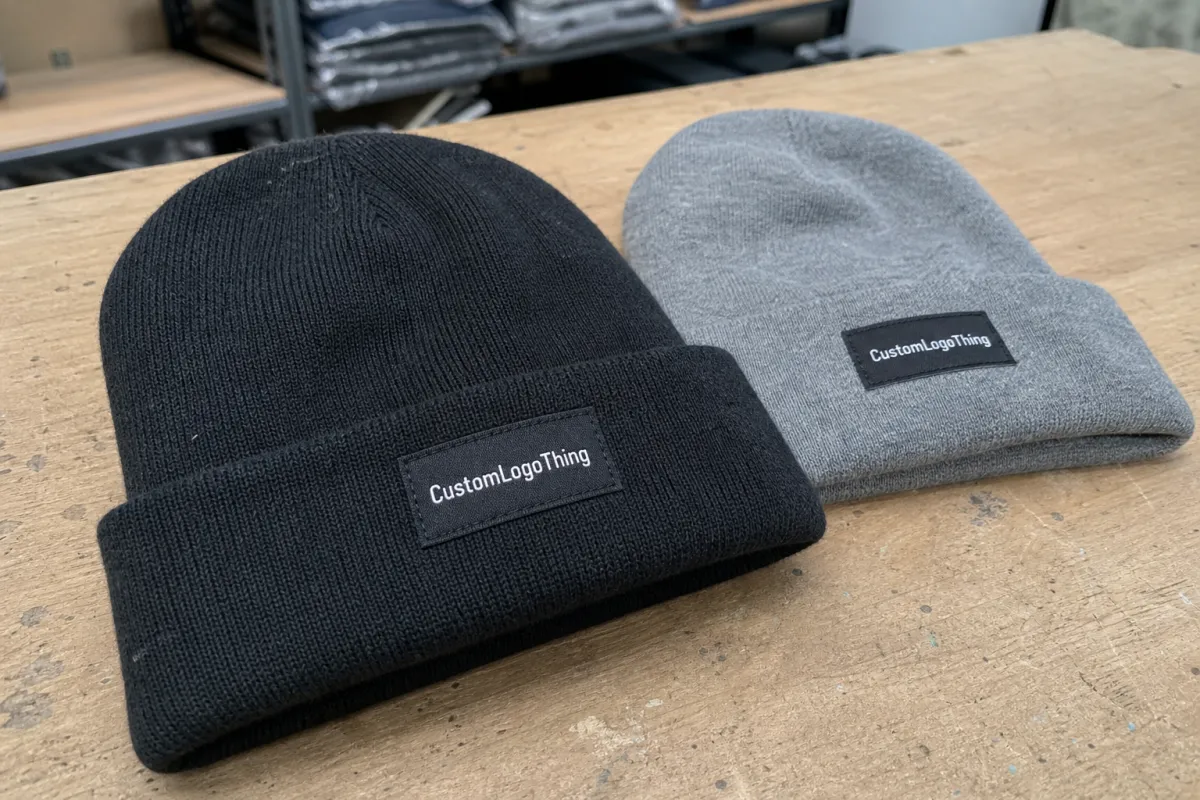
A vitamin woven label Beanies Unit Cost Review is less about finding the cheapest hat and more about understanding which spec choices actually move the price. Two beanies can look similar in a catalog and still land in very different cost bands once yarn, cuff height, label size, packaging, and approval needs are added in.
Woven labels are a useful middle ground. They usually look cleaner than a plain knit, feel lighter than heavy embroidery, and often cost less than thick patches or complex appliques. For buyers comparing shelf appeal, online presentation, and landed cost, that balance is often the reason to choose them.
The important part is that a woven label is not a fixed-cost add-on. Its price changes with artwork detail, label dimensions, thread count, placement, and the beanie construction itself. Buyers who understand those variables can read quotes faster, compare suppliers more honestly, and avoid paying extra for vague specs.
Why woven label beanies beat plain knits on shelf
Plain knit beanies can sell, but they often disappear in a crowded assortment. A woven label gives the product a focal point and makes the brand easier to remember. That matters in retail because the customer usually sees the item for only a few seconds before deciding whether it looks intentional or generic.
For e-commerce, the effect is similar. A labeled beanie photographs better, reads faster in a thumbnail, and usually feels more complete in a product page grid. That is why a vitamin woven label beanies Unit Cost Review should include shelf and image value, not just the base manufacturing cost.
Woven labels tend to work well because they:
- Preserve the knit structure instead of adding bulky stitching.
- Stay legible in photos even when the image is small.
- Usually cost less than detailed embroidery when setup and labor are included.
- Repeat cleanly on later orders when the artwork and placement are already defined.
They are not right for every build. A very textured knit, a slouch style with limited front visibility, or a cuff that folds awkwardly may need a different approach. The label should be treated as part of the garment spec, not a last-minute branding fix.
For brands using multiple trims, it helps to keep the label system aligned across products. A beanie label, hang tag, and insert should feel like one program. Buyers often review that broader system alongside Custom Labels & Tags so the headwear spec and the rest of the brand kit match.
Beanie build details buyers should check before quoting
Quotes get unreliable when the request is vague. A supplier cannot price “something similar” with confidence if the buyer has not defined the yarn, cuff, label, or packaging. The more complete the brief, the more useful the quote.
Before asking for pricing, lock down the core build details:
- Yarn type: standard acrylic, recycled acrylic, wool blend, or mixed fiber.
- Knit density: looser knits feel softer; tighter knits hold shape better.
- Cuff height: low, medium, or tall; this affects both fit and label visibility.
- Crown shape: fitted, full crown, or slouch.
- Label placement: front cuff, side seam, back cuff, or folded edge.
- Packaging: bulk packed, polybagged, hang-tagged, or retail ready.
These details affect unit cost and approval timing. Recycled acrylic and wool blends usually cost more than basic acrylic. A taller cuff may need a larger or more carefully placed label. Retail packaging adds handling and sometimes changes the MOQ because the supplier has to manage extra materials and assembly steps.
Buyers should send artwork with measurements, not just a logo file in a message thread. A flat sketch, target dimensions, and placement note save time and reduce back-and-forth. If the order is part of a larger headwear program, say so early so the supplier can keep the label logic consistent across styles.
The most useful early questions are straightforward: How much does the beanie weigh? How wide is the cuff? Does the logo need to read from across a room or just at arm's length? Those answers determine whether the woven label can stay small and clean or needs more space for legibility.
If the project includes other branded trims, it helps to reference the supplier's broader woven label options before the quote is finalized.
Specs that change fit, feel, and decoration quality
Beanie pricing only looks simple until the spec starts changing. Yarn choice changes handfeel. Cuff height changes label placement. Artwork detail changes proofing time. Small changes can add up quickly, especially on lower-volume orders.
Label size versus legibility
Woven labels hold detail well, but they still have limits. A small label with too much text will blur, and a dense logo can look crowded if the artwork tries to do too much. Simpler graphics and fewer thread colors are easier to weave cleanly and easier to approve.
That does not mean every label should be minimal. Some brands need a tagline, a secondary mark, or a small care line. The issue is density. The more information a label carries, the more carefully it needs to be planned so it still reads cleanly on a small knit accessory.
Placement and product behavior
Front cuff placement is the safest choice because it photographs well and reads quickly. Side placement is subtler but can disappear in flat-lay images. Back cuff placement works when the front needs to stay clean. Folded-edge placement can look refined, though it depends on the knit holding its shape.
Comfort matters too. The label should lie flat, with soft edges and secure stitching so it does not curl or feel scratchy. Buyers should ask how much placement tolerance the factory allows. A one-centimeter shift may sound small, but on a narrow cuff it can look off-center.
Color matching and approval discipline
Color is often more important than buyers expect. A dark label on a dark knit can disappear, while a pale label on a pale hat can look washed out. Good suppliers will flag weak contrast before production starts instead of letting the issue show up in bulk.
For stricter programs, confirm the thread color system, acceptable tolerance, and whether a digital proof is enough or a physical sample is needed. Digital proofing is faster, but it cannot show texture, sheen, or how the label sits against the knit. When the project is sensitive, a pre-production sample is worth the time.
Unit cost, pricing, and MOQ for woven label beanies
This is the part buyers compare most closely. A vitamin woven label Beanies Unit Cost Review only becomes useful when it turns into workable budget ranges. The figures below are indicative, not universal, but they show the usual pattern: setup costs are harder to absorb on small runs, while higher quantities spread those charges across more units.
| Build option | Typical MOQ | Indicative unit cost | What drives the price |
|---|---|---|---|
| Basic acrylic rib knit with simple woven label | 100-300 pieces | $1.10-$1.85 | Simple structure, limited thread count, minimal packaging |
| Recycled acrylic knit with 2-3 color label | 300-500 pieces | $1.65-$2.60 | Material premium, cleaner label art, folded presentation |
| Wool blend with detailed label and hang tag | 300-500 pieces | $2.40-$4.10 | Fiber cost, tighter spec control, additional decoration |
| Premium knit with custom packaging | 500+ pieces | $3.00-$5.50 | Higher yarn cost, custom mailer or box, more handling |
The label itself often adds only a small amount at volume, sometimes just a few cents per piece. The bigger cost jumps usually come from setup, packaging, material grade, and any extra handling needed to keep the label aligned and the knit consistent.
Setup charges matter more on small runs. Buyers may see one-time costs in the rough range of $35-$150 for digitizing, loom setup, or art cleanup. On larger orders, those charges are easier to absorb, which is why the same product can look much cheaper once the quantity climbs.
MOQ is not just a factory rule. It also shapes the price. A low MOQ usually means the buyer is paying for the same proofing, setup, and coordination on fewer units, so the per-piece cost rises. That is why asking for the next break quantity is useful: it shows how fast the economics improve if the order gets bigger.
When comparing suppliers, ask for three things separately:
- Product cost at the target MOQ and the next break quantity.
- Setup or artwork charges listed as one-time costs.
- Freight and packaging shown separately from unit price.
A low unit price can be misleading if it leaves out freight, inserts, or packaging. Landed cost is the number that matters for budgeting, not the headline price in the first email.
Process and turnaround from artwork to shipment
Good production is usually predictable. It starts with a brief, moves to artwork checks, then proofing, then bulk making, then inspection and shipping. Most delays happen because the brief was incomplete or the approval cycle kept changing.
A normal flow looks like this:
- Brief intake with quantity, size, placement, and packaging notes.
- Artwork check to confirm the logo is suitable for weaving.
- Digital proof or label mockup for approval.
- Sample or pre-production piece when the project needs extra certainty.
- Bulk production after sign-off.
- Final inspection and packing before shipment.
Lead times vary by complexity, but a clean project often looks like this: 1-2 business days for initial art checks, 2-4 business days for proofing, 5-10 business days for a sample or pre-production piece, and 12-20 business days for bulk production after approval. Freight adds its own timeline depending on route and packing volume.
Rush orders are possible, but only when the artwork is clean and the materials are ready. If the buyer is still revising placement or changing colors after the proof arrives, the schedule stretches quickly. The most common delay causes are missing dimensions, unclear logo files, color disputes, and slow sign-off.
One expensive mistake is approving a sample that is only “close enough.” If the label edges look rough, the cuff sits oddly, or the logo loses clarity once the knit is stretched, those issues should be corrected before bulk production. A low unit cost is not useful if the first shipment needs rework.
A lower quote becomes expensive quickly when the approval chain is messy. Clean specs usually beat dramatic discounts.
Efficiency gains come from simple artwork, fewer label colors, standard packaging, and a clear approval window. Those choices reduce handling time and help keep the order on schedule.
What a reliable beanie supplier should show you upfront
A reliable supplier makes the order easy to understand before money changes hands. The quote should be broken out, the spec should be legible, and the sample policy should be clear. If the pricing is vague early on, it usually stays vague later.
Before approval, a solid supplier should provide:
- A complete spec sheet with yarn type, knit style, cuff height, label size, and placement.
- A transparent price breakdown showing product cost, setup charges, sample cost, and freight separately.
- A sample policy that explains whether the buyer gets a digital proof, a physical sample, or both.
- Artwork feedback that flags weak files, unreadable text, or unrealistic detail before production starts.
- Packaging details that explain what is included and what is extra.
Buyers should pay attention to what is missing. A quote that looks unusually cheap may exclude setup, packaging, testing, or shipping. A quote that looks high may simply be more honest about those costs. The useful number is the landed cost, because that is what actually hits the budget.
Quality control should not be an afterthought. The points worth checking are straightforward: label alignment, thread tension, cuff consistency, weave clarity, color match, and whether the label sits flat after folding. On repeat orders, buyers should also confirm consistency against the approved sample.
For programs with multiple branded trims, the beanie label should match the rest of the brand system. That is why broader Custom Labels & Tags planning is worth doing at the same time as the knit spec.
Next steps to lock in an accurate quote fast
The fastest way to get a useful quote is to send a one-page brief instead of a thread of partial details. Include quantity, target price, beanie color, yarn preference, label artwork, label placement, packaging preference, deadline, and ship-to location. With that information, the supplier can price the job instead of guessing.
It also helps to request two scenarios: one at the intended MOQ and one at the next realistic break quantity. That comparison shows how quickly the unit cost changes and whether the order is sitting too close to a more expensive threshold.
Before sending the request, check these points:
- Quantity and color count
- Vector logo or clean artwork file
- Label dimensions and placement
- Packaging needs
- Deadline and destination
After that, approve the proof quickly, confirm the lead time in writing, and separate freight from product cost so the landed number stays visible. That is the cleanest way to keep the order moving without avoidable surprises.
What is the typical MOQ for vitamin woven label beanies?
Most custom runs start around 100-300 pieces, depending on yarn type, label complexity, and packaging. Lower MOQs usually carry a higher cost per piece because setup and proofing are spread across fewer units. If you need retail-ready packaging or multiple colorways, expect the MOQ or unit price to move up.
How much does a woven label add to beanie unit cost?
A simple woven label usually adds only a small amount per piece, but the final increase depends on label size, color count, and placement. Bulk quantity matters because larger runs dilute setup charges. Ask for a quote with and without packaging so you can see the label's real effect on landed cost.
What artwork do you need for a vitamin woven label beanie quote?
Send a vector logo if possible, plus Pantone colors, label dimensions, and where the label should sit on the beanie. If the art is rough, a clear reference image still helps, but it can slow proofing. The faster you confirm placement and size, the faster the quote becomes useful.
How long is the lead time after approval?
Sample or proof timing is usually faster than bulk production, but both depend on artwork approval and material availability. A clean approval process can keep the schedule tight; revisions are what usually blow it up. Always ask for separate sample and bulk timelines so you can plan launch dates honestly.
Can you customize color, label placement, and packaging together?
Yes, but each add-on changes the quote and may affect MOQ or lead time. Color matching, special label placement, and custom packaging are all doable when they are specified early. If all three are changing, request a single all-in quote so the final cost is not a surprise.


