Buyer Fit Snapshot
| Best fit | Embossed Corrugated Cartons for Ecommerce projects where brand print, material claims, artwork control, MOQ, and repeat-order consistency need to be specified before quoting. |
|---|---|
| Quote inputs | Share finished size, material target, print colors, finish, packing count, annual reorder estimate, ship-to region, and any compliance wording. |
| Proofing check | Approve dieline scale, logo placement, barcode or warning zones, color tolerance, closure strength, and carton packing before bulk production. |
| Main risk | Vague material claims, crowded artwork, missing packing details, or unclear freight terms can make a low unit price expensive after revisions. |
Fast answer: Embossed Corrugated Cartons for Ecommerce: Board, Finish, Dieline, and Unit Cost should be specified like a repeatable production item. The safest quote records material, print method, finish, artwork proof, packing count, and reorder notes in one written spec.
Production checks before approval
Compare the actual filled-product size with the drawing, then confirm tolerance on folds, seals, hang holes, label areas, and retail display edges. Reserve space for logos, QR codes, warning copy, and material claims before decorative graphics fill the panel.
Quote comparison points
Review material grade, print process, finish, sampling route, tooling charges, carton quantity, and freight assumptions side by side. A quote is only useful when the supplier can repeat the same color, closure quality, and packing count on the next order.
Embossed Corrugated Cartons for Ecommerce: Design Tips
Embossed corrugated cartons for ecommerce do something flat print cannot quite fake. They give a shopper a reason to touch the box before it is even opened. That matters more than brands like to admit. The outer carton is often the first physical object a customer handles, and that first contact sets expectations fast. Premium. Generic. Careful. Sloppy. People decide in seconds, then spend the rest of the unboxing justifying the decision.
Embossing means pressing the board so part of the surface rises above the rest. The shape lives in the material itself instead of sitting on top like ink or varnish. That creates a quieter kind of presence. It feels deliberate without shouting. For ecommerce brands, that makes embossed corrugated cartons for ecommerce a useful way to make mailers, shippers, and presentation boxes feel more considered while still keeping the package practical for fulfillment and transit.
A good embossed mark should feel like part of the carton, not decoration pasted on after the fact. If the box has to survive conveyor belts, stacking pressure, and a few rough hands before it reaches the customer, structure still has to come first.
Why embossed corrugated cartons for ecommerce stand out
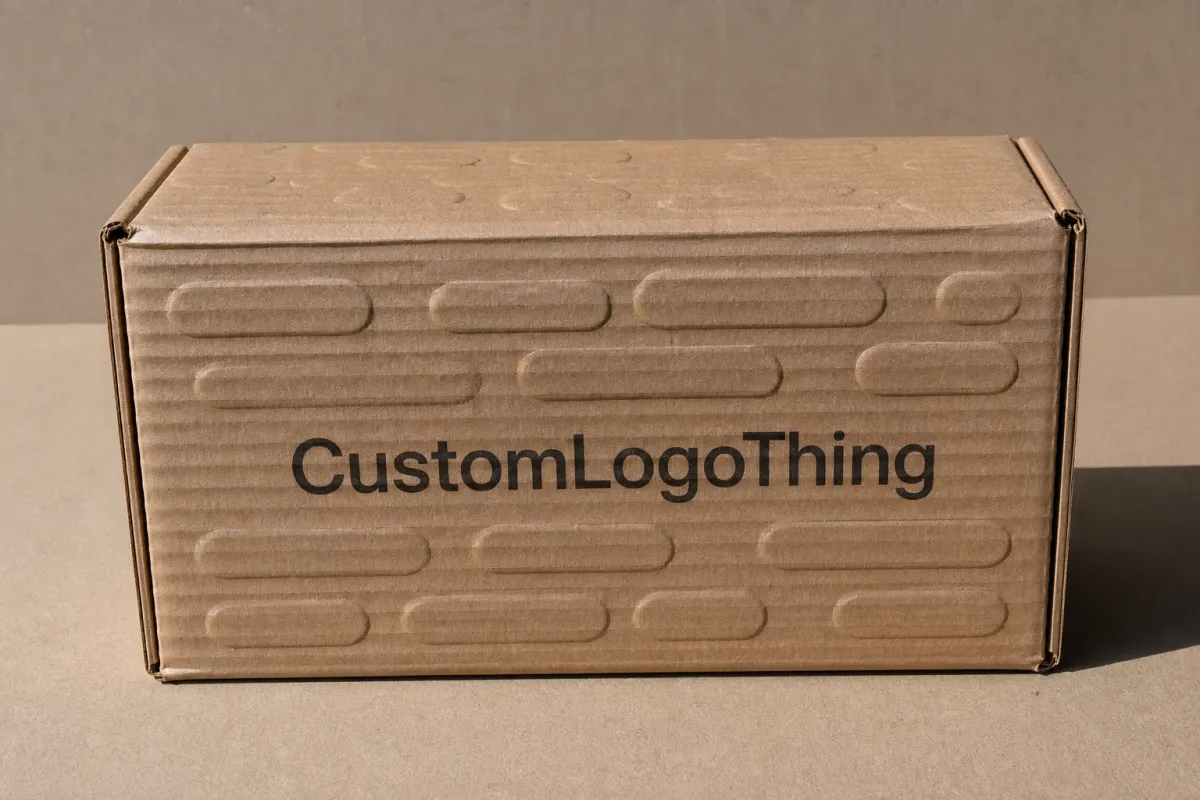
Texture changes judgment. A clean print can look good from across a room, but a raised logo gives the hand something to notice up close. That small physical cue tends to stick. It is one reason embossed corrugated cartons for ecommerce keep showing up with subscription brands, premium DTC labels, and gifting companies that want the box itself to carry more of the brand story.
There is also a practical reason buyers keep choosing embossing: it can increase perceived value without requiring a heavy ink build or a pile of complicated finishing steps. A raised panel, a blind embossed logo, or a subtle pattern on the lid can lift the carton without overwhelming it. Restraint usually reads better than noise. Loud packaging often looks nervous, not premium.
Ecommerce packaging has a strange double job. It has to protect the product, then turn around and act like a brand moment. Sometimes it even has to earn its place in social content. When a box arrives with texture, people tend to handle it more slowly. Fingers trace the surface. The carton tilts toward the light. The material gets noticed before the tape gets ripped. That sequence matters because it shapes the story the customer remembers afterward.
Corrugated embossing is not the same as Embossing on Folding carton stock. Flute structure, liner thickness, adhesive bond, and board grade all affect the result. E-flute often supports finer detail. B-flute and double-wall boards can deliver a stronger physical feel, but delicate lines may soften. A logo that looks perfect in a paperboard mockup can behave very differently once it hits a shipping carton.
The goal is not to cram every surface with detail. It is to choose one or two moments and make them count. The best embossed carton often looks understated at first glance, then earns attention by inviting touch. That works especially well for premium apparel, beauty, gourmet food, and curated kits where the package is part of the product experience rather than just the container.
Brands still deciding on structure should compare embossed cartons with other Custom Shipping Boxes options and decide whether the emboss belongs on the outer shipper, an inner mailer, or a separate presentation box. If the parcel takes a beating in transit, it can make more sense to reserve the premium texture for the customer-facing layer and keep the outer carton simple.
Testing and sourcing also matter. ISTA testing standards help explain how packages are evaluated for distribution hazards, while FSC certification resources are useful if the brand wants responsibly sourced board with documented chain of custody. Those details do not make the box prettier, but they do make the sourcing story more credible.
How embossing works on corrugated board
Embossing on corrugated board is a controlled compression process. A custom die presses the liner against a matched counter surface so the fibers and flute structure take on a raised form. The aim is straightforward: create a visible and tactile design without crushing the board or weakening the panel. That balance is the whole trick, because corrugated material already has spring and thickness built in.
There are two common approaches. Blind embossing leaves the raised shape unaccompanied by print, so the detail is read through light and touch. Registered embossing places the emboss in relation to printed artwork, which lets the texture support a logo, border, or panel graphic. Registered work can look very polished, but it needs tighter setup and more careful proofing because the print and die have to line up on the finished board.
Board choice changes the result more than many first-time buyers expect. E-flute usually gives a cleaner, more refined feel for smaller details. B-flute offers more body and a firmer hand. C-flute works for larger cartons, though fine emboss geometry can lose definition if the relief is too ambitious. Double-wall board can handle heavier shipping loads, yet the extra thickness can dull subtle detail unless the artwork is simplified.
The limits show up quickly when the art gets too delicate. Small type, hairline strokes, tight curves, and deeply sculpted relief can all distort once the board compresses. A logo that looks elegant on a screen may turn awkward if the letter gaps cannot survive die pressure. In corrugated emboss work, bold forms usually read better than ornate ones, and generous spacing helps more than extra depth.
Embossing often gets paired with light print, spot color, or a restrained coating so the carton still feels finished without asking too much from the board. A matte varnish or soft-touch film can add refinement, but those choices need to be handled carefully because a heavy coating can blunt tactile clarity. The strongest results usually come from a simple system: one strong brand mark, enough blank space to breathe, and just enough print to support the raised area.
Flute direction matters too. If the emboss crosses the flute the wrong way, the board can react unevenly and the shape may vary from one panel to another. A good converter will look at the dieline, panel orientation, and press direction before approving the die layout. Skipping that step is how pretty ideas become frustrating samples.
Cost, pricing, MOQ, and quote factors
Price for embossed corrugated cartons for ecommerce comes down to a handful of variables, and the die is only one piece of the bill. Custom tooling, press setup, board grade, print coverage, order quantity, and registration requirements all affect cost. If a quote feels high, the first question should be whether the price reflects the real structure of the job or whether setup is simply being spread across too few units.
MOQ, or minimum order quantity, depends on the converter and the carton style. A simple embossed mailer may come with a lower minimum than a large, heavily finished shipper. Specialty board, deeper relief, and multiple finishing steps usually push the number up. For many buyers, the practical range lands around 1,000 to 3,000 units for a custom project, though some suppliers will quote lower or higher based on complexity and board spec.
A quote makes more sense when it is broken into two buckets: one-time tooling and recurring carton cost. The die is usually paid once, while board, print, finishing, and assembly continue with every run. That matters because a higher upfront spend can still make sense if the unit cost drops at scale or if the packaging drives repeat purchases, stronger perceived value, or better gift appeal.
| Approach | Best For | Typical Tooling / Setup | Typical Unit Cost at 5,000 Pieces | Notes |
|---|---|---|---|---|
| Blind emboss on E-flute | Clean branding, lightweight ecommerce mailers | $250-$700 for die and setup | $0.28-$0.55 each | Good for simple logos and quiet premium looks |
| Registered emboss with one-color print | Brand panels, subscription boxes, premium shipping cartons | $400-$1,000 for die, registration, and setup | $0.35-$0.75 each | More precise alignment, more proofing time |
| Deep sculpted emboss with coating | Gift boxes, launch packaging, display-worthy cartons | $600-$1,500+ for tooling and press prep | $0.55-$1.10 each | Higher perceived value, but more risk if artwork is too intricate |
Those numbers are planning ranges, not promises. A small run may cost much more per unit because the die and setup get spread across fewer cartons. A larger run can drop the carton price fast. Board availability shifts the quote too. If the project needs FSC-certified stock, a stronger burst rating, or a specialty liner color, the material line can move more than the emboss itself.
There is a value test buyers sometimes miss. If the box gets hidden inside another shipping carton, opened once, and tossed before the customer notices the branding, the emboss may never pay back its cost. If it improves unboxing, gift-worthiness, or repeat recognition, the premium is easier to justify. The cheapest quote is not always the smartest buy. The better choice is the one that fits the role of the package in the customer experience.
Production steps and lead time for embossed cartons
A custom embossed carton usually moves through a familiar sequence: artwork review, structural dieline development, emboss die creation, proofing, material approval, production, finishing, and packing for shipment. That sounds tidy on paper. In practice, timing depends on how quickly the team resolves registration, board choice, and emboss depth. The more the design depends on precision, the more useful an early sample becomes.
Lead time tends to stretch in three places. First, the die may need adjustment if the image is too fine or too deep. Second, the board may need to be sourced in a specific grade or caliper. Third, the sample may reveal that the carton looks different under real lighting than it did on a screen. None of that is unusual. Corrugated board flexes, springs back, and behaves very differently from a flat mockup.
For standard corrugated specs, a common timeline after proof approval is often around 12-15 business days for production, with a bit more time if finishing gets complicated. Custom tooling, specialty board, or multiple proofs can stretch the project closer to 20-30 business days before shipment. Seasonal campaigns and product launches need a buffer. Tight schedules make small delays feel huge.
Sampling deserves its own time slot. A prototype is not a formality. It is the easiest way to catch mistakes in logo scale, embossed depth, flap placement, and panel orientation before the full run begins. A sample that feels right in hand saves money later because it prevents waste, rework, and late artwork changes. Ecommerce deadlines are usually tied to inventory arrivals, warehouse bookings, and campaign dates that do not care about optimism.
Ask for the sample on the same board grade and flute profile planned for production. A mockup made on smoother paperboard can flatter the design and hide compression that will show up later on corrugated. If the carton will ship in bulk, ask whether the supplier can reference a distribution test plan such as ISTA 3A or ASTM D4169 so the prototype is checked against handling conditions, not just appearance.
Design tips for embossed corrugated cartons for ecommerce
Good emboss design starts with the job the carton needs to do. It has to protect the product, fit the packing line, and communicate the brand in a way that feels natural during opening. Embossing should support those goals, not fight them. That sounds obvious. Still, people get distracted by texture and forget the unglamorous realities of fulfillment, stacking, and carrier handling.
The best place for the emboss is usually the panel where the hand lands first. For a mailer, that might be the lid. For a rigid-style shipping box, it may be the front face or the inner reveal panel. For a premium set, the embossed area can sit where the customer pauses before lifting the tray. That placement matters more than extra complexity because texture is most memorable when it shows up naturally.
Start with the structure, not the artwork
Pick the carton style first. Once the format is set, the emboss can be built around score lines, glue zones, and panel sizes instead of fighting them. A logo placed too close to a fold can distort. A border that hugs a seam can look uneven after conversion. Good structural planning keeps the emboss clean and cuts down the odds that the final box looks crowded or strained.
For most corrugated emboss jobs, skip hairline strokes and tiny text. As a practical rule, strokes below roughly 0.75 mm are risky, while 1.0-1.5 mm is a safer starting point for visible detail. Large open shapes, broad letterforms, and simplified iconography tend to reproduce more reliably. If the brand mark has ornate curves or fine serifs, the easiest fix is often to enlarge the embossed area and simplify the relief instead of forcing a fragile shape into a material that wants to spring back.
Use the emboss as a focal point
A strong embossed carton does not need to cover every surface. One hero panel is often enough. That keeps the package elegant, speeds up production, and lowers the odds that the finish starts to feel overworked. A subtle logo on the lid, a raised pattern on the inside flap, or a blind embossed emblem on the side panel can all create a premium effect without turning the carton into visual noise.
A restrained print strategy helps here. A single spot color, a dark-on-natural palette, or a mostly unprinted board can make the texture read more clearly. Heavy graphics and full-coverage ink can flatten the embossed area visually, which undermines the point. The strongest packages balance open space, material color, and texture so the eye knows where to land.
Prototype under real conditions
Do not trust renders alone. View the sample under warehouse light, office daylight, and lower indoor light, because embossing changes character with angle and shadow. Then pack a real product into the carton, tape or seal it the way operations will, and check how the raised detail behaves after compression and handling. A box that looks beautiful on a screen can feel awkward if the emboss sits where hands need to grip it.
That practical test also matters for unboxing. Customers do not experience packaging in a sterile studio. They open it at a kitchen table, on a porch, or under whatever light happens to be nearby. A well-planned emboss should still read clearly in that setting. If the texture disappears unless the carton is tilted just right, the design is probably too delicate.
If you are still choosing formats, compare the structure against your Custom Shipping Boxes needs and decide whether the embossed carton will be the primary shipper or part of a layered package system. Apparel and kit brands often do well with a simpler outer box and a more expressive inner reveal. Fragile or premium goods may need the outer carton itself to carry the tactile cue.
Common mistakes when specifying embossed corrugated cartons
The most common mistake is asking too much of the material. Corrugated board is strong, but it is still a layered fiber structure with a flute between liners. Fine linework, tiny type, and deep relief can look impressive in a digital proof and then soften or distort once the press and the board start working against each other. If the design depends on tiny precision, simplify before production starts.
Another frequent error is treating corrugated like rigid paperboard. Folding carton embossing and corrugated embossing are related, but the substrate behaves differently enough that the artwork has to be engineered for it. Flute direction, compression resistance, and liner thickness all change how sharply the image holds its edge. A design that feels crisp on coated carton stock may need a wider profile and shallower relief to work on a shipping box.
Skipping a prototype is risky for any ecommerce carton, and embossing makes that risk worse. The customer may never see the design if a box arrives crushed, and a small shift in die registration can make a clean brand mark look sloppy. Testing the sample on a real packing line also shows whether the embossed panel interferes with loading, sealing, or stacking. Those problems are cheap to fix before production and expensive after delivery.
Budget mistakes happen on the other side too. Some teams overbuild the finish package when the box has a limited moment to shine. If the carton sits inside another shipper, gets opened once, and gets tossed, a costly emboss may not return much value. A simpler branded panel or a smaller tactile element may be the smarter move. Packaging should earn its cost through visibility and function, not novelty.
One last problem shows up too often: waiting until the end to confirm print-to-emboss registration. The die may be made perfectly, but if the artwork lands off-center, the texture feels accidental instead of deliberate. Panel seams and glue areas need attention too. An emboss that crosses a structural line without planning can break the visual rhythm and make the carton look uneven from side to side.
A practical way to avoid those problems is to review the dieline with the supplier before art is finalized, then approve a sample that reflects the real board, flute, and finish stack. If the supplier cannot explain how the emboss will behave on the chosen substrate, slow down and ask better questions. That is not a red flag. That is the flag.
Expert tips and next steps for ecommerce brands
Use embossing where the customer notices it first, not everywhere it can physically fit. A single hero panel or a thoughtful interior detail often makes a stronger impression than a carton covered in raised graphics. The package feels more confident that way, and the production cost usually stays more manageable.
Pair tactile detail with restraint. A clean logo, a limited color palette, and a little unprinted board space can do more for perceived quality than layers of decoration. That is especially true for brands that want a modern unboxing experience without drifting into clutter. The carton should speak in a calm, material voice.
Ask for a sample that matches the planned board grade, flute profile, and print method. Mockups can help with approval, but they do not reveal how the carton will behave under pressure or how the raised detail will look in normal light. A sample built on the real spec is the better decision tool, even if it takes longer.
Compare suppliers on more than price. Tooling clarity, communication, proof quality, and how the supplier talks about board behavior all say a lot about whether the final result will match the brief. A shop that understands branding and corrugated performance usually saves time later because it catches issues before they turn into production problems.
If the project is still in the planning stage, a practical sequence looks like this:
- Define the carton job, including size, product weight, and how the box will be used in fulfillment.
- Gather the dieline, artwork, and any brand rules that affect logo size or print usage.
- Request a quote that separates tooling, setup, material, and production costs.
- Confirm MOQ and lead time before approving the design.
- Review a prototype on the actual board spec.
- Launch only after the sample proves the emboss is readable, durable, and worth the spend.
For brands that want a sturdier shipping format alongside the premium finish, reviewing a broader set of shipping boxes built for ecommerce before locking the structure can help. That keeps the design honest about handling conditions and makes the embossing feel like part of a complete packaging system instead of an isolated decorative choice.
Handled well, embossed corrugated cartons for ecommerce give a package a memorable touch point, support the brand story, and still do the hard work of shipping. That combination is the point. A carton that feels thoughtful in the hand, survives transit, and earns its place in the customer experience is doing its job.
The most useful next step is simple: pick one carton structure, one emboss location, and one board grade, then prototype that exact combination before adding more finishes. Once the structure works, the rest becomes a design decision instead of a rescue mission.
Frequently asked questions
Are embossed corrugated cartons for ecommerce strong enough for shipping?
Yes, when the design respects the board structure and the emboss depth stays within a safe range. Strength depends on flute choice, liner weight, panel size, and where the embossed area sits, so the carton should be tested the same way it will be handled in the warehouse and in transit. If the box needs to carry heavier contents or stack in bulk, the emboss should stay modest and away from high-stress seams.
How much do embossed corrugated cartons for ecommerce usually cost?
Cost depends on tooling, order quantity, print coverage, board grade, and finishing complexity. A quote should separate the one-time die or setup charge from the recurring per-carton cost so the buyer can compare options clearly. Smaller runs usually carry a higher unit price because setup is spread across fewer boxes, while larger runs can bring the per-unit cost down a lot.
What artwork works best for embossed corrugated cartons for ecommerce?
Bold logos, simple iconography, and clean line work usually emboss more clearly than tiny type or intricate textures. The artwork should be built with board thickness, flute direction, and panel layout in mind so the raised detail stays legible after production. If a design feels fragile on screen, it usually needs simplification before it goes into corrugated material.
How long does the embossing process take for ecommerce cartons?
Lead time depends on whether the die already exists, how many proof rounds are needed, and whether the carton uses standard or specialty board. A custom project usually needs time for artwork review, sampling, approval, and production planning before the full run starts. For many jobs, a standard production window after approval may fall around 12-15 business days, with longer timelines for more complex setups.
Can embossed corrugated cartons for ecommerce be combined with printing or coating?
Yes, embossing is often paired with print, spot color, or a protective coating to create a more polished unboxing experience. The key is keeping the finishing stack balanced so the board does not lose its texture or get overloaded by too many effects at once. A restrained print system usually lets the embossed area read better and keeps the carton from feeling visually crowded.