Buyer Fit Snapshot
| Best fit | Custom Mailing Cartons for Ecommerce projects where brand print, material claims, artwork control, MOQ, and repeat-order consistency need to be specified before quoting. |
|---|---|
| Quote inputs | Share finished size, material target, print colors, finish, packing count, annual reorder estimate, ship-to region, and any compliance wording. |
| Proofing check | Approve dieline scale, logo placement, barcode or warning zones, color tolerance, closure strength, and carton packing before bulk production. |
| Main risk | Vague material claims, crowded artwork, missing packing details, or unclear freight terms can make a low unit price expensive after revisions. |
Fast answer: Custom Mailing Cartons for Ecommerce: Board, Finish, Dieline, and Unit Cost should be specified like a repeatable production item. The safest quote records material, print method, finish, artwork proof, packing count, and reorder notes in one written spec.
Production checks before approval
Compare the actual filled-product size with the drawing, then confirm tolerance on folds, seals, hang holes, label areas, and retail display edges. Reserve space for logos, QR codes, warning copy, and material claims before decorative graphics fill the panel.
Quote comparison points
Review material grade, print process, finish, sampling route, tooling charges, carton quantity, and freight assumptions side by side. A quote is only useful when the supplier can repeat the same color, closure quality, and packing count on the next order.
Custom Mailing Cartons for Ecommerce: Practical Notes from the Pack Line
Custom mailing cartons for ecommerce can change the feel of a shipment in ways that are easy to miss until you compare them side by side. A carton that fits well, opens cleanly, and holds the product steady does more than protect the order; it quietly tells the customer that somebody thought the whole process through. I have seen plenty of packages that looked fine on a screen but fell apart in real handling, and I have also seen a simple carton do a lot of heavy lifting because the fit, structure, and print were all doing their jobs.
For a packaging buyer, the real value starts with fit. Custom mailing cartons for ecommerce are built around the product, the inserts, and the actual parcel path, not just around a generic size chart. That means less void fill, fewer scuffs, and less time spent wrestling with a box that never really wanted to close properly in the first place. The best carton is usually the one that feels almost boring during packing because it just works.
For brands comparing packaging formats, the carton often becomes the workhorse of the shipping system, not merely a shell around the item. It can support package branding, speed up fulfillment, and bring a cleaner retail-style presentation into the mailbox experience. If your line includes different shipment types, it can help to compare broader options through Custom Packaging Products and, for lighter shipments, Custom Poly Mailers.
Why Custom Mailing Cartons for Ecommerce Outperform Generic Mailers
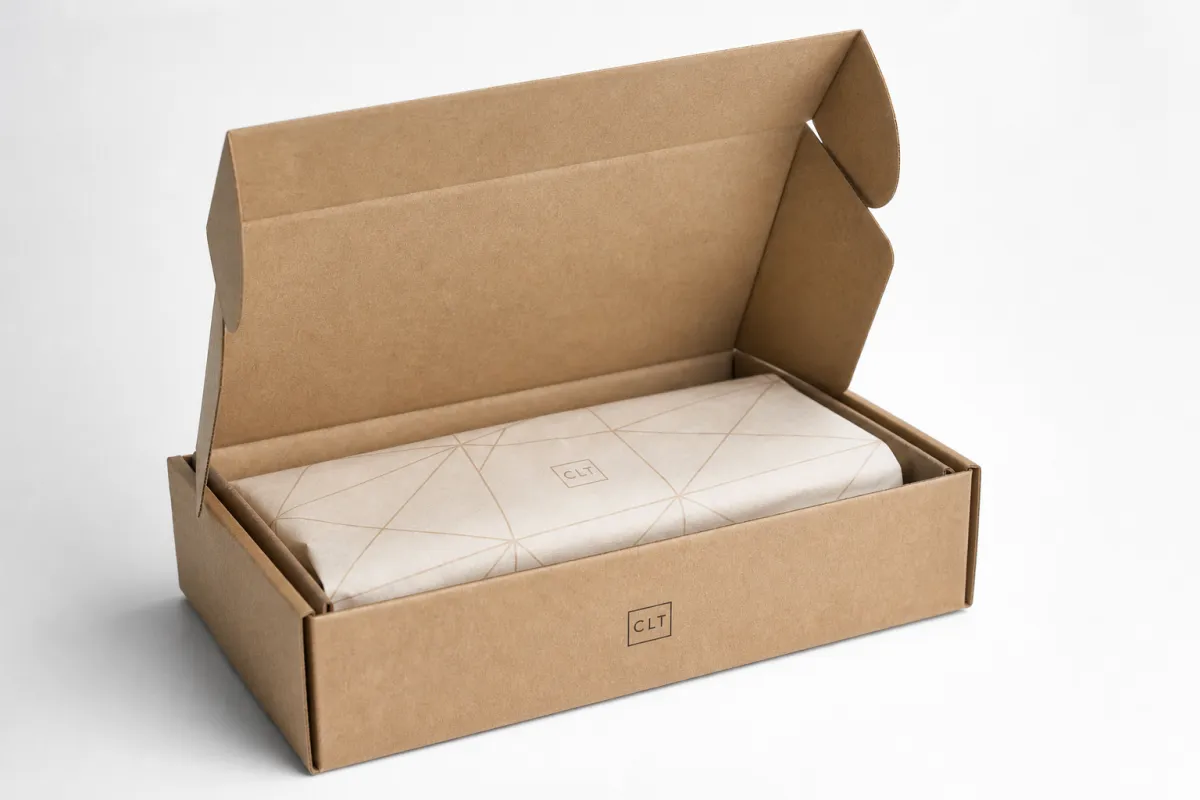
Picture two orders leaving the same warehouse. One goes out in a generic mailer that is slightly too large, so the product slides around and the packer has to add filler by hand. The other uses custom mailing cartons for ecommerce sized around the product and insert, with a clean front panel and a closure that lands square. The second shipment usually feels more polished the second it hits the doorstep, and it often handles transit better too.
That practical edge is easy to overlook because generic mailers can look cheaper on a quote sheet. In real use, though, custom mailing cartons for ecommerce are built around the actual product, the fill method, and the handling conditions the box will face. When the structure matches the workflow, packers move faster, damage rates often drop, and the shipment is less likely to arrive with crushed corners or a sloppy interior presentation. Nobody wants a box that looks tired before the customer even opens it.
There is also a hidden cost to oversized or mismatched packaging. Extra void fill takes time, uses material, and makes every order a little slower to build. Oversized cartons can trigger dim weight charges, which hurts even more when volumes climb. Loose product fit can lead to scuffing, corner impact, or customer complaints that seem small individually but add up across a season. Custom mailing cartons for ecommerce reduce those little inefficiencies one by one, and that is where the savings start to show up.
The brand side matters just as much. A carton is a physical message. A plain mailer says the shipment was handled like any other commodity. A well-printed carton with a crisp structure says the brand paid attention all the way through the order. That matters for subscription kits, cosmetics, candles, apparel accessories, supplements, gifts, and other products where the box is part of the experience. The packaging is doing part of the selling before the customer even touches the product, and that is kinda the point.
Custom mailing cartons for ecommerce can also ship more efficiently than they first appear to. A right-sized structure uses cube space better, reduces dunnage, and helps the shipment stack more predictably in transit. For ecommerce teams watching freight costs and damage claims at the same time, that balance can matter more than shaving a few cents off the board cost.
Practical rule: if the carton is fighting the packer, it is probably fighting the customer too. Custom mailing cartons for ecommerce should make the shipment easier to build, easier to protect, and easier to remember.
The strongest packaging programs treat the shipping carton as part of the product packaging system, not as an afterthought. Once the carton supports the item properly, the rest of the chain gets simpler: fewer returns, fewer breakages, less filler, and a clearer brand story. That is the real reason custom mailing cartons for ecommerce tend to outperform generic mailers in day-to-day operations, even when the unit price looks a little higher.
If you want a credible starting point for shipping tests and material expectations, review the published guidance from ISTA for transit testing and FSC for fiber sourcing standards. Those references do not replace a real pack test, but they do help ground the conversation in something practical and measurable.
Custom Mailing Cartons for Ecommerce: Process, Timeline, and Lead Time
Most custom mailing cartons for ecommerce projects move through the same basic sequence: product review, dieline development, sampling, proofing, production, finishing, and freight. The details shift depending on the structure, but the path stays familiar. A good supplier should start with product dimensions, shipping method, and pack-out goals, then translate those inputs into a layout that reflects the real shipment rather than an idealized sketch on a monitor.
Timing surprises usually show up early, not late. Structural revisions can add days. Artwork changes can add more. Specialty coatings, insert work, or a switch in board grade can stretch the schedule faster than people expect. If you are ordering custom mailing cartons for ecommerce with heavy print coverage, spot coating, foil, or a complex locking structure, build in review time before you lock the calendar. Lead time is rarely lost only in the factory; it is often lost in the back-and-forth before production even starts.
Prototype timing and production timing are not the same thing, and buyers get tripped up here more often than they admit. A sample can move quickly because it is a controlled build. Full production is different because the carton has to be made in quantity, stacked, packed, and sometimes shipped to a fulfillment center with its own receiving rules. Custom mailing cartons for ecommerce can look simple on paper and still need a longer run window if the order volume is large or the material spec is tight.
Buyers can keep the process moving by sharing three things early: exact product dimensions, the target ship method, and final artwork files. If the packaging partner knows whether the carton is going parcel, LTL, or direct to retail storage, they can make better calls about board strength, closure style, and print orientation. It also helps to explain warehouse constraints, like pack-line speed, storage height, or whether teams prefer one-piece cartons over cartons that need extra folding time.
Some decisions can be handled in parallel, and that saves real time. While the structural sample is being tested, the design team can finish artwork placement and barcode location. At the same time, the operations team can run pack tests with mock product. That kind of overlap is one of the easiest ways to keep custom mailing cartons for ecommerce on schedule without cutting corners or guessing at the finish line.
Typical lead times vary by supplier and by spec, but a simple first run may move from approval to production in about 10-15 business days, while a more complex order may sit closer to 15-25 business days or longer if tooling or special materials are involved. Freight to the fulfillment site adds its own clock. If you are planning a launch, promo window, or seasonal reset, do not schedule custom mailing cartons for ecommerce with only a thin cushion. A two-day slip can become a real problem when the product launch date is fixed and the warehouse is already busy.
One thing I tell buyers all the time: treat proof approval like a production gate, not a casual checkpoint. Once the dieline, graphics, and dimensions are signed off, the run should be based on a known target. Changing the structure after that point is possible, but it usually costs time and money. The smoothest custom mailing cartons for ecommerce projects are the ones where everyone agrees on the pack-out before the order is released.
Key Factors That Shape Custom Mailing Cartons for Ecommerce Performance
The material spec is the first place to look. Board grade, flute profile, and caliper all change how custom mailing cartons for ecommerce behave once they are stacked, shipped, and opened. A typical ecommerce mailer might use E-flute or B-flute corrugated, depending on product weight and how much crush resistance is needed. Paperboard can work very well for lighter items and tighter presentation, but it will not behave the same way as corrugated when the shipment sees compression or rougher handling.
Sizing matters just as much as material. A carton should fit the product, the insert, and the chosen packing method without leaving the contents loose or pinching them too tightly. Too much space leads to movement, scuffing, and filler. Too little space slows packing and can stress the carton during closure. Custom mailing cartons for ecommerce work best when the internal dimensions are built around the full pack-out, not just the item itself.
Closure style carries more weight than many teams expect. Some designs rely on tape, some on glue, and some on self-locking tabs that speed up the line. Dust flaps, tuck locks, and rollover ends can all affect how the carton behaves in transit and how fast a packer can build it. If your warehouse processes a high number of custom mailing cartons for ecommerce, a closure that saves even two seconds per unit can create a measurable labor benefit across a full shift.
Branding choices deserve a careful eye. Print coverage, inside printing, varnish, and specialty finishes all add value in the right place and cost in the wrong one. A simple one-color exterior on natural board can look clean and intentional. A fully printed inside panel can create a stronger unboxing moment. Not every brand needs full-surface decoration. Often the smartest move is to keep the structure strong and use the print where customers actually see it.
Sustainability is another major factor, and not just as a marketing line. Right-sizing reduces filler, which lowers material use and usually improves recycling consistency. Cleaner structural design can also help the carton break down more predictably after use. For teams that care about sourcing, FSC-certified fiber is a meaningful option, and recycling-focused design can align with broader company goals. The EPA also publishes useful guidance on waste reduction and recycling practices at epa.gov/recycle, which is worth reviewing if your brand is formalizing sustainability claims.
From a packaging design perspective, the carton should support the product story. That might mean matte varnish for a softer tactile feel, a high-contrast print layout for retail packaging visibility, or a minimal exterior that keeps the product looking premium and understated. The point is not decoration for its own sake. The point is a structure that feels deliberate, performs properly, and supports the brand without piling on unnecessary complexity.
It also helps to think in families rather than one-off boxes. Many brands can cover a range of items with a few well-chosen carton sizes instead of inventing a new format for every SKU. That approach makes custom mailing cartons for ecommerce easier to manage, easier to store, and easier to reorder. If the line later expands, those same families can often be adapted into other branded packaging formats without starting from scratch.
Custom Mailing Cartons for Ecommerce Cost and Pricing Factors
Pricing for custom mailing cartons for ecommerce depends on a handful of core variables: carton size, board spec, print method, finishing, quantity, tooling, and freight. Those are the main levers. A larger carton uses more fiber. A stronger board adds material cost. More print colors, coatings, or specialty effects increase setup and run complexity. And because cartons often ship to a fulfillment site or distributor, freight can become a meaningful part of the landed cost.
Unit cost usually drops as quantity rises, but that does not mean the biggest run is always the best choice. Storage space, SKU change risk, and forecast uncertainty all matter. A buyer might save a few cents per carton at a very high quantity, then lose that advantage if the boxes sit in a warehouse for too long or become obsolete when the product changes. Custom mailing cartons for ecommerce should be ordered with actual demand in mind, not just the lowest quoted price on paper.
MOQ expectations vary by vendor and by build type. A plain structural mailer may have a lower threshold than a Custom Printed Carton with multiple finishing steps. A first run can also price differently from a repeat run because tooling may already exist and artwork may already be approved. That is why it helps to ask whether the quote includes new die charges, plate charges, sample charges, and freight. Those details can make a simple-looking order less simple once the full quote is on the table.
Sampling and proof revisions are part of the economics too. A carton might look straightforward, but if the dieline needs revision or the artwork needs panel adjustments, the project can absorb extra time and cost before the first production sheet is printed. Special inserts, glue points, window features, and inside print all add to the budget. For custom mailing cartons for ecommerce, the true cost is not just the board. It is the sum of the engineering, the art, the production steps, and the handling needed to get the box to the pack line.
| Carton Style | Best Fit | Typical Board / Build | Approx. Unit Cost at 5,000+ | Typical Lead Time |
|---|---|---|---|---|
| E-flute mailer-style corrugated | Lighter ecommerce goods, gifts, accessories | Single-wall corrugated with clean print surface | $0.28-$0.55 | 10-18 business days |
| Paperboard folding carton with shipper support | Small, light products with strong shelf appeal | Folding carton stock, often with insert or sleeve | $0.18-$0.42 | 8-15 business days |
| Double-wall corrugated mailer | Heavier items or rougher parcel conditions | Heavier caliper board, stronger crush resistance | $0.45-$0.95 | 12-25 business days |
That table is only a planning tool, not a quote. Still, it shows the kind of tradeoff buyers face. If the shipment needs higher protection, the extra material may be justified because it reduces damage and replacement cost. If the product is lightweight and presentation-driven, a simpler build can be the better answer. Custom mailing cartons for ecommerce are not about chasing the lowest carton price; they are about choosing the right total system cost.
Here is a rule of thumb I use with buyers: spend where the product needs protection, and simplify wherever the carton only needs to travel cleanly and present well. That usually means investing in board strength, sizing accuracy, and closure performance first, then deciding whether print coverage, inside decoration, or specialty finishes actually earn their place. The smartest custom mailing cartons for ecommerce often look simple because the engineering underneath is doing the work.
Some brands also compare cartons against other formats, such as custom printed boxes or mailers, to see where the value lands. That comparison is healthy. It keeps the project honest and prevents overspending on features that do not improve the customer experience. If the box is mostly hidden inside a shipper, then a full retail-style treatment may be unnecessary. If the customer opens it on camera, then presentation may deserve a bigger budget. The right choice depends on the route the carton takes from warehouse to doorstep.
Step-by-Step Guide to Specifying Custom Mailing Cartons for Ecommerce
The cleanest way to start custom mailing cartons for ecommerce is to document the product set in plain terms: dimensions, weight, fragility, accessories, inserts, and any seasonal variants that might share the same carton family. Do not stop at the product dimensions alone. Once you include a charging cable, instruction sheet, tissue, protective wrap, or insert card, the pack-out changes. That full pack-out is what the carton needs to handle.
Measure the completed pack, not the naked product. That sounds obvious, but it is one of the most common miss points in packaging design. A carton that fits the product perfectly on paper can become a poor fit once the team adds cushioning or a display insert. Custom mailing cartons for ecommerce should leave enough room for assembly, but not so much that the item shifts around or the shipper has to improvise with filler.
After that, decide the carton style based on the shipping environment. Parcel carrier handling is different from local delivery or retail replenishment. Warehouse pack speed matters too. If the team needs a structure that folds in one motion and closes without tape, a self-locking mailer may make sense. If the shipment needs more rigidity, a heavier corrugated style may be the safer choice. Good custom mailing cartons for ecommerce align with real operational habits, not theoretical ones.
Once you have the structure in mind, request a dieline or structural mockup. This step is not optional for serious orders. A dieline lets you see panel orientation, tuck direction, print areas, and closure behavior before the carton is built at scale. Test assembly, fit, and shipability before you approve the final art. A carton that looks good on screen can behave very differently in a hand test on the pack line.
Then run a pilot build with real packers and real orders. Give the team the actual product, the actual insert, and the actual sealing method. Watch how long assembly takes, how often the closure needs adjustment, and whether the item moves in transit. That pilot usually reveals small issues that would be expensive to discover after full production. For custom mailing cartons for ecommerce, a half-day of testing can save a lot of wasted cartons and customer complaints later.
If the shipment is especially sensitive, ask for ship testing that reflects the actual route. ISTA-style transit testing, along with compression and drop screening, can show whether the carton stands up to handling as expected. A box does not need to survive every possible abuse scenario, but it should survive the shipping route you actually use. That is the real standard.
Finally, confirm logistics details. How many cartons fit on a pallet? How are they packed? What is the storage footprint at the fulfillment site? Can the team open and build them quickly enough to support order volume? Custom mailing cartons for ecommerce should be spec'd with operations in mind, because the best structure in the world can still fail if it slows the team down or clogs the receiving dock.
When all of those pieces are clear, the path to production becomes much smoother. The supplier can quote the right spec, the art team can place graphics where they belong, and the warehouse can prepare for a carton that actually fits the workflow. That is the real advantage of a disciplined spec process: custom mailing cartons for ecommerce become a tool, not a guessing game.
Common Mistakes When Ordering Custom Mailing Cartons for Ecommerce
The first mistake is sizing to the product alone. A carton that only accounts for the item often ends up too tight once the full pack-out is added, or too loose once the item is centered inside it. That leads to scuffed surfaces, unstable packing, or an awkward amount of filler. Custom mailing cartons for ecommerce need room for the whole shipment, not just the hero product.
The second mistake is overdesigning the graphics while underdesigning the structure. A box can look excellent and still fail if the board is too light, the closure is weak, or the carton wrinkles under stacking pressure. I see this more often than I should. Strong package branding is good, but it should never come at the expense of the carton actually doing its job.
Humidity and compression are easy to overlook until they become a problem. Corrugated strength changes in storage conditions, and a carton that looks fine on the day it arrives can behave differently after sitting in a warm, damp warehouse. That is why custom mailing cartons for ecommerce should be tested with the actual storage and shipping assumptions in mind. ASTM D642 compression testing and related parcel checks are useful references when a project needs more discipline around performance.
Artwork approval is another trap. Approving graphics before confirming bleeds, barcode placement, panel orientation, and print limits can create costly delays or unpleasant surprises on press. If the carton includes both exterior branding and operational marks, make sure the two work together rather than competing for space. It is frustrating to rework a run because a logo sat too close to a fold or a barcode landed in a bad place.
Inventory planning also matters. Brands sometimes order too much of a single carton size, then discover the SKU mix changes faster than expected. Others order too few and burn time on emergency reorders. With custom mailing cartons for ecommerce, it pays to think ahead about product refreshes, seasonal bundles, and whether a shared carton family could cover more than one shipment type.
One more thing: do not assume every brand needs a dramatic print treatment. A lot of buyers want premium results, but premium does not always mean more ink. Sometimes a restrained exterior, a clean logo panel, and a smart internal message create a stronger result than a busy surface full of decoration. Good product packaging is often calm because the structure and print are working together instead of competing.
If the goal is to support a retail packaging feel without overcomplicating the build, keep the exterior clean and reserve the most expressive moments for the opening sequence. That approach usually gives custom mailing cartons for ecommerce a more thoughtful feel while keeping production manageable.
Expert Tips and Next Steps for Custom Mailing Cartons for Ecommerce
One of the best ways to simplify operations is to standardize carton families across multiple SKUs. That does not mean every product gets the exact same box. It means the business keeps a small number of proven structures that cover a range of sizes and weights. Custom mailing cartons for ecommerce become much easier to manage when the warehouse is not juggling a dozen one-off carton types.
Keep high-visibility branding on the panels the customer sees first, and leave logistics marks where they will not distract from the experience. That simple move can make the carton feel more polished without compromising warehouse readability. It is a small detail, but small details are often what make package branding feel intentional instead of crowded.
Ask for performance feedback before you lock a large order. Drop-test results, compression notes, and pack-line observations tell you more than a pretty mockup ever will. If the carton feels flimsy in a real test or takes too long to assemble, fix that before production. Custom mailing cartons for ecommerce should be judged in use, not just in renderings.
Align the spec with warehouse SOPs. If the team folds cartons at a certain station, stores blanks in a certain rack, or seals packages in a certain sequence, the design should respect that process. A carton that saves a few cents but slows the team down can become expensive very quickly. The best custom mailing cartons for ecommerce fit the system as well as the product.
If you are still narrowing options, compare the carton against other packaging categories in your line. Some shipments may be better suited to a simple mailer, while others deserve a sturdier printed carton. That is where a broader view of branded packaging pays off. It gives you the freedom to Choose the Right format for each SKU rather than forcing one solution onto everything.
Before you place the first production run, follow a short action list: gather accurate dimensions, define shipping conditions, request a quote with full spec details, review a sample, and run a pilot pack with your fulfillment team. That sequence is simple, but it prevents a lot of avoidable mistakes. It is also the easiest way to move custom mailing cartons for ecommerce from idea to actual inventory without losing control of cost or timing.
For brands that want a packaging program that feels mature rather than improvised, custom mailing cartons for ecommerce are a strong place to start. They can protect the product, support the brand, and make the shipping process more consistent, all at the same time. If you get the size right, Choose the Right board, and keep the print decisions disciplined, custom mailing cartons for ecommerce can carry a surprising amount of value well beyond the shipping lane.
FAQ
How do custom mailing cartons for ecommerce differ from standard shipping boxes?
They are built around the exact product and pack-out instead of a generic size range. That usually improves presentation, reduces void fill, and lowers the risk of movement in transit. In many operations, custom mailing cartons for ecommerce also speed up packing because the closure and fold pattern are designed around the actual workflow.
What affects the cost of custom mailing cartons for ecommerce the most?
Size, board grade, print coverage, quantity, and freight usually drive the biggest pricing swings. Sampling, structural revisions, and specialty finishes can add cost before full production begins. In some cases, a slightly stronger board can save money by reducing damage-related losses, which is why custom mailing cartons for ecommerce should be priced as part of the full shipping system.
How long does the process for custom mailing cartons for ecommerce usually take?
Lead time depends on whether the design is simple, whether tooling already exists, and how quickly artwork is approved. Sampling can move faster than full production, but revisions often add days or weeks. The fastest path is to share product specs, target quantity, and artwork files at the start so custom mailing cartons for ecommerce can move through review without avoidable delays.
What size should I choose for custom mailing cartons for ecommerce?
Measure the full pack-out, not just the product, because inserts and protection also need space. Aim for a snug fit that limits movement without slowing packers down. Test a real sample with your fulfillment team before final approval, because custom mailing cartons for ecommerce often look right on paper and feel different once the actual shipment is assembled.
Are custom mailing cartons for ecommerce worth it for small brands?
Yes, especially when product presentation, damage reduction, or a premium first impression matters. Smaller brands can often benefit from right-sizing because it can reduce filler, returns, and wasted shipping space. A focused design with simple print can deliver value without overcomplicating the order, which makes custom mailing cartons for ecommerce a practical option even at modest volumes.

