Buyer Fit Snapshot
| Best fit | Embossed Packaging Sleeves with Logo projects where brand print, material claims, artwork control, MOQ, and repeat-order consistency need to be specified before quoting. |
|---|---|
| Quote inputs | Share finished size, material target, print colors, finish, packing count, annual reorder estimate, ship-to region, and any compliance wording. |
| Proofing check | Approve dieline scale, logo placement, barcode or warning zones, color tolerance, closure strength, and carton packing before bulk production. |
| Main risk | Vague material claims, crowded artwork, missing packing details, or unclear freight terms can make a low unit price expensive after revisions. |
Fast answer: Embossed Packaging Sleeves with Logo: Material, Print, Proofing, and Reorder Risk should be specified like a repeatable production item. The safest quote records material, print method, finish, artwork proof, packing count, and reorder notes in one written spec.
Production checks before approval
Compare the actual filled-product size with the drawing, then confirm tolerance on folds, seals, hang holes, label areas, and retail display edges. Reserve space for logos, QR codes, warning copy, and material claims before decorative graphics fill the panel.
Quote comparison points
Review material grade, print process, finish, sampling route, tooling charges, carton quantity, and freight assumptions side by side. A quote is only useful when the supplier can repeat the same color, closure quality, and packing count on the next order.
Embossed Packaging Sleeves With Logo: Design Guide
Embossed packaging sleeves with logo can change a plain carton from something purely functional into a package that feels thought through the second someone picks it up. The raised texture catches light, creates shadow, and gives the hand a cue that flat print alone just cannot match. That is why embossed packaging sleeves with logo show up so often in premium product packaging, branded packaging programs, and retail packaging that needs to feel polished without forcing a complete box redesign.
At a basic level, embossed packaging sleeves with logo are printed wraps or outer bands that are pressed with a die so the logo rises from the sheet. The result is visual branding with a tactile layer on top. That tactile layer matters more than people expect, because package branding is never only about color. It is also about texture, edge clarity, paper feel, and the way a surface reacts when fingers brush across it.
For shipping cartons, subscription kits, influencer mailers, and direct-to-consumer launches, embossed packaging sleeves with logo can carry a lot of the brand load while using less material than a fully custom rigid box. A sleeve can slide over a standard carton, wrap a rigid mailer, or frame a gift box. Many teams start there because it lets them keep the base structure practical and spend the design budget where people actually notice it. Honestly, that is often the smarter move.
The sleeve is still packaging, though, not a decorative afterthought. It has to survive handling, stacking, scuffing, and the occasional rough pass through a parcel network. A good sleeve needs to fold cleanly, stay aligned, and resist rub marks long enough to reach the customer looking the way it left the pack line.
Embossed Packaging Sleeves with Logo: Why They Stand Out
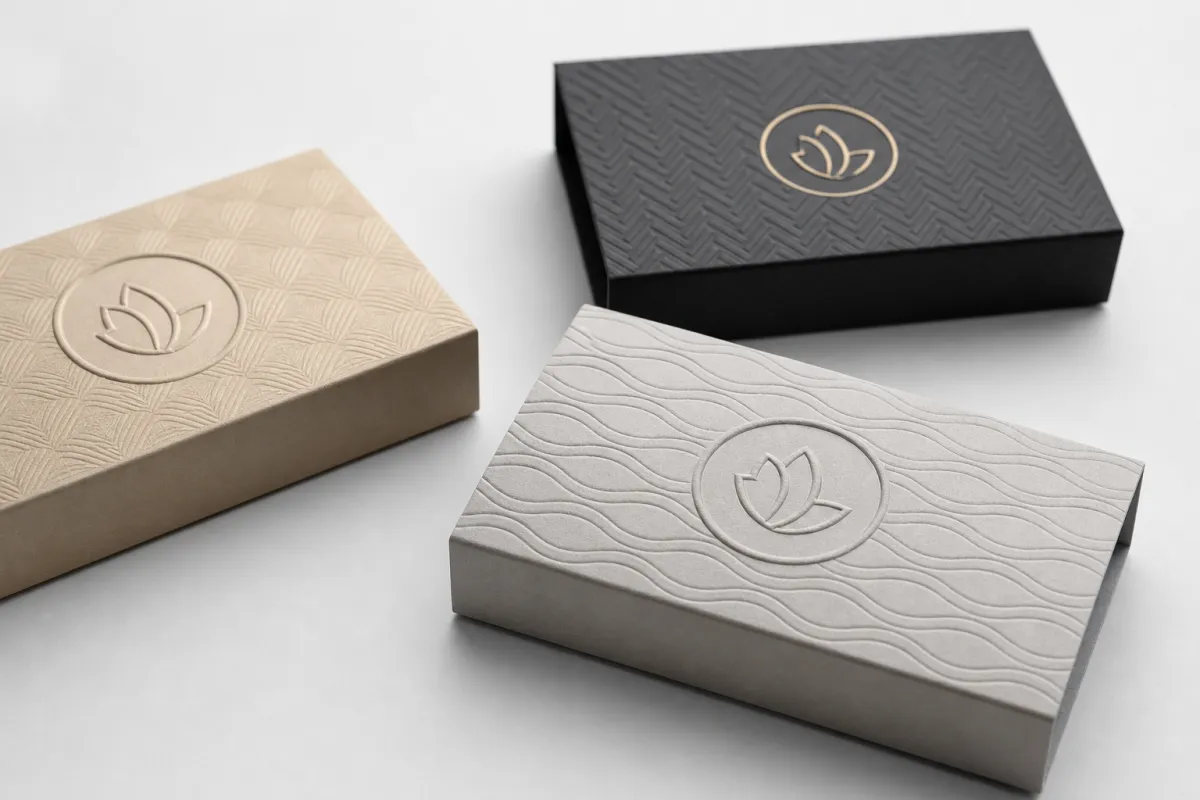
The reason embossed packaging sleeves with logo work so well is pretty simple: contrast. Flat print can be crisp, but a raised mark adds another layer of perception, and that makes the whole sleeve feel more deliberate. Even a subtle emboss can shift how someone reads the package, because the surface itself starts carrying part of the message.
From a packaging buyer's perspective, that gives the sleeve a real job. First, it can make a standard carton feel premium without a structural overhaul. Second, it can stay flexible across launches, since the same base box can wear different sleeves for seasonal graphics, limited editions, or co-branded runs. Third, it stores flat, which is a nice benefit when warehouse space is already tight.
There is also a retail and DTC benefit that gets overlooked. If the box lands on a studio table, in a boutique back room, or on a customer's doorstep, the sleeve is usually the first surface people touch. That first contact can influence perceived value more than a louder graphic ever could. Embossed packaging sleeves with logo tend to signal care, and care is part of the product story.
Where they fit best depends on the route the package takes. In subscription boxes, the sleeve can frame the monthly reveal. In influencer kits, it can create a camera-friendly surface that reads well under mixed lighting. In retail packaging, it can add a premium layer to a simple base carton. For DTC shipments, embossed packaging sleeves with logo can help a brand control cost while still improving the unboxing experience.
A raised logo does not need to shout. In a lot of cases, the best embossed packaging sleeves with logo are the restrained ones, because restraint makes the texture feel more expensive.
The sleeve should never fight the structure underneath. If the carton is flimsy, embossing will not fix the feel of the package. If the artwork is overcrowded, the texture can disappear into the noise. The strongest embossed packaging sleeves with logo support the box, the product, and the shipping method instead of trying to do every job at once.
For teams comparing options, it helps to think about package branding in layers:
- Base structure: the carton, mailer, or rigid box that protects the product.
- Surface identity: the sleeve, print, emboss, foil, or coating that shapes the look and touch.
- Customer moment: the unboxing sequence, where embossed packaging sleeves with logo often deliver the strongest return.
If you are still figuring out the larger structure, the smartest place to start is often a sleeve paired with a proven carton. That is where Custom Packaging Products can be a useful reference point, especially if you are building a branded packaging system that needs both shipping stability and presentation.
How Embossed Packaging Sleeves with Logo Are Made
The embossing process is straightforward in concept and a little more demanding in execution. For embossed packaging sleeves with logo, the artwork is first prepared as a vector file so the die maker can translate the logo, line weight, and spacing into a metal tool. That tool applies pressure to the paperboard fibers, pushing them upward so the logo rises above the surface instead of sitting flat on it.
The final look depends heavily on the paper stock. Softer boards tend to create a rounder, more tactile rise, while heavier or coated boards can hold sharper edges. That is why embossed packaging sleeves with logo should always be tested against the chosen substrate, not just approved on a screen. A logo that looks crisp in a PDF may behave differently once the fibers start moving under pressure.
Most production runs follow a familiar sequence:
- Confirm the carton or mailer dimensions.
- Build or approve the sleeve dieline.
- Prepare print-ready artwork and emboss callouts.
- Create the emboss die and any cutting or scoring tools.
- Print the sheet or roll stock.
- Apply embossing, foil, spot UV, or other finishes if specified.
- Die-cut, fold, and ship flat or assembled.
That sequence sounds tidy on paper, but the small details matter. If the register between print and emboss is off by even a little, the logo can look blurry or misaligned. If the score line is too shallow, the sleeve may crack at the fold. If the artwork is too fine, the raised shape may collapse or disappear into the grain. Embossed packaging sleeves with logo reward clean files and disciplined production planning.
Pairing emboss with other finishes can work beautifully, but it needs restraint. A little foil can make a mark glow, and soft-touch lamination can make the raised area feel especially rich. Spot UV can add contrast where the eye needs direction. Still, every extra step adds cost and production complexity, so the design should support the brand instead of trying to cram every available finish into one sleeve.
In practice, embossed packaging sleeves with logo tend to work best when the embossed area gets room to breathe. A centered logo, a clean border, and one or two well-placed details often outperform a busy surface full of competing effects. The tactile moment becomes clearer when the design is not trying to do five things at once.
For shipping programs, it is worth thinking about transport standards too. Teams that want a stronger validation approach often look at ISTA testing guidance for shipping simulation, especially when the package will be handled repeatedly before the customer sees it. That kind of discipline is useful because embossed packaging sleeves with logo should look good after transit, not just on a desk during approval.
Cost, Pricing, and MOQ for Embossed Packaging Sleeves with Logo
Pricing for embossed packaging sleeves with logo depends on a handful of variables that can move quickly if the design gets complicated. Sleeve size is the first one, because larger wraps use more board and more print area. The second is paper stock, since heavier or specialty boards cost more and may require slower production speeds. The third is finish complexity, because embossing itself is a setup step, and added effects like foil or soft-touch lamination increase both labor and setup time.
MOQ matters for the same reason. Once a die is made and a press is set up, the first pieces carry a larger share of the setup cost. That means small runs of embossed packaging sleeves with logo can feel expensive on a per-unit basis, while larger runs usually drop the unit price more comfortably. For a buyer planning a launch, that is not a flaw in the process; it is simply how custom print and finishing work behaves on press.
Here is a practical pricing view, using broad market-style ranges that will still vary by region, artwork, and production method:
| Option | Typical Stock | Finish | Approx. Unit Range | Notes |
|---|---|---|---|---|
| Simple sleeve | 300-350gsm SBS or C1S | 1-2 color print, light emboss | $0.18-$0.35 | Best for clean branding with modest tactile detail |
| Premium sleeve | 350-400gsm artboard | Emboss plus matte or aqueous coating | $0.35-$0.75 | Common for premium product packaging and DTC launches |
| Luxury sleeve | 400gsm+ specialty board | Emboss plus foil, soft-touch, or spot UV | $0.75-$1.60+ | Strong tactile effect, higher setup cost, better for high-value SKUs |
Those ranges assume a few thousand units rather than a tiny sample run. A pre-production sample or prototype can be more expensive per piece because the press still needs setup, the die still needs to be made, and the production team still has to check register, fold behavior, and fit. That is normal. It is also why embossed packaging sleeves with logo usually become much more cost-efficient as quantity rises.
When requesting a quote, the clearest brief is the fastest one. Include final dimensions, a flat dieline if you already have one, target quantity, artwork files, preferred stock, finish preference, packing method, and the ship-to deadline. If the sleeves must arrive in batches for staggered fulfillment, say that upfront. A good quote for embossed packaging sleeves with logo should make it obvious where the money is going.
There is another cost factor people overlook: logistics. Flat shipping is usually easier and cheaper than pre-assembled packing, but some fulfillment setups need sleeves nested or partially formed. Warehousing also matters, because a finished sleeve stack takes space and needs to stay clean. If the sleeve will be stored for several months, a finish that resists rub marks is worth considering even if it costs a little more upfront.
For brands working through the larger packaging budget, it often helps to compare the sleeve against the rest of the system. Sometimes a high-end sleeve plus a standard carton gives a better customer impression than overspending on a box that ships in a plain mailer. That is where custom printed boxes, sleeves, and inserts should be evaluated together instead of in isolation. If the base package still needs development, the Custom Packaging Products catalog can help teams think through the full stack of options.
One more practical note: if the project includes FSC sourcing, that should be specified early. FSC-certified board can support sustainable procurement goals, but it needs to be confirmed before print approval so the right substrate is quoted from the start. For teams that want more detail on responsible material choices, the FSC site is a reliable reference point.
Materials, Thickness, and Finish Choices That Affect Performance
Material choice shapes almost everything about embossed packaging sleeves with logo, from how sharp the emboss feels to how much the sleeve scuffs in transit. A lighter stock may keep the quote attractive, but it can also feel thin in the hand and lose some of the premium effect. A heavier board can feel much better, yet it may need more careful scoring so the folds do not split. The sweet spot depends on the product, the carton, and the shipping path.
Most sleeves are built on paperboard in the 300-400gsm range, though some brands move heavier when the package needs a more substantial tactile cue. A coated SBS board can make printed color pop cleanly, while an uncoated board tends to feel warmer and more natural. C1S boards are useful when one side needs strong print and the other side is less visible. Embossed packaging sleeves with logo can work on all of these, but the final feel changes enough that samples are worth the effort.
Thickness matters in two directions. Too thin, and the sleeve can wrinkle, bow, or feel underbuilt next to the product. Too thick, and the score lines can get stubborn, which makes folding slower and can weaken the crispness of the emboss. The best material for embossed packaging sleeves with logo is the one that balances clean forming with enough body to hold the raised area without flattening too quickly.
Finish choices also affect readability. Matte coatings reduce glare and make raised details easier to see under bright retail lighting. Soft-touch lamination can create a velvety feel, which many brands like for premium product packaging, though it may show fingerprints in some settings. Aqueous coating is useful when a practical, cost-conscious finish is needed. Uncoated stock gives the most paper-like feel, but it may absorb ink more readily and show handling marks sooner.
The sleeve also has to live through actual shipping conditions. Boxes rub. Cartons stack. Tape edges catch. Conveyor belts scuff. If the emboss is tall and the finish is soft, repeated friction can soften the effect before the package arrives. Embossed packaging sleeves with logo should therefore be tested not just for beauty, but for how the surface looks after a little abrasion and pressure.
Here is a simple way to think about the tradeoffs:
- Coated board: cleaner print, sharper color, slightly less natural hand-feel.
- Uncoated board: warmer tactile impression, more absorbent, often softer-looking emboss edges.
- Soft-touch lamination: luxurious feel, but best paired with careful handling.
- Matte or aqueous coating: practical and flexible for shipping-heavy programs.
For brands that want the sleeve to connect with broader retail packaging, consistency matters. The sleeve should not look like a separate object pasted onto the box; it should feel like part of the package branding system. That is why color match, emboss scale, and material tone need to be considered together. A bright sleeve on a dull carton can feel disconnected. A restrained sleeve on a well-chosen base can feel much more complete.
Process and Timeline: Production Steps for Embossed Packaging Sleeves with Logo
The cleanest projects start with the clearest measurements. Before embossed packaging sleeves with logo go into production, the carton or mailer dimensions should be confirmed from an actual sample, not just a drawing. Even a small difference in width or depth can change how the sleeve sits, where the seam lands, and whether the emboss aligns with the visible face of the box.
A realistic production timeline usually begins with a brief and a dieline check, then moves into artwork prep, proofing, tooling, and production. If the sleeve needs a custom emboss die, that step can add meaningful lead time. If the project also includes foil or a specialty coating, the schedule expands further because every additional process needs its own quality check. For many runs of embossed packaging sleeves with logo, the safest planning window is often 12-15 business days after proof approval, though complex jobs can take longer.
Where do delays usually happen? Missing vector files. Last-minute box changes. Artwork that has not been separated for print and emboss correctly. Color approvals that come back after the press slot has already shifted. These are ordinary production delays, not unusual failures, and they are exactly why embossed packaging sleeves with logo benefit from a disciplined handoff between design and manufacturing.
A practical workflow looks like this:
- Measure the carton or insert precisely.
- Build the sleeve layout with bleed, score lines, and seam allowances.
- Approve the artwork and confirm where the logo will be embossed.
- Create the die and review a digital or physical proof.
- Run a pre-production sample if the sleeve fit or finish is critical.
- Start full production once the sample is accepted.
- Pack flat or pre-formed according to fulfillment needs.
For shipping teams, the best schedule is the one that connects sleeve delivery to the rest of the packaging supply chain. Cartons, inserts, labels, and sleeves should not arrive in a random sequence. If the sleeves show up too early, they take space. If they show up too late, the launch slips. Embossed packaging sleeves with logo are only useful when the whole system arrives in sync.
That is also where some packaging buyers make a smart move and ask for a small run first. A short test run may feel slower on paper, but it can save a much larger order from mistakes in fit or finish. A sleeve that looks great in proof but shifts on the box is a costly lesson. A sleeve that fits and reads cleanly in real light is worth the extra step.
When the shipment will travel through parcel channels, it is smart to think about durability in a more formal way. Some teams use shipping simulation as part of their QA process, and standards like ISTA can be helpful in judging how well a package holds up under vibration, drop, and compression. That kind of thinking keeps embossed packaging sleeves with logo from becoming a pretty object that only works in a perfect environment.
For a brand launching with custom printed boxes as part of the same program, the sleeve schedule should be aligned with the box schedule from day one. Coordinating those steps early is usually easier than trying to fix mismatched inventory later. A good packaging design plan treats the sleeve, carton, and ship date as one timeline rather than three separate problems.
Common Mistakes When Ordering Embossed Packaging Sleeves with Logo
The most common mistake is overdesigning the artwork. Fine type, hairline rules, tiny symbols, and crowded logos can all lose clarity when the emboss die presses into the board. Embossed packaging sleeves with logo usually look stronger when the logo has enough boldness to survive the physical process. The raised area needs room to breathe, or the texture turns muddy.
Another frequent problem is ignoring carton tolerances. A sleeve can be perfect on a sample box and still behave badly on a production box if the box dimensions wander. Corrugated cartons especially can vary a little from run to run, and those small changes matter. Embossed packaging sleeves with logo should be designed with a realistic allowance for fit so they do not bow, twist, or sit loose on the final package.
Proofing mistakes are just as common. A screen mockup does not show you how the board feels, how the emboss catches light, or how the color shifts under actual print conditions. Approving color without checking texture is one of the easiest ways to miss a problem. A pre-production sample gives the buyer a real chance to check alignment, fold quality, and the strength of the tactile effect.
Shipping missteps can be costly too. Some finishes hold up better than others, and a sleeve that looks luxurious in the studio may mark too easily in transit. Weight is another concern, especially when the package ships across a long distance or in volume. If the sleeve is too heavy, it can add cost without adding enough perceived value. Embossed packaging sleeves with logo should feel premium, not bulky.
A few other mistakes show up often enough to deserve their own warning:
- Using a logo scale that is too small for the chosen emboss depth.
- Skipping a fit check on the exact production carton.
- Choosing a coating that hides the tactile effect more than expected.
- Sending raster artwork instead of clean vector files.
- Assuming every sleeve will fold the same after embossing.
These issues are fixable, but only if they are caught early. The strong habit is to compare the physical sample, the dieline, and the shipping requirement together. That is how embossed packaging sleeves with logo stop being a generic marketing idea and become a dependable part of product packaging.
Brands also sometimes underestimate how the sleeve looks after handling. A finish that resists scuffing in one part of a plant may behave differently in another, especially if the package is stacked, shifted, or packed next to rougher cartons. If the sleeve is part of branded packaging for a premium launch, this is not the place to assume everything will stay pristine without testing.
Expert Tips and Next Steps for Embossed Packaging Sleeves with Logo
If the goal is to get embossed packaging sleeves with logo right on the first serious run, start with a tight brief. Give the supplier the exact carton size, the shipping method, the brand mood, the expected handling conditions, and the tactile effect you want people to notice first. That little bit of clarity helps the production team Choose the Right stock, the right score, and the right emboss depth.
One of the best habits is ordering a sample or short run before committing to full volume, especially when the sleeve is supposed to carry most of the visual impact. Embossed packaging sleeves with logo can look clean on a render and still need small adjustments in the real world. A sample lets you check how the logo reads in daylight, under office lighting, and against the actual carton color.
Another useful rule is to keep the design focused. Choose one strong tactile moment and let it do the work. If the logo is embossed, maybe the rest stays clean and quiet. If foil is included, let the foil and emboss support each other instead of competing. A restrained layout often looks more premium than a crowded one, particularly on custom printed boxes where every extra effect increases the chance of visual noise.
For teams building a launch plan, the next steps are usually simple but important:
- Measure the carton carefully and confirm the sleeve wrap area.
- Gather vector artwork and separate emboss instructions from print art.
- Choose stock, finish, and quantity before requesting the quote.
- Ask for a timeline that includes tooling and sample approval.
- Compare the sleeve with the rest of the packaging design system.
That comparison matters more than many brands expect. A well-made sleeve can lift a standard shipping carton into something memorable, but it works best as part of a package branding system that already makes sense. When the sleeve, insert, and box all support each other, the result feels considered rather than patched together. That is how embossed packaging sleeves with logo earn their keep.
For brands that need a broader sourcing view, the safest approach is to line up the sleeve with the rest of the packaging order early. If the box supplier, print supplier, and fulfillment team are not aligned, the project can get messy fast. If they are aligned, embossed packaging sleeves with logo can be one of the cleanest ways to increase perceived value without rebuilding every component from scratch.
If sustainability is part of the brief, material selection should reflect that from the start. FSC board, right-sized structures, and finishes that support reuse or easier recycling can all be considered during planning. The key is to make those choices while the design is still flexible, not after the artwork is already locked.
Embossed packaging sleeves with logo are most effective when they feel purposeful: the right board, the right texture, the right fit, and the right amount of visual restraint. Done well, they add depth to branded packaging, support retail packaging goals, and make product packaging feel more complete without asking the base carton to do all the work.
Take the next step by confirming the carton dimensions, choosing the stock, and requesting a physical sample before you lock the full run. That one sample will tell you more than a dozen render views ever could, and it will save you from guessing about fit, texture, and finish.
FAQ
What are embossed packaging sleeves with logo used for?
They add tactile branding to shipping boxes, retail cartons, subscription kits, and gift packaging without redesigning the base package. They are especially useful when a plain carton needs to feel more intentional, more premium, or more aligned with the rest of the brand experience.
How much do embossed packaging sleeves with logo cost?
Pricing depends on sleeve size, paper stock, emboss depth, finish choices, and quantity. Tooling and setup usually make the first run more expensive per unit, while larger orders tend to lower the unit price. A simple sleeve can be relatively modest, but a sleeve with foil, soft-touch lamination, or deep embossing will sit at a higher price point.
How long does it take to produce embossed packaging sleeves with logo?
Timeline depends on artwork readiness, proof approval, tooling needs, and the size of the production run. Projects move faster when dimensions are final, files are print-ready, and the sleeve does not need multiple finish layers. Complex jobs with custom tooling or repeated revisions can take longer, so it helps to plan early.
What file format is best for embossed packaging sleeves with logo artwork?
Vector files such as AI, PDF, or EPS are usually best because they hold clean edges for logos and line work. It also helps to separate print artwork from emboss instructions so the die maker can build the raised area accurately and avoid translation problems in production.
What mistakes should I avoid with embossed packaging sleeves with logo?
Avoid tiny details, weak carton measurements, and finishes that do not hold up well during shipping and handling. Always test a sample or proof so you can check fit, fold quality, and how the embossed logo reads in real light before approving a full production run.


