Buyer Fit Snapshot
| Best fit | embossed paper bags with logo for packaging buyers comparing material specs, print proof, MOQ, unit cost, freight, and repeat-order risk where brand print, material, artwork control, and repeat-order consistency matter. |
|---|---|
| Quote inputs | Share finished size, material target, print colors, finish, packing count, annual reorder estimate, and delivery region. |
| Proofing check | Approve dieline scale, logo placement, barcode or warning zones, color tolerance, and any recyclable or compostable wording before bulk production. |
| Main risk | Vague material claims, crowded artwork, or missing packing details can create delays even when the unit price looks attractive. |
Fast answer: Embossed Paper Bags with Logo: Branding, Cost, Process should be specified like a repeatable production item. The safest quote includes material, print method, finish, artwork proof, carton packing, and reorder notes in one written spec.
What to confirm before approving the packaging proof
Check the product dimensions against the actual filled item, not only the sales mockup. Ask for tolerance on folds, seals, hang holes, label areas, and retail display edges. If the package carries a logo, QR code, warning copy, or legal claim, reserve that space before decorative graphics fill the panel.
How to compare quotes without losing quality
Compare board or film grade, print process, finish, sampling route, tooling charges, carton quantity, and freight assumptions side by side. A lower quote is only useful if the supplier can repeat the same color, closure quality, and packing count on the next order.
Embossed Paper Bags with Logo change the first impression before a customer reads a single word. The raised surface speaks first. That matters because touch often registers quality faster than color, copy, or even shape. A thumb running over a crisp impression can do more branding work in two seconds than a long paragraph ever could.
That is why embossed Paper Bags With Logo keep turning up in premium retail, hospitality, gift packaging, and event kits. They are not decorative extras. They affect brand perception, production timing, unit cost, and how well the bag holds up once it leaves the counter and enters the messy part of the journey: hands, car seats, crowded sidewalks, and storage closets.
For a packaging buyer, the useful question is not whether embossing looks attractive. It usually does. The real issue is whether embossed paper bags with logo fit the product, the budget, and the calendar without creating avoidable problems later. That tradeoff sits at the center of every good packaging decision, and it is the part people sometimes gloss over.
Embossed paper bags with logo: what they are and why they stand out
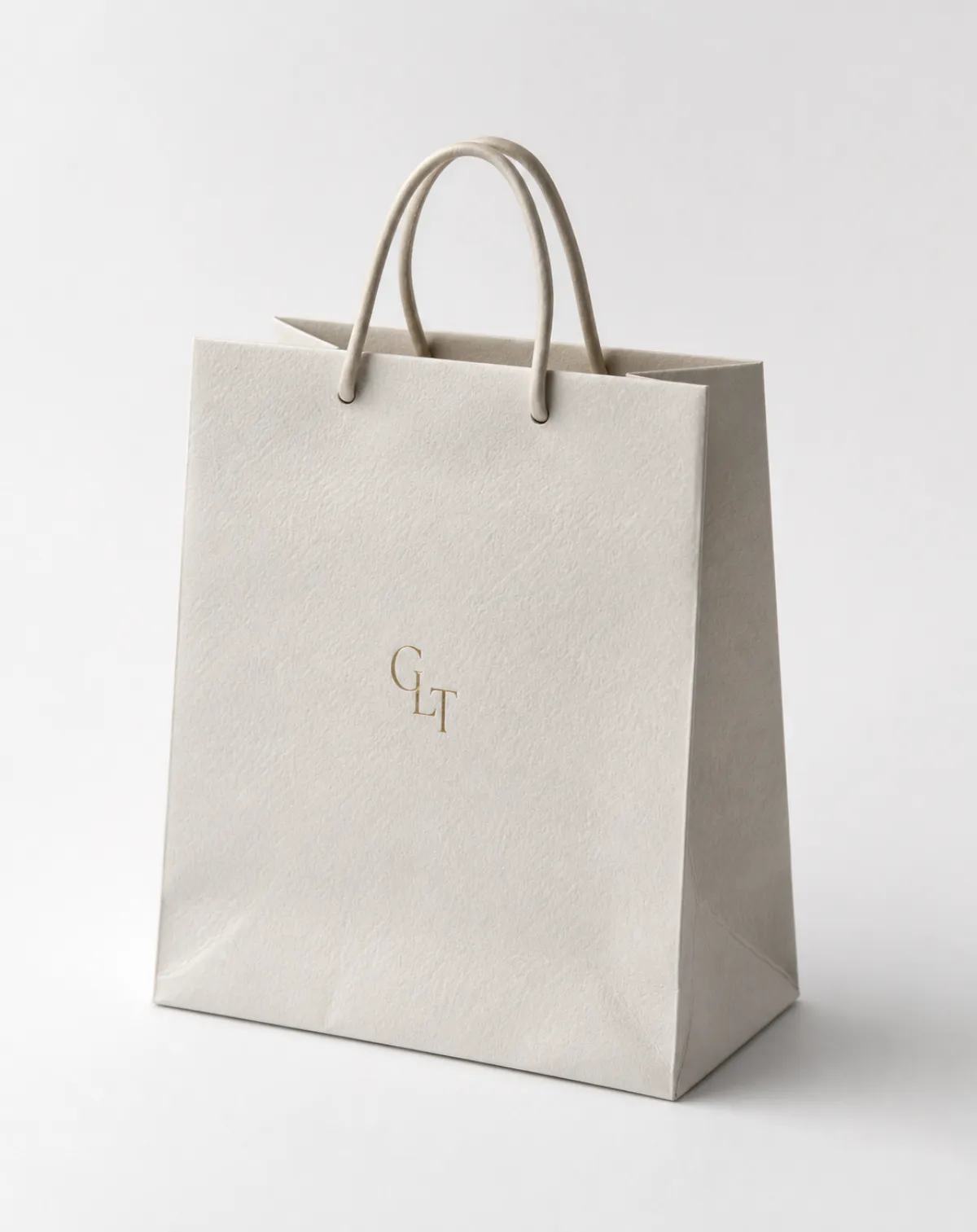
Embossed paper bags with logo use pressure to raise or recess part of the paper surface so the design can be felt as well as seen. Ink may be involved, or it may not be. A blind emboss gives a clean sculpted mark with no color at all, while a printed logo can be embossed afterward for extra depth and shadow. That second layer is not just cosmetic; it changes how the bag behaves under light and in the hand.
The effect is restrained, which is exactly why it works. Flat print communicates from across a room. Embossing changes the bag at close range. The texture arrives the moment someone lifts it, and that split-second contact gives embossed paper bags with logo an advantage that ordinary carrier bags rarely match. They do not announce themselves loudly. They linger.
That tactile difference matters for branding. A small mark with a strong emboss often feels more intentional than a crowded design with four inks and no surface variation. Many brands chase visual density when the smarter move is simpler: one clean raised logo, one well-chosen stock, and one clear silhouette. Embossed paper bags with logo make that restraint feel expensive rather than empty.
Here is a useful comparison:
| Finish | How it looks | How it feels | Best use case | Typical tradeoff |
|---|---|---|---|---|
| Standard print | Clear, direct, high visibility | Flat | High-volume retail and promotions | Lowest cost, least tactile impact |
| Embossing | Subtle, premium, restrained | Raised or recessed | Luxury, gifting, boutique packaging | Needs stronger paper and a die |
| Debossing | Pressed inward, understated | Indented | Quiet branding, editorial styles | Can soften on thin stocks |
| Foil stamping | Reflective, eye-catching | Light texture, mostly visual | Premium launches and gift sets | Higher setup and a more decorative look |
That table frames embossed paper bags with logo as a packaging decision instead of a decorative afterthought. If your brand needs instant shelf visibility, print may be enough. If the goal is a premium signal that survives close handling and repeated touches, embossing deserves serious consideration.
It also helps to think in terms of material behavior. Paper has memory. Pressure reshapes it best when the stock has enough body to hold the detail without collapsing. In practice, embossed paper bags with logo perform best when paper weight, handle style, print method, and structural build are selected together rather than piecemeal.
Another detail often gets missed: embossing can make a smaller logo feel larger without increasing the printed area. That matters for brands that want a cleaner face panel or a more restrained design language. Embossed paper bags with logo often succeed not because they shout louder, but because they feel settled and complete.
"The bag does not have to explain the brand in one glance. Sometimes it only has to make the customer curious enough to keep holding it."
Embossed paper bags with logo production: process, timeline, and lead time
Making embossed paper bags with logo starts with artwork review, but the real work begins when the design is translated into a metal die or plate. The supplier checks line thickness, negative space, and the intended depth of the impression before tooling is made. Hairline strokes and tiny text usually need cleanup, because paper does not forgive delicate details the way a screen does.
After artwork approval, the die is prepared and the press is set for the chosen stock. Sample inspection follows, then bulk production, drying, trimming, assembly, and packing. The sequence sounds tidy on paper. Live orders are less obedient. A slight shift in pressure or paper moisture can alter the impression, which is why embossed paper bags with logo often need a sample round before full production starts. That can feel a little fussy, but it saves a rerun.
Paper selection changes the result more than many buyers expect. A 250gsm sheet may look adequate on a spec sheet, yet it can feel too soft for a sharp, deep impression. By contrast, 300gsm to 400gsm kraft or art paper usually carries embossing with more definition, especially if the bag also needs handles, reinforced tops, or a folded base. For embossed paper bags with logo, the stock is part of the design, not just the surface.
Timelines depend on the amount of custom work involved. A straightforward order with approved artwork might move in about 12 to 15 business days after proof approval. Add custom size changes, a first sample, or a second finish, and the schedule can stretch toward 18 to 25 business days. International freight adds more time, sometimes another week or two depending on route and customs timing.
The delay usually appears in one place: the first proof is rarely the last proof. Fine-line logos, specialty papers, and combined finishes often need a revision. That is not unusual. Embossed paper bags with logo are challenging because quality depends on alignment between artwork, tooling, and material. Miss one of those and the whole effect loses authority.
When planning lead time, it helps to break it into checkpoints:
- Artwork review: 1 to 3 business days
- Die or plate creation: 3 to 7 business days
- Sample approval: 2 to 5 business days, depending on revisions
- Bulk production: 5 to 12 business days for many standard runs
- Freight and delivery: highly variable by distance and mode
For shipping tests and pack-out confidence, some brands also ask suppliers to follow relevant transportation standards. If the bags are part of a retail kit or shipped with fragile goods, it can be worth checking ISTA guidance so the packaging performs in transit as well as it performs on the shelf.
A careful buyer watches for three timing traps. The first is artwork that looks acceptable on a laptop but is not actually press-ready. The second is toolmaking that begins before the final proof is signed. The third is a late change to handles or dimensions after the die is already made. Any one of those can turn embossed paper bags with logo from a controlled schedule into an expensive scramble.
There is also a materials angle tied to sustainability claims. If a brand wants FSC-certified paper, the supplier should be able to document chain of custody through FSC. That does not make the order environmentally perfect by default, but it does give buyers something concrete to verify rather than relying on vague green language.
Strong results come from simple concepts, strong stock, and a tight approval chain. The more custom the bag becomes, the more each decision affects the final outcome. Embossed paper bags with logo reward that kind of discipline.
Cost, pricing, and MOQ: what changes the unit cost
Pricing for embossed paper bags with logo usually comes down to setup cost, material cost, and press time. Setup includes the die, plate, or mold. Material includes paper weight, handle type, and reinforcement. Press time changes depending on whether the finish is blind embossing, emboss plus print, or emboss plus foil. Each added step pushes the unit price upward, sometimes more than buyers expect.
The biggest surprise for first-time buyers is how much quantity changes the price. A tooling charge of $80 to $250 can disappear inside a 10,000-piece run, yet it weighs heavily on a 500-piece order. That is why embossed paper bags with logo are usually more expensive per bag at low quantities. The economics improve as the order gets larger and the setup cost gets spread across more units.
Minimum order quantities vary, but custom embossed work often starts around 1,000 to 3,000 bags, with many suppliers preferring 5,000 pieces or more for better press efficiency. Smaller runs are possible, though they usually carry a premium because the equipment and labor do not shrink just because the order size does. For embossed paper bags with logo, MOQ is a cost-control mechanism as much as a policy line.
Below is a practical way to think about price bands for a typical medium-size bag order. These are broad ranges, and they shift with size, stock, region, and print coverage, but they are useful for planning.
| Option | Typical MOQ | Typical unit cost at 5,000 pcs | Best fit | Notes |
|---|---|---|---|---|
| Printed paper bag only | 1,000-3,000 | $0.18-$0.30 | Retail promotions, general branding | Lowest cost, no tactile finish |
| Blind embossed bag | 1,000-3,000 | $0.26-$0.42 | Boutique, gifting, premium retail | Requires stronger stock and tooling |
| Embossed bag with one-color print | 2,000-5,000 | $0.32-$0.55 | Brands that want visibility and texture | Better logo recognition at a distance |
| Embossed bag with foil | 3,000-5,000 | $0.45-$0.85 | Launches, luxury retail, event kits | Highest visual impact, highest setup |
Those numbers are not universal, but they show the pattern clearly. Blind embossing is often the most efficient premium option. Add foil, multiple inks, or special coatings, and the budget climbs fast. Embossed paper bags with logo can still be cost-effective, but only when the brand knows which finish is carrying the visual weight.
The cost levers are usually predictable:
- Paper stock: heavier, smoother, or specialty papers cost more
- Bag size: larger formats use more material and stronger handles
- Handle type: rope, ribbon, and cotton handles add labor and cost
- Emboss depth: deeper impressions need more careful setup
- Color count: more ink passes increase both setup and production time
- Custom die: a new tool is usually required for each unique design
Ask for a line-item quote whenever possible. Then the die charge, print charge, finishing charge, and freight charge stay visible instead of dissolving into a single number. It is much easier to compare quotes for embossed paper bags with logo when you can see whether one supplier bundled the tooling and another did not. Headline price alone hides too much.
A practical comparison: a brand might save a few cents by dropping foil and keeping a blind emboss, but if the logo becomes too faint, the bag stops doing its job. The cheapest embossed paper bags with logo are not always the smartest buy. The right price is the one that matches the visual goal and the planned order volume.
Key design factors for embossed paper bags with logo
Logo shape is the first variable to inspect. Bold marks, wider strokes, and simple geometry emboss more cleanly than tiny text or intricate linework. If the logo depends on fine serifs, crowded words, or thin outlines, embossed paper bags with logo may need a simplified version for the bag face even if the full logo remains intact elsewhere.
Paper texture comes next, and it matters more than many people expect. Smooth stocks usually give a sharper edge to the impression, while rough kraft surfaces create a softer, more natural feel. Neither is automatically better. A luxury cosmetics brand may want a crisp, polished face panel. A natural food brand may prefer a quieter, tactile finish. Embossed paper bags with logo can support both, but not with the same material choice.
Placement shifts the message too. A centered logo reads as formal and deliberate. A lower-corner mark feels editorial and restrained. Repeated all-over patterns can look elegant, but they can also complicate the die and add cost. In practice, the best layout is the one that fits the handling distance. If the bag will mostly be seen in a customer's hand, embossed paper bags with logo can be subtle. If it will be photographed often, the logo may need more contrast.
Construction matters more than people think. A beautifully embossed face panel can still feel disappointing if the handle attachment is weak or the base folds awkwardly under load. Bag size, gusset depth, and reinforcement should all be checked together. A premium finish on a flimsy structure sends mixed signals, and embossed paper bags with logo are meant to avoid exactly that kind of disconnect.
Here is a simple way to think about the visual strategy:
- Blind emboss only: best for understated, premium presentation
- Emboss plus print: best for logo visibility and stronger recognition
- Emboss plus foil: best for launch moments and high-impact retail
- Pattern emboss: best for custom texture and design-led brands
Color contrast is optional, but it can be strategic. A blind embossed mark feels refined and calm. A printed logo with embossing behind it can read faster from a distance. The point is not to add everything. The point is to choose only the finishes that improve the bag's job. For embossed paper bags with logo, restraint often looks more expensive than excess.
If you want a packaging standard to think around, consider how the bag will be handled, stored, and shipped. A structure that looks strong in a studio but fails in a carton is not a premium bag. Many brands test carrying weight, scuff resistance, and handle pull before approving the final embossed paper bags with logo.
Another detail worth watching is the relationship between emboss depth and readability. A deeper impression can create stronger shadows, but if the stock is too soft, the detail may spread instead of sharpening. That is why sample review matters so much. On-screen mockups cannot fully show how embossed paper bags with logo will feel under real pressure, real light, and real handling.
From a packaging buyer's point of view, the best designs are often the ones that survive a five-second glance and a five-second touch. If the bag succeeds at both, the brand looks considered rather than overworked.
Step-by-step guide to ordering embossed paper bags with logo
Start with a clear brand brief. Gather the logo files, preferred dimensions, expected contents, target budget, and any sustainability requirements before talking to suppliers. A quote for embossed paper bags with logo only helps if everyone is pricing the same thing. Without the brief, suppliers are guessing, and guessing leads to revisions later.
Choose the bag structure before locking in the finish. Size, paper weight, handle style, and gusset depth should come first because they shape the way the emboss behaves. A 300gsm paper shopping bag with twisted paper handles is a different build from a rigid gift bag with cotton rope. Embossed paper bags with logo are far easier to spec when the structure is fixed early.
After that, request mockups or physical samples. A sample tells you three things at once: how deep the emboss reads, whether the logo stays clean at the chosen size, and whether the paper feels strong enough under hand pressure. If the bag is for retail, hold it at arm's length. If it is for gifting, feel it under load. Embossed paper bags with logo can look excellent on a digital proof and still disappoint in the hand.
Before approving production, check these points carefully:
- Logo is positioned within a safe margin and not too close to folds
- Emboss area is large enough to remain legible after pressing
- Paper stock can support the chosen depth
- Handles, base, and gusset match the expected product weight
- Production timeline includes sample approval and freight time
Confirm whether the supplier is quoting with or without tooling. A die charge of $120 to $300 is common for custom embossed work, yet not every quote spells that out cleanly. Compare like with like. Embossed paper bags with logo should be judged on the full landed cost, not just the headline unit price.
If the order is tied to a launch, store opening, trade show, or seasonal promotion, build a buffer into the schedule. A good rule is to add at least one week beyond the supplier's stated lead time. That cushion protects you from sample revision, freight delay, or a short run that needs a reprint. In packaging, the calendar is part of the specification.
One practical ordering sequence looks like this:
- Step 1: Define the brand use case
- Step 2: Lock the bag size and construction
- Step 3: Choose emboss location and depth
- Step 4: Review sample and approve or revise
- Step 5: Confirm production slot and freight mode
- Step 6: Plan reorder timing for the next cycle
The process sounds simple because it should be. It prevents most of the expensive mistakes. Embossed paper bags with logo reward careful buyers. The more deliberate the order, the more likely the final result looks clean, balanced, and worth keeping.
Common mistakes that flatten embossed paper bags with logo
The biggest mistake is asking a thin or busy logo to do an embossing job it cannot support. Tiny lettering, narrow outlines, and crowded elements often flatten out because paper does not behave like a digital canvas. If the design needs to be read from ten feet away, embossing alone may not be enough. Embossed paper bags with logo work best when the mark is bold enough to hold its shape after pressing.
Another common problem is paper that is too soft, too thin, or too heavily textured. These stocks absorb the pressure and blur the edges. The result is not dramatic. It is vague. If the bag will carry weight, structure should come first and decoration second. Strong embossed paper bags with logo are built from the inside out.
Budget mistakes happen too. Some quotes look lower because they exclude die creation, proofing, or freight. Others bundle those costs but hide the unit math. Either way, the buyer thinks the order is cheaper than it really is. For embossed paper bags with logo, always ask what is included in setup, sampling, and packaging of the final shipment.
Timelines create another trap. A clean, simple order can move quickly, but a complicated one rarely does. If the design needs revised artwork, a first sample, and a second round of approval, the lead time grows fast. That is not a supplier failure. That is the nature of custom work. Embossed paper bags with logo need more breathing room than standard printed bags.
Do not skip the physical sample. Ever. A screen proof cannot tell you how the impression catches light, how the stock flexes, or whether the logo feels centered in the hand. A sample can reveal issues in minutes that might cost a full run if discovered later. A lot of packaging frustration starts right there, and the sample stage is where it can be stopped.
Watch for these warning signs:
- The logo uses hairline detail that disappears in small sizes
- The paper weight is below what the supplier recommends for embossing
- The quote has a suspiciously low unit price and vague setup terms
- The supplier will not show a sample or mockup before production
- The order timeline leaves no room for revision or transit delays
There is also a branding mistake that is harder to spot. Some teams add embossing simply because it feels premium, even when the visual system does not need it. That can make the bag feel ornamental rather than intentional. Embossed paper bags with logo should support the brand story, not compete with it.
Packaging standards can help here. For transport testing, follow the logic of ISTA. For material sourcing, check FSC documentation. For environmental framing, use EPA guidance carefully and accurately instead of leaning on vague claims. Those references do not replace good design, but they keep the project grounded in verifiable choices. One useful EPA starting point is EPA recycling guidance.
Expert tips and next steps for embossed paper bags with logo
Start with one hero bag size. Too many brands try to launch three formats, two handle types, and four finishes at once. That spreads the budget thin and makes the approval process messy. A single strong format is easier to refine, easier to reorder, and easier to keep consistent. For embossed paper bags with logo, consistency matters more than a long menu of options.
If you are unsure how deep the emboss should be, ask the supplier for two sample levels on the same stock. A shallow impression may read elegantly on a refined brand, while a deeper one can create stronger shadow and more visual drama. Seeing both side by side is often the fastest way to choose. Embossed paper bags with logo are one of those categories where touch changes the answer as much as sight.
Consider pairing blind embossing with restrained print when the logo needs stronger recognition. The embossed area gives the bag character, while a small amount of ink keeps the mark legible in busy environments. That balance often works better than jumping straight to foil. For some brands, the quieter version is the one customers remember longest.
Ask every supplier for a written spec sheet. It should list paper weight, handle type, emboss location, die charge, unit price by quantity, sample terms, and estimated lead time. If any of those items are missing, the quote is incomplete. The more exact the spec, the easier it is to compare embossed paper bags with logo across suppliers without making assumptions.
As a final decision rule, keep the following in mind:
- Use blind embossing if you want restraint and texture
- Use print plus embossing if logo recognition matters most
- Use foil plus embossing only if the brand needs extra shine
- Use stronger paper before increasing emboss depth
- Use a sample before approving a full run
Then compare three quotes, not one. Prices for embossed paper bags with logo vary because suppliers handle tooling, paper sourcing, and freight differently. Three quotes give you a range, and the range reveals where the market is actually sitting. That is much more useful than chasing the cheapest number on a page.
If the order is tied to a future reprint, ask about archive tooling and reorder terms. A well-documented die and spec sheet can shorten the next run dramatically. That is where good packaging decisions begin paying back. A one-time bag purchase is a cost. A repeatable packaging system is an asset.
Frequently Asked Questions
What paper works best for embossed paper bags with logo?
Choose a stock that is sturdy enough to hold the raised impression without collapsing around the logo. In many cases, 300gsm to 400gsm paper performs better than lighter stock, especially if the bag carries weight or uses a deep emboss. Ask for sample swatches so you can compare smooth and lightly textured options before committing. If the bag will hold heavier items, strength should come first and emboss depth second.
Are embossed paper bags with logo more expensive than printed bags?
Usually yes, because embossing adds tooling, setup, and press time beyond standard printing. The price gap shrinks as quantity rises, since setup costs are spread across more bags. Simple blind embossing is often more affordable than combining embossing with foil or multiple print passes. The final cost depends on paper weight, handle style, bag size, and order volume.
How long does it take to produce embossed paper bags with logo?
Lead time depends on artwork approval, die creation, sample rounds, quantity, and shipping distance. A clean, approved design moves faster than a complicated logo that needs revision before production starts. Many standard jobs land around 12 to 15 business days after proof approval, but first-run samples and premium finishes can extend that window. If the bags are tied to an event or launch, build in extra time.
Can I use a full-color logo on embossed paper bags with logo?
Yes, but the logo needs enough clear space and contrast so the embossing does not blur the design. Many brands use print plus embossing for visibility, or a blind emboss for a quieter premium look. The best choice depends on how close customers will be to the bag and how much detail the logo contains. If the logo is highly detailed, a simplified version often performs better on the bag face.
What is the minimum order for embossed paper bags with logo?
MOQ varies by supplier because custom tooling and setup costs need to be recovered. Smaller runs are possible, but the unit cost is usually higher than a larger production order. Many custom projects start around 1,000 to 3,000 bags, while better pricing often appears at 5,000 pieces or more. If you only need a short run, ask for the smallest viable MOQ and compare it with a standard printed option.
Embossed paper bags with logo work best when the brand treats them as a packaging system, not a finishing trick. Get the structure right, keep the artwork readable, ask for a sample, and compare quotes with the full setup cost visible. Do that, and embossed paper bags with logo can deliver the tactile, premium impression that flat print alone rarely matches.


