Buyer Fit Snapshot
| Best fit | Embossed Shipping Boxes with Logo projects where brand print, material claims, artwork control, MOQ, and repeat-order consistency need to be specified before quoting. |
|---|---|
| Quote inputs | Share finished size, material target, print colors, finish, packing count, annual reorder estimate, ship-to region, and any compliance wording. |
| Proofing check | Approve dieline scale, logo placement, barcode or warning zones, color tolerance, closure strength, and carton packing before bulk production. |
| Main risk | Vague material claims, crowded artwork, missing packing details, or unclear freight terms can make a low unit price expensive after revisions. |
Fast answer: Embossed Shipping Boxes with Logo: Board, Finish, Dieline, and Unit Cost should be specified like a repeatable production item. The safest quote records material, print method, finish, artwork proof, packing count, and reorder notes in one written spec.
Production checks before approval
Compare the actual filled-product size with the drawing, then confirm tolerance on folds, seals, hang holes, label areas, and retail display edges. Reserve space for logos, QR codes, warning copy, and material claims before decorative graphics fill the panel.
Quote comparison points
Review material grade, print process, finish, sampling route, tooling charges, carton quantity, and freight assumptions side by side. A quote is only useful when the supplier can repeat the same color, closure quality, and packing count on the next order.
Embossed shipping Boxes with Logo change the feel of a parcel before the knife ever reaches the tape. A plain corrugated shipper says the job is transport; a raised brand mark says the carton was planned with care, that the opening moment matters, and that the package is part of the product experience rather than a disposable shell. In ecommerce shipping, in order fulfillment, and in that brief second when a customer lifts the box from the doorstep, that difference can shape how the brand is remembered.
I have seen buyers underestimate that effect more than once. A clean emboss on a well-built carton can make an otherwise ordinary box feel considered, even if the rest of the packaging stays practical and restrained. That kind of detail is not flashy, and it is not trying to be. It simply tells the customer the brand bothered to get the basics right.
Embossed shipping boxes with logo: why the detail changes perception
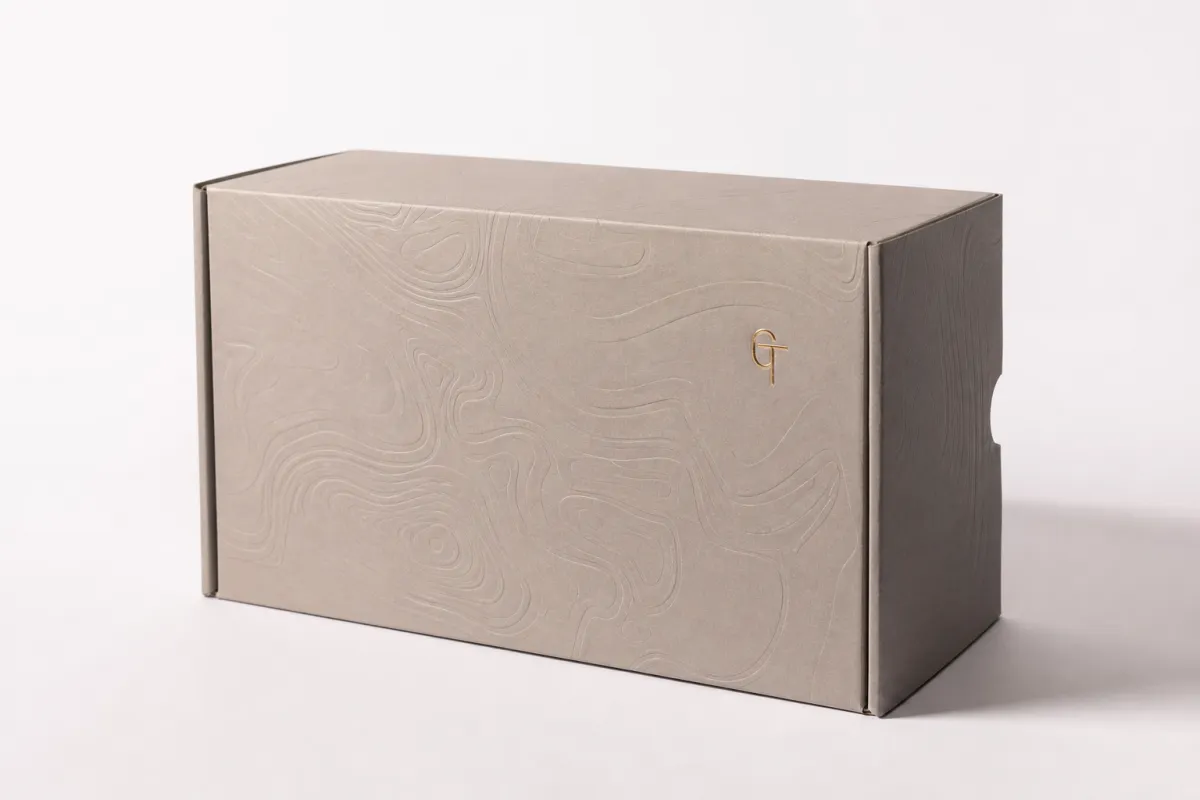
Picture a fulfillment line moving hundreds of orders before lunch. One carton is a standard kraft box with printed tape and a label slapped on the top. The next is embossed shipping Boxes With Logo, and the mark is visible in the side light even before the seal is broken. The box has not changed its basic job, yet it feels more intentional, more settled, and more tied to the brand behind it. That is the quiet power of a raised impression on transit packaging.
Embossing is a physical process, not a visual trick. A matched die presses the board so the logo rises from the surface, catching shadow and finger pressure in a way ink alone cannot. On corrugated board the effect stays restrained, which is part of why it works so well. Embossed shipping boxes with logo tend to feel confident because the design does not need to shout. The shape does the talking, and the surface carries the message with a cleaner kind of authority.
People register texture faster than they realize. A hand sliding across the panel feels the ridge before the eye sorts out the details, and that tactile cue can make a practical carton feel close to a premium mailer. Many brands assume premium presentation means dense graphics, metallic finishes, or a heavy coating. The reality is simpler. A well-placed embossed mark on embossed shipping boxes with logo can carry more presence than a crowded full-panel print because it gives the package depth without clutter.
The logistics side still sets the limits. Embossed shipping boxes with logo are transit packaging first, branding second. The box still has to stack, resist crush, survive vibration, and fit the product without wasting board. If the structure is weak, the raised logo becomes a detail on a damaged carton, and that is not much of a win. A good shipper balances package protection with brand expression so the carton arrives looking like it was built for the job.
That balance is why embossing works best as a brand cue, not a replacement for structural print, handling marks, or packout instructions. Embossed shipping boxes with logo should read clearly from arm’s length, show a clean shadow line, and stay legible when the box is handled in a warehouse under mixed lighting. Overly delicate artwork disappears quickly on corrugated board. A simple mark, kept in the right place, survives the process and still feels deliberate.
There is also a trust signal baked into the material itself. Buyers may not consciously say, “that box is embossed, so it must be better,” but they do read craftsmanship from the surface. A raised logo on a shipper tells a customer the brand thought about the carton as part of the unboxing, not just as a container to get through the carrier network. That kind of impression is subtle, but it sticks.
Process and timeline for embossed shipping boxes with logo
The production path matters more than many buyers expect. Embossed shipping boxes with logo usually begin with dieline approval, because the box layout determines where the raised mark can sit without interfering with folds, scores, glue zones, or flaps. Board selection comes next, followed by tooling for the embossing die, then a sample run, and only after that does final production begin. Each step protects the next one, and skipping one usually creates work later.
Lead time does not usually stretch because of the emboss itself. The slower part is tooling, proofing, and sample approval. A realistic schedule for embossed shipping boxes with logo should leave room for a first article sample and at least one revision round. A straightforward project can often move in about 12-15 business days after proof approval, but that assumes the structure is already locked and the artwork is clean. Structural changes, by contrast, push the date back quickly because the carton has to be rechecked from the fold pattern outward.
Artwork prep can save or sink a schedule. Vector files are the safest starting point because they preserve edge detail when the die is made. Tiny text, hairline rules, and crowded crests often flatten during embossing, so embossed shipping boxes with logo tend to work best with bold shapes and clear negative space. Safe margins matter too. A logo placed too near a score or edge may distort after folding and gluing, even if it looks perfect on screen.
Rush projects benefit from restraint. One-color embossed shippers move faster than programs that combine several print passes, specialty coatings, or multiple logo locations. Embossed shipping boxes with logo are not inherently slow, yet every extra decision adds another checkpoint for approval and tooling review. A small artwork change can force the die to be revised, and once that happens the calendar often shifts with it.
A practical approval sequence keeps the project moving: confirm dimensions, confirm the box style, choose the board grade, approve the sample, and reserve production capacity before release. That order keeps embossed shipping boxes with logo aligned with the fulfillment plan instead of turning them into a late-stage packaging scramble. If a launch date is fixed, I always advise locking the structural spec first and treating artwork as the second decision, not the first.
One more timeline detail gets missed a lot: freight and receiving. A carton can be produced on time and still miss the launch if the inbound shipment arrives after the warehouse has already staged inventory. That is why the schedule should include not just production, but delivery, receiving, and a small buffer for inspection. The box may be simple, but the handoff is never just one step.
Key factors that affect embossed shipping boxes with logo quality
Board type is the starting point. A flute that is too soft can mute the impression, a liner that is too thin can lose crispness, and a board that is too heavy can flatten the visual contrast more than expected. Embossed shipping boxes with logo rely on the substrate as much as the die, because the caliper and fiber structure determine how cleanly the mark rises. If the board is wrong, the logo may still be raised, but it will not have the edge definition that makes embossing worth the effort.
Logo complexity comes next. Bold marks transfer well to corrugated board. Hairline strokes, tiny taglines, and ornate crests often lose definition during the press. For embossed shipping boxes with logo, simple geometry usually performs better because the press can create a sharper rim and a more readable shadow. If the logo must include text, keep the wording short and the letterforms generous. Small type can look tidy in a design file and turn muddy on a finished carton.
Placement shapes the whole experience. A front-panel impression feels immediate when the carrier or customer sees the box upright. A top flap can feel more subtle and private, which works well for a premium reveal. Side panels can be useful for shelf-facing shipments, though they can disappear once cartons are stacked on pallets. Embossed shipping boxes with logo should be planned around how the box will move through the world, not only around how it looks in a render.
Print and finish interactions deserve careful handling. Embossing can sit beside ink, foil, or varnish, but each layer changes the feel, the visibility, and the cost. A light ink pass behind the raised mark can deepen contrast; a heavy coating can soften the tactile effect. Embossed shipping boxes with logo often look strongest when the surface treatment stays restrained and the embossing carries most of the visual weight.
Shipping performance still sets the baseline. A branded shipper that crushes in transit loses the value it was meant to create. Testing against parcel handling standards matters here, especially if the cartons move through parcel networks. The test guidance at ISTA is worth reviewing for shipping performance, and FSC certification can help document responsible fiber sourcing. Embossed shipping boxes with logo should be judged by compression strength, scuff resistance, consistent scoring, and real packout behavior, not just by how the mockup looks under studio light.
Brand intent should steer the specification. A luxury subscription launch needs a different tactile effect than a spare-parts carton or a high-volume ecommerce shipper. In practice, embossed shipping boxes with logo have to match the promise being made. Speed calls for a clean, efficient detail. Prestige asks for a more deliberate impression. Sustainability benefits from board and finish choices that support the story without adding unnecessary complexity.
Temperature and humidity can matter too, especially in long storage or seasonal distribution. Corrugated board breathes, and changes in moisture can make a crisp emboss look a little softer than it did on press day. That does not mean the design failed; it means the real world is doing what it always does. A supplier who understands those conditions will usually recommend a board and impression depth that holds up after the cartons sit in a warehouse for a while.
Embossed shipping boxes with logo cost, pricing, and MOQ
Cost is where the conversation gets specific. The price of embossed shipping boxes with logo comes from board, cutting, the embossing die, setup, printing, freight, and sometimes warehousing. The die is usually a one-time tooling expense, but the way that expense is distributed across the run changes the unit cost dramatically. A small order can look expensive because setup is spread across very few boxes. A larger order often lowers the per-unit figure faster than buyers expect.
MOQ matters because embossing takes setup work. For embossed shipping boxes with logo, a 500-piece run may be possible, but it rarely delivers the best unit economics. Once a project moves into the 2,500- to 5,000-piece range, the tooling burden is spread more sensibly. That is not a fixed rule. Board grade, box size, print coverage, and delivery requirements can move the price in either direction.
Size changes the math too. Bigger cartons use more board, occupy more freight space, and often take more press time. Dimensional weight can also affect downstream shipping spend if the finished shipper is oversized for the product inside. Embossed shipping boxes with logo for a compact mailer and embossed shipping boxes with logo for a large apparel carton are different buying decisions, even if the logo itself never changes.
Here is a planning table that helps set expectations before quotes are requested. The ranges are rough planning figures, not locked pricing, but they give buyers a practical starting point.
| Option | Typical use | Planning price per unit | Notes |
|---|---|---|---|
| Single embossed mark on kraft RSC | Simple ecommerce shipping, basic brand presence | $0.65-$1.25 at 2,500+ units | Usually the leanest version of embossed shipping boxes with logo |
| Embossed mark plus one-color print | Branded order fulfillment with stronger shelf appeal | $0.85-$1.65 at 2,500+ units | Good balance of visibility and cost for embossed shipping boxes with logo |
| Deep emboss on heavier board mailer | Premium presentation, stronger tactile effect | $1.10-$2.10 at 1,000-2,500 units | Better for premium package protection and a stronger hand feel |
| Emboss plus foil or special varnish | High-end launch cartons, gifting, retail kit shipments | $1.40-$2.60 at 1,000-2,500 units | Most visually striking, but also the most spec-sensitive version of embossed shipping boxes with logo |
A buyer checklist makes quoting much easier: exact dimensions, box style, board grade, number of print colors, emboss location, quantity, and delivery destination. Once those details are clear, suppliers can price embossed shipping boxes with logo on the same basis instead of guessing at the spec. The hidden cost to watch is revision churn. Changing artwork after tooling approval almost always costs more than simplifying the design early and moving forward with confidence.
It also helps to ask whether the order really needs every option all at once. I have seen teams shave meaningful cost by keeping the emboss and dropping an unnecessary coating, or by choosing a cleaner one-color print instead of adding a second decoration pass. That is not about cutting corners; it is about spending where the customer will actually notice it.
Step-by-step guide to ordering embossed shipping boxes with logo
Start with the use case, not the decoration. Is the carton meant for ecommerce shipping, retail display, fragile product transit, or a premium gift program? The answer shapes everything that follows. Embossed shipping boxes with logo can support several different programs, but they should never be chosen before the shipment purpose is clear.
Pick the structural format next. A mailer box behaves differently from a regular slotted carton, and both behave differently from a tuck-style shipper. If you are comparing options, review Custom Packaging Products first, then narrow into Custom Shipping Boxes if the project needs stronger outer packaging or Custom Poly Mailers if the shipment is light enough to move in a softer format. The right embossed shipping boxes with logo choice depends on structure just as much as it depends on artwork.
Artwork prep should stay clean and simple. Use vector files, remove tiny details, and position the logo where it reads from normal handling distance. A tagline should earn its place; if it does not improve the package, it only adds noise. Embossed shipping boxes with logo usually benefit from fewer elements, stronger contrast, and a clear focal point that survives both print and handling.
Request a structural and visual sample before release. That step is not a formality. It is where the real risk gets exposed. Review the board feel, the logo depth, the fold behavior, and how the carton closes under actual packout conditions. A render cannot show whether a score is too tight or a raised mark is too shallow. Only a physical sample can show whether embossed shipping boxes with logo still look right after the box is folded, taped, stacked, and moved around the warehouse.
Operational fit comes after that. Test the carton on the live packing line. Check packout speed, label placement, void-fill needs, and pallet loading. One small structural choice can slow a shift if it forces workers to reorient the box or change the tape path. Embossed shipping boxes with logo should make fulfillment feel orderly, not create a bottleneck that ripples through the day.
Lock the production details before release: quantity, bundle count, pallet pattern, delivery date, and storage space. If the cartons will sit in a back room before launch, that matters too. Strong embossed shipping boxes with logo programs are usually built on disciplined habits: clear specs, one approval path, and no guesswork about how the boxes will be used once they arrive.
If you are still deciding between packaging formats, think through the route the carton will actually travel. A box that looks great on a design board may be overbuilt for local delivery or underbuilt for cross-country parcel shipping. The right choice usually comes from balancing visual presence, board strength, and how much handling the carton will take before it reaches the customer.
Common mistakes with embossed shipping boxes with logo
The first mistake is overdesigning the logo. Embossed shipping boxes with logo reward clarity, not complexity. Dense artwork can flatten in the press, lose edge definition, or become difficult to read once the carton is handled under warehouse lighting. A simpler mark often looks more premium because it survives production with a cleaner shape and a better shadow line.
The second mistake is ignoring board strength. A raised panel can look impressive in a mockup, but transit packaging still has to survive drops, crush, vibration, and stacking. If the board grade is too light, the brand detail stops mattering. Embossed shipping boxes with logo are only as good as the box they are built into, and package protection still outranks decoration every time.
The third mistake is placing the logo in a high-friction area. Corners, seams, and heavy tape zones take more abuse. Over time, that can wear the embossing down or make it harder to see. For embossed shipping boxes with logo, the best placements are usually the large open panels where the mark can breathe and stay visible through handling.
Skipping sample review causes trouble more often than people admit. Screen renders do not show how the carton behaves in real light, at real distance, or after a worker folds it all day. A sample reveals whether the emboss is too shallow, too deep, or too close to a fold. If the goal is reliable ecommerce shipping, that sample is worth much more than the savings from skipping it. Embossed shipping boxes with logo deserve a physical approval, not only a digital thumbs-up.
Lead time gets underestimated constantly. Waiting until launch week to request tooling is how brands miss shipping windows. Tooling, sampling, and board procurement each take time, and delays can stack up fast. A calmer schedule gives embossed shipping boxes with logo a far better chance of arriving on spec and on date.
Some teams also forget the larger system. The outer carton has to work with inserts, tape, labels, and the pace of order fulfillment. A branded outer box is not a standalone object; it is one part of the shipping materials stack. If the system is not aligned, the embossed detail will not rescue the experience.
Another quiet mistake is assuming every carton needs the same treatment. A repeat subscription box, a seasonal gift pack, and a replacement parts shipment each have different expectations. If you copy the same emboss spec across all three, you can end up with a box that looks too fancy for one use and not strong enough for another. Matching the carton to the actual job keeps the program honest.
Expert tips for better embossed shipping boxes with logo
Use contrast with intention. A raised logo works best when it can be seen by shadow and touch, not only by color. Embossed shipping boxes with logo should read clearly even if the carton is kraft, uncoated, or printed with very little ink. That is what gives the detail staying power through the shipping cycle.
Keep the hierarchy simple. One strong tactile mark often looks more polished than three brand messages fighting for attention. A single focal point can make embossed shipping boxes with logo feel settled and deliberate because the eye does not have to sort through clutter. The effect is especially strong in ecommerce shipping, where the parcel may be seen for only a few seconds before it is opened.
Test the carton in real logistics conditions. Stack samples on a pallet, apply tape, move them through the warehouse, and inspect the edges after handling. If the mark survives that rough treatment, it is more likely to survive the real route. Embossed shipping boxes with logo should pass the same practical scrutiny as any other transit packaging, because appearance alone does not pay for freight damage or rework.
A strong box does not need to shout; it needs to be remembered.
Treat sampling as risk control, not an extra line item. A small approval spend can prevent a large tooling error, especially when the design touches multiple surfaces or sits in a tight placement window. The fastest way to protect margin is to reduce surprises before production begins. That is why embossed shipping boxes with logo often perform best when the team spends time on the sample instead of on the apology after a bad run.
Match the box to the brand promise. Luxury, sustainability, and speed each call for a different level of finish and structure. A premium brand may want a deeper tactile impression. A sustainability-led brand may prefer lighter board and no extra coating. A high-velocity fulfillment operation may need the simplest structure that still carries the brand mark. Embossed shipping boxes with logo should support the promise, not work against it.
If you are building a launch program, gather dimensions, confirm quantity, decide on emboss placement, request samples, and schedule production early. That sequence keeps embossed shipping boxes with logo from becoming a last-minute scramble and turns them into a controlled part of the packaging system. The best results usually come from ordinary habits: clear specs, realistic timing, and honest testing.
One more practical tip: ask how the box will photograph in customer hands, not just how it looks on a press proof. Lighting from a phone camera can either flatter or flatten the emboss, and customers do share package photos. If the raised logo still reads in a casual snapshot, you have probably chosen the right size and placement.
For brands that want more than a carton with a logo, the smartest move is to keep the raised mark simple, verify the board grade, and test the structure under actual order fulfillment conditions. That is how embossed shipping boxes with logo earn their place in the budget instead of just looking impressive on a proof. When the detail supports package protection, transit packaging, and brand perception at the same time, the box is doing real work. If the next shipment has a clear product mix and a known delivery window, start with the structural spec first and let the embossing support it second; that order usually keeps the whole program cleaner and a lot less stressful.
Frequently asked questions
Are embossed shipping boxes with logo good for e-commerce shipping?
Yes, as long as the carton still meets transit and compression requirements. Embossed shipping boxes with logo work especially well when you want premium branding without fragile decoration. The important part is testing the box with real packout, tape, and shipping conditions before scaling the order.
What is the difference between embossing and debossing on shipping boxes with logo?
Embossing raises the logo above the surface, while debossing presses it inward. On corrugated board, embossed shipping boxes with logo usually catch light and touch more noticeably than a debossed mark. Debossing can feel subtle and refined, but the result depends on board thickness and flute structure.
How much do embossed shipping boxes with logo usually cost?
Cost depends on board grade, size, tooling, print, and order quantity. Small runs of embossed shipping boxes with logo often carry a higher unit cost because setup is spread across fewer boxes. Ask for quotes with the same specs so you can compare the numbers on equal footing.
What file type is best for embossed shipping boxes with logo artwork?
Vector artwork is best because it keeps edges clean at the tooling stage. Avoid tiny text and fragile linework that may not emboss clearly. Before finalizing the art for embossed shipping boxes with logo, ask the supplier for placement guidance and minimum-detail recommendations.
How long does it take to produce embossed shipping boxes with logo?
Timeline depends on tooling, sample approval, and production capacity. Simple projects can move faster, but custom tooling usually adds lead time. Build in extra time if you need structural changes, rush freight, or multiple approval rounds for embossed shipping boxes with logo.


