A repeat order looks easy until the second run exposes the weak points in the first one. The style may have worked, but the record behind it may be incomplete: a thread code was changed, a proof was approved too quickly, the beanie body was swapped, or placement on the cuff was never written down. Those are small misses, but they are the ones that create reorder problems.
This embroidered Beanies Reorder Planning guide is for buyers who want the next run to behave like a controlled production order. That matters for staff uniforms, promotional programs, club merch, school orders, and retail restocks. Once a beanie style has proven itself, the goal is to protect the fit, decoration size, color balance, and overall look. A clean reorder should be predictable, not creative.
The safest repeat order is the one built from the original approved record, not from memory.
Embroidered beanie reorders: where the real risk shows up
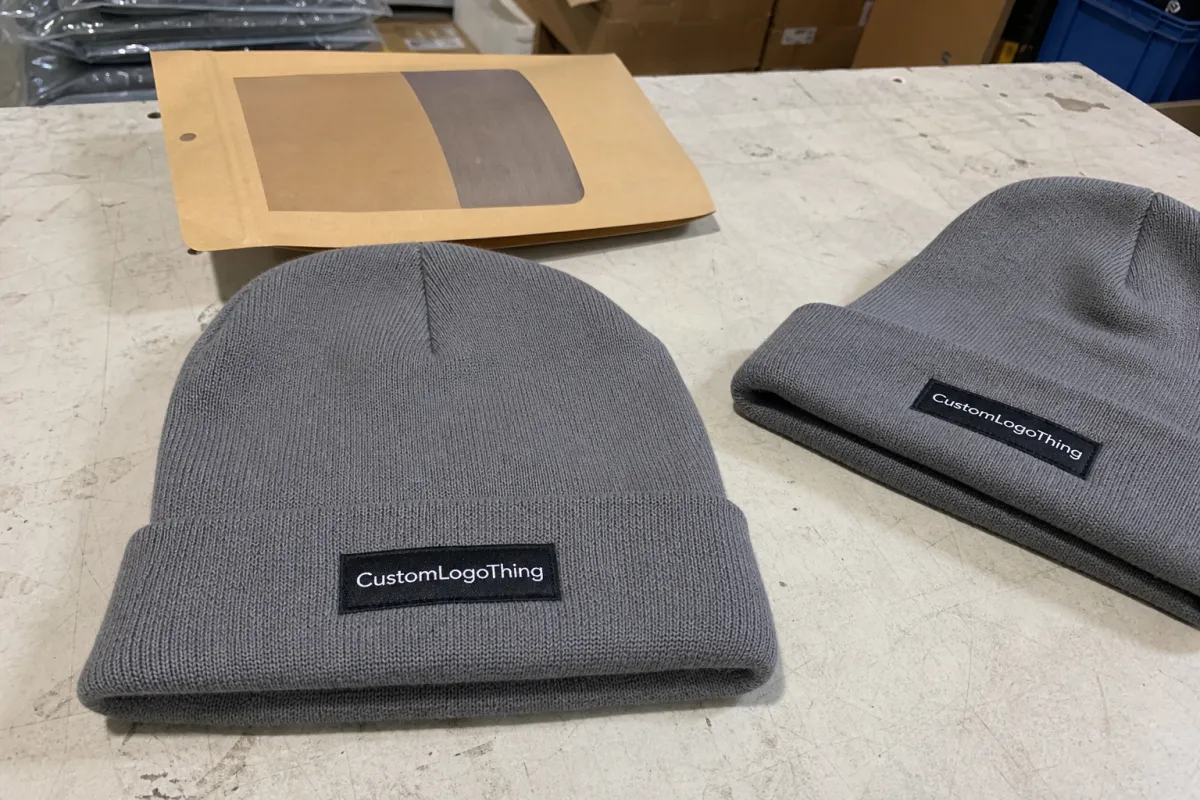
The beanie itself is rarely the problem. The risk lives around it. A buyer may say “same as last time,” but the earlier order may have included a redigitized logo, a thread substitution, a different cuff height, or a rushed proof. If those details were not captured, the repeat can drift without anyone noticing until the goods arrive.
That drift is easy to miss because knitwear feels familiar. A beanie is a beanie until one body has a looser hand, another has a taller crown, and a third has a fleece lining that changes the way embroidery sits. The logo can read slightly higher, the hat can fit tighter, or the color can look different under retail lighting. Those changes affect wearability, shelf consistency, and how well the product supports the brand.
Most buyers reorder embroidered beanies for practical reasons: staff liked the first run, the promo team knows the style photographs well, or a school or club wants the same look across multiple batches. For retail restocks, the need is even simpler: the new run must not look disconnected from the old one. A reorder should protect what worked, not reopen design questions.
- Staff uniforms: need exact repeat color and consistent placement.
- Promo drops: often need a clean restock before a launch or seasonal event.
- Clubs and schools: need the same look across batches and sizes.
- Retail restocks: need visual continuity so the shelf stays coherent.
Three things matter most on a second run: the body must match the approved style, the embroidery must keep the same placement and scale, and the quote, proof, and packing notes need to reflect the actual production history. A reorder should be boring in the best way, because boring means the factory can follow the same path without reopening old questions.
Product details to confirm before you repeat the order
Start with the blank beanie, not the logo. If the first order was a cuffed acrylic beanie, do not casually switch to a slouchier knit because the catalog image looked close. The body type changes the fit, drape, warmth, and embroidery backdrop. A softer crown behaves differently from a dense knit, even when the color name is the same.
Lock the core product details first: cuff style, knit weight, crown shape, yarn blend, and any lining. A single-layer acrylic beanie and a fleece-lined version do not wear the same. A 9-gauge knit has a different surface than a 12-gauge knit. A shallow crown sits lower than a tall one and can change how the embroidery reads. Knitwear stretches, moves, and recovers, so a small body change can affect the final look more than expected.
Some changes are fine if they are deliberate. Packaging can often be revised without affecting the product. A body color change may work if the logo contrast still holds. Lining updates may make sense for colder weather. The mistake is treating every change as minor. On repeat orders, small adjustments can carry more weight than the original setup.
- Keep locked: knit structure, cuff height, silhouette, and logo placement.
- Usually easy to change: packaging, carton count, ship-to details, and mailing labels.
- Change with care: body color, lining type, and yarn blend, since each affects appearance and feel.
Repeat orders usually fall into three buckets: a straight repeat with the same body and embroidery, the same decorated style with a color adjustment, or a top-up order for a larger team or second season. If the brand cares about responsible sourcing, paper stocks that align with FSC can be specified early instead of added later as a rush note. If you have the original physical sample, keep it with the order history. It is usually more useful than memory.
Embroidery specifications that keep repeat runs consistent
Embroidery on knitwear magnifies small changes. A logo that looked balanced on the first order can feel too small, too crowded, or too loose if the digitized file changes or the stitch density shifts. That is why the embroidery record matters as much as the garment record. If the original approved file still exists, use that file. If it does not, ask for the version number, stitch count, thread reference, and placement notes before approving anything.
On a repeat run, confirm these items from the earlier order:
- Logo size: width and height in inches or millimeters.
- Stitch count: especially for fill areas, outlines, and small text.
- Thread colors: brand code, Pantone reference, or sample-card match.
- Placement: centered on cuff, offset, or front-panel position.
- Backing: stabilizer type and whether the finish was low profile.
- Digitized file version: DST, EMB, or the supplier's master file.
This matters because knit fabric stretches and embroidery reacts to that stretch. Letterforms can widen or compress. Dense fills can pucker. Fine text can disappear into the knit. A logo around 2.25 to 3.25 inches wide is common on cuffed beanies, but the right size depends on the knit gauge, cuff depth, and visual weight of the design. Very small type, especially strokes under about 1 mm, often becomes weak on a textured surface.
A repeat order should be checked against the approved sample, not against a recollection of the sample. Build a concise spec sheet so the next proof can be compared quickly and accurately.
- PO number and original invoice number
- Garment style, color, and knit construction
- Embroidery placement and measured artwork size
- Thread codes and approved logo file name
- Packaging instructions and carton count
- Ship date target and delivery address
If any item changes, mark it clearly in writing. Hidden adjustments are how a repeat becomes a new order with no one explicitly owning the difference.
Pricing, MOQ, and unit cost for embroidered beanie reorders
Repeat pricing usually moves for a few predictable reasons: decoration area, stitch complexity, packaging, add-ons, and freight. Buyers often compare the new quote with the old unit price and assume the gap means something is wrong. Sometimes it does. More often, the quote is reflecting a real change: a larger logo, a new thread color, a fresh digitizing file, or a different packing spec.
For a standard Cuffed Knit Beanie with one embroidery location, many suppliers quote roughly $4.50 to $8.50 per piece at 100 to 300 units. Larger runs often fall closer to $3.50 to $6.50 per piece at 500+ units if the artwork stays unchanged and no major packing changes are needed. Small top-up orders cost more per unit because the same setup burden is spread across fewer pieces. If the logo needs to be digitized again, a reasonable setup charge may be around $25 to $75, depending on design complexity. Rush freight can add materially more if the timeline is tight.
| Reorder scenario | Typical unit cost | Setup impact | Lead time | Best fit |
|---|---|---|---|---|
| Exact repeat, same artwork | $3.50-$6.50 at larger quantities | Low; old file reused | Fastest | Staff replenishment, steady retail restock |
| Repeat with color swap | $4.00-$7.50 | Moderate; thread match needed | Moderate | Seasonal refresh, brand update |
| Repeat with new logo version | $5.50-$11.00 | Higher; new digitizing may apply | Longer | Campaign rebrand, updated artwork |
| Rush top-up order | $6.50-$12.50 | Premium freight or overtime | Shortest if stock is ready | Emergency replacement, event deadline |
MOQ affects the economics more than most buyers expect. A 50-piece reorder can be fine operationally, but the unit cost may look high because setup is spread across a small batch. A 250-piece repeat often lands in a better price band. The better question is not “what is the cheapest quote?” It is “what is the cleanest repeat at the right landed cost?”
If a quote feels off, ask for the line items. A supplier should be able to show blank body, embroidery, packing, and freight separately. That breakdown makes it easier to see whether the increase came from a real change or from an unexplained lump sum.
Process, timeline, and lead time for repeat production
A clean reorder should move through a short, predictable sequence: confirm the original order, verify the artwork file and approved proof, update quantity, check whether any colors or packaging changed, approve the final proof, and lock production. Most delays happen when one of those steps is skipped because everyone assumes the old setup can simply be copied.
- Confirm the original order number, artwork file, and approved proof.
- Check whether the blank beanie body is the same lot, color, and construction.
- Review any change to logo size, stitch count, or thread color.
- Approve the final proof only after the measurements match the earlier run.
- Lock in production, packing, and freight booking.
- Save the final approved version with the job record for the next repeat.
Timeline slips usually happen in four places. The artwork file is hard to find. A specific thread code is out of stock and needs a match. The proof needs another approval cycle because a buyer is traveling or has not reviewed it yet. Or the shipment misses the best freight window because booking happened too late. None of that is unusual, but it does mean the reorder was treated like admin instead of production.
Lead time depends on how much is changing. An exact repeat with the same file and thread references is usually the fastest route, and once approved, production may take about 7 to 12 business days. A repeat with a color change or modest spec adjustment often needs 10 to 15 business days. A reorder with new artwork, a resized logo, or fresh digitizing usually needs 12 to 20 business days, depending on queue length and whether a revised sample is requested.
For packed retail goods or display-ready packaging, ask how cartons are handled during transit. If the beanies are moving through a distribution chain where carton performance matters, package testing guidance such as ISTA can be relevant. The embroidery may be the visible part, but carton integrity affects whether the goods arrive ready for shelf or need rework on arrival.
Why repeat buyers stay with a supplier that tracks every spec
The best supplier for a repeat order is not always the lowest quote on day one. It is the one that keeps the original spec set intact so the next run starts from facts instead of memory. Good recordkeeping saves time and reduces friction. There are fewer calls about thread substitutions, fewer debates about placement, and less chance of discovering that the old file was renamed into something no one can find.
Repeat buyers usually want three things: responsive quoting, clear communication when a thread color or packing detail has to change, and a documented approval trail that shows what was signed off before production started. That is basic competence for any supplier handling recurring merchandise.
A supplier that keeps the original spec set protects you from memory gaps and from everyone else's.
Good partners also know when to push back. If a logo is being enlarged past what the knit surface can support, the supplier should say so. If the new body color reduces contrast, that should be flagged before production. If the packing spec increases transit risk, the issue should be explained directly. Honest friction is useful; cheerful failure is not.
Recordkeeping matters even more when the repeat order is part of a longer buying cycle. If the same beanie appears in multiple seasons, the price structure should remain readable from one run to the next. That does not mean every quote is identical. It means the buyer can see what changed and why.
What to gather before you request the next quote
If the next reorder needs to move quickly, gather the core details before you ask for pricing. The goal is not a long brief. It is a complete one. Send the previous order number, quantity, artwork file, preferred colors, shipping address, and deadline. If you have the approved proof or spec sheet, include it.
- Previous order number: so the supplier can find the exact setup.
- Quantity needed: this drives MOQ and unit cost.
- Artwork file: send the cleanest version available.
- Color references: body color, thread colors, and any alternate options.
- Ship-to details: full address, delivery window, and contact name.
- Deadline: a real date tied to the event, restock, or internal need.
Then ask for a quote built against the original spec sheet, not against a fresh assumption. Review the proof line by line. Check logo size, placement, stitch count, thread color, and body color. If the supplier shows a revision, compare it against the approved version before signing off. Once production starts, the goal is to remove ambiguity, not create more of it.
Common order help, proofs, and timing questions are covered in the FAQ, which is useful when a buyer needs a quick reference for a repeat rather than a full re-specification.
FAQ
How many extra embroidered beanies should I reorder to stay safe?
For internal teams, a buffer of 5 to 10 percent is usually enough if you expect replacements, late additions, or new hires. For retail or event stock, base the quantity on actual sell-through or attendance numbers instead of guessing high.
Can a previous embroidered beanie reorder be matched exactly?
Usually yes, if the original spec sheet, artwork file, thread references, and approved proof are still available. Matching gets harder if the file was redigitized, the body changed, or the earlier approval was never documented clearly.
What affects embroidered beanie reorder pricing the most?
Logo size, stitch count, thread changes, and whether the artwork needs to be digitized again usually move pricing the most. Quantity, packaging, and freight speed can change the total as well, especially on smaller repeat orders.
How long does a reorder of embroidered beanies usually take?
Simple repeats are faster because the factory can reuse the approved setup. Add time if the proof needs revision, the thread needs a replacement, the artwork changes, or the packing spec differs from the original run.
What should I send before asking for an embroidered beanie reorder quote?
Send the previous order number, quantity, colors, logo file, shipping ZIP or full address, and deadline. If you have the approved proof or spec sheet, include it so the quote is based on the right version from the start.


