B2B Guide to Cuffed Knit Beanie Materials, Fit Specs, and Ordering
A cuffed knit beanie can read as premium retail stock or a forgettable handout, and the difference usually comes down to yarn choice, knit density, cuff height, and how the hat actually sits on a head. That is why a Cuffed Knit Beanies material and sizing guide matters before a bulk order is approved, not after cartons are on the move. Buyers get into trouble when they treat beanies as a single-spec item. They are not.
There are a lot of small decisions hiding inside a small product. Fiber blend affects warmth, softness, and pilling. Stitch gauge affects shape, stretch, and how cleanly decoration lands. Cuff depth changes usable length and the visible branding zone. Even packaging matters, because a beanie that ships compressed in a tight master carton may arrive looking flat and tired unless the construction rebounds well.
The practical job is simple: define the fit you want, match the yarn and knit to that fit, and confirm the sample under real conditions. If the order is for retail, staff wear, or a promotional run, the same rule applies. Lock the spec early so the bulk lot matches the approved sample.
Cuffed Knit Beanie Materials and Fit Basics
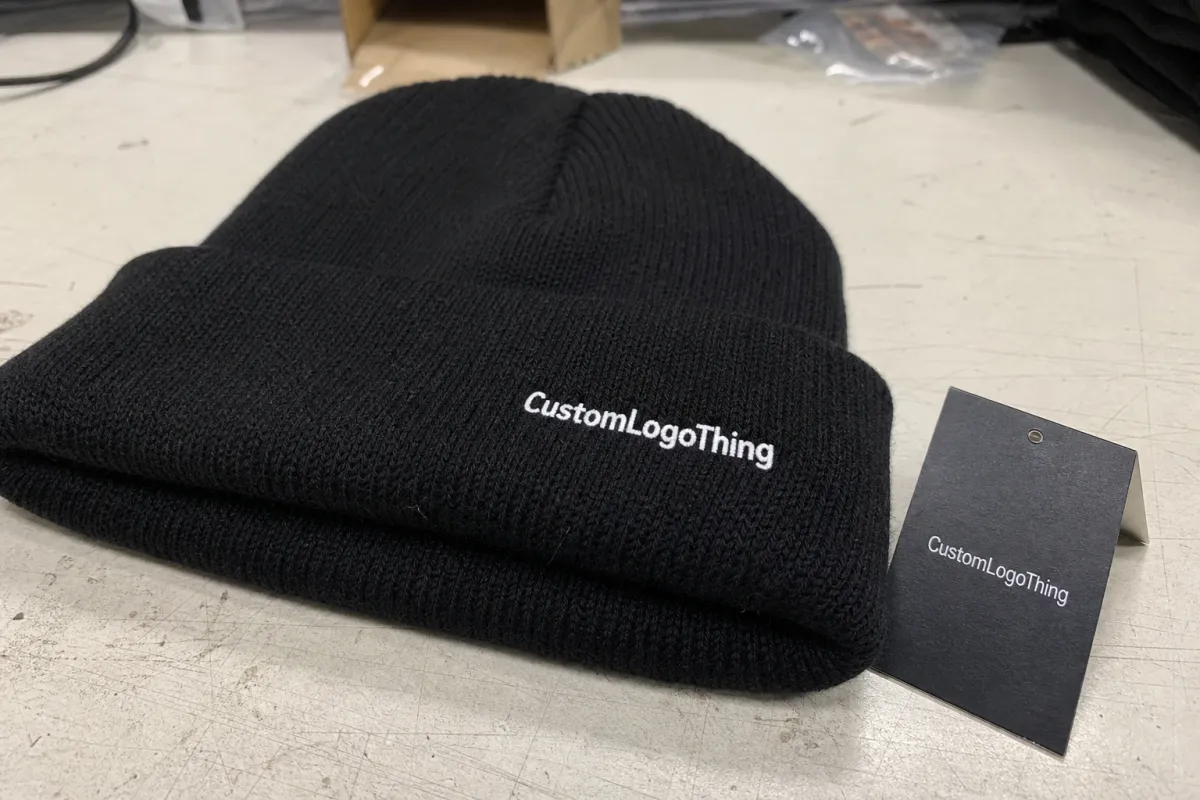
A cuffed knit beanie is just a knitted cap with a folded band at the bottom, but that fold changes nearly everything buyers care about. It changes forehead feel, head coverage, logo placement, and how structured the finished product appears on a shelf. The cuff also creates a cleaner decoration area than an unrolled edge, which is one reason this style stays popular for branded programs and retail basics.
The spec drivers are straightforward. Yarn blend affects softness, warmth, and how quickly the surface pills. Stitch density affects whether the knit looks tight and premium or open and casual. Stretch recovery tells you whether the beanie snaps back after wear or starts to bag out. Cuff height changes the amount of visible crown and the height available for decoration. If any one of those is off, the beanie can pass a flat inspection and still disappoint on a real head.
Buyers often prefer a cuff because it gives more control over fit. A deeper cuff can make the beanie feel snugger and more structured, while a shorter cuff leaves more crown coverage and usually feels less compressed. That matters because a youth promo run, a winter retail assortment, and a workwear program should not be built on the same silhouette. The right cuffed knit beanies Material and Sizing guide should make those differences obvious before production starts.
Do not approve cuffed beanies from flat measurements alone. The same flat width can wear very differently once stitch density, cuff depth, and crown depth are introduced.
Presentation matters too. A beanie with decent recovery and clean knitting stacks better in packaging, rebounds faster after transit, and looks fresher when opened at receiving. That is not cosmetic fluff. In many bulk orders, it is the difference between a product that looks ready to sell and one that looks like it was crushed on the way in.
How Knit Structure and Cuff Depth Change Sizing
Knit structure is where sizing starts to drift if nobody pays attention. Rib knits usually stretch more across the head and recover better than looser jersey-style constructions. Tighter gauges feel more controlled and tend to hold shape longer. Bigger loops can create a chunkier, more relaxed look, but they also open the door to slouch and growth over time. A Cuffed Knit Beanies material and sizing guide should describe how the knit behaves, not just list the fiber content.
Cuff depth changes usable length. That is the simple version, and it matters more than many buyers expect. Two beanies can have the same flat width on paper, yet the one with the deeper cuff will often sit higher once worn because more of the body is folded up. A shallow cuff leaves more crown length visible and can feel less compressed. People compare flat samples on a table and assume body length tells the whole story. It does not.
Fit usually falls into three practical profiles. Snug styles sit close to the head and suit colder weather or cleaner retail styling. Structured styles balance coverage and shape, and they are the safest choice for most branded programs. Slouchier styles have more visual volume and work for fashion-led assortments, but they are less forgiving if the knit is too loose. The right profile should match the audience, not the mood board.
Shape retention deserves its own check. Higher-density knits hold silhouette better after folding in transit or sitting in a display stack. That matters if the order is packed in corrugated cardboard master cartons or wrapped in simple kraft paper sleeves. A hat that keeps its outline after shipment usually performs better on arrival and stays presentable longer on the sales floor.
If you are building a range, ask for relaxed width, stretched width, total height, cuff height, and crown depth on the same sheet. Then compare those numbers to how the sample wears on a real head. Numbers alone do not tell the full story, but they eliminate a lot of bad assumptions.
Best Yarn Blends for Warmth, Stretch, and Decoration
Acrylic remains the workhorse for many bulk beanie programs because it is affordable, easy to source, and usually predictable in production. It holds color well, keeps unit cost under control, and delivers decent warmth without getting too heavy. If the plan is a simple branded beanie with embroidery or a woven label, acrylic often wins on consistency and price.
Polyester blends usually bring stronger color stability and a slightly more technical handfeel. Wool blends add warmth and a richer, more natural texture, but they raise cost and care requirements. Recycled yarns are useful when the brand wants a lower-waste story, although the feel and warmth depend entirely on the blend and finishing. Ask for the fiber breakdown, not just the marketing line. A recycled claim is only meaningful if you know how much post-consumer content is actually present.
Decoration should influence the material choice. Tighter, more stable knits usually handle embroidery better because the stitches sit cleaner and distortion stays lower. Woven labels and sewn patches are safer if you want a premium look without stressing the knit surface. Heat-applied decoration can work, but it needs the right fabric and temperature range. Loose knits and fuzzy yarns can deform under heat or pressure, and that damage shows up fast once the pieces are packed.
| Material | Typical Feel | Decoration Behavior | Common Bulk Price Range | Best Use |
|---|---|---|---|---|
| Acrylic | Warm, light, widely available | Good for embroidery and woven labels | $1.10-$1.80 per unit | Promos, retail basics, large runs |
| Polyester blend | Smooth, consistent, slightly technical | Strong for clean logos and patch work | $1.30-$2.10 per unit | Teamwear, branded merch, repeat orders |
| Wool blend | Warmer, softer, more premium | Better with sewn labels than heavy heat press | $2.40-$3.80 per unit | Retail, cold-weather collections, higher margin items |
| Recycled yarn blend | Depends on content and finishing | Usually fine for embroidery if knit is tight | $1.45-$2.60 per unit | Sustainability-led programs and gift sets |
Quality checks should cover pilling resistance, color consistency, and wash behavior. If a supplier can reference a test method for stretch and recovery, that is more useful than a vague promise that the hat “holds up well.” Compression performance matters too. A beanie that looks clean on the sample table but wrinkles badly after shipping is not a strong buy, no matter how nice the yarn sounded in the quote.
Packaging can support the product story, but it should not overpower it. Kraft paper hangtags, recycled corrugated cardboard mailers, or simple FSC-certified inserts can make sense if they protect the beanies and reinforce the brand position. Extra packaging that adds cost without improving presentation or protection is easy to cut. Pretty packaging that arrives crushed is still a problem.
Step-by-Step Sizing Method for Bulk Orders
One-size thinking creates a lot of avoidable returns. Start by naming the wearer group: adult, youth, unisex promo, retail assortment, team uniform, or mixed-size audience. A Cuffed Knit Beanies material and sizing guide should reflect that audience before artwork is approved.
Step one is head circumference. Measure the target group if possible, or use a realistic range if the order is being planned from market assumptions. For many adult programs, a relaxed internal opening around 18-20 inches with good stretch can work, but the actual fit depends on the knit and yarn. Youth sizing usually needs less body length and tighter control over the cuff.
Step two is to compare relaxed width and stretched width on the sample. Do not stop at the spec sheet. Pull the beanie on, leave it in place for a few minutes, and check whether the cuff digs in, slips, or leaves a gap at the forehead. Then check crown depth. Hair length, braids, and bulkier hairstyles all change how the hat sits.
Step three is cuff height. It affects comfort and branding at the same time. A taller cuff gives more logo space, but it shortens the visible body of the hat. A shorter cuff keeps more crown coverage and usually feels more relaxed. If the decoration must sit centered on the cuff, verify placement on the worn sample rather than only on the flat piece. Logos that look perfect on paper can land too low once the knit stretches.
Step four is sample approval. One worn sample by one person is not enough. Three heads, three hair types, and two rounds of wear testing are far more useful than a polished approval email with no real fit check behind it. That is the practical version of a cuffed knit beanies Material and Sizing guide: test the actual hat on actual people before the order is locked.
Common Material and Fit Mistakes That Lead to Reorders
Photos can mislead buyers in both directions. A beanie may look dense and premium in a studio image but feel flimsy in hand. The opposite happens too: a chunky knit can look oversized online and wear perfectly in real life. Buyers who skip samples because the photography looked convincing often pay later in returns or slow-moving stock.
Cuff depth is another common failure point. Too deep, and the beanie can look heavy or overly short on the wearer. Too shallow, and the decoration zone shrinks or the style loses the structured look that made it appealing in the first place. Many reorders start here. The product technically fits, but it does not fit the way the buyer expected.
Decoration placement causes its own mess. Logos placed too low on the cuff can disappear once the beanie is worn. Logos placed too high can drift onto the crown and look awkward. Loose knits can also let embroidery pucker, which makes the art look cheap even when the file is correct. That is a production-fit issue, not a design issue.
Common miss: approving a sample without checking stretch recovery after wear and a light wash. If the opening relaxes too much, the beanie may stop sitting close to the head and start looking tired after only a few uses. That can turn into complaints, returns, or stock that never gets reordered.
Storage and transit can hide trouble until the cartons are opened. Beanies compressed too hard in corrugated cardboard cases may arrive flat and take time to rebound. If the pack-out uses kraft paper wraps, recycled inserts, or mixed packaging components, the method should protect the cuff, not crush it. A clean garment is only part of the job. The rest is getting it to the buyer in the same shape it left production.
Pricing, MOQ, and Unit Cost Factors
Unit cost moves with five main variables: yarn blend, knit complexity, color count, decoration method, and finishing. Simple acrylic beanies with one-color embroidery are usually the cheapest path. Add a premium yarn, multiple decoration locations, woven labels, specialty packaging, or custom dye work, and the price rises quickly.
MOQ matters because setup and sampling cost are spread across the run. A 500-piece order usually carries a higher per-unit price than a 5,000-piece run, even with the same design. That does not make small orders bad. It just means the quote has to be read with the right expectations. A clean quotation should separate blank cost, decoration, sampling, freight, and rush charges so the base price does not hide the real landed cost.
As a working range, a simple acrylic cuffed beanie might land around $1.10-$1.80 blank at scale, while a wool-blend version with more finishing care can move into the $2.40-$3.80 range before freight. Add embroidery, sewn patches, labeling, or FSC-certified packaging inserts and the landed cost rises again. If recycled content or lower-impact packaging is included, ask whether the premium sits in the material, the labor, or both.
Packaging can add a few cents per unit, which sounds minor until it is multiplied by thousands. Kraft paper belly bands, biodegradable inserts, or printed recycled-card pieces only make sense if they support the product presentation or the shipping requirement. If they do not, they are easy to trim.
Two quotes on the same exact spec sheet are far more useful than three vague prices. Same yarn. Same cuff height. Same decoration method. Same packaging. If the numbers still differ a lot, the gap is usually hiding in quality, overhead, or assumptions buried in the fine print.
Sampling, Lead Time, and Delivery Workflow
The cleanest workflow starts with spec confirmation. Lock the yarn blend, knit type, cuff height, decoration method, packaging, quantity, and delivery window before sampling begins. Then request a physical sample or pre-production proof. That sounds basic because it is basic, and basic is what keeps a run from drifting into avoidable problems.
Lead time usually breaks into stages: sample development, sample revision, bulk knitting, decoration, packing, and shipment. Standard production often takes about 12-20 business days after sample approval for a straightforward order, but custom yarn sourcing, more complex decoration, or peak-season congestion can extend that timeline. Rush orders are possible, but they reduce room for revision and usually cost more.
Shipping and pack-out should be planned at the same time as production. If the beanies are retail packed, confirm whether each unit ships in a polybag, kraft wrap, or folded carton. If the master cartons are corrugated cardboard, ask how many units go into each carton and whether compression could alter the knit shape. For transit testing, ISTA packaging test protocols are a useful reference point.
For brand-led programs, packaging materials should match the claim being made. FSC-certified paper components are easier to defend than vague eco language, and recycled materials only carry weight if the content can be documented. If sustainability is part of the brief, the pack-out needs to support it. Otherwise the product and the marketing copy start working against each other.
The schedule is usually healthiest when everyone is reading from the same sheet: spec approved, sample signed off, quantity fixed, and milestone dates recorded. That level of clarity prevents most surprises before they become expensive.
FAQ
How do I choose the right cuffed knit beanie material for cold-weather buyers?
Choose thicker acrylic or a wool blend if warmth and structure matter more than a very soft handfeel. Look for solid stretch recovery if the beanies will be worn often or handed out as everyday merch. A finished sample is the only reliable way to judge comfort, warmth, and shape retention together.
What sizing should I use for cuffed knit beanies for adults?
Start with head circumference, then compare it to the beanie's relaxed and stretched dimensions. Review crown depth and cuff height together, because cuffed styles can wear very differently even when the flat width is the same. If the audience is mixed, a more forgiving stretch range is usually safer.
How does cuff depth affect cuffed knit beanie sizing?
A deeper cuff reduces usable body length and can make the beanie sit higher on the head. A shallower cuff usually leaves more crown coverage and changes where decoration looks best. Check cuff depth on the worn sample, not only on the spec sheet.
Which cuffed knit beanie material works best for embroidery?
Tighter, more stable knits usually handle embroidery better because they resist puckering and logo distortion. Acrylic blends are often more predictable than loose or fuzzy yarns when stitch accuracy matters. Test the embroidery area on a sample first, since the same logo can behave differently across materials.


