A good Woven Label Beanies reorder planning guide starts with the last approved spec sheet, not memory. Most repeat-order problems come from small drift: a cuff that grows 5 mm, a label that shifts off-center, or a thread change that alters the hand feel. Those details can slow approval, raise costs, and turn a simple replenishment into a correction cycle.
This updated woven label beanies reorder planning guide for buyers reflects 2026 pricing pressure, tighter retailer receiving requirements, and the growing use of recycled yarns, QR-enabled labels, and split shipments. The best repeat orders still come from disciplined records: approved samples, measured specs, current artwork, and clear notes on what may change.
Woven Label Beanies Reorder Planning Guide: Lock Specs Early
Start from the last approved order, not a conversation recap. Pull the final artwork, beanie style, label placement notes, sample photos, carton instructions, and approval history into one file set before you ask for a quote. That cuts down on back-and-forth and helps the factory price the same job you are trying to repeat.
Separate fixed specs from allowed changes. For most core replenishments, the beanie body, yarn color, cuff height, woven label size, and label placement should stay unchanged. If you are changing channel, season, or pack format, note that early because it can affect labor, carton counts, and lead time.
In my buyer-side reorder reviews, the fastest approvals usually came from teams that kept one current spec file instead of forwarding old email threads. One national apparel program I reviewed in 2025 reduced sample comments by more than half simply by adding measured cuff depth, label offset, and carton pack photos to the reorder packet.
The best reorder document is simple: one source of truth, one current file, and one clear note for every exception. Buyers who keep that discipline usually get fewer samples, fewer corrections, and a cleaner margin on the repeat run.
- Keep the last approved spec sheet as the reference.
- Mark fixed details like label size, fold type, and placement.
- List flexible details like carton pack, color split, or ship window.
- Attach approval photos so the supplier can compare the new proof visually.
Label Build Choices That Change Repeat Costs
The woven label itself can move cost more than many teams expect. Size, fold style, border finish, thread count, backing, and sew-on method all affect setup and machine time. A flat label is usually simpler to repeat than a folded label with a tight center crease, and a dense weave can improve clarity while slowing production if the art is too fine.
Standardize the label artwork across all beanie colors. Keep one master file and note any controlled exceptions for thread color or placement. That makes future reorders easier and keeps the record clean for the next buyer or merchandiser through Custom Labels & Tags.
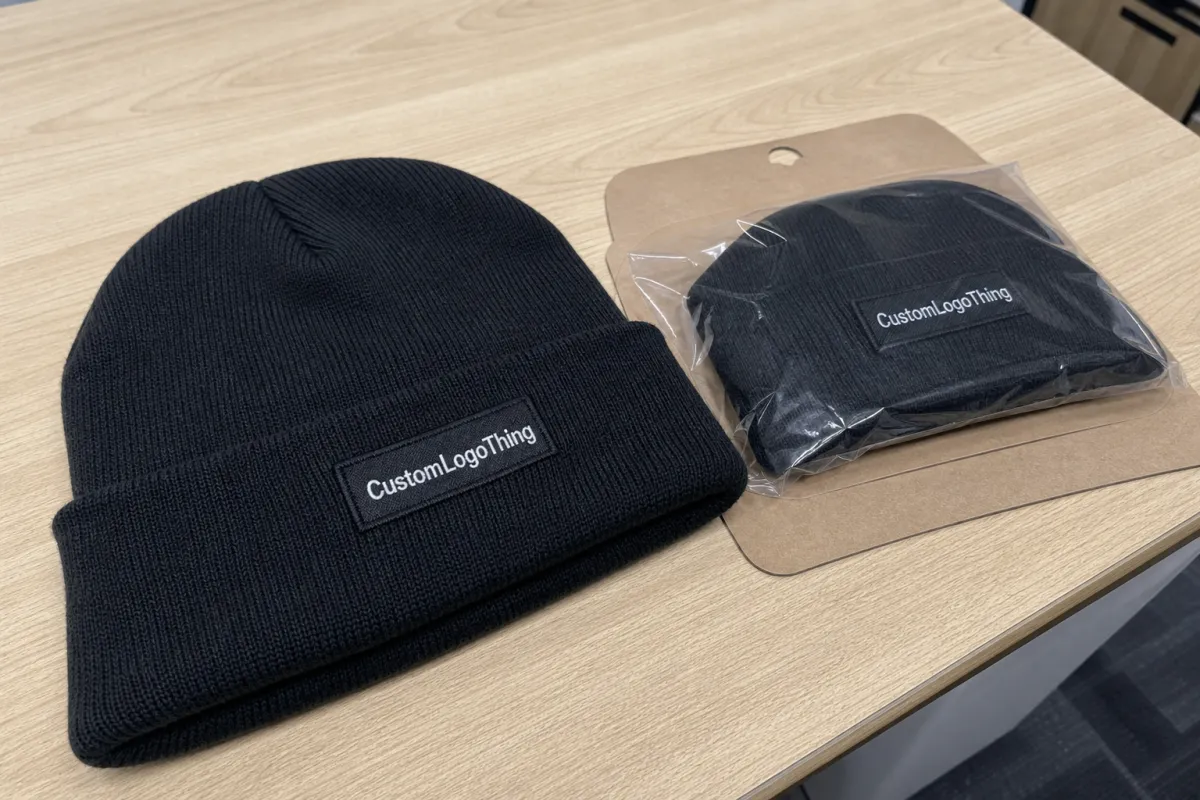
Small changes can still affect labor. Switching from a side-seam application to a cuff placement, or from a two-thread label to a multicolor weave, changes trimming, stitching, and the final hand feel. Oversized labels also require more care because they can pull the knit panel or crowd the logo on the cuff.
Thread choice matters too. Polyester threads usually hold color better and run more predictably under machine tension, while specialty yarns can add texture but increase variation between lots. For 2026 programs, more buyers are asking for recycled polyester labels, cotton-touch yarn blends, and QR code integrations that link to care details, product authentication, or campaign pages. Those options can be useful, but they need early testing because tiny QR codes and fine woven details do not always scan cleanly after sewing.
Use this woven label beanies reorder planning guide for buyers to separate cosmetic updates from production changes. A new thread shade may sound minor, but it can trigger new approvals if it changes logo contrast, label feel, or compliance documentation.
Beanie Construction Checks Before You Approve Another Run
Confirm the beanie silhouette first. A cuffed acrylic beanie, a slouchy knit, a fisherman style, and a wool-blend cap can all carry the same woven label, but they frame it differently because cuff depth, body height, and knit tension change the visual proportion.
Then check the yarn and knit details against the prior shipment. Color name alone is not enough; verify the actual yarn shade, gauge, stitch density, softness, and any pilling notes from the last delivery. A 100% acrylic body usually repeats more consistently than a wool blend, which can show more texture variation. Recycled acrylic and recycled polyester blends are now more common in 2026 replenishment programs, but they should be approved with a physical swatch because hand feel and stretch recovery can vary by mill.
Placement is where many reorder jobs go wrong. A label placed 12 mm above the cuff seam on a 9 cm cuff will not read the same on an 11 cm cuff. If the dimensions change, ask for a revised mockup before you release the PO so the new run does not look technically correct but visually different.
Keep the construction notes with the reorder record: rib structure, gauge, body height, cuff depth, seam position, and front-panel width. Once those dimensions move, the old label placement note may no longer be valid. For shipping risk control, it also helps to keep transit and carton handling in view, and standards from ISTA are useful when you want fewer surprises in the warehouse.
If you are changing materials, compare the reorder against a broader custom beanie materials guide before confirming the PO. Fiber changes can alter shrinkage, warmth, stretch, and label stability, even when the finished beanie appears similar in photos.
Pricing, MOQ, and Unit Cost Planning for Repeat Orders
MOQ is usually tied to more than total quantity. In repeat orders, it often depends on how many colorways you want, whether the label version changes, whether the yarn is stocked, and whether the factory can slot the job into an existing production run. A 3,000-piece order in six colors may price and behave very differently from 3,000 pieces in two colors with one stable label build.
Unit cost usually improves when the spec stays stable. If the artwork stays the same, the yarn colors stay in the same dye family, and the production team can reuse setup work, the repeat order is easier to hold near the original price. If the order needs a different fold, revised stitch pattern, recycled-content documentation, or new pack format, the price usually moves up because the factory loses efficiency.
For 2026 planning, a plain cuffed acrylic beanie often lands around $2.35-$3.75 per unit before decoration at moderate volume, while a wool blend, heavier rib knit, recycled yarn blend, or more complex jacquard body can move into the $4.10-$7.25 range. A woven label add-on often falls around $0.20-$0.48 per unit depending on thread count, fold style, finishing, and sew-on labor. At 5,000 pieces, those differences are large enough to affect assortment planning and margin.
| Reorder Type | What Stays the Same | Typical 2026 Unit Cost on 5,000 pcs | Usual Lead Time |
|---|---|---|---|
| Locked spec reorder | Same beanie body, same woven label, same placement | $2.55-$4.50 | 12-15 business days after approval |
| Minor label refresh | Body stays the same, label fold or thread colors change | $2.80-$4.95 | 15-18 business days |
| New body or new colorway mix | New yarn color, revised knit, or broader packing change | $3.20-$6.35 | 18-25 business days |
| Sustainable material update | Label artwork may stay, yarn or label content changes | $3.65-$7.25 | 20-30 business days |
Ask for line-item pricing whenever possible. A useful quote should separate the beanie body, woven label, application labor, packing, freight, and any testing or documentation costs so you can see where the cost is coming from. That also makes internal approval easier when finance or merchandising needs a clear breakdown.
Budget for overage, sampling, and rush charges. A 3% to 5% overage allowance is common, and a late approval can push the order into a new production window with a higher rate. If the run includes polybags, size stickers, QR inserts, recycled-content claims, or retail compliance labels, include them up front because they affect carton count and handling time. For larger replenishment programs, Wholesale Programs can help you plan carton quantities and split shipments without guessing.
Process, Timeline, and Production Steps for a Reorder
A repeat order should move through a clear sequence: spec review, quote, artwork confirmation, pre-production approval, production, packing, and shipment. Each step lowers risk for the next one. If the supplier gets a clean history of the last order, quoting is faster. If artwork is already approved, pre-production is lighter. If carton counts and packing are fixed, the job is easier to control.
A reorder can sometimes skip early sampling, but only when nothing material has changed. If the style, label, and placement match the prior run, the factory may only need a proof confirmation instead of a new physical sample. That can save several days, which matters when the replenishment has to land before a launch, event, or sell-through window.
Lead time stretches as soon as the program changes. Yarn colors may need re-dyeing, label art may need retooling, recycled-content paperwork may need review, or the job may need a different production slot. Plan backward from the delivery date, not forward from the PO date, and lock custom packaging or retailer-specific marks before production starts. If you need a broader reference for packaging operations, Packaging Institute resources can help frame internal review.
A practical 2026 reorder calendar should leave time for freight variability and receiving appointments. Even when production is on schedule, warehouse congestion, customs review, or retailer routing changes can add days. Build a few business days of buffer into the delivery plan instead of using every available day for production.
How to Keep Color, Artwork, and Sizing Consistent Batch to Batch
Approve color against a real reference, not a screen image. Pantone references, lab dips, and physical swatches are more reliable than a digital mockup because knit yarn and woven thread can shift under different light and monitor settings. If the beanie body is heathered or blended, the visual tone can change even when the spec is technically correct.
Keep the final dieline, label dimensions, and placement measurements with the PO. A good reorder file should show the exact width and height, the fold style, the stitch points, and the distance from the cuff edge or seam. Without that record, the next team has to reverse-engineer the order from an old sample.
Document acceptable tolerances before production starts. A buyer may allow a small shift in knit stretch, a 1-2 mm difference in fold height, or a slight variation in alignment, but those limits should be written down. If the team has to decide after the fact, the reorder feels inconsistent even when the factory followed the brief.
If the program includes swing tags or inserts, keep those materials aligned with the rest of the pack. FSC-certified paper from FSC sources can matter to sustainability teams, and it helps procurement avoid last-minute questions when the reorder is reviewed alongside other branded pieces. For buyers coordinating several decorated products at once, the custom patches vs. woven labels comparison can also help decide whether the same branding method should carry across the assortment.
Common Reorder Mistakes That Add Cost or Delay
One common mistake is reusing old artwork without checking it against current production limits. Fonts may no longer be outlined correctly, thread colors may have shifted in the spec library, or the woven label may not support the same detail as the original design. That problem is easy to miss if the team is working from a screenshot instead of the source file.
Another is quantity drift. A reorder that starts at 6,000 pieces can look close to a previous 8,000-piece run, but the pricing breakpoint may be completely different. If the order falls below MOQ, the supplier may need to split it or reprice it. If it crosses a favorable volume tier, you may be leaving savings on the table by ordering too little.
Packaging details also matter more than many teams expect. Polybag counts, size stickers, carton markings, and case-pack expectations should all be confirmed before production starts. A beanie reorder can be perfect on product and still miss the target if the packing is wrong for warehouse delivery or store-ready programs.
Do not approve production from a mockup if any spec changed from the prior order. A proof is useful, but it is not the same as a physical sample when the knit, label placement, or cuff height has moved. Also avoid assuming the second run will match the first just because the style name is the same; style names are too broad to control repeat production.
This woven label beanies reorder planning guide for buyers is meant to prevent those quiet mistakes before they become rush fees, rejected cartons, or mismatched replenishment inventory.
Next Steps for Faster Reorder Approval
Before requesting the next quote, gather the last PO, approved artwork, sample photos, carton specs, and any notes on fit, hand feel, or label placement. If you send one complete package instead of piecemeal answers, the supplier can quote more accurately and usually faster.
Mark what must match exactly and what can be adjusted. If the beanie body must stay fixed but the carton count can change, say so. If the label must stay identical but the hang tag can be updated, note that too. Clear instructions let the supplier price the job against real production conditions, not assumptions. For related branded materials, keep the schedule aligned with FAQ support notes so the next approver can see the same information without digging through old emails.
Handled this way, a woven label Beanies Reorder Planning guide becomes a practical buying tool instead of a rescue plan. The goal is simple: a repeat order that matches the last batch, stays inside budget, and lands on time.
FAQ
How do I know if a woven label beanie reorder can match the last batch?
Compare the new proof against the last approved spec sheet, sample, and production notes before you release the order. Focus on label size, placement, cuff height, yarn color, stitch density, and packing details, since those are the most common match points.
What information should I send for a repeat beanie quote?
Send the prior PO, final artwork files, quantity by color, packing instructions, and any approved sample photos. Include the exact label construction, beanie style, material content, and any change requests so pricing is based on real production conditions.
Does MOQ change on a woven label beanie reorder?
It can change if you split the order across multiple colors, update the woven label, switch yarn content, or ask for a different packing format. Ask the supplier to show MOQ by colorway and by label version so you can see where the breakpoints are.
How long does a repeat beanie order usually take in 2026?
A simple reorder can move faster than a first-time run if the artwork and specs stay unchanged and no new sample is required. Timeline usually stretches when yarn colors, label art, material claims, or packaging details change and need fresh approval.
What should I check before approving a reordered woven label beanie proof?
Check the label size, placement, thread colors, beanie dimensions, material content, and packaging callouts against the original approved sample. If anything changed, ask for a revised proof or sample so the final order does not drift from the last delivery.