Two beanies can look nearly identical on a quote sheet and still land with very different true costs. An embroidered beanies Unit Cost Breakdown is not just “blank hat plus logo.” The real unit cost includes yarn, knit construction, embroidery setup, stitch count, machine time, finishing, inspection, packing, carton dimensions, and freight.
That matters for procurement teams, marketing managers, event buyers, and retail planners who have to defend a branded merchandise budget. A low unit price can become expensive if the knit feels thin, the embroidery puckers, the cuff loses shape, or the final cartons cost more to ship than expected.
A useful quote should show what is actually being bought: production inputs, visible cost drivers, and enough detail for purchasing, marketing, and operations to agree before the order moves forward.
What Buyers Miss Before They Compare Beanie Quotes
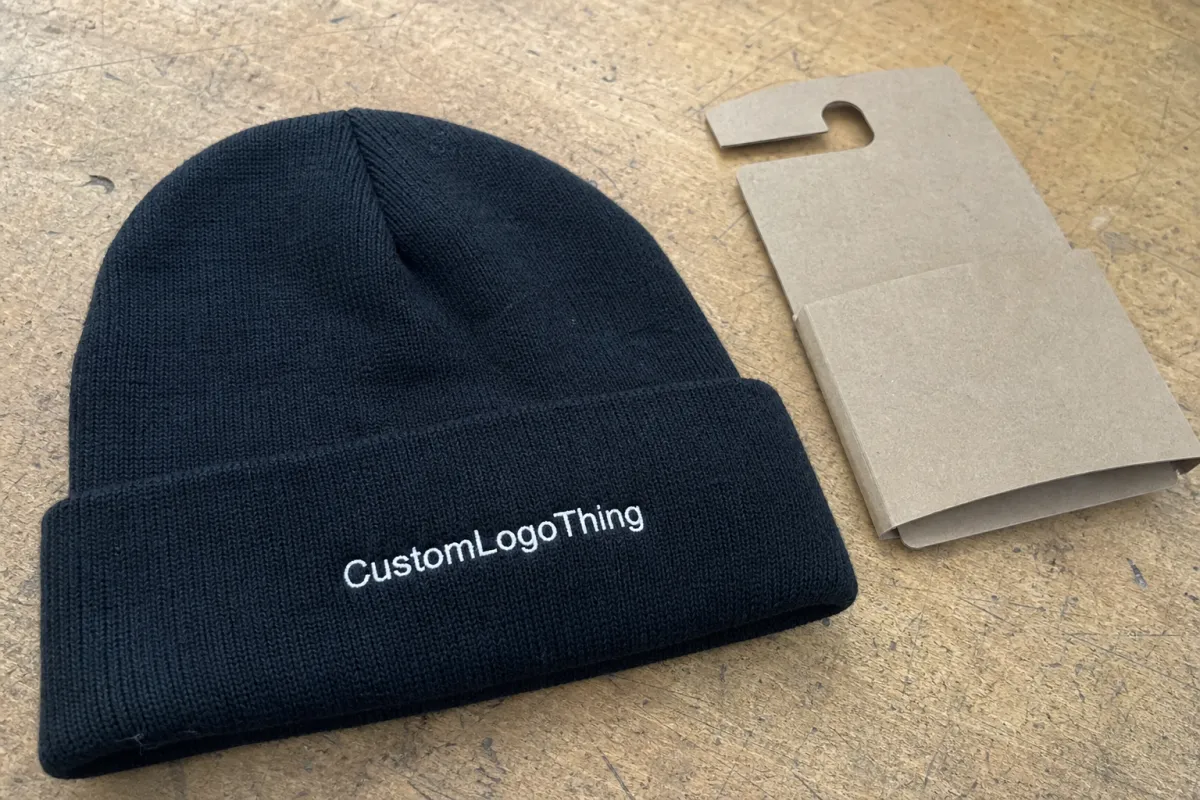
The first mistake is comparing beanies by photo alone. A 12-inch cuffed acrylic beanie with firm stretch recovery may photograph like a lighter 10-inch style, but yarn weight, cuff height, and knitting time can move the cost per piece. Add embroidery, individual packing, carton labels, and freight, and the spread gets wider.
Finishing is often underestimated. Trimming thread tails, checking logo placement, folding cuffs consistently, inserting pieces into polybags, applying barcode labels, and packing cartons by count all take labor. Even if the quote hides that work under one tidy line, it still affects the invoice.
Practical buying rule: compare landed unit cost, not just factory unit price. The number that matters is the beanie delivered to the correct address, packed the way your team or retail channel needs it.
A clean cost breakdown separates fixed charges from per-unit charges. Digitizing and sampling may happen once. Embroidery labor, thread, packing materials, and freight repeat across the order. That distinction matters most on small runs, where setup charges are spread across fewer pieces.
It also helps buyers spot weak quotes. Sometimes a supplier has a more efficient blank, better machine scheduling, or stronger freight rates. Sometimes the quote excludes packing, freight, stitch-out approval, or a realistic embroidery allowance.
Beanie Construction Choices That Move the Price
Material comes first. Acrylic rib knit is common for promotional beanies because it holds color well, wears reasonably, and usually prices better at volume. Cotton blends can feel softer, though they may not rebound as firmly after stretch. Wool blends add warmth and a more premium hand, but they bring higher material costs and more careful care labeling.
Recycled yarn options can fit sustainability requirements for employee programs, retail assortments, or brand campaigns with environmental claims. Buyers should ask what documentation is available before building a claim around recycled content. For paper-based belly bands, hang tags, or cartons, some teams also request supporting standards such as FSC documentation.
Gauge, yarn thickness, cuff height, and total beanie length all influence cost. A double-layer knit uses more yarn than a single-layer style. A taller cuff adds material and changes the embroidery zone. A slouch beanie needs more body length. A fisherman-style beanie uses less length but often needs a tighter cuff so it does not look undersized.
- Standard cuffed beanie: usually the most efficient balance of wearability, embroidery area, and bulk pricing.
- Pom beanie: adds component cost and handling, especially if the pom color is custom.
- Slouch beanie: uses more knit length and can change how the logo sits during wear.
- Jacquard knit beanie: builds the design into the fabric and usually requires higher MOQ and tighter artwork control.
- Premium wool blend: improves warmth and feel, but material cost, care instructions, and sourcing constraints rise.
Color choice affects price and timing. Stock yarn colors cost less and move faster because the material is already available. Custom-dyed yarn can raise MOQ, add lab dip approval, and extend the schedule depending on mill capacity.
Ribbed knit behaves differently under embroidery than flat woven fabric. It compresses under the hoop, stretches during wear, and recovers based on yarn quality and construction. If the knit does not rebound well, the logo can look clean on the table and distorted when worn.
Embroidered Beanies Unit Cost Breakdown by Line Item
A proper embroidered beanies Unit Cost Breakdown separates the base product from the work added to it. Common components include the blank or custom-knit beanie, embroidery digitizing, thread colors, stitch count, machine time, backing, trimming, finishing, inspection, individual packing, master carton packing, and freight.
Stitch count is often the biggest embroidery variable. A compact wordmark at 3,000 to 5,000 stitches may run efficiently. A dense filled emblem, mascot, shield, or patch-style front design can push beyond 8,000 to 12,000 stitches. More stitches mean more machine time, more thread, and more chances for distortion on stretch fabric.
Tiny text can be worse than big artwork. Small letters, thin outlines, and tight gaps leave less tolerance for thread pull and fabric movement. A logo that looks sharp on a PDF may need simplification before it behaves on rib knit.
| Cost Area | Typical Driver | Buyer Impact |
|---|---|---|
| Beanie base | Material, gauge, cuff height, stock or custom knit | Sets the starting unit cost and perceived quality |
| Digitizing | Artwork conversion for embroidery machines | Often a setup charge or one-time cost |
| Embroidery | Stitch count, thread changes, placement difficulty | Raises cost per piece as complexity increases |
| Finishing | Thread trimming, cuff folding, placement checks | Affects consistency and receiving quality |
| Packaging | Bulk pack, polybag, belly band, hang tag, barcode label | Can add labor and material cost per unit |
| Freight | Carton size, weight, destination, service level | Changes landed unit cost, especially for bulky cartons |
One-time costs should not be confused with per-unit costs. Digitizing, sampling, and artwork preparation may sit upfront. Embroidery labor, backing, thread, trimming, polybags, labels, and freight repeat across each unit. A buyer ordering 144 pieces feels setup charges far more than a buyer ordering 2,500 pieces.
Logo placement deserves review. Front cuff embroidery is standard and usually efficient. Side embroidery can look sharp, but placement needs control so the logo does not drift toward the ear or back seam. Oversized embroidery across stretchy knit raises rejection risk because dense thread fights the movement of the fabric.
Packaging can change the math. Bulk pack is efficient for giveaways where the receiving team handles distribution. Individual polybags protect each beanie and keep styles organized, but they add material and labor. Belly bands, hang tags, barcode labels, kitting, and retail-ready carton requirements can be worth the cost, but they should be visible in the quote.
Freight is the other quiet cost driver. A heavy knit, pom style, or retail package can increase carton size enough to affect dimensional weight. Split shipments, residential delivery, liftgate needs, tight event deadlines, and expedited service can all change the final landed cost.
Specifications to Confirm Before Requesting a Quote
The best quotes start with complete inputs. Send the beanie style, yarn or material preference, cuff size, color, logo artwork, decoration location, embroidery size, order quantity, packaging needs, and delivery address. If your team has a brand guide, include it early.
Artwork quality matters. Vector files such as AI, EPS, or clean PDF files are ideal because shapes can be sized without losing edge quality. High-resolution raster art can sometimes be redrawn, but that adds time and may create interpretation issues. Gradients, distressed effects, hairline outlines, and tiny legal text usually need simplification for embroidery.
Set the embroidery area based on wearability, not only maximum available space. A front cuff may technically fit a wide logo, but the fabric stretches around the head. Dense thread across too much width can pull the rib knit flat, create a stiff rectangle, or make the mark look warped during use. For many cuffed beanies, compact embroidery in the 2.5-inch to 4-inch wide range performs better than an oversized logo.
Thread color matching should be handled realistically. Standard thread charts are fast and economical. Exact PMS matching usually means choosing the closest available thread, not dyeing thread to match, unless the program is large enough to justify special sourcing. Light thread on dark rib knit may need extra density. Dark thread on heather yarn can lose contrast. Metallic thread can be difficult in production and should be used carefully.
Buyers should also confirm backing and embroidery density. Too little backing can allow puckering or unstable edges. Too much density can make the cuff stiff. The goal is a clean logo that survives wear without turning the beanie into a rigid billboard.
Knit goods have normal manufacturing tolerances. Slight variation in stretch, finished dimensions, logo placement, cuff fold, and thread appearance can occur across a production run. That is not always a defect; it is part of working with flexible textile goods.
For larger orders or retail programs, a pre-production sample is worth the review. It lets the buyer approve yarn color, cuff height, logo size, embroidery density, thread colors, label position, and packaging presentation before mass production.
MOQ, Pricing Tiers, and What Changes at Higher Quantities
MOQ is plain math. Lower quantities absorb setup, digitizing, handling, and machine changeover costs across fewer pieces, so the unit price is usually higher. As quantity increases, the same setup work is spread across more units, yarn purchasing improves, embroidery scheduling gets more efficient, and packing labor becomes easier to forecast.
Stock beanie programs generally support lower MOQs and faster pricing. Fully custom knit colors, custom labels, jacquard patterns, pom color matching, woven patches, and retail packaging usually require higher minimums because more materials and production steps are reserved for one order.
That is why a quote for a stock acrylic cuffed beanie can look very different from a quote for a custom retail beanie with belly band, hang tag, barcode label, and specified carton packing. They are both beanies, but they are not the same project.
Ask for pricing at realistic decision points. If the event needs 600 pieces, request 600, 750, and 1,000. If the order supports employee kits and a sales channel, split quantities by planned use. Arbitrary round numbers can hide practical inventory problems, especially with seasonal goods.
Do not overbuy only to chase a lower unit cost. Storage, seasonal timing, brand refreshes, and leftover colors can turn extra inventory into waste. A lower cost per piece does not help if a large share of the order sits in cartons after the campaign ends.
Buying tip: request a quote that separates product, embroidery, setup charges, sampling, packaging, and freight. Internal approvals move faster when finance can see the cost structure.
An itemized breakdown also helps compare suppliers fairly. One quote may include freight and packing while another excludes both. One may include a stitch-out, while another adds it later. One may assume a 5,000-stitch logo when the actual file will run closer to 11,000. The cheapest line on a spreadsheet is not always the lowest delivered cost.
Production Steps, Lead Time, and Approval Timeline
The workflow is usually straightforward: quote review, artwork check, digitizing, digital proof, sample or stitch-out approval, material reservation, knitting or stock allocation, embroidery production, trimming, inspection, packaging, carton labeling, and shipment.
Production lead time is not the same as total timeline. Lead time usually starts after artwork is usable, proof is approved, payment terms or purchase order details are settled, and any sample approval is complete. Buyer review time, missing details, and late approvals can all push the delivery date.
Buyers can control several timeline variables. Approve artwork quickly. Confirm specs in writing. Provide the final shipping address. Decide on packaging early. Return sample feedback in one consolidated note instead of sending scattered comments from multiple reviewers.
Some delays are harder to control. Custom yarn colors, high stitch counts, multiple thread changes, overseas freight congestion, holiday peaks, weather disruptions, and carrier capacity can all affect timing. For freight planning, many packaging and distribution teams use transit testing and handling references from groups such as ISTA, especially when retail cartons or kitted shipments need to survive parcel networks.
Rush production may be possible on stock beanies with simple embroidery. The tradeoff is choice. Rush orders often limit yarn colors, packaging options, sample rounds, and freight economy. If the beanie is for resale, a high-visibility launch, or a strict brand program, build in time for a physical sample or production stitch-out.
How Custom Logo Things Keeps the Quote Practical
Custom Logo Things starts with the use case, target quantity, deadline, and logo requirements. A beanie for a field crew has a different job than a retail-ready winter drop. An event giveaway may need efficient bulk pricing. A premium employee gift may justify a heavier knit, cleaner packaging, or a woven label.
The useful work happens in the details. If a logo has small text that will fill in on rib knit, it should be flagged before production. If a dense emblem will make the cuff stiff, a patch or woven label may perform better. If the brand color is difficult to match in thread, the buyer should know before approving the proof.
Material and process clarity make the quote easier to defend internally. Buyers need plain explanations of yarn choices, embroidery limits, packaging options, and cost drivers because the person requesting the quote is often not the only person approving the spend.
Quality control belongs in the discussion too. Checks may include stitch appearance, thread trimming, placement consistency, cuff orientation, packaging accuracy, carton count, carton labeling, and pre-shipment review. These steps matter more for programs that ship to multiple locations or pass through a retail receiving process.
A practical quote should define what is included and what is not. Does pricing include digitizing? Is the sample included or billed separately? Are freight and duties estimated or final? Are cartons bulk packed, labeled by SKU, or prepared for retail receiving? Those answers prevent invoice surprises.
For buyers who need dependable promotional beanies, retail merchandise, employee gifts, or event items, a clear cost breakdown gives everyone the same picture: what is being made, how it is decorated, how it is packed, and what it costs to land.
Next Steps to Get an Accurate Beanie Quote
Start with the basics: logo artwork, desired beanie style, quantity range, target delivery date, shipping destination, packaging requirements, and any brand standards for color or placement. If the artwork is not final, say so. A supplier can still advise on the likely embroidery path, but final pricing depends on the real mark.
If the budget is not settled, ask for two or three pricing scenarios. A useful comparison might include a stock acrylic cuffed beanie, a premium yarn option, and a retail-packaged version. That makes the tradeoffs visible without forcing the team to decode one number.
- Confirm the beanie style and material preference.
- Send vector artwork or the highest-resolution file available.
- Choose the embroidery location and approximate size.
- Provide a realistic quantity range for MOQ and bulk pricing review.
- List packaging needs, including polybags, belly bands, labels, or cartons.
- Share the final destination so freight can be estimated early.


