A five-panel cap looks simple on a mockup. One front panel. One logo. One closure. Done, right? Not quite. The Five Panel Caps unit cost breakdown depends on fabric, crown structure, embroidery density, closure, trim, MOQ, packing, freight, and the finishing details that usually become “urgent questions” after the first quote arrives.
That clean flat front is great for branding. It is also great at exposing weak logo placement, puckered embroidery, uneven backing, and cheap fabric. A basic cotton twill five-panel cap with one flat embroidered logo can stay in an efficient price range at 500 to 2,000 pieces. Add dense stitching, a woven side label, custom inside tape, a metal buckle, individual polybags, hangtags, and branded cartons, and the per-piece cost moves. Quickly.
The cheapest-looking cap is not always the cheapest order. Buyers who compare only the headline unit price often miss setup charges, digitizing, sample fees, packing changes, duty assumptions, and freight terms. Then the “great deal” gets less great. Very mysterious. Also very preventable.
Why a Small Design Change Can Move Your Cap Cost
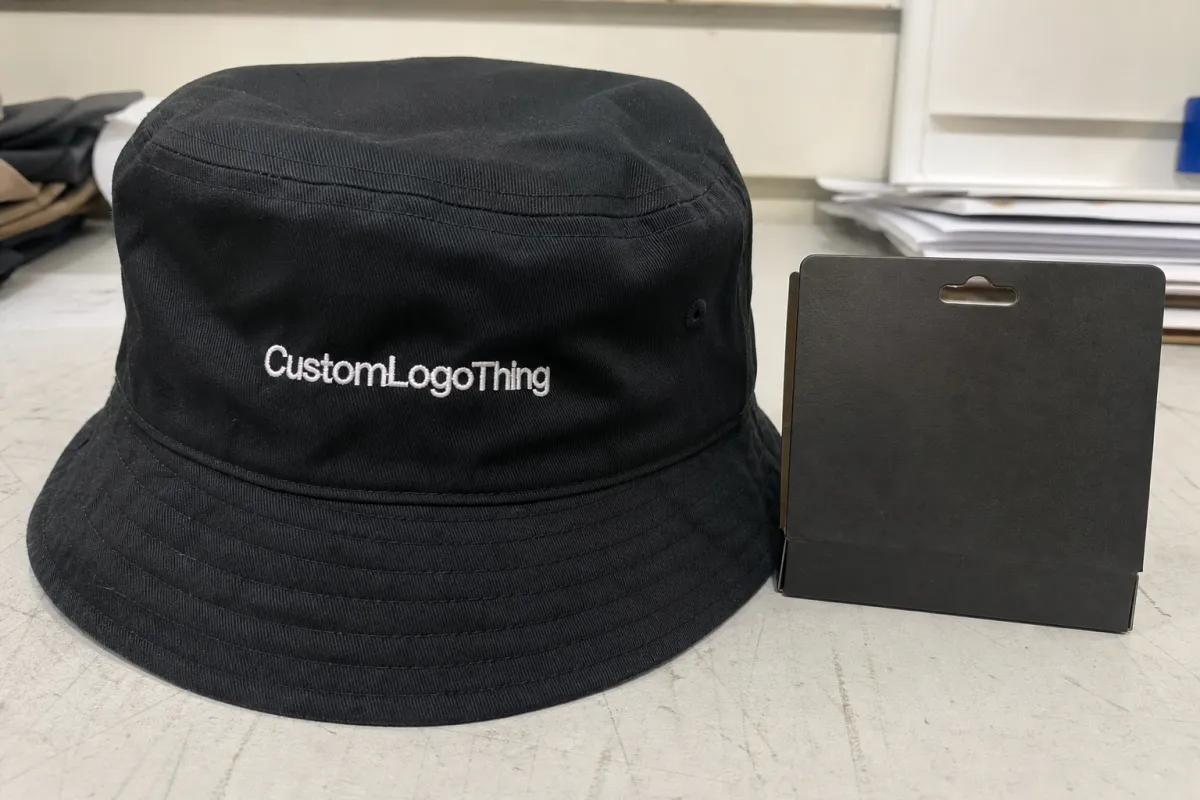
Five-panel caps are popular because the front panel gives you one broad branding area. That makes them useful for retail drops, event merchandise, team caps, staff gear, and promotional campaigns where the cap has to look intentional, not like leftover swag from a storage closet.
Small design choices change the quote. A standard cotton twill cap with a low-profile crown, plain sweatband, plastic snapback, and one 2.5-inch flat embroidered logo is not the same product as a structured cap with brushed cotton, 3D puff embroidery, branded seam tape, a woven rear label, and a metal clasp closure. Both may be listed as five-panel caps. They will not cost the same.
A useful quote should show the full stack: base cap, fabric, construction, decoration, labor, finishing, packing, and shipping. If a supplier gives one vague number and cannot explain what is included, the quote is not clean enough for serious buying.
Buying rule: compare the full spec, not the prettiest mockup. A cap quote without fabric weight, logo size, decoration method, closure type, MOQ, packing method, and freight terms is only half a quote.
Take a common order: 1,000 five-panel caps with a front logo. Standard cotton twill, flat embroidery under 7,000 stitches, one location, snapback closure, and bulk packing can stay controlled. Change that to 12,000 stitches, three thread colors, a woven side label, custom hangtag, and individual retail packaging, and the price difference is not a supplier “marking it up for fun.” It is more material, more handling, more inspection, and more production time.
What Buyers Need to Know About Five-Panel Construction
A five-panel cap uses one front panel, two side panels, and two rear panels. The single front panel is the main selling point because it gives logos, patches, and flat embroidery a cleaner surface than a center-seamed six-panel cap. For strong marks, short text, and graphic patches, it is a practical shape.
Fit matters. Most five-panel caps have a lower profile and a modern streetwear feel. The crown can be shallow for a relaxed look or slightly deeper for a more structured retail cap. The brim can be flat, slightly curved, or pre-curved. Decide that before quoting. Brim shaping affects both the look and the production handling.
Construction choices also change cost. An unstructured front panel is softer and often lighter. A structured front uses added backing or reinforcement, which helps the logo area hold shape but adds material and labor. A cap meant for a retail shelf usually needs better shape consistency than a promo cap being handed out at a one-day event.
Typical materials include 260gsm to 350gsm cotton twill, polyester-cotton blends, washed cotton, brushed cotton, and nylon for lighter outdoor styles. A 350gsm brushed cotton cap with a reinforced front panel feels more substantial than a 260gsm promo twill cap. Yes, the quote reflects that. Magic remains unavailable in bulk manufacturing.
Use case should drive the spec. Retail orders often justify better fabric, tighter logo placement tolerance, branded labeling, and cleaner packing. Promotional orders usually prioritize cost per piece and delivery timing. Team merch sits in the middle: durable enough to wear often, but not so overbuilt that the budget disappears into trim nobody notices.
Fabric, Closure, and Decoration Specs That Change the Quote
Fabric is usually the first real cost driver after quantity. Standard cotton twill is common because it decorates well, feels familiar, and keeps pricing reasonable. Brushed cotton costs more but gives a softer retail handfeel. Polyester blends can help with durability and color consistency. Washed finishes add handling because the cap needs a worn-in look without looking tired before it ships.
Small fabric upgrades matter on volume. A $0.20 increase per cap becomes $400 on 2,000 pieces. Add a second upgrade, then custom tape, then a better closure, and the “small” changes have eaten the sample budget. This is why a proper cost breakout matters before approval, not after production starts.
Decoration Options
Flat embroidery is usually the cleanest and most predictable decoration for five-panel caps. A simple logo under 6,000 to 8,000 stitches often prices well. Dense embroidery, large filled shapes, gradients converted into thread, and 3D puff embroidery raise machine time and inspection risk. More stitches mean longer production. More thread colors mean more setup and more chances for errors.
Artwork has limits. Tiny text may fill in. Thin lines may break. Gradients rarely translate cleanly into embroidery without simplification. A good supplier should flag those problems before sampling, not after bulk goods are finished and everyone pretends the logo was always supposed to look like that.
Patches can look premium, especially woven patches, rubber patches, faux leather patches, and embroidered patches. They also add a separate component plus application labor. Woven or printed labels can control cost on larger runs, especially when the artwork has fine detail that embroidery cannot hold cleanly.
Closures and Hardware
Closures are not just a style note. A plastic snapback is common and efficient. A fabric strapback with metal buckle or clamp gives a more retail look but adds hardware cost and sewing time. Velcro can be practical for uniforms or event use, though it rarely feels premium. A metal closure may add $0.15 to $0.45 per unit depending on finish, quality, and volume.
Internal details affect the quote too: sweatband quality, seam tape, inner labeling, care labels, hangtags, barcode stickers, and carton marks. None of these sounds dramatic. Together, they explain why two quotes for the “same cap” can land $0.70 apart.
| Spec Choice | Typical Cost Effect | Best Use | Buying Advice |
|---|---|---|---|
| Standard cotton twill | Base level | Promo, events, simple merch | Good default if budget matters more than retail feel. |
| Brushed cotton or heavier twill | Often adds $0.20-$0.60 per cap | Retail, brand launches | Worth it if customers will handle the cap before buying. |
| Flat embroidery | Efficient under moderate stitch counts | Logos, short text, clean marks | Keep artwork simple for sharper results and lower setup risk. |
| Patch application | Adds component cost plus labor | Premium merch, textured branding | Ask if patch cost and application are listed separately. |
| Metal buckle closure | Often adds $0.15-$0.45 per cap | Retail, lifestyle caps | Confirm finish, color, and adjustment length before sampling. |
Five Panel Caps Unit Cost Breakdown: What Drives the Price
The Five Panel Caps unit cost breakdown starts with the blank cap base, then adds fabric upgrades, decoration setup, embroidery or patch labor, trim, finishing, packing, and freight. Tooling fees may apply for custom patches, metal trims, molds, special labels, or non-standard components. Setup charges can include embroidery digitizing, sample setup, color matching, and production line preparation.
Quantity is the biggest lever. A 100-piece order has to absorb many of the same setup tasks as a 1,000-piece order. The sewing line, decoration setup, artwork review, and packing instructions do not shrink just because the order is small. That is why low-MOQ pricing can look painful.
Here is a realistic planning comparison for Custom Five-Panel Caps with front decoration and standard export packing. Actual pricing depends on final spec, shipping destination, freight market, and current material costs, but these ranges are useful for budgeting.
| Order Type | Typical MOQ | Spec Example | Estimated Unit Cost | Main Cost Drivers |
|---|---|---|---|---|
| Basic promo cap | 100-300 pcs | Standard twill, flat embroidery, snapback, bulk pack | $3.80-$6.50 | Small-run setup, embroidery, freight allocation |
| Standard merch cap | 500-1,000 pcs | Midweight cotton, 1 front logo, strapback, inner label | $2.90-$5.20 | Fabric, closure, logo stitch count |
| Premium retail cap | 1,000-3,000 pcs | Brushed cotton, patch, custom tape, hangtag, polybag | $4.20-$7.80 | Trim package, patch tooling, QC, packing |
| Large bulk run | 5,000+ pcs | Locked spec, repeated logo, efficient packing | $2.20-$4.60 | Material volume, production efficiency, freight method |
Artwork complexity matters more than buyers expect. A clean 2-inch logo with 5,000 stitches is not the same as a 4-inch filled design with 14,000 stitches and five thread colors. Dense embroidery can pucker the front panel if the backing, tension, or fabric choice is wrong. That may require another sample or a design adjustment.
For a basic embroidered cap, the cost stack might look like this: $1.50 to $2.40 for the cap base, $0.35 to $0.90 for embroidery, $0.10 to $0.35 for closure or trim upgrades, $0.08 to $0.25 for labeling, and $0.15 to $0.60 for packing and carton handling before freight. A premium version with custom labels, inside tape, patch tooling, individual packaging, and tighter inspection may add $1.00 to $2.50 per cap.
Shipping can distort the final number. Air freight on a small urgent order may add far more per cap than buyers expect, especially if caps are packed to protect shape. Ocean freight can reduce unit shipping cost, but it needs more planning and works better for larger replenishment orders. A cheap factory price with vague freight terms is not a landed cost. It is a starting point with suspense.
Standards can help keep quality conversations practical. For transit testing, buyers can review general guidance from ISTA. For paper-based hangtags, cartons, or FSC-certified packaging requests, check FSC requirements before putting sustainability claims on retail materials.
Production Steps and Lead Time: From Sample to Ship
A clean production process starts with quote approval, then artwork check, sample or pre-production approval, bulk cutting, sewing, decoration, finishing, packing, and shipment. Skipping the sample may save time on a rush order, but understand the tradeoff: you are approving from a mockup and spec sheet, not a finished cap in hand.
Sample time often runs 5 to 10 business days for a straightforward cap after artwork and materials are confirmed. Bulk production commonly takes 12 to 25 business days after sample approval for standard specs. Custom fabric dyeing, unusual trims, heavy embroidery, retail packing, or multiple colorways can push that longer. Freight is separate. Air may take several business days after dispatch; ocean is cheaper but slower.
Cost and lead time are connected. If the cap needs a custom closure, special woven label, rubber patch, or patch tooling, those components may need approval before bulk sewing starts. Late changes to closure type, brim shape, fabric color, or packaging can reset the clock. Nobody enjoys that email.
Common Production Bottlenecks
- Artwork revisions: tiny text, gradients, and thin lines often need cleanup before embroidery digitizing.
- Color matching: thread, fabric, buckle finish, and label colors may not match perfectly across different materials.
- Embroidery approval: stitch density and placement need review on the actual cap shape, not just a flat image.
- Trim delays: custom patches, buckles, labels, and tape can hold up bulk production if approved late.
- Packaging changes: hangtags, barcode labels, carton marks, and individual bags add handling and approval steps.
A simple spec moves faster. Standard fabric, one front embroidery location, a common snapback or strapback, and bulk packing can keep production controlled. A premium retail cap with custom labels, inside tape, special packing, and dense artwork needs more buffer. That is not a scare tactic. It is scheduling math.
Quality checks should happen at several points: fabric and color review before cutting, crown shape and size checks after sewing, logo placement inspection after decoration, closure function testing, thread trimming, and carton count verification before shipment. If the order has multiple colorways, each colorway needs its own approval path. Otherwise, the navy cap looks great and the stone cap shows every stitch shadow. Fun little surprise. Avoid it.
How to Keep Quotes Clean, Comparable, and On Budget
A good quote is boring in the best possible way. It names the fabric, crown style, brim shape, closure, logo size, decoration method, MOQ, sample cost, setup charges, packing method, lead time, and shipping terms. No mystery soup.
If one supplier quotes standard cotton twill and another quotes brushed cotton with a metal buckle, the lower number may not be the better offer. It may just be a cheaper cap. That sounds obvious until five PDFs hit your inbox and each one uses different terms.
A clear cost breakdown also protects the order after sampling. If the approved sample includes a woven label and individual polybag, those details should not vanish from the bulk quote. If a supplier buries them in vague line items, ask for the breakout. Vague quotes age badly.
Good production partners flag hidden cost drivers early. Dense embroidery? Say it before sampling. Patch tooling? List it. Special carton packing? Confirm it. Rush freight? Quote it separately. Buyers do not need fairy dust. They need numbers they can defend to a boss, finance team, or retail buyer.
Quality control belongs in the price conversation. For five-panel caps, that means checking size consistency, front-panel shape, brim curve, logo placement, stitch quality, thread trimming, closure function, label attachment, and carton count. A quote that includes stricter inspection may not be the lowest number, but it can be the cheaper order if it prevents rework, returns, or unusable stock.
Repeat orders usually get easier because the spec history is already documented. The next run starts from a known cap, known logo file, known packaging instruction, and known cost range. That cuts emails, reduces rework, and can improve bulk pricing because fewer details need to be rebuilt from scratch.
How to Compare Quotes Without Missing Hidden Costs
Compare the whole offer, not just the headline unit cost. A $2.85 cap can be a worse deal than a $3.40 cap if the cheaper option uses weak fabric, loose embroidery, missing labels, vague packing, or freight that appears later like a raccoon in the ceiling.
Start with the same spec across every supplier. Same cap style. Same fabric weight. Same crown structure. Same logo size and decoration method. Same quantity. Same closure. Same packing. Same delivery address. Then check landed cost, not just factory price.
Hidden-cost traps are common:
- Sample fees: often $35-$120 depending on decoration, trim, and shipping.
- Digitizing and setup charges: may be included, waived at higher volume, or billed separately.
- Patch tooling fees: common for rubber, metal, leather-look, or custom-shaped patches.
- Special packaging: polybags, hangtags, barcode labels, carton marks, and retail packs add labor.
- Rush fees and split shipments: useful in emergencies, expensive if poor planning caused the emergency.
- Freight and duty assumptions: quote terms can change the real landed price by more than the cap spec does.
MOQ confusion is another buyer trap. A quote at 5,000 pieces may show a much better cost per piece than a quote at 500 pieces, but that does not mean the larger order is smarter. If the brand only needs 800 caps, the extra inventory ties up cash and storage. Cheap unused stock is still expensive. Ask for two or three quantity breaks instead. 500, 1,000, and 2,500 pieces usually gives a useful pricing curve.
The quote should also identify shipping terms. FOB, EXW, delivered duty paid, and door-to-door courier pricing can produce very different totals. If you are comparing suppliers, ask each one to quote to the same destination and delivery method. Otherwise, you are comparing cap cost against cap-plus-something-maybe. Not a strategy.
What to Send for a Fast, Comparable Quote
The fastest quotes come from complete specs. Send the artwork file, target quantity, fabric preference, decoration method, closure type, cap color, logo size, packing request, delivery deadline, and destination. If you have a previous sample or reference photo, include it. One clear email can save three days of back-and-forth.
Tell the supplier how the caps will be used. Retail, promo, team gear, employee uniforms, and launch merch do not need the same spec. A retail cap may justify heavier cotton, better labeling, and individual packaging. A one-day event cap may need a tighter budget and faster shipping. A team cap may need durability and color consistency across repeat orders.
Use this checklist before asking for pricing:
- Artwork: vector file preferred, plus logo size, placement, and thread or patch color notes.
- Quantity: target order plus optional breaks such as 500, 1,000, and 2,500 pieces.
- Cap spec: five-panel shape, structured or unstructured front, brim style, and fabric.
- Decoration: flat embroidery, 3D embroidery, woven patch, printed patch, rubber patch, or label.
- Closure: snapback, strapback, Velcro, buckle, or metal clamp.
- Packing and delivery: bulk pack, polybag, hangtag, barcode, carton marks, deadline, and destination.
Ask for the quote in a line-by-line format so you can compare the five panel Caps Unit Cost Breakdown without guessing. Confirm the spec, review the sample, and approve bulk production only when the price, timeline, artwork, finish, packing, and freight terms all match the plan. That is how you buy custom caps without paying tuition to the school of avoidable mistakes.
FAQ
What affects the five panel caps unit cost breakdown the most?
Quantity is usually the biggest lever because setup charges spread across more units as the run grows. Fabric choice, decoration method, stitch count, closure type, packaging, and freight also change the final cost. A proper breakdown should show those items clearly instead of hiding them inside one vague unit price.
How low can MOQ go before five-panel cap pricing jumps?
Small runs usually carry a higher per-piece cost because setup, artwork review, sewing preparation, and decoration labor do not shrink much. Below 100 to 300 pieces, expect fewer customization options and higher unit pricing. Once the order reaches a more efficient batch size, bulk pricing usually improves.
Is embroidery or a patch better for five-panel cap unit cost?
Simple flat embroidery is often cleaner and more cost-efficient for moderate logo sizes. Patches can look more premium, but they add material cost, possible tooling fees, and application labor. The better choice depends on stitch count, artwork detail, texture, placement, and order quantity.
How long does five-panel cap production usually take?
Sample approval often takes 5 to 10 business days after artwork confirmation. Bulk production commonly runs 12 to 25 business days after approval for standard specs, while custom trims, dense embroidery, special packaging, or tight deadlines need more buffer. Shipping time should be confirmed separately.
What should I include to get an accurate five-panel caps quote?
Send artwork, quantity, fabric preference, decoration method, closure type, cap color, packing request, deadline, and delivery destination. Add the intended use so the quality level matches the order. The more complete the spec, the cleaner the quote will be, and the fewer price changes you will see later.


