The first embroidered cap run usually has a clean arc: approve the sample, place the order, wait for production, open the cartons, and watch them move. The second run is less dramatic, but in practice it matters more. An event merch Embroidered Baseball Caps reorder plan keeps a proven item from turning into a spec hunt, a pricing debate, and a shipping scramble all at once.
That is especially true in event merch, where timing is unforgiving. A cap that sold well at a spring event may need to be back on a table by summer, and the gap between those dates is rarely long enough to rebuild the job from scratch. A good reorder is not a reinvention. It is controlled repetition.
Buyers who handle caps regularly tend to think in terms of risk rather than novelty. They want the same crown shape, the same thread color, the same front panel footprint, and the same delivery window. Those details sound small. They are not. A one-degree change in fit or a half-tone drift in thread can be enough to make a reorder look off, even when the art file is technically correct.
Why a Reorder Is Cheaper Than a Fresh Cap Run
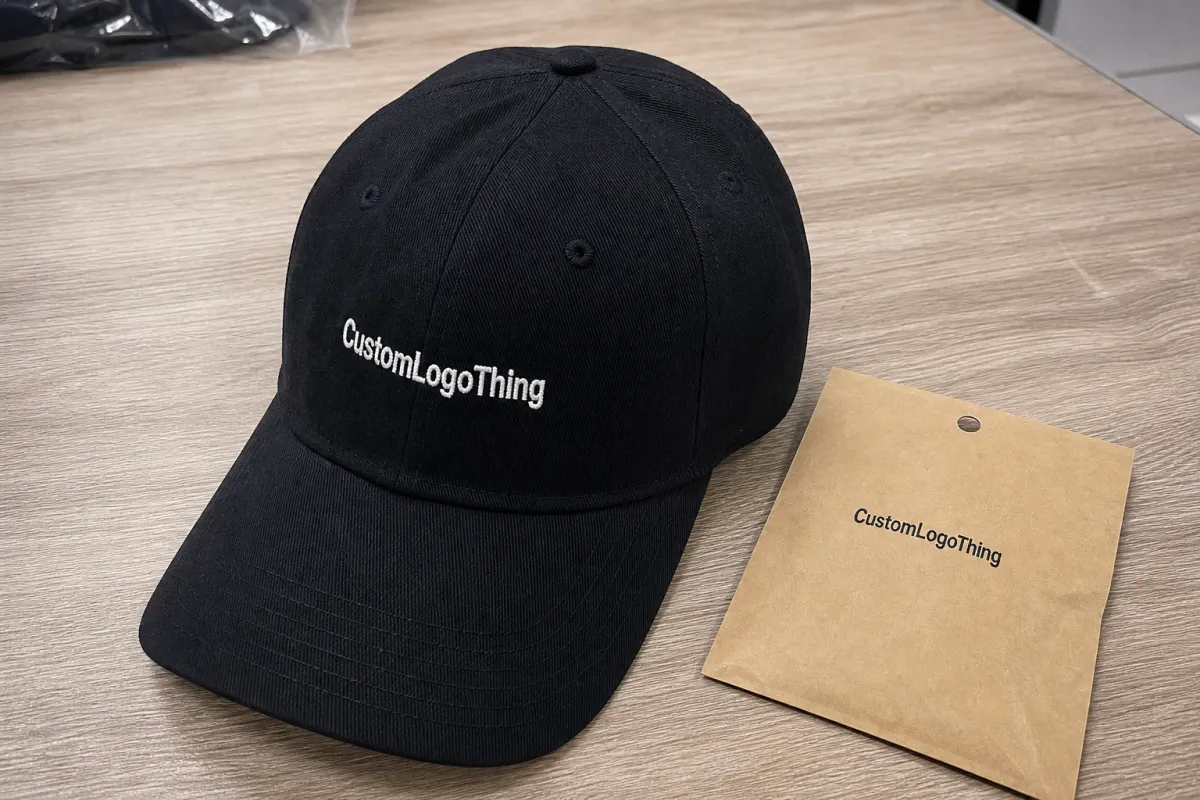
The price gap between a reorder and a new cap program comes from what you do not have to repeat. If the embroidery file already exists, the cap blank is still available, and the factory has the prior run on record, then setup work drops quickly. No new digitizing. No sample round just to prove the logo sits in the right place. No internal debate about whether the crown should be lower or the brim slightly flatter.
Fresh runs pay for uncertainty. Reorders usually do not, unless the file is missing or the blank has been discontinued. That is why the best reorder program is built around recordkeeping. The money saved is not abstract. It shows up as fewer approvals, fewer corrections, and fewer chances for someone to “improve” the item into something that is no longer the same product.
A lot of buyers compare only the unit price and miss the hidden cost stack. Embroidery setup, cleanup of old art files, proofing, carton labels, freight splits, and rush fees can move the total more than the cap itself. In small or medium quantities, those extras matter a lot. On a 100-piece order, a modest setup fee can change the economics enough to wipe out the benefit of a supposedly cheaper blank.
Repeat production also protects against a common failure mode: a near-match that passes on screen but fails in hand. A navy cap can be five shades of navy depending on the fabric mill, wash treatment, and lighting. A subtle shift in thread sheen can make an approved logo read darker or flatter than the first batch. You do not notice that in a quote sheet. You notice it when the boxes are opened.
The least expensive reorder is the one that arrives looking like the first run, not the one that wins a spreadsheet comparison by a few cents and loses the whole visual match.
For events with multiple audience segments, consistency matters even more. Staff caps, sponsor caps, and merch caps may serve different purposes, but they still need to feel like they came from the same program. If one piece drifts, the collection looks patched together. That is rarely a decoration problem alone; it is usually a planning problem.
Cap Styles and Decoration Choices That Reorder Cleanly
Some cap constructions are easy to repeat. Others create problems the second time they are made. Structured six-panel caps tend to hold their shape better than soft unstructured options, and standard mid-profile crowns are usually easier to source again than unusual low-profile bodies with custom curvature. That does not make one style better than the other. It just means the more unusual the shape, the more attention the reorder will need.
Fabric is the next variable. Cotton twill, brushed cotton, and common polyester blends are usually stable enough for repeat runs because they are widely stocked and easy to match. Specialty washes, pigment-dyed fabrics, and limited-run blends are harder to reproduce. If the original order depended on a fashion finish that was trending for one season, the reorder may face a substitution issue even when the supplier is trying to help.
Closures should stay boring. Snapback, strapback, and fitted constructions all work, but the exact closure type needs to stay the same if the buyer wants the fit to match. A small change in buckle profile or strap material can alter how the cap sits, especially when the order is split across staff and retail use. That is the kind of detail that gets dismissed during quoting and then becomes a complaint during distribution.
Embroidery is easiest to repeat when the logo stays in the same place on the same panel with the same stitch count. Front-panel embroidery is the cleanest option because placement is obvious and repeatable. Side and back placements are still fine, but they need exact measurements. A logo shifted a quarter inch left may still be within production tolerance, yet it can look wrong to anyone comparing it with the first run.
Patches are reliable too, but only if the patch dimensions, border treatment, and attachment method were documented on the first job. Heat-applied patches and sewn patches do not behave the same way over time. A buyer who wants a cleaner repeat order should resist the temptation to switch methods just because the quote looks slightly lower. The savings often disappear once sample approval and corrections are added back in.
- Best for repeatability: structured six-panel cap, standard cotton twill, front embroidery
- Usually stable: snapback or strapback with the same closure and panel count
- Higher risk: specialty fabric, unusual wash, discontinued blank, custom crown shape
- Easiest to match: logo on the front panel with fixed size and stitch density
If the larger merch program still needs a volume structure, the cap reorder should not be the first place to experiment. A repeat item should stay repeatable. Anything that changes fit, decoration complexity, or sourcing risk belongs in a separate item family, not folded into the same approval trail.
Specs to Lock Before You Approve the Next Run
If the first order happened months ago, memory is not enough. The reorder should begin with the original cap code, panel count, crown profile, brim shape, closure type, logo dimensions, thread references, and carton requirements. One missing line item can turn a reorder into a spec rebuild, and spec rebuilds are where timelines slip.
The file set matters just as much as the cap itself. A vector logo is useful, but an embroidery machine needs more than art. It needs stitch logic, placement notes, and ideally the same digitized file that was approved on the first order. A JPEG pasted into an email thread is not production control. It is just a picture of the logo.
Color is where many reorders start to drift. Thread lines vary by supplier, and dye lots on blanks can shift from one production cycle to another. That is normal manufacturing behavior, not necessarily a defect. The buyer’s job is to preserve the reference point: thread codes, Pantone targets if they were used, and a photo of the approved sample with measurements visible. A remembered “dark blue” is too vague to protect a repeat order.
The fastest way to delay a reorder is to let internal notes scatter. A clean approval package usually includes the old PO, the approved art file, a photo or scan of the sample, and any notes about stitch count or placement. If any of those pieces are missing, the quote can still happen, but production confidence drops. The result is usually one more proof round, and that eats time.
Useful reorder checklist:
- Confirm the cap style code and blank source from the first run.
- Verify panel count, crown shape, closure, and brim profile.
- Match decoration size, location, and stitch count to the approved sample.
- Check thread colors against code, sample, or documented Pantone reference.
- Confirm carton count, packout method, and delivery destination before release.
The list is short because the job should be short. If a buyer has to explain the reorder for ten minutes, something was not recorded when it mattered. A clean purchase history is worth more than a clever last-minute fix.
It also helps to know what not to change casually. Switching the cap from structured to unstructured, changing the blank from cotton twill to a washed finish, or moving the logo slightly to make room for a new sponsor mark may all seem harmless. They are not. Each one changes the visual balance of the cap, and on a small item like headwear, small changes are obvious.
Pricing, MOQ, and Unit Cost Breakpoints
The real cost of an embroidered cap reorder is the sum of several parts: blank cap, embroidery setup, digitizing if the file was not retained properly, thread, finishing, packaging, and freight. That is the straightforward version. A quote that gives only one neat number may be useful for a yes-or-no decision, but it hides where the money is actually going.
MOQ follows production efficiency more than buyer preference. A factory can run a small batch, but the unit cost tends to be unfriendly when setup time is spread across too few pieces. Once quantities move into the low hundreds, the per-cap cost usually drops in noticeable steps. Not every supplier uses the same breakpoint, but the pattern is consistent enough to plan around.
| Order Type | Typical Cost Shape | Best Use | Risk Level |
|---|---|---|---|
| Repeat reorder, same blank and art | Lowest setup, strongest unit price | Known sell-through, staff restock, VIP allocation | Low |
| Fresh run with new artwork | Higher setup and proofing cost | New sponsor, updated event theme | Medium |
| Reorder with changed blank | New spec review, possible sample cost | Discontinued cap or fit change | Medium to high |
| Small rush reorder | Freight and labor premiums stack up | Last-minute gap before event day | High |
Ask for tiered pricing at 50, 100, 250, and 500 units. That gives a real view of breakpoints instead of a single quote that may or may not fit the plan. In many cases, the difference between 100 and 250 pieces is smaller than the penalty of ordering too close to the event date. Buyers often underestimate that. Freight and labor surcharges can erase the savings of a lean quantity very quickly.
Repeated jobs do not always come with zero setup. If the old embroidery file cannot be recovered cleanly, if the blank changed, or if the supplier has to confirm a color match from scratch, some fees return. That is not a problem if it is explained up front. It becomes a problem when the buyer assumes the reorder should automatically be cheaper and then sees the invoice after approval.
There is also a practical range to keep in mind. For standard decorated caps, unit pricing often looks quite different at 100 pieces versus 500 pieces because the fixed costs are distributed more efficiently. A small reorder may still be the right choice, but it should be chosen for inventory reasons, not because the quote looked deceptively simple. The cheapest line item is not always the smartest procurement decision.
If a program has to ship through a distribution center or across multiple delivery points, packaging choices begin to matter more than people expect. Carton count, compression, and carton labeling all influence whether the order arrives intact and easy to receive. Basic distribution testing standards are worth reviewing if the caps are going through complex freight. The ISTA material on shipping tests is a useful benchmark for that side of the process.
Production Steps, Timeline, and Reorder Lead Time
The production path for a clean reorder is usually simple: confirm the file, confirm the blank, source stock, stitch, finish, pack, and ship. The order only feels complicated when one of those steps is uncertain. If the original records are organized, the schedule tends to move faster than buyers expect.
For a reorder that uses the same blank and the same embroidery file, a realistic production range is often 12-15 business days after proof approval, plus freight. If the blank needs to be swapped or the art file needs cleanup, the schedule can stretch to 15-20 business days or longer. That range is not meant to scare anyone. It reflects the real constraint: stock availability and proofing rhythm matter as much as stitching time.
Delays usually come from ordinary problems:
- an old logo file that cannot be stitched without cleanup
- a cap blank that is no longer stocked in the same form
- internal approval that moves slower than the production calendar
- a rush order that arrives after capacity is already committed
Packaging and transit should be treated as part of the product. Caps packed too loosely can lose shape in transit; cartons packed too tightly can crush the crown or leave creases in the bill. If the order is going into long-distance freight, split deliveries, or a warehouse intake process, the packout has to be clear and durable. Material handling is not an afterthought. It affects what the buyer actually receives.
The safest planning rule is plain: reorder before the last box is gone. Waiting until inventory hits zero forces expensive choices. Freight becomes urgent, approval windows shrink, and the final decision often gets made by whoever is available rather than whoever has the best spec memory. That is a bad way to buy anything, especially a repeat item that should already be solved.
An event merch embroidered baseball Caps Reorder Plan works best when lead time is treated as part of the item itself. If the event date is fixed, the cap order date has to be fixed too. That sounds obvious. It still gets missed all the time.
Why Repeat Buyers Stick with the Same Cap Spec
The real advantage of repeat buying is continuity. The same cap blank, the same thread library, the same placement notes, and the same QC standard keep the second order from looking like a substitute. Buyers who manage cap programs well usually care less about novelty than about repeatability. They know the value of preserving something that already worked.
That starts with recordkeeping. Save the PO, proof, artwork, placement measurements, approval email, and a photo of the accepted sample. The archive does not need to be fancy. It needs to be complete. Most of the expensive mistakes in reorder work come from reconstruction by memory, not from embroidery itself.
Quality control on a repeat run should focus on the things people see first:
- embroidery alignment and center point
- stitch density and edge coverage
- thread color match against the approved reference
- brim shape and crown consistency across the batch
- carton count, packout, and label accuracy
Those checks sound basic because they are basic. That is what makes them useful. The buyer does not need a long checklist full of jargon. They need a short list of items that protect the visible product and catch the sort of small variation that ruins a repeat order.
Repeat buyers also know where not to spend attention. A second run does not need a new creative brief, a new style story, or a fresh round of embellishment ideas unless the actual product is changing. Event merch often works best when the cap becomes a known object. Staff recognize it. Attendees recognize it. The brand identity is reinforced instead of reset.
If a reorder has to substitute a blank, the substitution should be handled as a controlled change, not a silent swap. Even when the new cap is close, the fit can differ a little, and the embroidery may sit differently depending on crown height and panel stiffness. Those are the kinds of changes that are easier to manage before production than after cartons are packed.
Next Steps to Place the Reorder Without Delays
Start with the documents that already exist: previous PO, approved art file, cap style code, quantity split, delivery address, and any notes on what must remain identical. Those items turn a reorder from a guess into a known job. If they are missing, the process slows down immediately.
Then ask for a line-item quote. Setup, decoration, freight, rush handling, and packaging changes should each be visible. A single lump sum can hide the real decision points, and buyers need those points before they approve the order. If the supplier cannot explain what changed from the first run, the quote is not ready.
Shipping choice matters too. One delivery is simplest. Split delivery works when the event schedule is staggered or when storage space is limited. Inventory hold can make sense when the next wave is already planned. None of those options is inherently better. What matters is deciding before production starts instead of after the cartons are already moving.
If the original blank is no longer available, do not pretend the reorder is identical. Request a close-match sample, compare crown shape and closure, and confirm whether any embroidery adjustment is needed to preserve visual balance. A small blank change can alter the way the logo reads on the front panel. That is normal. Ignoring it is the part that causes problems.
The most reliable workflow is simple: lock the spec first, confirm the file second, approve the schedule third. That sequence keeps the order disciplined and protects the margin. More important, it keeps the second cap run from becoming a correction project disguised as a reorder.
How many event merch embroidered baseball caps should I reorder?
Base the number on sell-through from the first run, not on a rough guess. Add a buffer for staff use, damaged units, and last-minute demand at the event. Tiered pricing at 50, 100, 250, and 500 units helps show where the cost breaks actually sit.
Can I reorder if the original baseball cap blank is discontinued?
Yes, but treat it as a controlled spec change. Check crown shape, closure, fabric, and overall fit before approving the substitute. A close-match blank can work well, but the decoration position may need a small adjustment.
What artwork do you need for a repeat embroidered cap order?
A vector file or the original embroidery file is the best starting point. Add the previous order details, thread colors, and placement measurements. A photo of the approved sample helps catch small variations before production starts.
How long does a reorder take compared with a first run?
A reorder is usually faster if the cap blank and decoration file stay the same. New digitizing, a different blank, or slow approvals add time quickly. For a straightforward repeat job, 12-15 business days after proof approval is a reasonable planning range, plus freight.
What changes usually raise unit cost on a cap reorder?
New artwork, extra thread colors, a different blank, and a very small MOQ can all raise cost. Rush freight and split shipments also add expense. The cleanest pricing usually belongs to the repeat run that changes nothing important.


