Trade show Embroidered Baseball Caps MOQ: buy with the event, not against it. The right minimum order quantity is rarely the lowest one on the page. It is the quantity that matches the audience, the show schedule, and the value of the impression. A cap has a longer life than most booth giveaways: it gets worn in hallways, on flights, in warehouses, and sometimes on the next sales call. That extended use changes the math.
For promo buyers, the real decision is not whether embroidery looks better than print. It usually does, especially on headwear. The decision is whether the blank cap, stitch count, setup charges, and freight can all fit inside a workable delivered cost. A cheap quote that misses lead time or hides shipping is not a bargain; it is a future problem with nicer typography.
MOQ matters because embroidered caps are a production item, not a shelf item. A supplier has to source the blank, digitize the artwork, set up the machine, and plan the run. Once those steps are in motion, the economics improve with volume. That is why trade show Embroidered Baseball Caps MOQ requests often get better pricing in tiers rather than one flat number.
Why embroidered caps outperform disposable booth swag
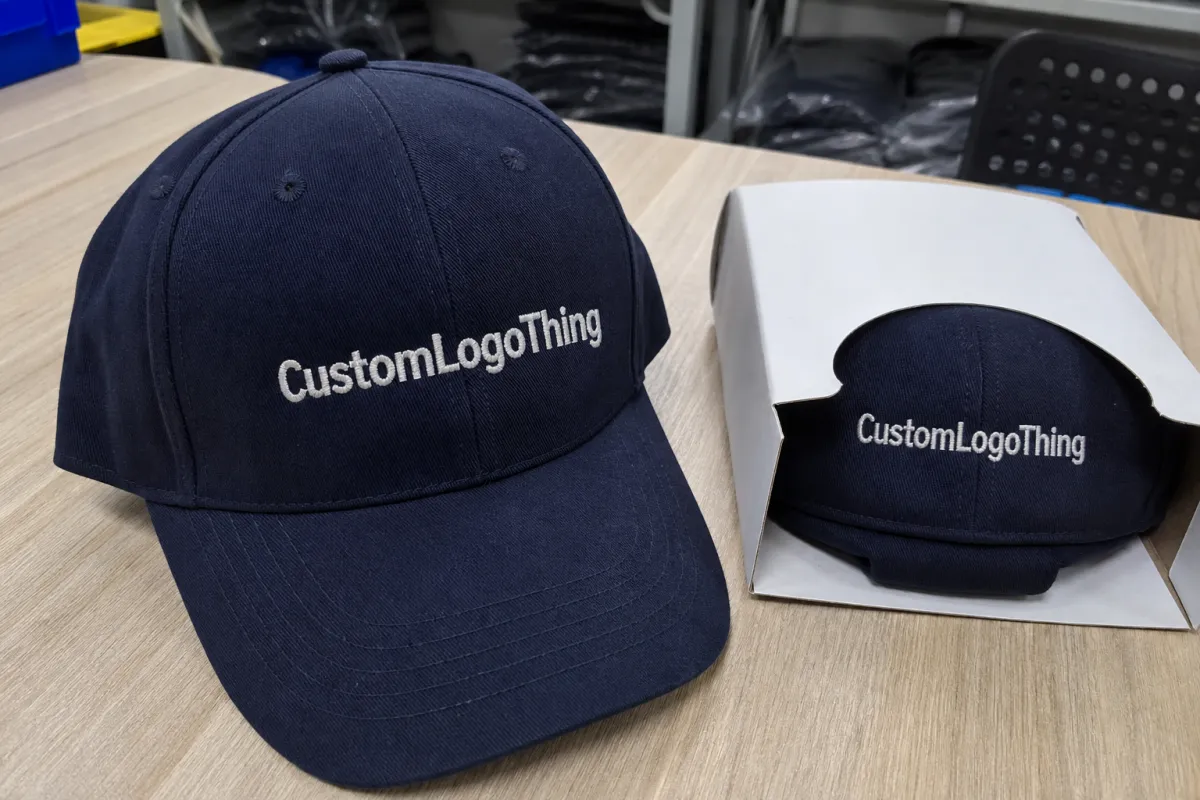
Embroidery gives a cap staying power. A pen can be useful, but it disappears into a desk drawer. A flyer does not survive a day of badge scanners and tote bags. A cap, if it fits and the logo is readable, enters a rotation. That is a different category of value. The buyer is not paying for a momentary handout; the buyer is buying repeated visibility.
That repeated visibility matters most for brands that need to be remembered after the booth closes. Staff uniforms are the obvious use case. So are VIP gifts tied to meetings, demo appointments, or distributor visits. Some teams also use caps as a closer after a useful conversation. The item does not need to be expensive to work. It needs to feel intentional and wearable.
Comparisons help here. A budget tote may touch more hands in one day, but a cap can keep advertising long after the event. A mug can look premium and still sit unused. A cap, by contrast, travels with the person wearing it. For events measured in brief interactions, that portable visibility is hard to beat.
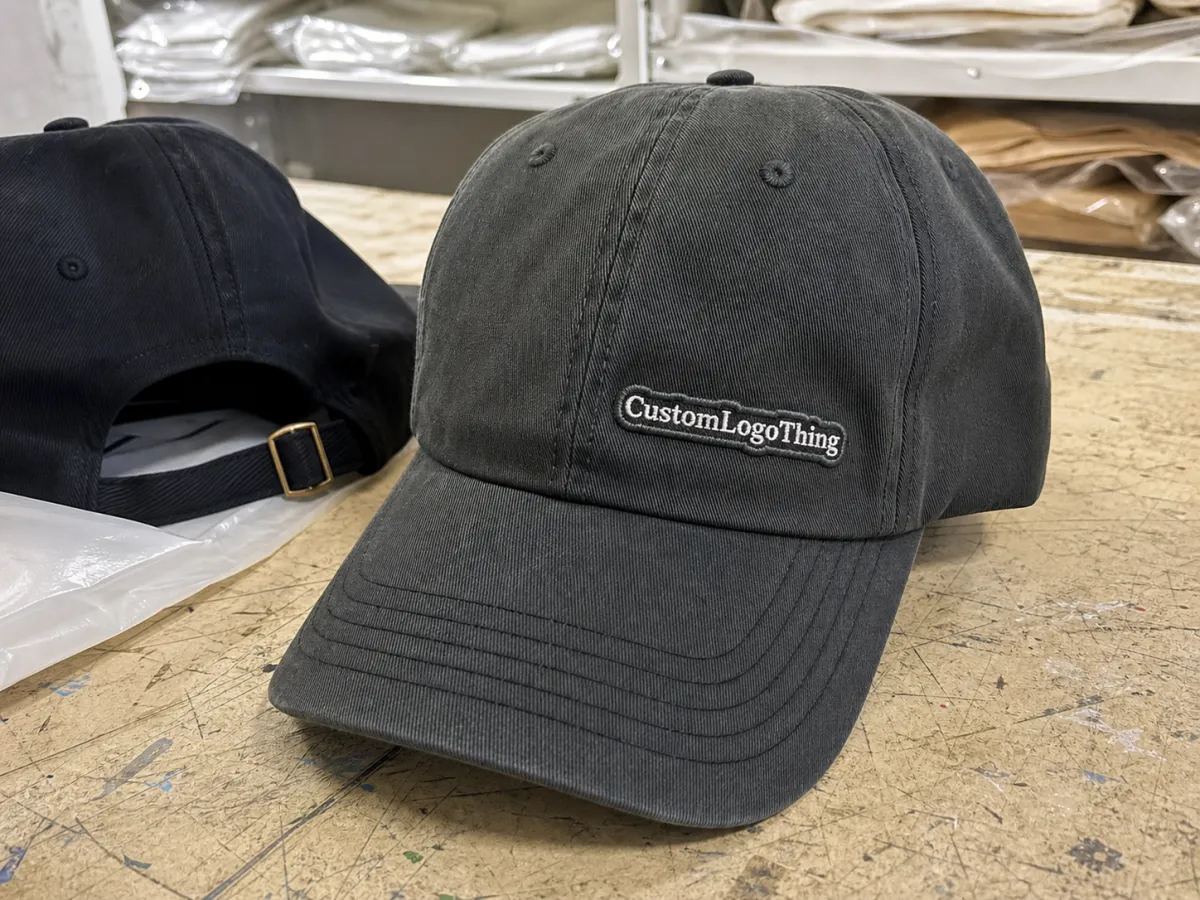
Style choice also changes how the cap performs. A structured six-panel cap reads more polished on the booth staff. An unstructured dad cap feels softer and more casual. A performance cap with a mesh back is often the practical choice for outdoor events, hot venues, or crews that wear the cap for eight hours at a stretch. The cap is part of the message, not just the container for the logo.
A booth item that leaves with the visitor is useful; a booth item that keeps being worn is better.
There is also a cost-per-impression argument that usually gets overlooked. A paper giveaway may cost less up front, but if it is forgotten the same afternoon, the real impression cost climbs. An embroidered cap costs more to make, yet it can stay visible for months. That is why buyers should judge it on the full lifecycle, not on the first line of the quote.
If you need a basic ordering reference, the ordering FAQ covers the details buyers usually ask before they request pricing.
Customization choices that change the quote
A cap quote changes quickly because there are several moving parts. The blank style matters first. A structured six-panel baseball cap, a low-profile unstructured cap, a mesh-back trucker style, and a performance cap all carry different base costs and behave differently under embroidery. The more tightly a buyer defines the style, the easier it is to compare suppliers on the same product.
Decoration placement is the next cost lever. Front-panel embroidery is the standard because it gives the logo the most visibility. Side embroidery is useful for a small sponsor mark, web address, or secondary brand element. Back embroidery can work for event names or short taglines, but text gets cramped fast. Every extra location adds labor and proofing time, so buyers should treat it as a deliberate choice rather than a decorative extra.
Thread count and color count also matter. A clean one-color logo is usually the simplest route. Two to four thread colors are still manageable for most trade show runs, but every added color adds digitizing complexity. Pantone matching in embroidery is approximate, not exact. A buyer gets better results by choosing a thread color that reads correctly on the cap than by chasing a perfect match that will never exist in stitched form.
Artwork quality is where first-time orders often slow down. Embroidery does not reward tiny details. Fine serif text, hairline strokes, gradients, and shadow effects can disappear once they are translated into thread. A logo that looks sharp at 2 inches on a screen may need simplification before it can live on a cap front panel. That is not a compromise so much as a production requirement.
- Structured six-panel caps are the most common for front-logo visibility and a cleaner booth presentation.
- Unstructured dad caps feel more relaxed and can suit lifestyle brands or casual field teams.
- Performance caps are a stronger fit for warm venues, outdoor staffing, and long wear times.
- Closure choice changes comfort and price: snapback, hook-and-loop, buckle, or fitted.
- Artwork clarity matters more than decoration ambition; bold shapes usually survive stitch translation better than tiny detail.
One practical note from the production side: a logo with 5,000 to 7,000 stitches is common for a standard front placement, but that range is not a target by itself. It is only a sign that the design is in a normal embroidery zone. A small, crisp emblem can be far more effective than a dense design that looks busy on paper and muddy in thread. Tiny text below roughly 0.2 inch high is especially risky because once it is stitched, each letter gains width.
Materials, stitching, and fit specs buyers should compare
Material choice affects comfort, photo quality, and stitch performance. Cotton twill is still the standard for many trade show orders because it feels familiar and holds embroidery cleanly. Brushed cotton has a softer hand and a more relaxed look. Polyester blends tend to resist wrinkles better and keep their shape through repeated wear. Mesh-back caps breathe better in heat, which matters more than many buyers expect once a booth runs under bright lights for hours.
The blank fabric is only part of the story. Stitch quality changes how expensive or premium the cap feels. Clean digitizing can make a mid-priced blank look far more polished than the fabric alone would suggest. Poor stitch mapping does the opposite. The thread piles up, corners look heavy, and small letters close in on themselves. In practice, I would rather approve a simpler logo with even satin stitches than a complicated design that loses clarity because the thread density is too high.
Fit specs deserve equal attention. Crown height changes how the cap sits and how much room the embroidery has before it touches a seam. Brim shape changes the visual line across a group of staff members. Closure range matters if the caps are going to a mixed audience. A cap meant for a booth team is not the same thing as a cap meant for a table giveaway. If the end user will wear it all day, comfort is not cosmetic; it determines whether the item gets used.
Proofing should include more than a flat image. A useful proof shows the cap style, logo size, thread colors, placement, and approximate stitch count. If the supplier can provide a stitched sample or a pre-production photo, that is even better on larger orders. The goal is to catch problems early: seam interference, logo drift, text that is too small, or a color contrast that looked acceptable on screen but weak on the actual blank.
If the order includes inserts, care cards, or carton liners, it is straightforward to specify FSC-certified paper stock for those pieces. That does not change the cap itself, but it can improve the quality of the full package.
Pricing, MOQ, and unit-cost tradeoffs
The minimum order quantity is not a penalty. It is the point where setup costs stop overwhelming the value of the order. Once artwork has been digitized and the blank cap style is locked in, the supplier can spread those fixed costs over more pieces. That is why trade show Embroidered Baseball Caps MOQ pricing often becomes more efficient as quantity rises.
Buyers often look only at the piece price and ignore the rest. That misses the full picture. A solid comparison should separate digitizing, setup charges, embroidery stitch count, blank selection, packaging, freight, and any rush fee. If those items are bundled together, it becomes hard to tell whether the quote is truly better or simply harder to read.
| Run size | Typical cost per piece | Setup charges | Best fit |
|---|---|---|---|
| 50-99 caps | $8.50-$13.50 | $35-$75 digitizing | VIP gifts, pilot events, small internal teams |
| 100-249 caps | $6.75-$10.25 | $35-$75 digitizing | Booth staff, appointment rewards, limited handouts |
| 250-499 caps | $5.25-$8.10 | $25-$60 digitizing | Regional shows, distributor gifts, multi-event programs |
| 500+ caps | $4.25-$6.95 | Often reduced or waived | National campaigns, recurring brand programs |
Those numbers are not fixed, but they are realistic enough to help with planning. A slightly larger order can sometimes move the unit price low enough to justify a better blank or a second decoration placement. That is the practical upside of a larger MOQ: it can buy quality, not just quantity.
Tooling fees are less common in standard embroidery than setup charges, though they can appear with custom patches, specialty trim, or unusual construction. Buyers should ask directly. It is easy to confuse a one-time digitizing cost with a recurring production fee, and that confusion creates bad comparisons.
The safest way to compare suppliers is to standardize the request. Same cap style. Same embroidery size. Same thread count. Same freight method. Same proof revision limit. If one quote includes shipping and another does not, the cheaper piece price may still be the more expensive delivered order. For trade show budgets, delivered cost is the number that matters.
A low MOQ only helps if the cap arrives on time, looks clean, and fits the delivered budget.
That is especially true for show-specific purchases. A cap that lands two days late has no value for the event it was meant to support. A cap that looks rushed can do the opposite of what the brand intended. The margin between a useful order and a wasteful one is often only a few dollars per piece, which is why the details deserve the attention.
Production steps and lead time from proof to delivery
Lead time is easier to manage once the process is visible. A normal order moves through intake, artwork review, digitizing, digital proof approval, production scheduling, embroidery, inspection, packing, and shipment. If any one of those stages slips, the delivery date slips with it. Buyers usually do not lose time in production; they lose it before production starts.
- Send the art in vector format if possible, ideally AI, EPS, or PDF with clean outlines.
- Confirm the cap style, color, closure, and decoration location before proofing begins.
- Approve the digital proof only after checking stitch size, thread colors, and placement.
- Allow production time after approval; changes usually reset the clock.
- Plan freight early so cartons are not arriving the day the booth opens.
For straightforward orders with in-stock blanks, standard production often lands around 12-15 business days after proof approval. Complex artwork, special closures, or a missing blank color can add time. Rush service may shorten the schedule, but only if the ingredients are already in place. A buyer who sends low-resolution art on Monday and wants a rush ship by Wednesday is asking the supplier to solve several problems at once.
Sampling can help, especially on larger programs. A stitched photo proof or pre-production sample can reveal issues that a digital mockup misses: crown distortion, seam placement, contrast problems, or lettering that needs to be enlarged. The trade-off is time. Sampling adds days, so it should be requested early if the order depends on it.
Shipping deserves the same discipline as decoration. Ask how many caps go in each carton, whether split delivery is possible, and whether the destination has receiving limits. A hotel dock, a convention center, and a warehouse all behave differently. Cartons that look fine on a loading dock may not survive being shuffled across a show floor with other materials. The logic behind ISTA testing is useful here: the package has to survive real handling, not just stacking.
Trade show timelines are usually compressed by two avoidable issues: missing vector art and late approval. Both can be controlled. The safest approach is to finish proofing earlier than the event date suggests and build in transit time that assumes something will slow down.
How repeat buyers keep event caps consistent
Consistency matters more than many teams realize. A cap used for quarterly shows, field reps, or regional events should look the same every time it is reordered. If the thread shade drifts or the logo gets resized without warning, the program starts to feel patchy. The audience may not articulate the difference, but they notice it.
Repeat buyers save time by archiving a clean spec sheet. The most useful version includes the approved artwork file, cap style and color, closure type, thread references, embroidery placement, and stitch count. Once those details live in the order record, the next run does not need to start from scratch. That reduces revision cycles and keeps the finished cap closer to the original.
- Approved embroidery file so future runs do not require re-digitizing.
- Thread references to keep the logo color stable across reorders.
- Cap style code so structured, unstructured, and mesh styles do not get mixed.
- Placement notes to hold the logo in the same position every time.
- Proof history so revisions are documented and easy to reproduce.
Quality control on repeat orders should be basic and strict. Check placement, panel alignment, thread cleanup, and the consistency of the closure hardware. If the first run landed well, the second one should match it. Drift usually comes from a messy order record, not from bad luck. A supplier that keeps the file history clean will usually make a cleaner reorder.
This is also where a buyer can save on admin time. A well-managed repeat order is faster to quote, easier to approve, and less likely to trigger last-minute corrections. The first order teaches the supplier what matters; the second order should prove that the recordkeeping worked.
If you need a quick reminder on reorder basics, the FAQ for embroidered cap buyers is a practical place to check before sending the next PO.
Next steps to price your order quickly
The fastest quotes come from complete briefs. Before requesting pricing, gather the logo file, preferred cap style, color count, quantity, event date, and ship-to ZIP code. If you already know whether the caps are for staff, VIPs, or general handout use, include that too. It narrows the blank selection and keeps the conversation focused.
It also helps to choose one primary option and one fallback option. A structured cotton twill cap plus a performance backup gives the supplier a realistic comparison without reopening every design decision. The same logic applies to closures. If snapback and hook-and-loop both work, say so. If only one closure is acceptable, make that clear up front.
Ask for the quote in separate lines. You want to see the cap blank, digitizing, decoration, freight, and rush charge if there is one. That makes the delivered number easier to judge and keeps a low piece price from masking a high shipping line. For show planning, the delivered number is the one that reaches the budget.
Use this short checklist before sending the request:
- Artwork: vector file if available, plus any Pantone references.
- Style: structured, unstructured, performance, or mesh-backed.
- Decoration: front only, front plus side, or front plus back.
- Volume: exact quantity and any expected reorder volume.
- Timing: event date, receiving hours, and any hotel or convention dock limits.
Finally, confirm reorder terms and file retention if the cap may be used for multiple events. That small step can save real time later. For buyers comparing Trade Show Embroidered baseball caps MOQ options, the cleanest path is simple: send art, quantity, cap style, and deadline together, then ask for a delivered quote that shows the full cost per piece.
What is the usual MOQ for trade show embroidered baseball caps?
MOQ depends on cap style, embroidery complexity, and whether the artwork needs digitizing. Smaller runs are available in many cases, but pricing usually improves as quantity rises. Ask whether the MOQ applies per style, per color, or per decoration location before comparing quotes.
How much do embroidered trade show caps cost per piece?
Unit cost is shaped by quantity, stitch count, blank quality, and setup charges. Freight and rush handling can move the total more than buyers expect, so compare delivered cost rather than the headline piece price. A larger run can lower the unit cost enough to fit a better blank into budget.
How long does production take after proof approval?
Standard production usually starts only after proof approval and final artwork confirmation. Digitizing, embroidery, inspection, and shipping all affect the schedule, so ask for a realistic ship date before placing the order. Rush options may exist, but they depend on blank availability and current production capacity.
Can I mix cap colors in one trade show embroidered baseball caps order?
Sometimes, but mixed colors can change the MOQ and complicate inventory planning. A single cap style with multiple colorways is usually easier to manage than several styles with different closures or fabrics. Confirm whether color mixing changes pricing tiers or requires separate production runs.
What artwork works best for embroidered trade show caps?
Vector artwork with clean lines is the safest choice because embroidery translates shapes, not photo detail. Simple logos, bold text, and limited thread colors usually produce the clearest result on a cap front panel. Very small text or fine detail may need to be simplified so the finished cap stays readable.