Event merch Embroidered Beanies Bulk Order Planning gets complicated fast once the quote exposes the trade-offs. Logo size changes stitch count. Stitch count changes cost. Yarn choice changes warmth, drape, and whether the beanie keeps its shape after repeated wear. Once those variables are visible, the job is less about picking a cap and more about buying a spec that will actually work on event day.
For buyers, the best merch is the item people keep using after the event ends. Embroidered beanies do well because they solve a real problem first: cold ears, wind, early starts, and bad weather timing. Branding matters, but the item has to earn its way into daily use before the logo gets repeated impressions.
The lowest unit price is rarely the lowest landed cost. In bulk apparel, setup, sampling, freight, and remake risk can matter more than the blank cap price.
Why embroidered beanies outperform most event merch
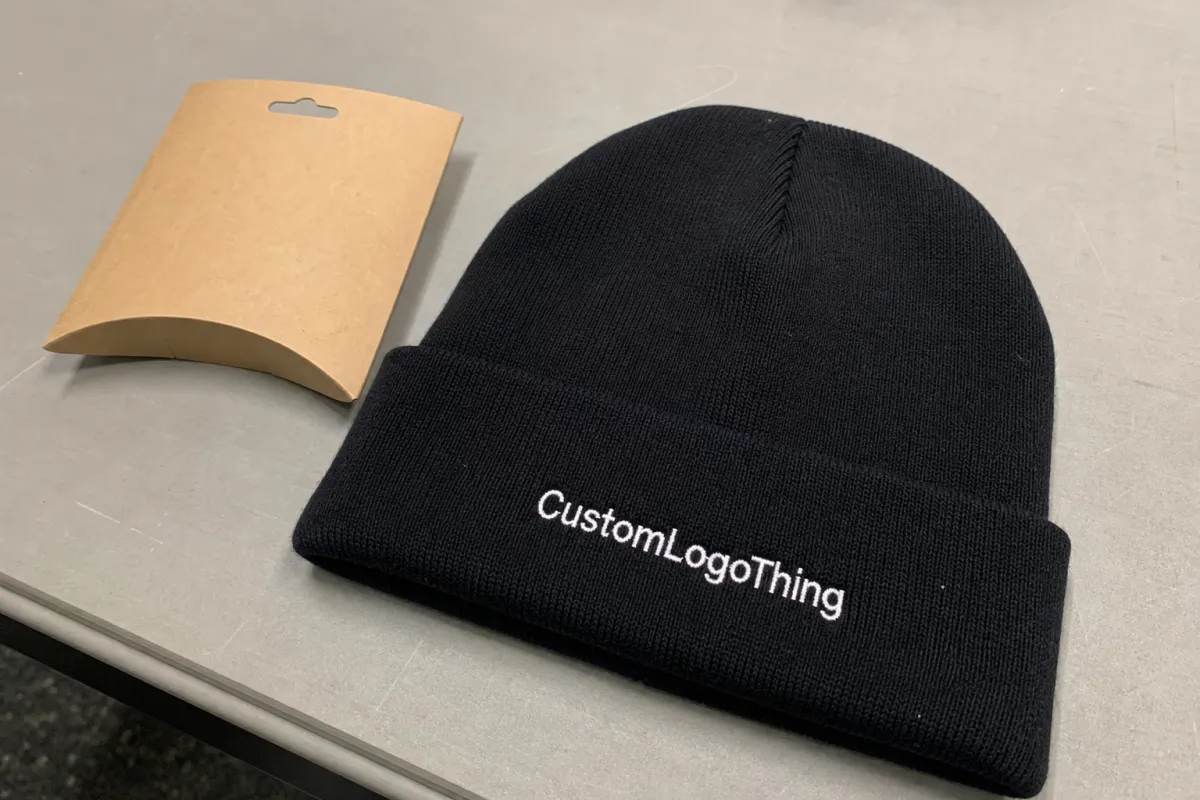
Beanies have a practical advantage that most giveaway items never quite match. A tote can be forgotten. A pen gets borrowed and disappears. A beanie gets worn when the temperature drops, which means the brand leaves the event with the attendee and keeps moving in daily life.
That repeated use changes the math. A $7 to $10 beanie worn twenty times costs less per impression than a cheaper item used once and discarded. Embroidery helps here because it reads as durable, and durability is what keeps merch in rotation.
Beanies are also easy to handle operationally. They stack cleanly, ship in compact cartons, and do not create awkward staging problems at registration or in sponsor kits. That simplicity matters when teams are working in tight spaces and need inventory that is easy to count, pack, and distribute.
Event merch embroidered beanies bulk order planning: what to lock before you request quotes
Before asking for pricing, define the job the beanie needs to do. A staff giveaway for mild weather needs a different knit than a winter conference. A volunteer uniform needs comfort across a long shift. A retail item needs tighter visual control because buyers will inspect the stitching, not just the color.
Then decide how visible the branding should be. Some events need a logo that reads from across a room. Others need something more restrained and premium. If that choice is not made early, supplier quotes will reflect different assumptions and the comparison becomes messy fast.
Artwork is the next point that needs real attention. Clean vector files, Pantone references, and one approval contact save time. If the logo includes thin lines, small lettering, or subtle gradients, simplify it before the proof stage. Embroidery has limits, and very fine detail can close up once it moves from screen to thread.
- Event use: attendee gift, staff uniform, sponsor item, or resale piece.
- Climate: mild weather, true winter use, or indoor-outdoor rotation.
- Brand goal: visibility, premium feel, or sponsor recognition.
- Artwork readiness: vector file, color references, and size approval.
If your team buys across product lines, keep one approved spec sheet on file and reuse it. That reduces back-and-forth on the second and third order, especially when different departments try to source the same item with slightly different assumptions.
Beanie styles, decoration methods, and logo placement
Cuffed beanies are the safest starting point for most branded events. The cuff creates a flatter area for decoration and gives the logo a stable front panel, which improves readability and keeps placement more consistent across the run. Uncuffed styles can look cleaner in a fashion context, but they are harder to brand with the same repeatability.
Slouchy knits fit creative events, music programs, or merchandise meant to feel relaxed rather than corporate. The trade-off is structure. Extra drape can make the logo sit lower or appear smaller than expected. That works if the brand wants understated styling, but it is less useful if the logo has to be seen at a distance.
Decoration method should follow the artwork, not the other way around. Direct embroidery is usually the most durable choice for a compact mark with clean shapes. Woven patches handle finer detail better and can support multiple colors with sharper edges. Applique creates more texture and can look premium, but it adds labor and usually pushes the price up.
Logo placement is a production decision, not just a design preference. Center front is easiest to read. A cuff hit looks polished when the knit is dense enough to keep the patch flat. Side placements are better for subtle branding, though they sacrifice visibility. If the design must be seen quickly in a crowd, the cleanest option is usually the one that sits flat and centered.
Practical logo placements
Center-front remains the most reliable option for event merch because it gives the least room for error. Off-center hits feel more fashion-led and can work well for retail-style programs. A small cuff emblem can look sharp on a dense knit, but if the fabric is too loose the thread may pull and the edge can pucker.
Specs that change fit, feel, and reorder consistency
Yarn content is one of the biggest drivers of how a beanie feels in hand. Acrylic is common because it is affordable, warm enough for general event use, and easy to color match. Acrylic-wool blends usually feel warmer and more substantial, though they cost more and can require tighter quality control on shade matching. Recycled yarns support sustainability goals, but they can introduce more lot-to-lot variation, so approval samples matter more.
Knit density affects both appearance and wear. A lighter gauge feels softer and packs smaller, which works well when the beanies are going into gift bags or shipping cartons. A denser knit tends to hold structure better and looks more substantial in photos. Neither is automatically better; the right choice depends on whether the item will be worn for a few event days or used through the winter.
Fit is easy to underestimate. Ask about cuff depth, stretch range, and the head circumference the beanie is built to cover. A sample can look perfect on a flat table and still fit too tight on larger head sizes or too loose on smaller ones. When a program includes employees, volunteers, and attendees across several age groups, it is worth requesting a pre-production sample or fit photos on more than one wearer.
For reorder planning, consistency matters more than novelty. Keep a record of yarn blend, knit gauge, logo size, placement, thread colors, and packaging format. That becomes the baseline for future runs and prevents the next order from being merely close.
One practical caution: warmer does not always mean better. Overly thick knits can feel expensive but become uncomfortable indoors or in shoulder-season weather. A beanie that works in a parking lot at 7 a.m. may be too much in a packed convention hall by noon.
Pricing, MOQ, and unit cost drivers to compare
Price comparisons only make sense when the quote is broken into real components. The blank beanie cost is just one piece. Digitizing, embroidery stitch count, patches, applique labor, packaging, freight, and rush handling all affect the final landed number. A supplier with a lower base price can still end up more expensive once the artwork and shipping are added.
MOQ is where buyers often lose leverage. One vendor may quote a lower unit price at 500 pieces, while another looks more expensive at that level but becomes cheaper once the order reaches 1,000. Setup fees spread differently across those quantities, so the first tier is not always the best indicator of value.
| Beanie option | Typical MOQ | Decoration fit | Common landed price range |
|---|---|---|---|
| Cuffed acrylic knit | 100-250 | Direct embroidery or woven patch | $6.25-$10.50 per unit |
| Acrylic-wool blend | 150-300 | Embroidery, patch, or applique | $8.50-$14.50 per unit |
| Slouchy fashion knit | 200-500 | Patch or simplified embroidery | $7.50-$13.00 per unit |
| Recycled fiber knit | 250-500 | Direct embroidery or patch | $8.00-$15.00 per unit |
The actual range will move with quantity, logo coverage, and shipping lane, but the pattern is steady: decoration complexity pushes cost faster than most buyers expect. A larger embroidered mark can add more than a switch in blank color. Dense stitching, multiple thread changes, and patch borders all increase labor.
Ask suppliers to separate art setup, sampling, production, freight, and rush fees. A clear quote makes it easier to tell whether a discount is genuine or just moved into another line item.
Packaging deserves a closer look than it usually gets. Presentation boxes and branded inserts are not the same thing as transit packaging. If the beanies will be shipped to multiple destinations, carton strength and packing method matter. Standards such as ISTA provide a useful reference when the goods will be handled several times before they reach the event site. If the paperwork includes paper inserts or hang tags, sourcing that material through FSC gives sustainability teams cleaner documentation.
Production process and timeline from proof to delivery
A sensible production flow starts with artwork review, then moves to a digital proof, sample approval, production, inspection, and shipment. Skipping a step does not really save time. It usually shifts the problem downstream, where it becomes a delay, a remake, or a charge the buyer did not budget for.
For most custom embroidered beanie orders, production often runs about 12 to 18 business days after proof approval. Larger quantities, more complicated decoration, or specialty yarns can stretch that window. Rush jobs can sometimes move in 7 to 10 business days, but only when the blank is in stock and the artwork is simple enough to approve quickly.
Shipping needs its own buffer. An order can finish on schedule and still miss the event because freight was booked late or the carton count was wrong. Build in time for weather, carrier delays, and address corrections. If the event date is fixed, a small overage is cheaper than a short table display or an empty volunteer station.
For split shipments or multi-venue events, request carton labels, pack counts, and destination verification before production starts. It is not glamorous work, but it avoids the familiar event-week scramble where half the inventory sits in the office, one box is at the hotel, and the rest is still in transit.
Inspect the sample under normal light, not just through a mockup file. Check stitch tension, logo placement, thread color, knit symmetry, and whether the embroidery pulls the fabric off-center. A good sample should also hold up to a quick stretch test at the cuff.
What a supplier should prove before you place the order
A credible supplier should show more than a polished rendering. Ask for examples of repeat production, not only a one-off sample. The useful question is not whether the mockup looks good, but whether the same result can be held across a full run and then repeated next season.
Examine the edges of the embroidery or patch closely. Look for puckering, loose trim, uneven borders, and thread density that crowds small text. If the design has to be simplified to work on a knit cap, that is normal. If the supplier keeps promising more detail than the material can handle, that is a warning sign.
Remake policy matters too. Bulk apparel is judged after delivery, not when the proof is approved. Ask how shortages, defects, and color variance are handled. Clear rules are better than optimistic language. The best suppliers are not the ones that promise perfection; they are the ones that state what happens when a problem appears.
Communication speed is a practical indicator. A team that answers minimums, lead times, decoration limitations, and freight questions without hedging tends to be easier to work with throughout the order. Vague answers usually become change orders later.
Keep the spec sheet to one page. Include style, color, decoration method, logo size, quantity, destination, deadline, pack count, and approval contact. That document becomes the control point for purchasing, receiving, and any future replenishment.
Next steps to finalize your bulk beanie order
Write the order like a buyer. Style, color, placement, quantity, packaging, and ship date should all be visible before the quote request goes out. That one sheet does more to tighten pricing than most teams realize because it keeps the supplier from quoting assumptions instead of the actual job.
Approve the proof only after checking the three things that fail most often: logo size, thread colors, and pack count. If a sample is available, inspect knit tension and embroidery stability in person. Then confirm whether the order needs carton labels, split delivery, or presentation packaging.
For repeat events, lock the reorder spec now. That is where event merch embroidered beanies Bulk Order Planning starts paying off in a measurable way. The next round should be a controlled repeat, not a fresh round of decisions.
How far ahead should I plan an embroidered beanie bulk order?
Plan far enough to cover artwork, proofing, sample approval, production, and freight, then add a buffer if the event date cannot move.
What minimum order quantity is typical for custom embroidered beanies?
MOQ varies by supplier, decoration method, and material. Compare the threshold against the next price tier, because a slightly larger run can sometimes lower the total unit cost more than a smaller order saves upfront.
Which beanie style is best for event merch branding?
Cuffed beanies usually give the cleanest front logo area and the most dependable wear. Slouchy styles work better when the aesthetic matters more than direct logo visibility.
What affects the unit cost most in bulk beanie orders?
Material, embroidery stitch count, logo size, packaging, and freight carry the most weight. Setup fees and sampling can change the landed price too, especially when quantities are lower.
Can I mix colors or sizes in one bulk embroidered beanie order?
Sometimes, yes, but mixed options often change MOQ and raise the per-unit cost. Ask for the price difference before committing, because split color runs are usually less efficient to produce.
What should I verify before approving the final proof?
Check the exact logo size, thread colors, placement, and pack count. If the order includes custom packaging, confirm carton counts and shipping addresses as well.


