For supplement unstructured dad hats Bulk Order Planning, the real work starts before production ever does. A soft front, relaxed crown, and adjustable back sound simple on paper. In bulk, though, those same easygoing features expose every small decision in fabric, fit, decoration, and packing. One vague detail can turn into a visible difference once the hats are stacked in cartons and checked under warehouse light.
The cleanest runs usually start with a tight spec, a quantity that matches the sales plan, and a quote that reflects the actual build rather than a placeholder version of it. If you already know your size range and basic decoration needs, our Wholesale Programs page is a useful starting point, and our FAQ covers common ordering questions before artwork is sent over.
This is a category where small choices matter more than buyers expect. A half-ounce difference in fabric weight changes how the cap drapes. A brim that is too flat makes the hat feel unfinished; a brim that is too aggressively curved can make the fit feel tight even when the measurement is correct. Multiply those details by 250 or 1,000 units and the stakes become obvious.
Why soft-front dad hats need tighter bulk planning
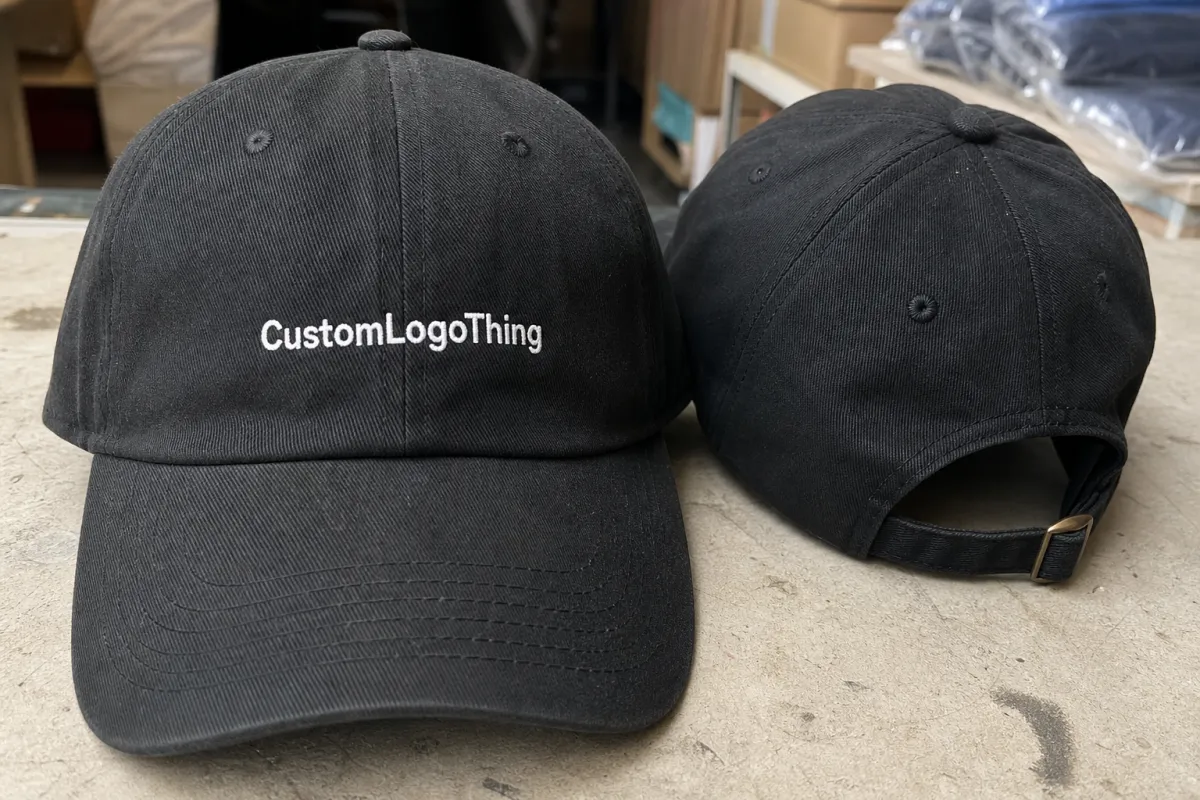
Unstructured dad hats look casual because they do not rely on stiff front panel reinforcement to hold their shape. That relaxed look is part of the appeal, but it also means the hat shows variation faster than a structured cap would. In supplement unstructured dad hats Bulk Order Planning, that means the buyer has less room to leave decisions open and hope the run sorts itself out later.
On a structured cap, a little variation in seam tension or crown height can hide inside the internal support. On a soft-front hat, the same variation is obvious. The panel may flatten differently from carton to carton, the seam lines may open a little more, or the crown may sit lower than the sample once the hat is worn. None of that sounds dramatic until the order is lined up for retail, giveaways, or photography. Then the difference is easy to see.
There are usually three kinds of buyers in this category. Promotional teams want something affordable that still looks clean in hand and on camera. Retail buyers want a cap that feels natural, not bulky, and has enough consistency to sell beside other accessories. Event teams want something that can be packed, shipped, and handed out without a pile of avoidable defects. They all want the same thing in the end: repeatable results with few surprises.
A good bulk hat run is won before the first stitch is sewn. Clear specs save more time than any last-minute rush charge ever will.
The other reason this category needs tighter planning is yield. A simple embroidered logo can be efficient, but a soft-front crown is less forgiving when stitch density rises. If the art is too large or too heavy, the front panel can pucker. That can turn a cheap-looking detail into the most expensive line item in the order, because rework on soft caps is slower than rework on a more rigid build.
So the smarter approach is not to overengineer the hat. It is to define the order clearly enough that the factory can make the same decision 500 times in a row without improvising. That is the practical side of supplement unstructured dad hats Bulk Order Planning.
What to define before you request a custom quote
A useful quote starts with the basics: quantity, color count, artwork file, in-hand date, and intended use. A retail program usually needs tighter presentation standards than a one-time promotional drop. Employee wear may need a tougher decoration method and enough stock depth to cover replacements. A campaign hat might care more about price and timing than premium finishing.
The cap itself should be described in manufacturing language, not marketing language. Say unstructured six-panel dad hat, low profile, curved brim, adjustable closure. Then specify whether the closure should be a self-fabric strap with a metal buckle, brass slide, hook-and-loop, or another back style. That detail matters because closure choice affects both cost and how the hat feels on head.
- Quantity: total units plus any color split by shade or trim.
- Artwork: vector file, font notes, and the maximum logo width.
- Decoration: embroidery, woven patch, leather patch, printed transfer, or a combination.
- Delivery: requested ship date, final destination, and whether freight must be expedited.
- Packout: polybag, size sticker, hangtag, master carton count, or custom labeling.
Those details sound small, but they drive the real quote. A logo centered on the front panel is not the same as a side hit and back mark. A woven patch is not the same as flat embroidery. Even packaging changes labor time, carton count, and freight cost. If the buyer leaves those choices open, the quote will either be too broad to trust or so padded that it stops being useful.
Good buyers also define what the order is not supposed to be. If the hat should not have a distressed finish, say so. If the color needs to stay inside a retail palette rather than a faded vintage range, say that too. Most production problems are not caused by an inability to make a cap. They come from a gap between what the buyer assumed and what the factory was asked to build.
For supplement unstructured dad hats Bulk Order Planning, the most reliable quotes are the ones that name the actual build and not just the headline price. That makes comparisons meaningful instead of guesswork dressed up as a spreadsheet.
Fabric, fit, and decoration specs that keep the run consistent
Fabric choice changes the entire look of an unstructured cap. Cotton twill gives a familiar, stable hand. Washed cotton feels softer and more broken in, but it can also introduce more visual variation from panel to panel. Brushed chino gives a cleaner retail look. Pigment-dyed finishes can look excellent on a soft-front dad hat, but buyers should expect subtle shade movement, especially if the order spans more than one production lot.
Fabric weight matters too. A lighter twill can feel airy and casual, which works well for events and warm-weather merch. A heavier twill gives the crown a bit more body and usually photographs better, but it can also make the hat warmer and slightly stiffer. That is a tradeoff buyers should decide up front rather than discover after approvals are done.
Fit matters just as much. A cap can be technically the right size and still wear poorly if the crown depth is too shallow or the brim curve is too aggressive. On bulk runs, it helps to check crown softness, seam alignment, sweatband construction, and closure repeatability. If the closure hardware shifts even a little, the hat can feel inconsistent on the head even when the outside looks correct in a photo.
Decoration limits deserve an honest conversation. Soft-front caps do not behave like stiff five-panels. Very large embroidery can distort the front. Dense fill stitches can pull the crown. Artwork that sits too close to the seam line may lose definition when the cap is worn. Fine text and tiny details are also riskier because unstructured fabric moves more during sewing than a reinforced panel would.
There is a simple rule here: the more the art depends on precision, the more the cap should be tested before the bulk run. A small logo with 6,000 to 8,000 stitches usually behaves differently from a bold, full-front design with heavy fill and borders. That difference shows up in both hand feel and appearance. A buyer who plans for it can avoid a lot of avoidable disappointment.
If the design is detailed, ask for a pre-production sample or a digital mockup with exact placement dimensions. That matters for multi-position branding, small sponsor marks, or tonal embroidery where the whole point is restraint. The goal is not to make the order fussy. The goal is to make the approved sample close enough to the bulk run that nothing feels like a surprise.
For buyers who want to verify packaging and carton handling expectations, transit standards from ISTA are a sensible reference point. If your retail presentation includes paper hangtags or inserts, FSC certification is worth asking about as well.
That is the part many people miss in supplement unstructured dad hats Bulk Order Planning: the hat is not only a garment, it is also a repeatable manufacturing object. The better the material and decoration decisions are documented, the fewer surprises show up at carton count.
Cost, pricing, and MOQ: how the order gets priced
Pricing usually comes down to five drivers: quantity, decoration type, stitch count or patch complexity, base fabric, and packaging requirements. A simple embroidered dad hat may cost noticeably less than a woven-patch version with custom labeling and individual polybags. The difference is not just the decoration itself; it is the setup, handling, and inspection time attached to each step.
MOQ is tied to how the cap is built and decorated. A straightforward embroidery run can sometimes start lower than a patch-based program because the setup is simpler. Once you add custom labels, special trims, or multiple colorways, the minimum can move upward. That is normal. The factory is balancing machine time, material usage, and the labor needed to keep the line efficient.
Unit cost usually improves as quantity rises, but smaller orders can be hit harder by setup fees, sample fees, and freight. That is why buyers should ask for several quantity tiers before signing off. A quote at 100 pieces tells you one thing; a quote at 250, 500, and 1,000 pieces tells you how the cost curve behaves. Sometimes a slightly larger order lowers landed cost enough to justify the extra inventory. Sometimes it does not. The numbers should decide that, not habit.
| Quantity tier | Typical unit range | What usually changes | Buyer note |
|---|---|---|---|
| 100 units | $7.50-$11.00 | Setup fee is felt more heavily; freight has less volume to spread across | Best for test runs, internal programs, or urgent small drops |
| 250 units | $5.25-$8.50 | Setup begins to spread out; embroidery or patch pricing becomes more efficient | A common starting point for promo and light retail orders |
| 500 units | $3.90-$6.40 | Better labor efficiency, better carton utilization, lower per-unit handling | Often the sweet spot for branded campaigns |
| 1,000 units | $3.10-$5.20 | Material buying and production planning usually improve the quote | Best landed value if the design and sell-through are already proven |
Those numbers are not fixed and they should not be treated like a universal rate card. A heavier stitch count, premium patch, custom woven label, or special packaging can move pricing up. A very simple logo, standard closure, and low-complexity packout can keep it down. Good suppliers explain those changes instead of hiding them behind a vague unit price.
Buyers should also separate product cost from landed cost. A hat that looks inexpensive before freight, duties, and packaging is added can become far less attractive once the order arrives at destination. A 500-piece run might look only modestly more expensive than a 250-piece run, but the freight share per unit can drop sharply because cartons are fuller and handling is more efficient. That is often where the real savings live.
For supplement unstructured dad hats bulk order planning, ask for a quote that shows what is included and what is not. Freight, sample approval, and special labeling should never be left as surprise line items if the buyer is trying to control landed cost.
Process, lead time, and production steps from sample to ship
A clean production flow is easy to describe and hard to skip. It usually starts with artwork review, then spec confirmation, then a digital mockup or sample, followed by bulk production, inspection, packing, and shipment. If any step is unclear, the schedule starts slipping. That is especially true on a run where the logo placement, trim color, or back-closure style still needs sign-off.
Delays tend to come from the same few places. Artwork revisions take longer than expected. Pantone references are missing or inconsistent. Placement instructions are vague. Approvals arrive late. The order is not usually delayed because a factory forgot it exists; it is delayed because a decision was left open and the line could not safely proceed.
Lead time depends on decoration method and factory load. A simple embroidered order can often move faster than a layered patch program. If the order needs special labeling, carton marks, or multi-step packout, build extra time into the schedule. Freight matters too. Air shipping can recover a tight calendar, but it changes landed cost. Ocean transit may be lower cost, but it demands a much earlier approval window.
For transit-sensitive programs, I prefer to think in terms of buffer time, not just production time. If the hats are needed for a launch, trade show, store drop, or field event, the buyer should leave room for final inspection and shipping variance. A good order arrives with a margin, not on the edge of the deadline. In practice, that buffer often matters more than shaving one or two days off the factory estimate.
One more thing buyers often miss: soft-front hats can look approved under a flat mockup and still behave differently once stitched and packed. The curve of the brim, the way the crown collapses in a carton, and the way the front panel sits after steaming all affect the final impression. That is why a single signed proof is not enough if the decoration is complex. Ask how the approved sample translates into production checkpoints.
That is also where the supplier should help with carton planning and dispatch details. A clean carton count, sensible pack ratios, and clear ship marks reduce mistakes on the floor and at receiving. The less guesswork in the packout, the smoother the shipment. If the carton plan is loose, even a good production run can turn into a warehouse headache.
What a reliable bulk-cap supplier should document for you
A reliable supplier does more than quote a price. They document the build so the order can be repeated without argument later. That means a written spec sheet that captures fabric, closure, decoration method, logo size, placement, sizing assumptions, carton count, and the approved artwork file. If a sample changes during revision, the final approved version should be easy to identify.
Communication matters just as much. Buyers should know the revision limit, the expected proof cycle, and the estimated ship date before the first payment clears. If the supplier keeps changing the numbers or the art file reference, that is a warning sign. A good production partner keeps the paper trail clean so the buyer can approve with confidence.
- Spec sheet: confirms the cap build and prevents hidden substitutions.
- Artwork lock: records the final logo version and placement dimensions.
- QC checklist: checks seam quality, logo alignment, and color consistency.
- Carton count: verifies quantity before shipment leaves the floor.
- Freight details: identifies the shipping method and handoff timing.
Quality control should include more than a glance at the first carton. Stitch consistency, patch adhesion, sweatband finish, and closure hardware need to be checked across the run. A hat that looks fine in one unit but drifts in another unit will cause problems once the order is distributed to multiple locations or sold through more than one channel.
Good QC is partly visual and partly mechanical. Check the front panel for puckering around the logo. Check the brim for symmetry from left to right. Check the closure for smooth adjustment and solid hardware attachment. If the order uses a woven patch or leather patch, inspect the edge finish and placement drift. These are small checks, but they catch the defects that are cheapest to solve before cartons are sealed.
For buyers building supplement unstructured dad hats bulk order planning into a broader merchandise program, supplier documentation becomes part of the risk control. The best vendors help you avoid returns, rework, and shelf inconsistency, which is a much better outcome than chasing the lowest headline price.
Next steps to lock the purchase order and avoid delays
Before you request final pricing, gather the practical items that shape the run: quantity, colorway, artwork file, preferred decoration, target ship date, and packaging instructions. If you already know whether the order is for promo use, retail, or employee wear, include that too. It helps the supplier recommend the right build instead of defaulting to a generic answer.
Confirm sample approval, purchase order details, and freight method in writing. That sounds basic, but basic details are where most avoidable delays live. A quick written confirmation now is cheaper than a correction once the order is already in motion.
If the decision still feels open, ask for two paths: one premium version and one value-focused version. Compare the fabric, decoration method, MOQ, and landed cost side by side. That gives you a more honest picture of where the money is going and what the buyer is getting for it.
There is usually no reason to overcomplicate the process. A clear spec, a realistic schedule, and a sample that is judged for actual wear and not just for aesthetics will carry most bulk hat programs farther than a long chain of back-and-forth emails. The order becomes easier to manage once the buyer treats it like a production process instead of a shopping cart.
For a smooth launch, the goal is simple: send the spec, lock the proof, confirm the packout, and keep enough time in the calendar for production and freight. That is the practical rhythm behind supplement unstructured dad hats bulk order planning, and it is usually the difference between a clean delivery and a messy scramble.
What do I need to start a supplement unstructured dad hats bulk order?
Send the quantity, artwork file, preferred hat color, and decoration method so the quote matches the real build. Include your target in-hand date and any packaging or labeling requirements before production starts.
How does MOQ affect supplement unstructured dad hats pricing?
Higher quantities usually lower the unit cost because setup and decoration expenses are spread across more hats. MOQ can also shift based on whether the order uses embroidery, patches, or custom labeling.
Which decoration method works best on unstructured dad hats in bulk?
Simple logos often work well with embroidery because it is durable and looks clean on soft-front caps. If the art is detailed or uses textured branding, a patch or woven label may hold the design better.
What is a normal lead time for a bulk dad hat order?
Lead time depends on sample approval, decoration complexity, and current production load. Freight method matters too, so confirm whether you are planning for standard transit or an expedited shipment.
Can I order multiple colors in one supplement unstructured dad hats bulk order?
Yes, but color splits can affect MOQ, pricing, and inventory planning, especially if each color needs its own setup. Ask for a tiered quote so you can see whether one-color or multi-color planning gives the best total value.

