For event merch Embroidered Logo Hats MOQ, the sticker price is only half the story. The real cost lives in setup: digitizing, stitch-count adjustments, blank inventory, thread matching, and how many versions of the cap the decorator has to manage before the first one runs through a machine. A 75-piece order can look tidy on paper and still cost more per hat than a 250-piece run if the artwork is fussy or the blank is hard to source.
That matters because event headwear has a very specific job. It has to read clearly in photos, survive quick handouts at a registration table, and still look respectable on staff, speakers, or VIPs by the time the event is in full swing. If the logo collapses into the seam or the cap color shifts because the requested blank is backordered, the merchandising plan starts to wobble. The math is never just about the cap.
Why event merch embroidered logo hats MOQ changes the math
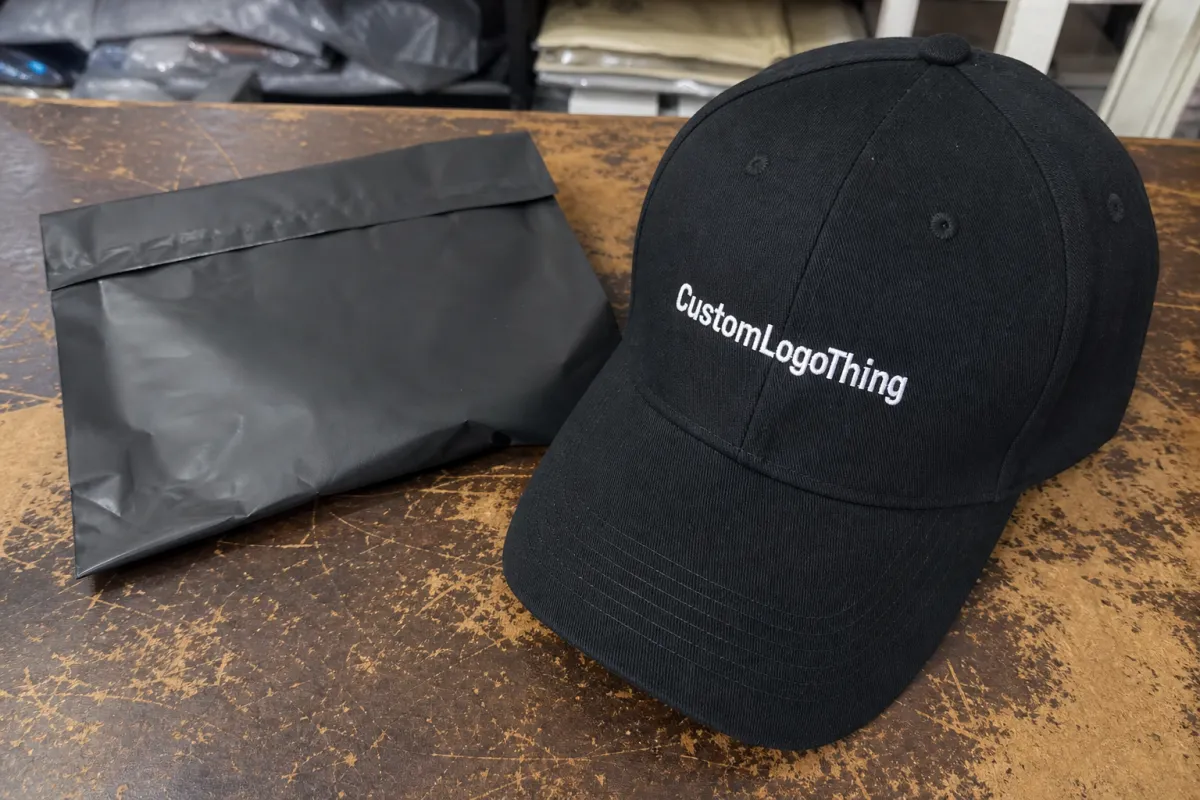
Most buyers start by comparing the blank cap price. That is sensible, but incomplete. Embroidery adds fixed costs that do not shrink much when the order is small: digitizing the art, testing placement, setting thread colors, hooping the hats, and scheduling machine time. Whether the order is 48 pieces or 480, that overhead still has to be paid.
That is why MOQ behaves less like an arbitrary rule and more like a production threshold. A decorator can usually absorb the setup pain on a larger run. On a small run, every minute spent preparing the job gets divided across fewer units, so the per-piece price climbs quickly. A conference organizer ordering 60 hats for staff may care more about certainty than savings. A fundraiser ordering 300 may care more about selling through inventory later. Both are valid, but they are not priced the same way.
The cleanest way to think about the order is as a branded asset, not a generic giveaway. If the audience will see the hats on stage, on camera, or across a crowded expo hall, the cap style should support the logo first. Color comes second. Quantity comes third. Chasing the lowest blank price usually matters less than avoiding rework, substitutions, or a design that stitches poorly.
"The cheapest cap is rarely the cheapest order if the logo needs cleanup or the blank color is unstable in inventory."
Small batches are not a problem by themselves. The problem is when a small batch includes a complex mark, multiple thread changes, and a non-stock cap. That combination can push labor and sourcing costs up faster than buyers expect. If you need the order to stay efficient, simplify the art before you negotiate the last few cents on the blank.
Pick the right cap shape, crown, and closure for embroidery
Not every cap supports embroidery equally. Structured caps usually hold a logo better because the front panels have enough firmness to keep stitches clean. Unstructured caps feel softer and more casual, but the fabric can shift or pucker if the design is large. Truckers are often a practical middle ground: stable front panel, familiar silhouette, and broad availability. Dad caps lean retail and relaxed, although the lower crown can limit how much logo area you really have.
Crown height matters more than many buyers realize. A taller front panel gives the digitizer room to place a larger center logo without crowding seams. A low-profile cap may force a smaller design or a simpler line of text. If the logo crosses a seam, the stitch line can distort and make the artwork look less precise than it did on screen. That shows up fast in event photos, where thread edges are much easier to spot than in a mockup.
Closures affect both comfort and the receiving team. Snapbacks are fast to size and easy to sort when you are handing out mixed inventory to different people. Strapbacks feel a little more retail and can suit premium donor pieces. Hook-and-loop closures adjust quickly, which helps for staff uniforms, but they can look less refined for sponsor gifts or VIP packs. One-size-fits-most styles also reduce sorting mistakes when several boxes are moving at once.
Blank availability should influence the choice as much as aesthetics. A black, navy, charcoal, or khaki cap is usually easier to source than a custom-dyed or unusually seasonal color. If the event date is locked, stay inside the supplier's regular stock program whenever possible. A substitute blank can change not just the look of the cap, but the entire schedule.
| Cap style | Best use case | Embroidery behavior | Order impact |
|---|---|---|---|
| Structured snapback | Photo-heavy events, sponsor giveaways | Holds center logos cleanly | Usually the most predictable for production |
| Unstructured dad cap | Retail-style merch, casual teams | Soft look, smaller logo area | Often needs simpler artwork |
| Trucker | Outdoor events, promotional staff | Good front-panel stability | Usually friendly to bulk pricing |
| Strapback | Premium donor or brand program | Clean appearance, less adjustable volume | Can raise unit cost if the blank is specialty |
If the logo needs to carry the event visually, choose the cap that gives it the most physical support. That usually means structured first, fashionable second.
Embroidery specs that protect logo clarity and sew quality
Strong embroidery starts with the file. The machine does not see a logo the way a designer does; it reads stitch paths. Clean vector art gives the digitizer clear edges to work with. A fuzzy JPEG, a screenshot, or a logo pulled from a slide deck usually creates cleanup work before production can begin.
The core specs to confirm are simple: embroidery area, stitch count, thread colors, and placement. A large front-center mark uses more stitches and often costs more than a small side emblem. A design with six thread colors usually takes longer to set than a two-color mark. Thin lettering, tiny registration lines, and gradients rarely translate well to thread. Bold shapes, open spacing, and strong contrast do.
Placement changes the whole feel of the cap. Front-center is best when visibility matters. Side embroidery works when you want a more restrained premium look or a secondary mark alongside the primary logo. Back placement can support sponsor messaging or an event URL, but it is not always the smartest choice if the cap has to be read from across a room.
Raised or puff embroidery adds dimension, but it has limits. It works best with simplified artwork, thicker letterforms, and enough room for the foam or underlay to sit cleanly. If the logo is detailed, flat embroidery is usually the safer route. It is also cheaper in many cases because fewer stitch transitions mean less machine time and fewer chances for thread breaks.
Good proofing prevents most surprises. A digital mockup is the first checkpoint, not the last. Thread colors should be confirmed against brand standards or a realistic close match, not just whatever looks fine on a monitor. For complicated marks, a sew-out sample is worth the extra step because it exposes distortion, density issues, and color balance problems before the full run starts.
- Best artwork: vector file, preferably AI, EPS, or SVG
- Better logo shapes: bold text, solid marks, simple outlines
- Risky details: tiny type, gradients, hairline strokes, crowded seals
- Useful approvals: placement, thread colors, sample sew-out for complex designs
There are also practical stitch limits to keep in mind. Fine text below a certain size may fill in or disappear after washing and wear. Designs with tight spacing between letters can bridge together. If the artwork has to survive on a moving head instead of a flat presentation sheet, clarity matters more than clever detail.
Pricing, MOQ, and quote factors that move unit cost
Pricing for embroidered hats is a stack of decisions, not a single line item. The blank hat cost is the starting point. After that come digitizing, embroidery setup, per-piece decoration, packaging, shipping, and any rush handling. A quote that looks manageable at 50 pieces can make a lot more sense at 250 because the fixed costs get spread out.
That spread is the reason MOQ tiers matter so much. At a low quantity, the setup burden sits on a small number of hats. At a higher quantity, the same work gets divided more efficiently. Buyers comparing Event Merch Embroidered logo hats MOQ should ask for at least two scenarios: the minimum order and the next pricing tier up. The difference is often large enough to change the whole buying decision.
Common quote adders are predictable once you have seen enough orders. Extra thread colors add setup time. Specialty packaging adds handling. Split shipments create more freight complexity. A last-minute logo revision can force the digitizer to reopen the file. If two departments want different colors, you may also be paying for separate blank inventories. None of that is mysterious, but all of it affects unit cost.
| Order scenario | Estimated unit cost | What drives it | Buyer takeaway |
|---|---|---|---|
| 50-75 hats | $9.50-$14.00 | Setup charges spread across fewer units | Good for a locked headcount, not the lowest cost per piece |
| 100-150 hats | $7.25-$10.25 | Moderate run with standard embroidery | Often the practical middle ground for conferences and staff kits |
| 250-500 hats | $5.80-$8.25 | Better bulk pricing and stronger blank availability | Best if you can forecast giveaways or resale demand |
| 500+ hats | $4.75-$7.25 | Lower decoration spread, higher volume efficiency | Useful for recurring events or multi-city programs |
Those ranges are directional, not universal. Style, region, thread count, inventory, and shipping method all move the final number. Still, they are useful for planning. If the budget is fixed, simplify the logo first. A cleaner design can save more than squeezing a small discount out of the cap blank.
Packaging and transport deserve attention too. Hats are not fragile in the same way a glass product is fragile, but embroidery can still suffer if cartons get crushed or packed too tightly. Case packs should keep the crown from flattening. Outer cartons should hold shape during transit. Buyers who already manage branded goods programs often think about this the same way they would think about general transit testing or carton durability: the product can be perfect and still arrive compromised if shipping is treated as an afterthought.
Production process and lead time from proof to shipment
The workflow is straightforward, but each step can slow down if the buyer is not ready. It starts with artwork intake, then digitizing, proofing, production, quality control, and shipping. The cleaner the input file and the more complete the order details, the less friction there is between each stage.
Artwork revisions are the biggest schedule risk. A logo with unclear spacing, low-resolution source art, or a late sponsor addition can add days. Backordered blanks are the second major risk, especially when the requested cap color is outside normal stock. Approval delays matter too. If a proof sits for two business days, the production clock does not pause to be polite.
For planning, separate proof time from actual production time. A straightforward order may need one to two business days for proofing, then 7 to 12 business days for production after approval. More complex embroidery, specialty blanks, or higher quantities can stretch that to 12 to 15 business days or more. Transit time is its own line item. Air shipping can save the event, while ground shipping may be the better value if the date is still comfortable.
Quality control is where a lot of weak orders get exposed. A good shop checks thread tension, color accuracy, stitch density, logo placement, and overall symmetry before anything leaves production. If the crown is collapsing or the lettering is too tight, that should be caught before packing. Buyers should also expect count verification so the number shipped matches the number ordered by color and size mix.
One practical rule helps a lot: work backward from the event date and build in a buffer. That buffer absorbs proof revisions, stock checks, and freight delays. The safest buyers do not assume the first quoted timeline is the final timeline. They plan for the version with one surprise in it.
- Send vector art and the final quantity by color.
- Confirm hat style, closure, and placement before quoting.
- Approve thread colors and the mockup quickly.
- Ask for the production window and transit window separately.
- Keep a backup blank style in mind if inventory shifts.
The order is both a branding task and a logistics task. A strong design still fails if the carton arrives late. A late carton still hurts if the buyer guessed wrong on quantity. The winning order respects both art and timing.
What repeat buyers check before placing another order
Repeat buyers usually care less about slogans and more about consistency. They want the same stitch density, the same thread color, the same placement, and the same response when a question comes up. That matters when marketing, sponsorship, and operations all have different expectations for the same cap.
Reorders expose small differences fast. A cap that looked fine in the first run can look off in the second if the digitized file changed, the blank was substituted, or the thread match drifted. Those differences are easy to miss in a spreadsheet and very obvious on a trade-show floor.
Practical support matters here. If the preferred blank goes out of stock, the buyer needs an alternate style that keeps the brand intact and the ship date realistic. If the budget tightens, the right adjustment is often a simpler placement, a lower stitch count, or a cap profile that reduces labor without making the merch look cheap. That kind of advice is more useful than a polished pitch.
For sponsor-driven events, clear approvals reduce risk. More stakeholders usually means more room for delay. The best orders move when the art, the timeline, and the packing instructions are all stated plainly. No guesswork. No hidden changes after the proof.
"The best order is the one that stays consistent from the first sample to the last box."
Next steps to lock in your order without delays
Before requesting quotes, gather the order facts in one place: quantity by color, cap style, logo file, placement, and delivery date. If the hats serve different uses, separate them. Staff, VIP, sponsor, and resale quantities should not be blended unless the plan really fits that way.
Then compare two versions side by side: the lowest MOQ option and the better unit-price option at a larger run. That comparison shows the real tradeoff. Sometimes the minimum order is the right answer because the event is small and the headcount is fixed. Other times the larger run wins because it lowers cost per piece and leaves enough inventory for follow-up events.
Do not approve the proof until thread colors, placement, and packaging details are correct. Once production starts, changes can be expensive. If the timeline is tight, keep the logo simple and the blank in stock. That choice alone can prevent a late shipment.
If you are pricing event merch embroidered logo hats MOQ, start with complete input instead of a half-finished request. The more accurate the details, the better the quote, and the less likely you are to overbuy or miss the delivery window.
What is the usual MOQ for event merch embroidered logo hats?
MOQ depends on cap style, blank availability, and decoration complexity. A small run is possible, but it usually carries a higher unit price because setup costs are spread across fewer hats. Ask for tiered pricing so you can compare the minimum against the next volume break.
Can I mix colors or styles under one embroidered hat MOQ?
Sometimes, but the answer depends on whether the blanks share the same style, supplier stock, and embroidery setup. Mixing colors within one cap model is usually easier than mixing multiple silhouettes, which can split pricing and complicate inventory.
How many thread colors can I use before the quote changes?
More thread colors usually raise setup time and digitizing complexity, especially if the artwork has several small color changes. A cleaner logo with fewer colors tends to stitch faster and cost less than a design packed with narrow color breaks.
How long does production take after proof approval?
A straightforward order often takes 7 to 12 business days after approval, while complex embroidery or specialty blanks can take longer. Build in transit time separately, because the fastest production estimate is not the same thing as the safest delivery plan.
What file do you need for an embroidered logo hat quote?
Vector artwork is best because it gives the digitizer clean edges and accurate scaling for the embroidery file. Include quantity, preferred hat style, placement, brand colors, and the event date so the quote reflects the real order instead of a rough guess.


