What an Event Merch Five Panel Caps Sample Checklist Covers
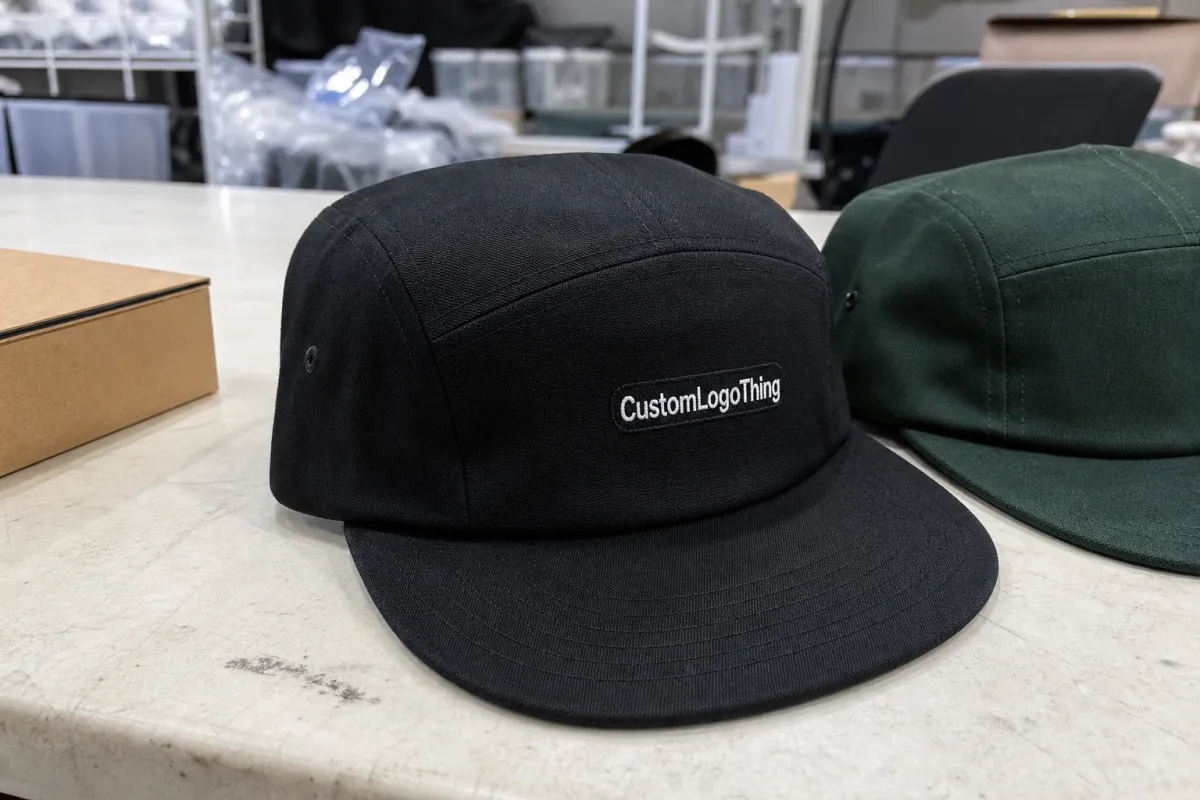
The right event merch Five Panel Caps sample checklist keeps a simple cap order from turning into avoidable revisions. A five panel cap can look strong in a proof and still wear poorly in real life. The front panel may sit too stiff, the crown may feel too tall, or the visor may curve more sharply than expected. Those differences are small on paper and obvious on a head.
The checklist helps move the discussion from vague approval language to the actual product: shape, hand feel, decoration, packing, and repeatability. For event merch, those details matter because a booth staff cap, a sponsor giveaway, and a merch drop often need different standards even when the blank is the same.
A good checklist separates the base cap from the decoration. A panel can sew cleanly and still fail once a dense logo is applied. A patch can look premium and still sit crooked if the front structure is too soft. The sample should show the final result, not an idealized version of it.
A practical checklist usually answers these questions:
- Does the cap fit the intended head range without pinching or floating?
- Does the front panel hold its shape without looking boxy?
- Does the decoration sit at the correct height, width, and center point?
- Does the closure feel secure after repeated adjustment?
- Does the sample match the actual production spec rather than a substitute?
That is the real value of an event merch Five Panel Caps Sample Checklist: it reduces back-and-forth, protects the schedule, and creates a record of what was approved.
Sample Process and Lead Time for Five Panel Caps
The sampling path usually looks simple: brief, sample, review, revise, approve. The delay happens in the handoffs. Missing logo files, unclear color targets, and feedback sent in separate rounds can stretch a one-week sample into a three-week chase.
Different sample types serve different jobs. A blank fit sample checks the body of the cap only. A decorated sales sample checks placement, thread color, patch size, and presentation. A preproduction sample is the final control point before bulk production. If those stages get blurred together, approval turns into guesswork.
| Sample type | Main purpose | Typical turnaround | Cost signal |
|---|---|---|---|
| Blank fit sample | Checks crown shape, visor curve, and closure comfort | Often 5-10 business days | Usually lowest if the factory uses stock components |
| Decorated sales sample | Shows logo scale, placement, and finish on the cap | Often 7-14 business days | Higher because decoration setup and finishing are included |
| Preproduction sample | Confirms the approved version before the full run | Often 10-18 business days | Highest if custom fabric, labels, or multiple steps are involved |
Those ranges are broad because the build changes the schedule. A simple cotton twill cap with a small embroidery hit can move quickly. A cap with a woven patch, custom inner label, and special closure needs more time. Add a sewn-in sweatband or brushed finish and the timeline shifts again.
One habit saves time: gather all revision notes into a single review. Separate comments sent over a few days usually create separate revisions. A marked-up file, one list of changes, and one decision record keep the round efficient.
For teams that also care about packing and transit, the general guidance from ISTA is useful if the caps ship with inserts, hang tags, or folded presentation packs. Basic packaging vocabulary and material references from packaging.org can help too. A cap sample that looks fine in hand but arrives crushed in a carton is still a failed sample.
Pricing, MOQ, and Sample Cost Signals to Watch
Sample pricing is usually a mix of labor, decoration setup, material choice, and shipping. If a quote rolls all of that into one figure, ask for a breakdown. A transparent breakdown tells you whether the sample reflects the real build or a shortcut version that only looks close enough for a photo.
MOQ changes how suppliers think about the sample. Some factories credit part of the sample charge back against the order. Others treat sampling as a separate service. Neither model is unusual. What matters is knowing which one applies before comparing quotes.
The price of the final cap is tied to the same levers that shape the sample: embroidery count, patch construction, closure type, fabric weight, inner labeling, and sweatband upgrades. A five panel cap in standard twill will not price like a brushed cotton version with a woven patch and custom taping.
Practical range: a basic blank sample often falls around $20-$45 before freight, a decorated sample often lands around $35-$120, and a preproduction sample can run higher if the cap uses custom materials or multiple finishing steps. Those numbers are directional, not fixed, but they show the shape of the market: simple samples stay modest, while custom details add up quickly.
A cheap sample is only cheap if it tells the truth. If it swaps in different fabric, a lighter patch, or a simplified decoration method, the savings can disappear in production. The better question is not “What is the lowest sample price?” but “What exactly is included?”
Packaging can change the landed cost too. A cap shipped flat in a polybag costs less to prepare than one packed with a card insert, tissue wrap, or branded mailer. If your event merch program includes printed cards or recycled paper components, ask about FSC-certified materials early. The FSC site is a useful reference point for paper-based packaging choices.
Low MOQ offers are attractive for test runs, and they are often the right move for event merch. They usually come with higher unit pricing. That is normal. The sample stage should show whether the design is strong enough to justify a larger run.
Fit, Fabric, and Construction Checks That Matter
Start with the crown. Five Panel Caps usually work best when the front panel sits cleanly and the side panels do not buckle outward. If the crown is too tall, the cap looks bulky. If it is too shallow, it feels unstable and rides oddly. A good sample makes the silhouette look intentional from the side, not just straight on.
Fabric changes both comfort and visual tone. Cotton twill, usually in the 220-280 gsm range for structured merch caps, gives a crisp and familiar look. Brushed cotton softens the hand and reads more casual. Nylon ripstop is lighter and often used where packability matters. Polyester blends can hold shape and resist wrinkles, which helps when the order will be boxed and handed out fast.
That choice is not purely aesthetic. A cap that photographs well on a flat lay may feel too warm outdoors after twenty minutes. A lighter fabric may solve comfort but lose structure in the crown. The sample is the only honest place to see that trade-off.
The closure deserves its own review. Snapback, strapback, buckle, and hook-and-loop closures all change fit range and feel. Cheap hardware usually shows itself in two ways: it feels flimsy in hand, or it shifts after a few adjustments. If the cap will be worn by a broad audience, secure closure matters more than a polished mockup.
Construction details tell you whether the cap is ready for production or only dressed up for approval. Check seam alignment, stitch tension, sweatband quality, visor stiffness, and the finish around the interior seams. Look inside. A neat exterior with rough internal finishing often points to inconsistent workmanship elsewhere.
If possible, have multiple people try the sample. One head tells you very little. Three or four different heads reveal whether the cap is generous, shallow, tight, or awkward across the audience. That small wear test is especially helpful for staff caps, where the goal is consistency rather than a single perfect fit.
A few checks are worth repeating because they catch problems early:
- Does the front panel stand cleanly without creasing?
- Does the visor curve feel natural when worn?
- Does the closure hold position without slipping?
- Does the cap sit evenly from front to back?
- Does the interior feel smooth against the forehead?
Decoration Details That Make or Break Event Merch
Decoration is where a good blank becomes a strong merch piece, or where the whole item loses clarity. A logo that looks balanced on a proof can land too low, too wide, or too crowded once it is stitched or applied to a curved front panel. Flat artwork and curved fabric do not behave the same way.
Embroidery, woven patches, leather patches, screen print, and heat-applied graphics each have their own strengths. Embroidery adds texture and a sense of finish, but dense stitch areas can pull the fabric if the design is too solid. Woven patches handle detail better, though edge quality matters. Leather patches create a more retail-style feel. Heat-applied graphics can work well for shorter runs, but they need close inspection for adhesion and flex performance.
Inspect thread color, patch edge quality, logo legibility, and placement under real light. A fine outline that looks sharp on a monitor may disappear against textured twill. Small type often needs to be simplified. Thin strokes can break apart. Gradients rarely survive the move from digital art to a sewn or pressed surface without compromise.
Measurements remove guesswork from this part of approval. Check centerline position, logo width across the panel, height from the brim, and edge distance from seams. That kind of note turns subjective feedback into something the factory can actually build from.
Durability should be part of the decoration review. Flex the brim. Press the front panel. Check whether patch edges lift or embroidery distorts under pressure. A cap for event merch will be handled, packed, worn, and adjusted more than a retail sample sitting on a shelf.
Clear notes get a better second sample than a pile of half-answers. “Scale too large,” “patch too glossy,” “thread shade too dark,” and “placement too low” are the kinds of comments suppliers can act on quickly. That is exactly where the event merch five panel caps sample checklist earns its keep.
Common Mistakes Buyers Make Before Approving
The biggest mistake is approving from a single front-facing photo. A cap is not a flat product. It needs to be checked from the side, from above, and from the inside. Photos can hide crown height, seam tension, visor shape, and lining quality.
Another common problem is feedback that is too soft to act on. “Make it better” does not tell the supplier what to change. “Lower the logo by 8 mm,” “reduce the patch width,” or “soften the crown” does. Precision saves time and avoids a second round built on assumptions.
Buyers also forget the packing details. If the event order needs size stickers, fold protection, department labels, or individual polybags, those requirements should sit in the approval sheet from the start. The cap may be correct while the receiving process becomes messy.
Color is another area where people assume too much. Fabric dye, embroidery thread, and printed patches do not always shift in the same direction. A clear reference point matters. That can be a Pantone target, a physical swatch, or a previous approved item. Loose color language leads to loose results.
Rush approvals are the final trap. Once production starts before the last changes are locked, small corrections become expensive. If the caps are tied to a fixed event date, slow down long enough to confirm that fit, finish, and decoration all match the brief. The checklist exists to protect that decision, not to add paperwork for its own sake.
Next Steps to Lock in a Better Sample Approval
If the goal is a cleaner approval, the brief has to be complete before the sample request goes out. Gather the artwork, define the target fit, choose the decoration method, and write down the event use case. A supplier can work quickly with a clear brief. Conflicting messages slow everything down.
A simple approval sheet is often enough. Include measurements, color references, decoration notes, packaging requirements, and timing checkpoints. If the order is large or the event date is fixed, ask for a blank sample, a decorated sample, and a preproduction sample. That sequence gives a clearer picture of how the cap will behave in the real run.
For the cleanest approval, everyone should be reviewing the same version: one photo set, one marked-up spec sheet, one final decision record. If a change is approved, write it down immediately. If a detail is unresolved, hold the order until it is settled.
Use the event merch five panel caps sample checklist in a straightforward order:
- Check fit on multiple heads.
- Confirm crown shape and visor curve.
- Review fabric hand feel and finish.
- Verify decoration scale, placement, and color.
- Inspect packaging, labeling, and presentation.
- Send all revision notes in one pass.
That sequence keeps the approval practical and the order honest. A sample that looks good only because the review was loose is not a good sample. A sample that survives the checklist gives you a much better chance of repeatable production.
FAQ
What should be included in an event merch five panel caps sample checklist?
Include fit, crown shape, visor curve, closure type, fabric choice, decoration method, color targets, and packaging details. Add a simple approval note beside each item so the supplier knows exactly what must change before production.
How long does a five panel cap sample usually take?
Blank or stock-based samples often move faster, while decorated samples usually take longer because they require setup and proofing. Revisions add time if artwork is unclear, materials are custom, or feedback arrives in separate rounds.
What is a fair sample cost for event merch caps?
A fair sample cost usually reflects labor, decoration setup, materials, and shipping rather than just the blank cap itself. Ask whether any sample charge is refundable or credited back on production, since policies vary by supplier and order size.
Why do buyers need a preproduction sample for five panel caps?
A preproduction sample confirms that the approved fit, fabric, and decoration can be repeated consistently in the final run. It helps catch small changes in color, stitch density, or placement before the full order is made.
Should I approve the fit or the decoration first?
Start with fit and construction, because a cap that wears poorly is difficult to rescue with decoration alone. Then approve decoration placement, scale, and color once the body shape feels right on real heads.


