Fitness Five Panel Caps Material Guide for Smart Buyers A cap can look clean in a mockup and still fail the moment the wearer starts sweating. That is why this Fitness Five Panel Caps material guide starts with heat, structure, moisture behavior, and wash performance rather than with a polished render that never has to survive a real session.
For a buyer, a good fitness cap has to do several things at once: breathe, dry quickly, keep its crown shape, feel comfortable for a full workout, accept decoration without distortion, and still leave room for packaging, freight, and margin. That sounds simple until the quotes arrive. Five-panel construction makes the fabric choice more visible because the front panel is flatter and cleaner than many six-panel builds, which means the material has less room to hide flaws.
Mockups sell the concept. Fabric tests decide whether the cap stays wearable after sweat, folding, shipping, and a wash cycle.
Fitness Five Panel Caps Material Guide: The Real Tradeoffs
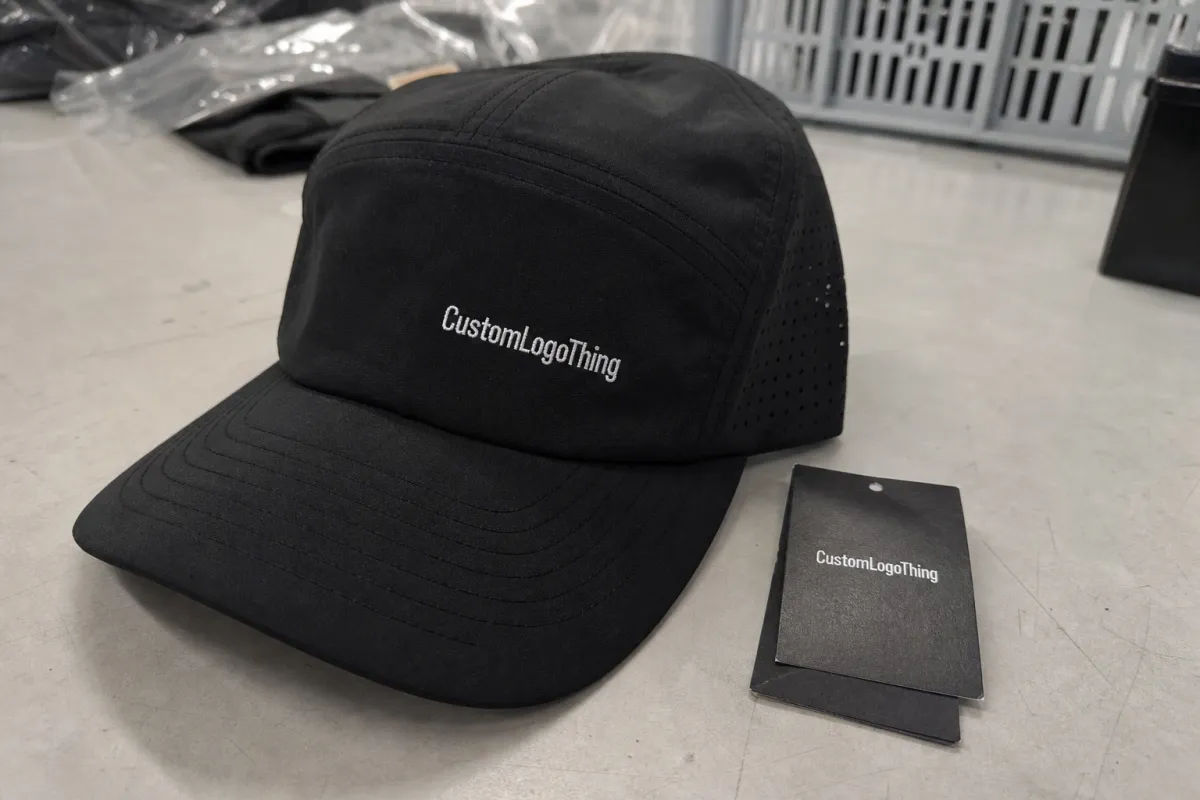
A fitness Five Panel Caps material guide is really a decision map. The best-looking sample swatch is not always the best cap, and the cheapest option is not automatically weak. The right answer depends on where the cap will be worn: gym training, outdoor running, casual athleisure, or branded merch that needs to look sharp and hold up through light daily use.
The five-panel layout uses fewer seams across the front than many six-panel caps, so the front panel often becomes the main brand surface. That helps with embroidery, woven patches, and heat transfers, but it also makes the fabric more visible. If the material is too limp, the crown collapses. If it is too stiff, the cap can feel boxy and hot. A buyer usually notices the problem only after wear testing, which is why the sample phase matters more than the sales pitch.
Before ordering, define what good actually means for the product. In fitness use, good usually means breathable fabric, fast sweat release, stable front structure, a soft internal feel, and a price that still makes sense after packaging and freight. That is the practical starting point for any serious fitness Five Panel Caps material guide.
How Fabric Affects Fit, Sweat, and Shape
Fabric weight changes how a cap sits on the head. Lighter technical fabrics, often in the 90-150 gsm range, drape softer and feel less bulky. Heavier cotton twills and brushed blends, often around 200-280 gsm, hold a cleaner shape in the front panel and crown, but they can trap more heat during long training sessions. The difference is obvious once the wearer moves from a fitting room to a treadmill.
Moisture management is where fabric choice becomes visible very quickly. Cotton absorbs sweat and tends to stay damp longer, which is fine for casual wear but not ideal for running or high-output gym work. Polyester and nylon usually move moisture away from the skin faster and dry sooner. That change in dry time matters more than most sample cards suggest. A cap that dries in 30 minutes behaves very differently from one that still feels clammy an hour later.
Structure and comfort pull in opposite directions. A firmer front panel helps embroidery sit flat and gives patches a cleaner base, especially on a five-panel shape where the face of the cap is so exposed. Too much stiffness, though, creates a rigid feel that can press in the wrong places and make the cap less pleasant over a long session. Buyers often discover that the shell fabric is only part of the comfort story; seam tape, sweatband thickness, and internal finishing all influence how the cap feels against the head.
Small details tend to reveal the weak points first. Pressure at the seam line, rough thread ends near the ear, a sweatband that feels thin after 20 minutes, or a front panel that waves after one wash are not cosmetic issues. They are the reasons one material choice outperforms another once the product leaves the sample table.
Key Material Factors Buyers Should Compare
When comparing samples, start with fiber content, then check weave, finish, and weight. A cap can be 100% cotton, 100% polyester, nylon, or a blend, and each route changes the final product. Cotton feels familiar and soft. Polyester gives faster drying and better color consistency. Nylon feels lighter and more technical, with strong tear resistance. Blends usually sit in the middle and are often the safest choice when a buyer wants comfort without giving up shape retention.
Finish matters nearly as much as fiber. Brushed surfaces feel softer but can hold heat. Washed finishes reduce the crisp new-product look and can help hide minor production variation. Water-resistant or coated finishes improve weather protection, though they can reduce airflow. Ripstop is a useful option for outdoor training because it resists tearing and gives the cap a more technical look. None of these finishes is automatically better; each one shifts the cap toward a different use case.
| Material | Typical Weight | What It Feels Like | Best Use Case | Typical Cost Impact at 1,000 pcs |
|---|---|---|---|---|
| Cotton twill | 220-280 gsm | Soft, familiar, slightly warmer | Casual fitness, athleisure, lifestyle merch | Baseline to +$0.25/unit |
| Polyester twill or mesh blend | 120-180 gsm | Light, quick-drying, consistent color | Training, gym floors, active promo runs | +0.15 to +$0.45/unit |
| Nylon ripstop | 90-140 gsm | Technical, crisp, durable | Running, outdoor fitness, sporty retail | +0.25 to +$0.70/unit |
| Cotton-poly blend | 180-240 gsm | Balanced, comfortable, shape-friendly | General-purpose fitness and branded merch | +0.10 to +$0.40/unit |
| Recycled polyester | 120-170 gsm | Similar to standard poly, sometimes firmer | Eco-positioned activewear programs | +0.20 to +$0.60/unit |
Buyers sometimes focus on the shell fabric and forget the rest of the build. That is a mistake. A cap can have a strong outer textile and still feel cheap if the sweatband is thin, the lining is scratchy, or the closure digs into the back of the head. Decoration matters too. Dense embroidery needs enough structure beneath it to sit flat. Large patches need a front panel that can carry the weight without buckling. If the fabric cannot support the decoration method, the weakness shows immediately.
For brands that care about sustainability claims, the story has to stay factual. Recycled polyester can be a practical choice, and packaging can reinforce that position with FSC certified corrugated cardboard, kraft paper wraps, and recycled materials where print quality allows. Post-consumer waste content can be useful too, but only if the material specs are documented. A crushed crown does not become better because the mailer is brown.
Color consistency is another point buyers underestimate. Deep blacks, bright reds, and saturated blues can vary more between dye lots than neutral shades. If the cap is part of a larger launch, ask for shade tolerance before bulk approval. A small delta in the fabric lab can become a large mismatch across a shelf or shipment.
Cost, MOQ, and Unit Price Tradeoffs
Material choice affects unit price faster than most first-time buyers expect. Standard cotton and common polyester blends are easy to source and usually keep pricing manageable. Performance fabrics, custom-dyed shells, water-resistant finishes, and tighter color matching add cost quickly. If the order needs a polished look at a low MOQ, the supplier often has to work harder to secure the right fabric, and that effort shows up in the quote.
For stock-fabric production, many suppliers can work comfortably at 300-500 pieces. Once custom dyeing or a special weave enters the brief, the MOQ often climbs to 1,000 pieces or more. That is not a negotiating tactic so much as a supply-chain reality. Mills do not like to open small custom fabric runs unless someone is paying for the setup time.
Sample fees also need to be accounted for. A simple pre-production cap sample may be low cost or even credited against bulk, while custom fabric swatches, embroidered approvals, and revision rounds can add $20-$120 before bulk starts. That does not sound large, but it adds up if the design changes three times.
Here is a practical pricing frame for Custom Five-Panel Caps, assuming standard decoration and normal freight conditions:
- Budget tier: about $1.80-$2.80 per unit at 500 pcs, usually with stock cotton-poly fabric, simple embroidery, and a standard closure.
- Mid-range tier: about $2.80-$4.50 per unit, often with better structure, a cleaner finish, and a stronger sweatband or patch application.
- Premium tier: about $4.50-$7.50 per unit, usually with performance fabric, recycled content, custom dye work, or more complex decoration.
The hidden cost stack is where quotes become real. A better sweatband can add $0.08-$0.25 per unit. A woven patch may add $0.30-$0.80 depending on size and stitch count. More embroidery density increases labor time. Closures matter too: a basic plastic snap is cheaper than a metal clasp or a branded elastic system. The shell fabric is only one line in the cost sheet, and rarely the biggest one once finishes and trims are included.
Freight and packaging can shift landed cost more than expected. A cap packed flat in a polybag is cheaper to ship than a cap protected by a shaped insert and retail carton. That is sometimes acceptable for low-value promo programs, but not for products that need shelf presentation or online unboxing value. If the cap is intended for retail, protect the crown and plan for the packaging weight early.
Process, Timeline, and Sampling Steps
Sampling should follow a disciplined sequence. First comes the spec sheet: fabric content, weight, finish, closure, sweatband, decoration method, and color target. Then comes the swatch. Then the sewn sample cap. Only after that should bulk production begin. Skipping any of those steps is how buyers approve a cap that looks fine in a photo and feels wrong on the head.
- Confirm fabric content, weight, and finish in writing.
- Review swatches under daylight, not only office lighting.
- Approve a sewn sample cap, not just a flat textile card.
- Test fit, sweat feel, crown shape, and decoration placement.
- Release bulk only after the sample matches the approved spec.
Lead times vary by fabric and decoration. A stock-fabric order with simple embroidery can often move from sample approval to shipment in 12-18 business days. Add custom dyeing, imported trims, or layered decoration, and the timeline can stretch to 20-35 business days, sometimes longer during busy seasons. Sample revisions can add another week. That schedule is not unusual; it is just what happens when one change forces a new trim booking or color match.
Quality control should happen before bulk and again during packing. The checks that matter most are stitching density, seam alignment, color variation, sweatband attachment, panel symmetry, and closure strength. For activewear caps, a simple wear test is valuable: check how the cap feels after 30-45 minutes, then inspect it after one wash and air dry cycle. If the front loses shape, the sweatband twists, or the fabric pills, the sample is still speaking. Ignore that message and bulk will repeat it at scale.
If the caps are shipping retail-ready, packaging deserves the same attention as the fabric. Corrugated cardboard mailers protect shape better than flimsy poly bags, and kraft paper inserts keep the product presentation cleaner. For sustainability-led programs, recycled materials can work well, but only if the pack-out still prevents crushing. To check that shipment handling is realistic, ask whether the pack-out follows an ISTA-style drop and vibration test. Transit damage turns a cheap package into an expensive problem.
Common Mistakes That Make Caps Unwearable
The most common mistake is choosing fabric by appearance alone. A sleek surface can still be hot, scratchy, or too flimsy to hold shape. This usually happens when a buyer approves a showroom sample and never asks how the cap behaves after sweat, folding, packing, or washing. The cap looks sharp at first and then loses structure the minute real use begins.
Overcorrecting with heavy fabric is the second trap. Thick cotton can feel premium on paper, but too much weight traps heat and makes the crown stiff. For fitness use, that often means the wearer notices the cap more than the workout. That is not a good trade.
Other failures show up repeatedly in production:
- Ignoring shrinkage: a cap can tighten after washing and change the fit.
- Skipping color testing: dark dyes can bleed into sweatbands or wash unevenly.
- Overlooking seam stability: weak stitching can twist the front panel after repeated wear.
- Testing only on a table: real heads reveal pressure points, heat buildup, and balance issues fast.
- Choosing the wrong decoration method: oversized embroidery can distort a thin panel or turn the front rigid.
Wear testing does not need to be complicated. Put the cap on three different head sizes, have people wear it for 30-45 minutes, and ask what they notice first. Then wash it once, air dry it, and check the front panel, brim, and sweatband again. If the shape changes or the hand feel turns rough, the sample has already told you what bulk will do.
Another quiet failure is poor internal finishing. Loose thread ends, sharp label edges, or a sweatband seam placed in the wrong spot can ruin comfort even when the outside looks polished. Those details are easy to miss in a photo, which is why physical samples matter so much in cap development.
Expert Tips for Final Material Selection
The cleanest decision process starts with use case. Hot indoor gyms usually favor breathable polyester blends or lighter nylon. Outdoor running and all-weather training often benefit from tougher, fast-drying fabrics. Casual athleisure can accept softer cotton-rich options, but those are usually weaker performers for sweat-heavy workouts.
Compare shortlisted materials under the same build, not across different cap constructions. The shell, sweatband, stitching, and closure all influence the result. A fair comparison means the same panel shape, same decoration method, same closure, and same packing method. Otherwise the buyer is not comparing fabric; the buyer is comparing inconsistent samples.
A concise vendor checklist keeps the quote honest:
- Exact fiber content and fabric weight
- Weave or finish type
- Sweatband construction
- Closure type
- Decoration method
- Sample timing and revision count
- MOQ and unit price breaks
- Pack-out details, including corrugated cardboard, kraft paper, or other shipping materials
Ask for swatches under real conditions, not just good lighting. Heat, sweat, folding, and carton compression all change how a fabric behaves. A shell that feels smooth in the hand can become sticky once it warms up. A cap that looks crisp on a table can crease badly once it is packed. If the supplier can document shipping protection with FSC certified cartons or recycled materials, that is useful, but it should not distract from the main question: does the cap still perform when worn?
Color fastness deserves a final check too. If the cap is dark or strongly saturated, request confirmation that the dye will not bleed into the sweatband or leave marks after a damp wear test. Small issues there often become customer complaints later, especially for products used in hot conditions.
The practical route is usually the shortest one: shortlist two or three fabrics, request quotes on the same build, compare sample caps side by side, and choose the one that still feels right after wear and wash testing. That is the part many buyers skip. A fitness five panel caps material guide only works if the final choice handles sweat, shape, and price at the same time.
Frequently Asked Questions
What is the best fabric for fitness five panel caps?
Polyester blends are usually the safest starting point because they dry faster and handle sweat better than plain cotton. If the cap is meant for casual wear or a softer lifestyle feel, cotton-rich fabrics can work, but they usually run hotter. The best answer depends on whether the cap is for training, leisure, or promo merch.
Are polyester blends better than cotton for fitness five panel caps?
For active use, they usually are. Polyester blends move moisture better and hold shape more reliably after repeated wear. Cotton can feel nicer at first, but it absorbs sweat and stays damp longer, which is a drawback during workouts or long outdoor sessions.
How does material choice change the unit cost of five-panel caps?
Technical fabrics, specialty finishes, and custom dyeing usually raise unit cost faster than buyers expect. Standard cotton and polyester blends are easier to source and generally support lower pricing at modest MOQs. Decoration, sweatband quality, and closure selection can matter just as much as the shell fabric.
What lead time should I expect for custom fitness five panel caps?
Simple stock-fabric orders can move faster, while custom fabrics, revision rounds, and complex decoration add time. A sample phase usually comes first, and that approval step is where schedules stretch. A written timeline should separate sample timing, bulk production, and shipping so delays are easier to spot.
What should I ask a supplier before ordering a material sample?
Ask for fabric content, weight, finish, sweatband details, and whether the fabric is in stock or still needs sourcing. Request a sample cap, not only a fabric swatch, because fit and structure matter as much as the textile itself. Confirm MOQ, unit price breaks, lead time, and packaging details before approving bulk.


