For event merch woven label Beanies Unit Cost, the first mistake is chasing the lowest number and assuming it tells the whole story. A beanie can be cheap because the yarn is thin, the knit is loose, the label is undersized, or the supplier left out packing you thought was included. The quote may still look attractive. The finished piece may not.
A woven label changes the read immediately. It gives the beanie a cleaner retail signal and usually makes it feel closer to apparel than giveaway stock. That matters because people treat the item differently when it looks intentional. They wear it. They keep it. Sometimes they wear it long after the event, which is the only kind of exposure that compounds.
The better question is not whether a beanie can be made for less. It can. The useful question is what drives the unit cost up or down and which variables actually affect wearability. Knit structure, yarn blend, cuff height, label size, and pack-out method all matter. If you are buying for a conference, festival, staff kit, or sponsor drop, the right spec can lower waste without making the product feel stripped back.
The Merch Math: Why Better Beanies Stay in Rotation
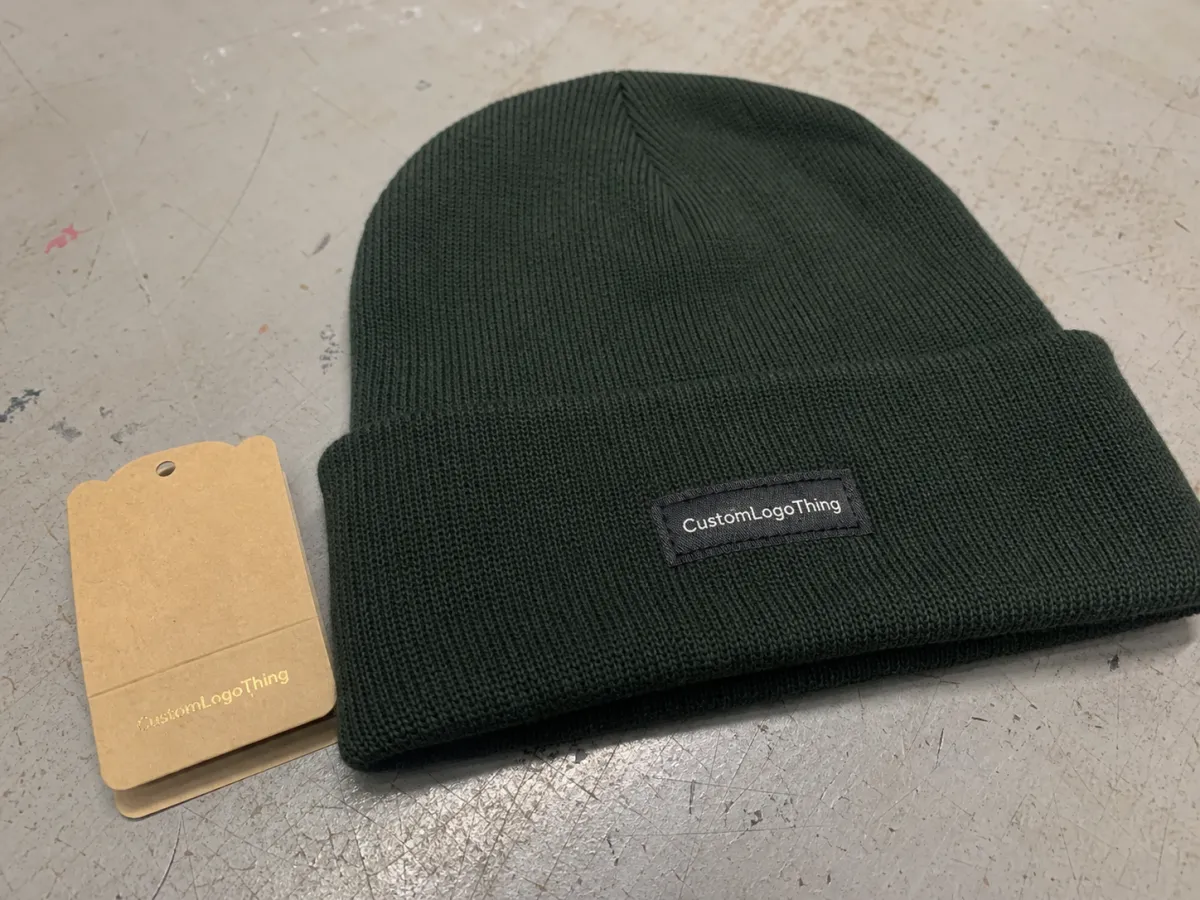
A beanie has a narrow test: does it feel good enough to wear outside the event? If not, it becomes baggage. That is why a slightly better build often outperforms several cheaper promo items. One thing that gets worn five times is more valuable than three things that never leave the tote bag.
From a buyer’s perspective, the math is simple. You are buying retention, visibility, and perceived value per dollar. A woven label pushes the item toward apparel. A flat print or generic heat seal often pushes it back toward giveaway territory. Same headwear category, very different outcome.
That difference is practical, not sentimental. Attendees are more likely to keep a warm, comfortable beanie than a novelty item that feels thin or scratchy. If you want the product to perform after the event, it needs to solve a real problem: cold weather, wind, or a long commute home. The branding should support that use, not fight it.
"If people wear it on the way home, the merch did its job. If it stays in the box, the budget bought inventory."
Premium is not the point by itself. Fit, warmth, and finish are. A clean cuff, a stable knit, and a label that looks attached on purpose will usually do more for actual wear rate than extra decoration ever will. Buyers often think they need more branding. They usually need better material choices and fewer visual distractions.
How Build Details Change Handfeel and Wear Rate
Beanies are simple in concept and sensitive in execution. Knit gauge, yarn blend, cuff structure, and crown depth all affect comfort and appearance. A tighter knit usually reads cleaner and more retail-like. A looser knit may feel softer right away, but it can lose shape sooner and show the head through the fabric more easily.
Acrylic remains common because it keeps price predictable and accepts color well. Acrylic-wool blends cost more, yet they often feel warmer and more substantial. That extra cost shows up in the quote because the material itself is more expensive and sometimes slower to source. Heavy yarn increases body and warmth, but too much bulk can make the hat feel stiff or overly hot indoors.
For event merch, the cuff matters more than buyers expect. A fold-over cuff gives the woven label a clear landing zone and adds structure to the front view. No-cuff designs can look sleeker, but the branding has less space and the proportions become more sensitive. If the order is going to a broad audience, a cuffed style usually fits more people and gives more room for clean placement.
Label placement is not decoration in the abstract. On the cuff, the woven label is visible without competing with the knit texture. On the body, it can feel subtle and fashion-led, which works for some programs but not all. Edge finish matters too. If the label curls, puckers, or gets stitched off-center, the whole product looks cheaper than the raw materials should allow.
Wear rate is also tied to durability. A beanie that pills fast, stretches out after one wash, or loses its shape around the crown is poor value even if the initial quote was friendly. Ask about yarn twist, stitch density, and attachment method. Those details sound small. They are the difference between a beanie that stays in circulation and one that gets pushed to the back of a closet.
Specs to Lock Before You Request Samples
Accurate pricing starts with a clean spec sheet. If the supplier has to guess at knit gauge, label size, or packaging, the quote will wobble. Buyers often compare two numbers that look similar but represent different materials, finishing, or packing assumptions. That is not a useful comparison.
- Knit gauge: tighter for a cleaner retail look, looser for a softer casual feel.
- Yarn blend: acrylic, acrylic-wool, or another blend depending on warmth and budget.
- Cuff height: affects label placement, proportion, and fit.
- Label size and colors: bigger labels and more colors usually increase setup complexity.
- Packing method: bulk carton, individual polybag, or retail-style presentation.
Artwork readiness matters more than people like to admit. Clean vector files, a simple logo version, and Pantone references reduce back-and-forth. If the artwork arrives as a screenshot or flattened JPEG, the production team has to interpret it. That slows approvals and can create avoidable revision charges.
Think about the order as a system, not a single beanie. If you need inserts, hang tags, or private-label packaging, those items change both labor and timing. A carton packed with loose bulk beanies is one thing. A carton with individually bagged units, size inserts, and label cards is another. The difference is real handling time. It should be priced as such.
Sample approval is only useful if the base spec is already fixed. A quarter inch change in cuff height can alter where the label lands. A yarn switch can change stretch, warmth, and color response. Even a small logo cleanup can require fresh setup on the label loom. Send the sample request after the spec is settled, not while the spec is still drifting.
Event Merch Woven Label Beanies Unit Cost: What Moves Price
Event merch woven label Beanies Unit Cost is shaped by a handful of predictable variables. Quantity matters most. After that come yarn choice, knit complexity, label size, color count, and any extra packing or kitting. There is no mystery here. The quote gets higher when labor, material, or handling increases.
Small runs carry more setup pressure. The factory still has to confirm artwork, prepare the knit, program the label, and inspect the first pieces whether the order is 100 units or 1,000. Those fixed costs do not disappear. They simply get spread across fewer pieces. That is why a run of 150 can look expensive next to a run of 1,000 even when the product looks similar.
Label setup is usually modest compared with hard-goods decoration, but it still shows up. If the label is custom woven, the loom may need programming. If the label has multiple colors or a small run of special finishing, the price steps up again. Packing can move the quote too. Polybagging, inserts, and retail-style fold-and-stuff operations add labor and carton handling.
| Order Band | Typical Cost Per Piece | What Usually Changes | Buyer Takeaway |
|---|---|---|---|
| 100-300 pcs | $4.80-$7.20 | Setup charges matter most; sample approval carries more risk | Useful for pilot events, staff-only runs, and very limited drops |
| 500-1,000 pcs | $3.10-$5.00 | Fixed costs spread better; bulk pricing becomes more efficient | Often the most balanced range for conferences and regional programs |
| 2,000+ pcs | $2.35-$3.85 | Lower unit cost, but planning and storage matter more | Best for recurring campaigns and multi-event inventory planning |
Those ranges are realistic, not guaranteed. A thicker acrylic-wool blend, a multi-color woven label, or retail-grade pack-out can push the number upward fast. A simple knit, one-color label, and bulk carton pack will usually keep the cost closer to the low end. If a quote looks unusually cheap, check what is missing before you compare it against anything else.
The cleanest way to compare quotes is to keep every variable identical: same beanie shape, same yarn, same label size, same packing, same destination. Compare cost per piece, not just the total. A lower total can still be a worse deal if it hides thinner yarn, weaker finishing, or a slower timeline that creates freight stress later.
For buyers who need to keep merch standards sane, product handling and packaging discipline matter as much as decoration. If the order is part of a larger pack-out, ask how cartons are labeled and whether the supplier’s testing assumptions align with standard shipping practices such as the guidance maintained by ISTA. If paper inserts or hang tags are included, stock from FSC-certified sources can support an environmental claim where that claim is required.
Production Steps and Lead Time From Art to Shipment
The production path is straightforward if the approvals stay tight. A standard run starts with spec confirmation, then artwork approval, then a sample or mockup, then production, finishing, packing, and shipment. Each step is simple. The schedule gets longer when one step turns into a string of revisions.
- Spec confirmation: lock beanie style, yarn, label size, and pack method.
- Artwork approval: confirm colors, logo placement, and any inside branding.
- Mockup or sample review: check fit, label placement, and overall balance.
- Production: knit, attach labels, inspect, and finish.
- Packing and shipment: carton count, labeling, and dispatch.
Lead time stretches for predictable reasons: artwork revisions, label corrections, holiday peaks, and custom packing requests. Fast turnaround is possible, but it depends on fast decisions from the buyer’s side too. A two-day delay on approval can push a production slot or cause a freight cutoff to be missed. The calendar is less forgiving than the email thread suggests.
There are a few ways to keep the job moving. Submit final art early. Approve the mockup quickly. Confirm quantity before sampling starts. Keep all decision-makers in the same approval chain so nobody has to revisit choices after the fact. If you want the order to stay simple, the approval process has to stay simple too.
Specific communication helps. Ask for checkpoints at sample approval, production start, finishing, and carton completion. You do not need constant status emails. You do need enough visibility to catch a placement error before the run is boxed.
What Reorders Smoothly and What Causes Friction
Repeat orders are easier when the original spec was documented well. The same knit, the same label placement, and the same color standard keep the next run from becoming a new project. That matters for annual conferences, recurring staff drops, and regional roadshows where consistency matters more than novelty.
The biggest friction points are ordinary and expensive: vague specs, last-minute logo changes, unclear packing instructions, and color mismatch. A buyer who says the label should be "a little bigger" without changing the file creates a loop of rework. Each issue seems small in isolation. Together they push delivery out.
Quality control should be practical. Inline checks catch problems while the order is still in process. Final inspection confirms count, placement, and finish. Carton labeling should make receiving simple, not create a warehouse puzzle. If the beanies are being packed with other items, the carton plan matters just as much as the hat itself.
Good repeatability depends on records. Save the approved spec sheet, label art, packing method, and carton notes after the first order. That makes a reorder faster and protects the result from drift. It also helps if the next campaign needs matching garment branding or packaging components. A companion item such as Custom Labels & Tags is easier to source when the previous notes are still clean.
How to Get a Quote That Lands in the Right Range
If you want a quote that lands correctly, send the information that changes price first: quantity, beanie style, artwork, label dimensions, color count, delivery destination, and event date. Shipping speed can matter as much as production timing.
Here is the shortest clean brief that produces useful pricing:
- Target quantity: include the main number and a backup tier if you are still deciding.
- Beanie style: cuffed, uncuffed, shallow, deep, or pom style.
- Branding: woven label size, placement, and color count.
- Packing: bulk, individual bag, or retail-style pack-out.
- Deadline: event date plus any must-arrive window.
If you are still between two specs, ask for a range instead of a fake-precise figure. A range is more honest and usually more useful. It shows what happens if you change from 300 units to 1,000 units or shift from a multi-color label to a simpler one-color mark. Once the direction is clear, tighten the request and get the final number.
Do not let a single low line item decide the order. Compare the same materials, same pack method, same approval steps, and same destination. If a supplier cannot explain what is driving the quote, the number is not ready for serious comparison. A useful quote should make the tradeoffs visible, not hide them.
What drives event merch woven label beanies unit cost the most?
Quantity usually has the largest impact because setup and handling costs get spread across more or fewer pieces. Yarn choice, knit density, label size, and pack-out also move the number. A simple beanie with bulk packing will usually sit lower than a thicker build with custom finishing.
What MOQ should I expect for woven label beanies?
MOQ depends on the factory setup and the decoration method, but smaller runs almost always cost more per piece. If you only need a limited event run, ask for the lowest workable quantity and compare it with a higher tier. Sometimes the slightly larger order makes more sense because the unit cost drops enough to justify the extra inventory.
How long does production usually take after approval?
Lead time depends on artwork approval, material availability, and whether samples or mockups are needed. Simple orders can move quickly; custom packing, special colors, or revisions add days or weeks. Ask for a schedule that includes approval windows, production, packing, and shipping rather than just factory time.
Can I get a sample before placing a bulk order?
Yes, and it is smart when you care about handfeel, label placement, or exact color match. Some suppliers offer a pre-production mockup or a physical sample depending on the order size and spec complexity. Use the sample to confirm fit, finish, and branding before approving the full run.
What information do I need for an accurate quote?
Send quantity, beanie style, artwork, label dimensions, color count, and delivery destination. Include your target event date so the quote can account for production timing and shipping speed. If the specs are still open, ask for a range first, then narrow it down with a sample or mockup.


