For recurring winter programs, subscription Pom Pom Beanies Unit cost is more than a line on a quote. It is the price architecture that decides whether monthly shipments keep their margin after packaging, fulfillment, and replenishment are added in. A beanie can look straightforward on a mockup and still swing in cost once the yarn, cuff depth, pom construction, and label method are locked into production.
That is why subscription buyers tend to focus less on a flashy first quote and more on repeatability. If the knit changes from batch to batch, or if one colorway needs a different decoration method, the reorder stops behaving like a controlled program. The result is usually familiar: a higher per-piece cost, slower approvals, and more time spent comparing supplier revisions than shipping product.
A reliable program starts with the shell itself. Keep the base knit stable, define the pom attachment method, standardize labels and care info, then agree on packout before bulk production begins. The more those details are settled early, the easier it is to hold pricing steady across multiple drops.
A clean beanie program is built from fixed specs, not hopeful assumptions. If the cuff, pom tie-off, or carton count is vague, the first quote will look tidy and the next reorder will be harder to control.
That matters because subscription margins can be narrow. A few cents added to unit cost rarely looks dramatic in isolation, but on a multi-drop program it compounds quickly. The practical goal is not the lowest possible opening price. It is a cost structure that stays usable when the order repeats.
How subscription pom pom beanies unit cost stays predictable
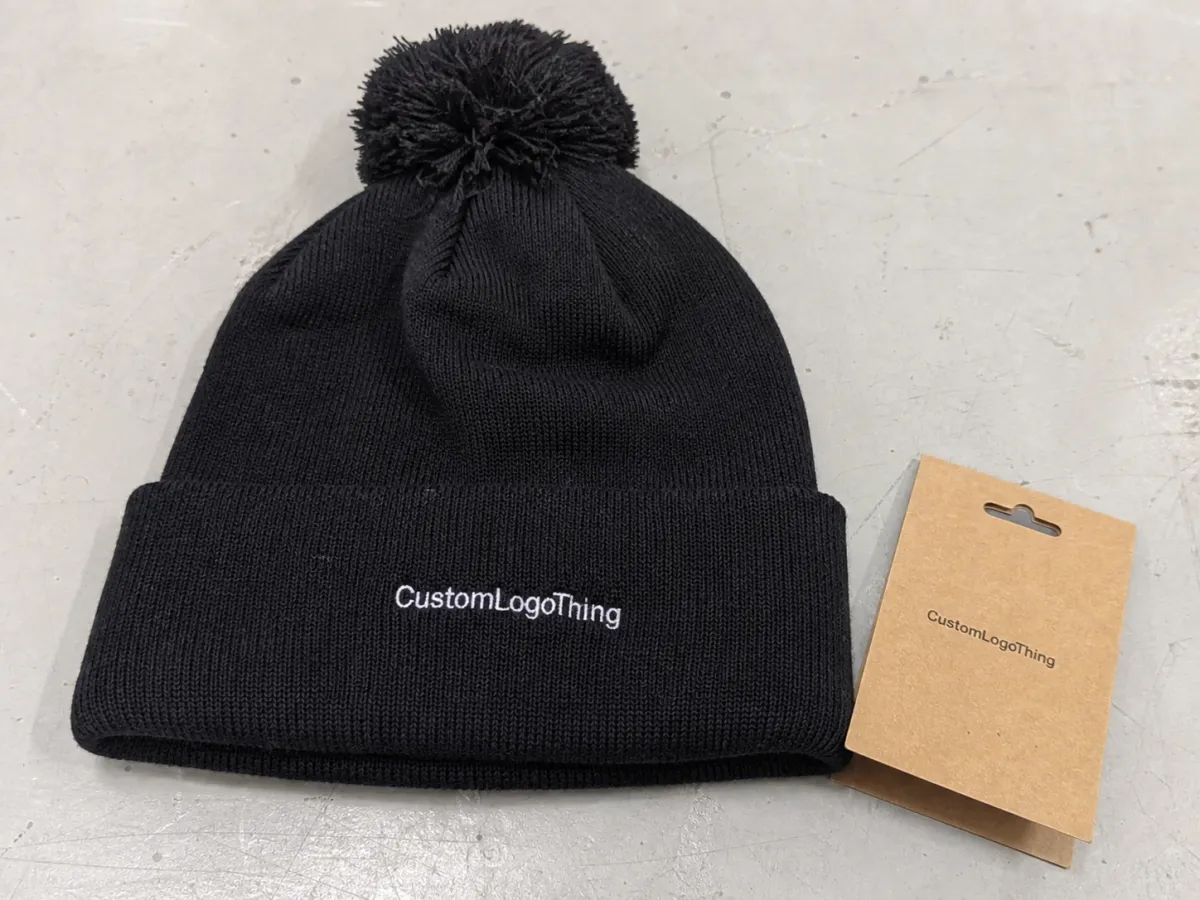
The most dependable programs keep the same body spec across every drop. Knit count, yarn blend, cuff height, and pom attachment stay fixed. Color or trim can change, but the base product does not. That approach keeps subscription Pom Pom Beanies Unit Cost from drifting every time the next seasonal design goes live.
Small changes often matter more than buyers expect. A half-inch deeper cuff increases yarn usage. A denser stitch slows production. A shift from woven label to embroidered patch adds sewing time and, in some cases, extra handling because the decoration changes how the beanie sits. Each change can be defensible on its own. Put three or four together and the price moves enough to matter.
Predictability also depends on documentation. A supplier should not have to guess at the crown depth, pom size, label placement, or bag count. If those points are clear in the spec package, the next order behaves like replenishment instead of a new development project. That is the difference between a quote that can be reused and a quote that needs to be rebuilt from scratch.
One practical observation from repeat programs: instability often starts in the sample stage, not production. If the first proto is approved without written measurement tolerances, the next order can quietly become “close enough.” That phrase is expensive. Tight approvals reduce that risk and make the unit cost more dependable over time.
For brands with a fixed retail target, that stability matters even more. A subscription box or monthly drop may have only a modest margin after freight and fulfillment. If packaging or decoration is allowed to vary from run to run, the program can lose profitability even though the product itself still looks fine on a shelf or in a mailed kit.
What goes into a pom pom beanie build
A pom pom beanie looks simple, but the build includes several cost-bearing choices. Yarn is the first. Acrylic is common because it is affordable, soft enough for everyday wear, and easy to color match. Acrylic-wool blends usually feel warmer and more premium, though they can push Subscription Pom Pom Beanies unit cost upward depending on fiber content and the season. Recycled yarns are another option, but lot consistency and shade control need more attention during approval.
Gauge and stitch density shape both feel and production speed. A tighter knit tends to look cleaner and hold form better, but it can take longer on the machine. A lighter knit may be cheaper and more flexible, though it may not deliver the same warmth or visual density. Neither choice is automatically better. The right call depends on whether the beanie is meant for casual everyday wear, outdoor use, or a more premium retail presentation.
Crown construction also changes the result. A shallower crown gives a more relaxed profile. A deeper crown sits closer to the head and usually looks tidier in product photography and retail display. Cuff height is just as important. A 2.5-inch cuff and a 3.5-inch cuff use different amounts of yarn and offer different decoration space, so they should never be treated as interchangeable.
The pom deserves more scrutiny than many buyers give it. A sewn-on pom is simple, but the attachment has to survive handling, shipping, and actual wear. A tied or loop-secured pom may look neat, though it needs better finishing so it does not loosen during transit. If the beanie will be used often, a more secure attachment usually earns its keep by reducing complaints and replacement costs.
Branding should follow the channel. Woven labels are often the most practical for subscription and retail orders because they are durable, low-profile, and economical at scale. Embroidery can look richer, but it adds thickness and can distort softer knit structures. Patches are useful when a brand wants stronger visual impact, yet they raise labor and can alter drape. Interior care labels are usually the quiet workhorse: they handle compliance and washing guidance without crowding the outer design.
Packaging is part of the build, not an afterthought. Many subscription programs only need a clean fold, a polybag, and a barcode label. If the order will be shipped through a warehouse, carton count, case markings, and pallet pattern should be confirmed early. For some channels, transit testing or an ISTA-based requirement is worth discussing before quotes are finalized, because the carton spec affects both damage rates and freight efficiency. Packaging references at packaging.org and ista.org are useful starting points.
Specs that affect fit, warmth, and decoration quality
Fit problems usually come from vague measurements. A beanie spec should state head opening, cuff width, crown depth, stretch range, and pom diameter. Without those numbers, two samples can look nearly identical on a table and still wear very differently. That gets especially messy in subscription programs, where consistency from one drop to the next is part of the product promise.
Warmth is not just a matter of thickness. A heavier yarn can feel bulky or overbuilt, especially if the knit pattern is dense enough to limit stretch. A lighter yarn with a well-balanced stitch can sit better on the head and still offer enough insulation for city wear. The right choice depends on the audience. A fashion-driven subscriber may care more about shape and drape, while an outdoor buyer may prioritize warmth and resilience.
Decoration quality depends on usable surface area and fabric tension. Woven labels usually work well because they need only a small, stable section of cuff. Embroidery needs careful placement, because too much tension can pucker the knit. Patches look strong, but they need enough structure underneath them or the edges begin to lift. These are not cosmetic issues only; they change labor time and therefore affect the subscription pom pom Beanies Unit Cost.
Color control is another place where disciplined buyers avoid unnecessary expense. If the program needs an exact PMS match, say so before sampling starts. If colorway continuity matters across monthly drops, document the yarn lot and approval reference. A slight shade variation may be acceptable in isolation, but it can look inconsistent when the same product is repeated over and over. That is a packaging and merchandising issue as much as a manufacturing one.
Material specifications should be stated plainly. Fiber content, yarn weight, stitch density, label type, and trim placement all belong in the quote request. The clearer the spec, the easier it is to compare vendors on a like-for-like basis. If packaging is part of the offer, define it with the same level of care. A supplier quoting a folded beanie in a polybag is not pricing the same program as one quoting retail-ready packaging with inserts and carton marks.
For sustainability, ask for specific material requirements rather than broad claims. FSC-certified cartons, paper-based inserts, and reduced-plastic packouts are common requests, but the factory needs exact instructions to price them correctly. It also helps to know whether the requirement is about material, recycling, or warehouse compliance. Those are not the same thing, and mixing them up usually leads to rework.
Cost, MOQ, and quote structure for repeat orders
The main cost drivers are easy to list and easy to underestimate: yarn selection, number of colors, decoration method, label setup, packaging, and any custom trim. A simple single-color acrylic beanie with a woven label is a very different cost profile from a two-color knit with an embroidered patch, custom care label, and branded insert. The first may be price-stable. The second may be perfectly viable, but only if the buyer accepts the extra setup and handling.
MOQ is not only about the hat body. It also reflects yarn batching, machine time, decoration setup, and packing labor. If a subscription program splits into several colorways, each with its own label art or insert, the supplier may need to treat them as separate production runs. That pushes unit cost upward even when the beanie silhouette looks unchanged.
For that reason, line-item pricing matters. A useful quote separates the knit body, pom, label, packaging, sample charge, and any tooling or artwork setup. It should also state whether those costs are one-time or recurring. If the quote only shows a single number, the buyer cannot tell whether the offer is efficient or merely incomplete. Transparency is valuable because it reveals where the money goes and where the cost can be trimmed without changing the product.
| Option | Typical effect on cost | Best use case | Notes |
|---|---|---|---|
| Woven label | Low to moderate | Most subscription and retail programs | Durable, clean, and usually the easiest repeat option |
| Embroidered patch | Moderate to higher | Brands wanting stronger visual identity | Adds sewing time and can change the drape of the cuff |
| Custom inner label + care label | Low to moderate | Programs needing compliance and reorder consistency | Useful for warehouse handling and future replenishment |
| Special packaging insert | Moderate | Subscription mailers and branded unboxing | Artwork changes can create repeated setup charges |
| Multiple colorways in one order | Moderate to higher | Seasonal or tiered subscription assortments | May raise MOQ and split production batches |
For repeat orders, ask how the quote changes at different quantities. A price for 1,000 pieces may not tell you much if the program is designed to repeat at 3,000 or 5,000. Some factories offer meaningful breaks after the first run because setup costs are already absorbed. Others stay relatively flat because labor and material availability are the real bottlenecks. A smart buyer looks for the pattern before committing.
Shipping terms should be part of the discussion too. If the order is heading to a fulfillment center, carton configuration and label placement matter. If the cartons are traveling through parcel networks, stronger packaging may save more than it costs. A lower factory quote is not always the better deal if the inbound damage rate rises or receiving at the warehouse becomes painful.
As a working range, custom pom pom beanies often sit in a mid-single-digit to low-teens unit-cost band depending on quantity, material, and decoration complexity. Simple repeat builds tend to be cheaper. Premium yarns, mixed trims, and retail-ready packouts move the number upward fast. Those ranges are broad by design, because the actual price depends on the product spec rather than the category label.
Production steps and lead time from sample to shipment
A clean production path usually follows the same sequence: spec review, sample or proto approval, knitting, pom attachment, finishing, inspection, and packing. Each stage needs a signoff point. If the sample comes back with the wrong cuff height, incorrect label placement, or a pom that is too small, correct it before bulk approval. Fixing that later can add days, sometimes longer if the yarn or trim needs to be reordered.
Lead time stretches in predictable places. Yarn sourcing is the first. If a color is not in stock, the schedule slips before the first beanie is knitted. Sample revisions are the second. A buyer who keeps adjusting the pom size or trying different fits can burn through the approval window quickly. Production capacity is the third. High season fills machines early, and a factory with a healthy backlog may not be able to move faster just because a program is urgent.
The fastest orders usually come from complete spec packages. A proper approval set includes construction details, measurement sheet, color references, decoration method, packaging plan, and carton count. If those pieces are signed off together, the factory has fewer reasons to stop and ask questions. The schedule becomes clearer and the odds of a last-minute surprise drop.
For planning, these ranges are common:
- Spec and artwork approval: 2-5 business days if information is complete.
- Sample or proto stage: 5-10 business days, longer if yarn must be sourced.
- Bulk production: 12-20 business days after final approval, depending on quantity and decoration.
- Inspection and packing: 2-4 business days for standard orders.
Those numbers shift with season and complexity. A basic reorder can move quickly. A mixed-color subscription assortment with custom inserts and special carton marking takes longer. Buyers usually save time by deciding early which details are fixed and which are allowed to vary. That one decision often has more impact on schedule than any rush request ever will.
Warehouse delivery is another point where planning pays off. If the cartons are going to a fulfillment center, the receiving spec should be understood before production begins. Carton labels, pallet height, and case counts can become expensive problems if they are discovered too late. The factory quote should reflect the actual delivery path, not an ideal one.
What a dependable reorder program should include
Repeat business gets easier when the supplier keeps the right records. At a minimum, that means an approved sample, a measurement sheet, color references, decoration notes, and carton packout details. Without them, the next order is rebuilt from memory, and memory is a poor production system. That is where inconsistency and price creep begin.
A dependable reorder process should also preserve the approved artwork and packaging notes. The knit count should not need to be rediscovered. The pom attachment should not need a fresh debate. The label position should not be reinterpreted every season. That level of discipline is what keeps subscription pom pom Beanies Unit Cost manageable over the life of the program.
There are also warning signs. Vague tolerances are one. So is a lack of written reorder history. Another is unexplained pricing changes from one cycle to the next. A legitimate change should tie back to materials, labor, or packaging. If it does not, the buyer should ask for a line-by-line explanation. A program can tolerate a price increase; it cannot tolerate mystery.
Good reorder control is not glamorous, but it is practical. It lowers the odds of receiving a beanie that looks right but behaves differently in hand, or a carton that clears production but fails receiving. It also helps the buyer forecast cash flow with a little more confidence, which matters when orders are scheduled month after month rather than once a season.
For programs that are meant to last, the best partner is usually the one that treats documentation like part of the product. The files, measurements, and packing instructions need to travel with the order every time. That is what keeps the next run from becoming a new project.
Next steps to lock specs, pricing, and first production slot
Before requesting a quote, gather the practical details: target quantity, color count, decoration method, packaging needs, delivery window, and the budget you need to hit. If there is a physical sample or a clear reference image, send that too. It shortens the back-and-forth and gives the supplier a better basis for pricing.
A spec sheet does not need to be elaborate. It should list measurements, yarn preference, label type, pom style, packing method, and any special handling requirements. Once that is ready, ask for written unit cost, MOQ, sample timing, and production schedule. If the quote is detailed, you can compare it against other offers on equal footing. If it is vague, the risk usually shows up later as hidden charges or schedule slippage.
The cleanest move is simple: fix the spec, request the quote, and lock subscription pom pom beanies unit cost before the first production window disappears. That gives the program a stable base and makes future reorders easier to price, easier to receive, and easier to manage.
What affects subscription pom pom beanies unit cost the most?
Yarn type, decoration method, pom construction, packaging, and color count usually have the biggest effect on cost. Setup requirements can matter almost as much as the product itself when the order has multiple colorways or custom inserts. The best way to control pricing is to standardize the base build before sampling begins.
What MOQ should I expect for custom pom pom beanies?
MOQ depends on yarn availability, number of colorways, decoration method, and how much packaging is customized. A simple repeat build usually has a friendlier minimum than a mixed subscription assortment. The supplier should state MOQ in writing so the comparison is clear.
How long does production take after sample approval?
Lead time varies with material sourcing, current machine capacity, and the number of approval changes. A clean order with complete specs moves faster than a project that is still changing after sampling. Ask for a schedule that separates sample time from bulk production time.
Can I mix colors or trim styles in one subscription order?
Yes, but each extra colorway or trim variation can raise setup time and affect the per-unit price. The supplier should confirm whether different colorways count toward separate MOQs. Keeping the base beanie spec the same is the easiest way to protect efficiency.
What details do I need to send for an accurate quote?
Send target quantity, color references, decoration method, packaging requirements, and delivery window. Include measurements or fit expectations so the quote reflects the actual build. A sample image or physical reference helps reduce errors and pricing surprises.

