Buyer Fit Snapshot
| Best fit | Export Corrugated Boxes Price Quote projects where brand print, material claims, artwork control, MOQ, and repeat-order consistency need to be specified before quoting. |
|---|---|
| Quote inputs | Share finished size, material target, print colors, finish, packing count, annual reorder estimate, ship-to region, and any compliance wording. |
| Proofing check | Approve dieline scale, logo placement, barcode or warning zones, color tolerance, closure strength, and carton packing before bulk production. |
| Main risk | Vague material claims, crowded artwork, missing packing details, or unclear freight terms can make a low unit price expensive after revisions. |
Fast answer: Export Corrugated Boxes Price Quote: Costs, MOQ & Lead Time should be specified like a repeatable production item. The safest quote records material, print method, finish, artwork proof, packing count, and reorder notes in one written spec.
Production checks before approval
Compare the actual filled-product size with the drawing, then confirm tolerance on folds, seals, hang holes, label areas, and retail display edges. Reserve space for logos, QR codes, warning copy, and material claims before decorative graphics fill the panel.
Quote comparison points
Review material grade, print process, finish, sampling route, tooling charges, carton quantity, and freight assumptions side by side. A quote is only useful when the supplier can repeat the same color, closure quality, and packing count on the next order.
Export Corrugated Boxes Price Quote: Costs, MOQ & Lead Time
export corrugated boxes price quote requests can change quickly, and not always for obvious reasons. A box that looks identical on a sketch can price very differently once the board grade, flute profile, print coverage, pallet pattern, or destination handling is defined. That is not a sales trick. It is how export packaging works.
Two cartons with the same outside dimensions can behave very differently in transit. One may survive a short regional move with standard single-wall construction. The other may need double-wall board, a higher compression rating, or a moisture-resistant finish to make it through a humid port, a cross-dock, and a long ocean lane. The quote reflects those realities whether the buyer sees them immediately or not.
The lowest unit price is rarely the best packaging decision. If a carton crushes under stack load, sags in humidity, or forces a redesign after sample testing, the apparent savings disappear fast. Damage claims, freight inefficiency, and rework usually cost more than the initial price difference. A useful quote should make those tradeoffs visible before approval, not after shipment.
This page is built around that problem. A buyer should be able to send one brief, receive a usable export corrugated boxes price quote, and compare offers on the same basis. That only happens when the request is specific enough to define the route, the product, and the performance expectation.
Why an Export Corrugated Boxes Price Quote Can Shift Fast
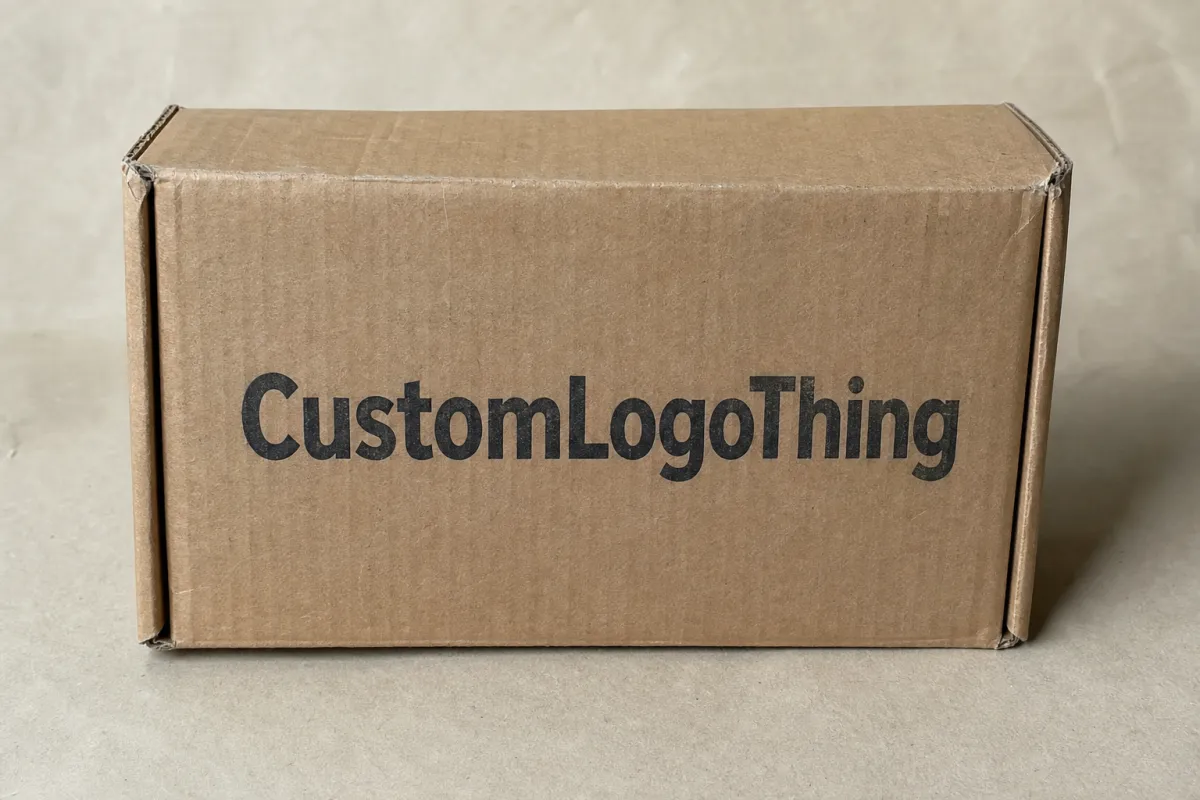
Export cartons are exposed to more variables than many domestic boxes. Longer transit windows, multiple handoffs, warehouse stacking, condensation, vibration, and mixed climates all add risk. A carton that performs well on a local route may weaken when it sits in a hot container yard or absorbs moisture on the way to port. The structure has to be priced for the route, not just the product footprint.
Board choice usually drives the first major price movement. A standard single-wall RSC may be enough for light goods, but heavier loads or less forgiving routes often call for higher ECT values, heavier liners, or double-wall construction. Those upgrades increase board consumption and converting time. The cost change is real even if the outer size never changes.
Print also matters more than many buyers expect. A simple one-color logo is one thing. Full-panel print, handling marks, barcodes, destination-language text, and compliance marks are another. Each added element can increase setup, plate cost, and waste allowance. Even the way ink sits on the liner can influence whether a supplier recommends a different board face.
"The cheapest export carton is not always the lowest-cost package once you include transit damage, rework, and wasted freight space."
Palletization changes the picture too. A carton that nests efficiently may reduce freight cost because it fills a pallet or container more cleanly. A carton with poor stacking geometry can waste cubic space or require more reinforcement. In other words, the packaging quote and the shipping quote are connected even when they arrive as separate numbers.
From a procurement perspective, landed cost matters more than the unit price alone. That means the box, any inserts, pallet materials, testing requirements, and freight basis should all be part of the same conversation. A quote that leaves those items vague is incomplete, even if the number looks attractive.
Buyers who want to sanity-check specifications against recognized transit practices can review the International Safe Transit Association for test methods. If fiber sourcing matters to your program, the FSC framework can also help define what responsible sourcing means in practice. Those references do not set your price, but they help define the performance and sourcing standard behind it.
Product Details: What You Are Actually Buying
"Corrugated box" is a broad label. In export work, the structure inside that label determines whether the carton is fit for purpose or only fit for a photo. The most common formats are regular slotted containers, die-cut cartons, heavy-duty master cartons, and knock-down shippers designed for compact storage and efficient loading.
A regular slotted container, or RSC, is the default workhorse. It is economical, easy to manufacture, and widely used when the product is not unusually heavy or fragile. Die-cut cartons are often chosen when the fit must be tighter or the presentation cleaner, but they usually require more setup. Heavy-duty master cartons are better when the load is dense, stacked high, or expected to endure rougher handling. Knock-down shipper styles are useful when buyers want strength without paying for excess cube.
Export-ready does not simply mean stronger. It means better matched to the route. A carton intended for a short inland move may prioritize cost and stackability. A carton intended for export may need greater compression resistance, moisture tolerance, and a more careful pallet fit. That difference sounds small on paper. In the warehouse, it is often the difference between an intact pallet and a damaged claim.
Many export programs also include components that are easy to overlook in the quote request. Dividers prevent item-to-item abrasion. Inserts hold parts steady and reduce movement. Desiccants help with humidity-sensitive products. Reinforced corners can improve top-load performance. Water-resistant coatings slow surface softening, though they are not a substitute for waterproof packaging. These options add cost, but they can prevent a much larger loss later.
Corrugated is often selected over wood, plastic, or mixed-material packaging because it balances cost, weight, and recyclability. It is lighter than many crate-based solutions, which helps freight economics. It prints cleanly, folds flat, and usually recycles more easily. That is why it remains common for food products, electronics, glass items, and industrial parts that need internal protection more than rigid walls.
There is also a compliance angle that buyers sometimes miss. Corrugated cartons are usually used with pallets, and pallets can trigger their own requirements. Corrugated board itself is not treated the same way as solid wood packaging, but if the shipment uses wooden pallets or crates, the pallet spec, treatment status, and destination rules still need attention. A complete export quote should describe the whole pack-out, not just the carton.
For higher-value or fragile products, corrugated is often paired with molded pulp, foam, corner protection, or a pallet-base system. That combination may cost more than a plain box, but the cost is rarely arbitrary. It is usually the price of controlling movement, reducing compression failure, or protecting a product finish from scuffing during transit.
Specifications That Shape the Quote
The fastest way to slow down an RFQ is to leave out the details that drive production. A supplier can only quote accurately when the technical inputs are clear. For export cartons, the minimum set usually includes inside dimensions, board type, flute profile, quantity, print needs, destination, and the performance target.
Inside dimensions matter more than outside dimensions because they determine the usable cavity. The carton has to fit the product with enough room for inserts, corner protection, and tolerances. Board type matters because liner quality, recycled content, and medium weight all influence strength and cost. Flute profile matters because it affects cushioning, crush resistance, and the print surface. ECT ratings and burst tests both appear in packaging conversations, but they are not interchangeable and should not be treated as if one were simply a prettier version of the other.
Weight and stacking height change recommendations quickly. A light retail bundle may work in a thinner single-wall carton. A denser assembly may require double-wall board or a higher ECT rating to survive stacked storage. Humidity matters too. A route moving through a dry inland warehouse has a different risk profile from a route that sits near a tropical port or inside a non-climate-controlled facility. Longer exposure usually means more risk.
Finishing options change the quote in practical ways. Water-resistant coatings add performance but also add material and process cost. Color print raises setup complexity. Window cuts, special glue patterns, and die lines may require tooling or slower converting. Pallet-ready packaging can affect how many cartons fit per layer or per pallet. Those details are small on a drawing and expensive on a production floor.
Two cartons can look nearly identical and still price very differently. The comparison below shows how small specification changes affect both performance and cost.
| Spec | Appearance | Performance Impact | Typical Cost Effect |
|---|---|---|---|
| Single-wall RSC, standard print | Simple, efficient | Suitable for lighter goods and shorter routes | Lowest setup and board cost |
| Single-wall with moisture-resistant coating | Similar exterior look | Better resistance to humidity and surface softening | Moderate increase from coating and added process step |
| Double-wall master carton | Bulkier, more rigid | Higher stacking and crush resistance | Higher board usage and converting cost |
| Die-cut export shipper with inserts | Cleaner fit, tighter presentation | Better product control and reduced movement | Tooling plus added labor or setup |
A vague brief usually leads to vague pricing. Vague pricing leads to revisions. Revisions slow the order and create room for misunderstandings about performance or freight assumptions. If the goal is a usable export corrugated boxes price quote, the request should define the problem the carton must solve, not just describe the carton in general terms.
Industry testing language helps buyers speak that same language. Many procurement teams reference ASTM compression methods such as ASTM D642 or transit test programs aligned to route risk. That does not mean every shipment needs lab validation. It does mean the supplier should be able to explain what test basis informed the recommendation. If a carton is being proposed as "export-grade," ask what that means in measurable terms.
Export Corrugated Boxes Price Quote: Cost, MOQ, and Unit Cost
When a supplier sends an export corrugated boxes price quote, the number usually reflects several cost buckets at once. Raw board is only one. Tooling, plate making, labor, waste allowance, packing, and outbound freight can all contribute. If the carton is custom sized or custom printed, setup can matter almost as much as material on smaller runs. That is why MOQ exists.
MOQ, or minimum order quantity, protects production efficiency. A converting line runs more efficiently when there are enough units to justify setup, trimming, print calibration, and quality checks. If the quantity is too low, the fixed work gets spread across too few cartons and the unit cost rises. As volume increases, the fixed portion shrinks on a per-unit basis, so the price often falls. The break point depends on the structure, print complexity, and board grade.
In practice, unprinted standard export cartons often carry a lower MOQ because they require less setup. Printed cartons, die-cut styles, and packages with inserts usually need more volume because tooling and artwork handling raise the front-end effort. A quote that looks expensive at 1,000 units may become competitive at 5,000 or 10,000 once that setup is diluted.
Not every part of the quote is equally negotiable. Size may be adjusted if the product allows some tolerance. Print coverage may be simplified. The required strength, core protection level, and route-related performance target usually are not negotiable without adding risk. If the load needs a certain compression threshold, that requirement should stay fixed while the surrounding spec is optimized.
The sample ranges below are illustrative, not a promise. They show how export carton pricing can move when quantity, structure, and protection level change together.
| Quote Scenario | Typical Structure | Indicative MOQ | Indicative Unit Cost | Typical Lead Time | Best For |
|---|---|---|---|---|---|
| Economy export shipper | Single-wall RSC, unprinted or minimal print | 2,000-5,000 pcs | $0.38-$0.72 per unit at 5,000 pcs | 10-15 business days after approval | Light goods, stable routes, lower damage risk |
| Standard branded export carton | Single-wall or reinforced single-wall, one- to two-color print | 3,000-8,000 pcs | $0.62-$1.15 per unit at 5,000 pcs | 12-18 business days after approval | Consumer goods, electronics accessories, retail-ready packs |
| Heavy-duty master carton | Double-wall, higher ECT, optional coating | 1,500-4,000 pcs | $1.15-$2.80 per unit at 2,000-3,000 pcs | 15-25 business days after approval | Dense parts, fragile products, long transit routes |
Those ranges move with board-market conditions, carton size, print coverage, and destination. A carton quoted ex works is priced differently from one quoted delivered duty paid, because freight, handling, customs-related costs, and import-side delivery assumptions are not the same. Buyers comparing offers should always ask whether the quote includes palletizing, corner boards, stretch wrap, documentation, sample shipping, and delivery mode.
A practical RFQ usually includes a short checklist. Show inside dimensions, product weight, stacking height, target board grade, print needs, quantity tiers, destination country, and whether samples are required before production. If a supplier has to guess, the quote will usually be conservative. Conservative pricing protects the supplier. It does not always help the buyer.
One useful procurement habit is to request two scenarios: the lowest compliant option and the upgraded protection option. That comparison shows the real cost of moving from a standard carton to a stronger export structure. Sometimes the upgrade is worth only a few cents. Sometimes it is cheaper than one damaged shipment. The difference matters.
For buyers also comparing broader packaging formats, it helps to review related options such as Custom Shipping Boxes and the wider range of Custom Packaging Products. If the brief is still evolving, you can also use Contact Us to send rough dimensions first and refine the spec afterward.
Process and Timeline: From RFQ to Ready-to-Ship
A disciplined export carton order usually follows a predictable sequence: inquiry, spec confirmation, quotation, sample approval, production, quality check, packing, and dispatch. The more complete the first inquiry, the fewer loops the order needs later. That matters because each round of revision can add days.
Stock structures move fastest. If the size is standard, the board is standard, and print is minimal, a quote can come back quickly and production can often begin soon after approval. Custom sizes and printed export cartons take longer because the drawing, tooling, sample, and sign-off steps have to line up. If a sample is needed for fit or compression review, add time for courier transit and internal review on the buyer side.
Where do delays usually happen? Missing dimensions are common. Artwork revisions are another. Material shortages can also extend lead time, especially for specific board grades or coatings. Late sample sign-off is one of the most common bottlenecks because production cannot lock in until the buyer approves the final structure. Export orders may also require additional handling if pallet labels, destination marks, or moisture protection need to be added before dispatch.
The timeline below gives buyers a working comparison between a standard custom run and a simpler fast-turn order.
| Stage | Standard Custom Run | Faster Simple Run | Risk of Delay |
|---|---|---|---|
| Spec review and quote | 1-2 business days | Same day to 1 business day | Incomplete brief, unclear board grade |
| Sample or artwork approval | 2-5 business days | 1-3 business days | Artwork revisions, fit concerns |
| Production | 7-15 business days | 5-10 business days | Tooling, material availability, print setup |
| Quality check and packing | 1-3 business days | 1-2 business days | Special pallet pattern or export labeling |
| Dispatch | Depends on freight mode | Depends on freight mode | Booking timing, destination handling |
Export packaging often takes more coordination than a domestic run because the carton is only one part of the shipment. If the load needs moisture control, the supplier may need to coordinate desiccants or barrier treatments. If the destination requires strict labeling, the proof has to show it. If palletization is part of the brief, the number of cartons per layer and per pallet matters as much as the box itself.
A controlled process pays off. A buyer should not need five revision cycles to get a usable answer. A strong supplier clarifies the requirements early, confirms the route, and flags any risk before production starts. That saves time and usually prevents the late-stage surprises that make export packaging feel more expensive than it should be.
Why Choose Us for Export Corrugated Boxes
Buyers do not need more packaging hype. They need fewer mistakes. A supplier earns export business by quoting clearly, matching the carton spec to the route, and documenting the assumptions behind the number. That becomes more important when goods are high-value, fragile, or moving through longer transit lanes where humidity and stacking pressure are real threats.
What does a disciplined partner do differently? First, the quote is tied to the product, not just to a catalog size. Second, the supplier checks whether the board grade and flute profile are actually suitable for the load. Third, the supplier identifies what is included: print, test requirements, pallet pack-out, and freight handling. Those details look minor until the invoice or damage claim arrives.
Operationally, strong export packaging programs tend to share a few traits. They review artwork before production to catch label placement or barcode issues. They use quality-control checkpoints during converting and packing. They keep quoting and production connected so the estimate does not drift away from what gets made. They are honest about lead time when a custom structure needs extra setup.
That honesty matters because the hidden cost in packaging is often revision time. Every extra round of changes delays production, increases the chance of miscommunication, and pushes freight planning back. A clear supplier protects both the schedule and the landed cost. In a tight supply chain, that is often more valuable than a slightly lower price with uncertain execution.
For buyers comparing options, the right question is not "Who has the cheapest carton?" The better question is "Who can give the most accurate quote for the least risky spec?" That shifts the procurement conversation in a more useful direction. If you need help scoping a carton family or comparing alternate packaging structures, start with Custom Shipping Boxes or browse the broader line of Custom Packaging Products before you commit to a final drawing.
At Custom Logo Things, the advantage should be quote discipline, not noise. A buyer should get a spec-driven response, a realistic MOQ, a production schedule that reflects actual setup work, and a packaging recommendation that fits export handling. That combination helps you spend where it counts and avoid the costs that show up later in transit.
Next Steps: What to Send Before You Request a Quote
If you want a useful response quickly, send the full pack picture up front. The carton dimensions matter, but they are only one part of the decision. A complete brief helps the supplier Choose the Right board, price the correct quantity, and tell you whether the design can be simplified without sacrificing protection.
Use this intake checklist before you request pricing:
- Inside dimensions of the carton, or product dimensions if the box is still being developed.
- Product weight, including inserts, accessories, or bundled items.
- Destination country and shipping mode, such as ocean freight, air freight, or mixed transport.
- Required stack height, pallet size, and preferred pallet pattern.
- Print file, logo details, barcode needs, and any handling marks.
- Target quantity and any future volume tiers you want quoted.
- Test requirement, if you already know the compression or transit standard.
- Any humidity, temperature, or storage concerns at origin or destination.
Attach the files that remove guesswork first. A dieline or sketch helps. Artwork files help more. If you already have a pallet plan, include it. If there is a target test standard, send that too. A good supplier can often quote from a short brief, but a better brief usually leads to a better quote.
It also helps to ask for two versions of the quote. One should be the lowest compliant option. The other should be the upgraded protection option. That comparison shows whether the stronger carton adds a modest premium or a meaningful one. In many cases, the more protective structure is cheaper than one damaged shipment, and the numbers make that very clear.
Before approval, confirm the essentials: exact specification, quantity, MOQ, Lead Time, pallet count, packing count per pallet, and Incoterms or delivery basis. If any of those items are unclear, the quote is not finished. The buyer who checks those details before signing avoids the most common surprises.
If you are ready to move from rough concept to a documented order, send the project details through Contact Us. The more complete the brief, the faster the final export corrugated boxes price quote can be tightened into a number you can actually compare against your landed-cost target.
Final Takeaway Before You Approve
Export corrugated packaging is a cost decision, but it is also a risk decision. The carton has to survive more than a warehouse aisle. It has to survive stacking pressure, transport vibration, humidity changes, and the possibility that a pallet will sit longer than planned. Specification discipline matters because export routes punish guesswork.
When buyers ask for pricing with complete dimensions, board targets, print details, destination, and pallet requirements, the quote becomes more useful and far less likely to change later. That is the buying habit that keeps export packaging honest. It turns a rough estimate into a working commercial plan.
If you are comparing suppliers, focus on what the number includes and what assumptions sit behind it. A lower price with a weaker carton or a missing handling step is not a lower-cost option. It is a delayed cost. The best export corrugated boxes price quote is the one that aligns spec, MOQ, lead time, and landed cost without hiding anything in the fine print.
Frequently Asked Questions
What details do I need for an export corrugated boxes price quote?
Send inside dimensions, product weight, board spec, print requirements, destination, quantity, and pallet pattern. If you need samples or testing, say so at the start. A more complete brief usually means fewer revisions and a faster, more accurate export corrugated boxes price quote.
How can I lower the unit cost without weakening the box?
Start by optimizing the carton dimensions so you use less board and ship less empty space. Then check whether a different flute or board grade still meets the stacking and transit requirement. Increasing quantity can also reduce unit cost, but only if storage space and cash flow can support the larger order.
What MOQ is typical for custom export corrugated boxes?
MOQ depends on size, print complexity, and whether tooling is needed. Simple unprinted cartons often start lower than printed or die-cut formats. The best way to find the real break point is to ask for pricing at two or three volume tiers so you can see where the meaningful savings begin.
How long does an export corrugated box quote usually take?
A basic quote can be fast if the specifications are complete and the structure is standard. Custom sizes, print approval, and export testing add time. In many programs, sample approval determines the real production schedule more than the quote itself.
Can one quote cover multiple export destinations?
Yes, but freight, handling, and Incoterms can change the landed cost from one destination to another. Separate destination pricing usually gives the clearest comparison, especially if one route is longer or more humid than another. If the route changes the risk profile, ask whether the board spec should change too, then compare each export corrugated boxes price quote on its own merits.