Fitness Logo Patch Beanies Quote: Fast Pricing, Fewer Surprises A solid Fitness Logo Patch Beanies quote starts with a simple question: what needs to look good on a knit cuff without turning into a production headache? Once the patch style, beanie base, quantity, and deadline are clear, pricing usually settles down quickly. Leave those out, and the quote tends to wander.
Patch beanies beat most printed winter merch for gyms, trainers, supplement brands, and fitness clubs because knit fabric is not a friendly surface for fine print. Stretch the cuff, wash the hat, or fold it in a gym bag a few times and direct print can lose sharpness. A patch gives the logo a stable field to sit on, which usually means cleaner edges and a more finished look.
That matters more than people admit. Winter merch is judged in motion: on a desk, in a class photo, at the front counter, or on the way to a cold morning session. A beanie with a well-made patch reads as intentional. A weak print looks rushed, even if the logo started out strong on screen.
From a buying standpoint, this is not just about decoration. It is about resale value, staff wear, and whether the item gets used instead of forgotten. If the hat feels sturdy, matches the brand, and survives normal handling, it has a much better chance of staying in circulation.
If the logo looks busy on a monitor, it will usually look busier on ribbed knit. A patch can rescue some artwork, but it cannot fix everything.
Why patch beanies outperform printed winter merch
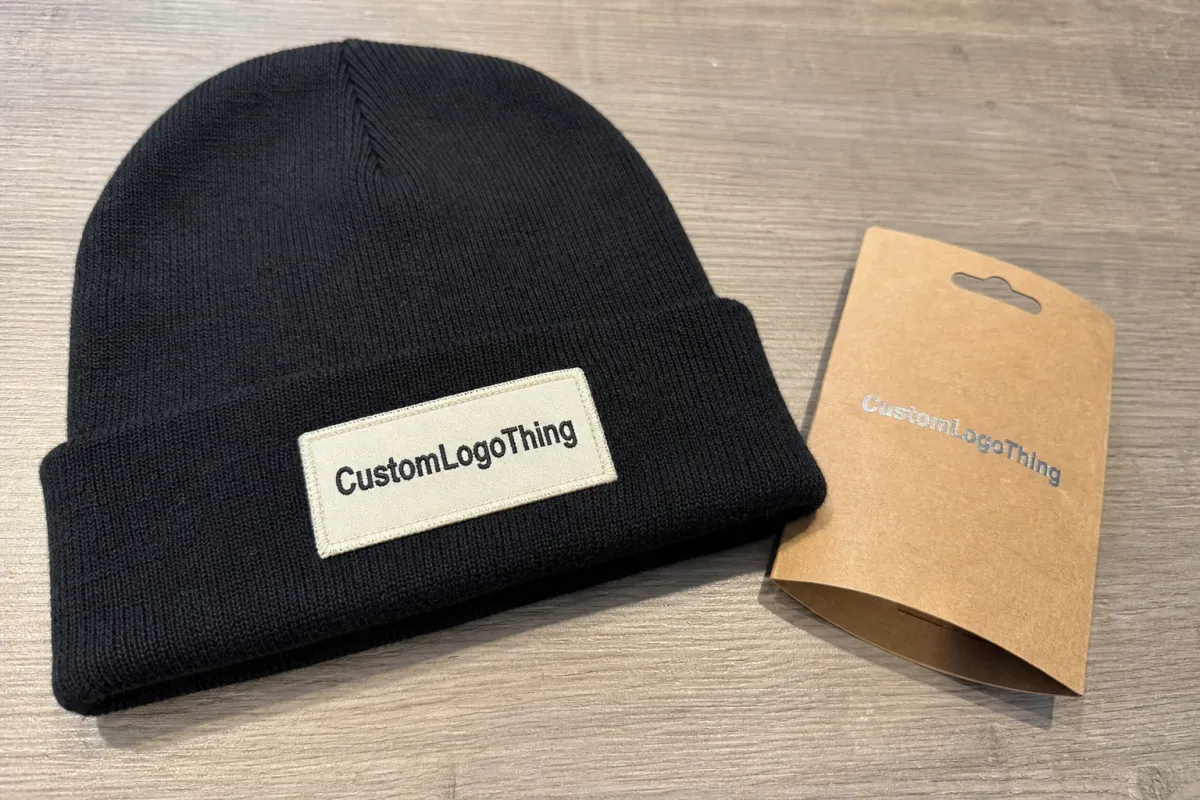
Printed winter merch sounds efficient until the fabric starts moving. Knit is soft, textured, and elastic, which is exactly why patches usually perform better. Woven, embroidered, silicone, and faux leather patches create a stable surface that keeps the mark readable even when the cuff stretches or the beanie gets stuffed into a bag.
For fitness brands, the use case is easy to understand. Gym staff need clean-looking headwear that does not feel cheap behind the desk. Trainers need merch that photographs well in class. Clubs want giveaways that members keep long enough to matter. A patch helps in all three cases because it adds structure, and structure reads as quality.
There is also a display advantage. On shelf or in a merch stack, a patch creates a stronger silhouette than a small print buried in knit texture. It can carry brand color, icon shape, and even subtle texture cues in a way that looks more retail-ready. Buyers often focus on decoration cost and forget that visual shelf appeal affects how the item is perceived before anyone tries it on.
Patch decoration also gives artwork more breathing room. Thin lines, compact typography, and simple icons can often be adapted into a cleaner version that still feels on brand. Try the same artwork as a direct knit print and it can collapse into a blur. The patch buys some forgiveness, but only up to a point.
There are limits, and they matter. Very dense logos, tiny legal text, or gradients with soft fades will still need cleanup. A good production team will usually flag those issues early rather than promise a miracle. That is a useful sign, not a setback.
Patch styles, knit options, and placement
Not every patch carries the same strengths. Woven patches are usually the best choice for small text and crisp detail. Embroidered patches feel sportier because the thread creates visible texture. Silicone and TPU patches are smoother, a little more modern, and easy to wipe clean. Faux leather leans premium and understated, especially for brands that prefer tonal branding over loud contrast.
The right choice usually depends on the artwork, not on trend language. If the logo is text-heavy, woven is often the safest option. If the branding is built around a bold icon or athletic emblem, embroidery can add the right amount of texture. Silicone works well for hard-edged marks and simple shapes. Faux leather makes sense when the goal is a cleaner retail finish.
| Patch style | Look and feel | Best for | Typical add-on at 500 pcs |
|---|---|---|---|
| Woven | Flat, crisp, detailed | Small text, fine lines, compact logos | $0.22-$0.50 per beanie |
| Embroidered | Raised thread, sporty texture | Bold icons, club merch, athletic branding | $0.25-$0.55 per beanie |
| Silicone / TPU | Sleek, slightly dimensional, wipe-clean | Modern fitness brands, simple geometric marks | $0.45-$1.00 per beanie |
| Faux leather | Matte, premium, understated | Retail beanies, tonal branding, lifestyle lines | $0.35-$0.90 per beanie |
Patch size is one of the easiest ways to improve or ruin the final look. Most buyers land somewhere between 2 and 3.5 inches wide, depending on cuff width and how much presence the logo needs. A 2-inch patch works for a minimal mark on a narrow cuff. A 3 to 3.5 inch patch reads better on a wider fold-over cuff or on a beanie meant for retail display. Too small and the brand disappears. Too large and the hat starts to feel overworked.
The beanie base changes the whole equation. Standard acrylic is the workhorse because it is affordable, warm enough for most use cases, and easy to source in bulk. Recycled acrylic costs a little more but gives the order a cleaner sustainability angle. Wool blends feel more natural and usually wear better in premium settings, though they also raise cost and demand a little more care in production. For staff wear or giveaways, acrylic often makes the most sense. For resale, wool blend can justify the added spend.
Construction details matter too. A 1x1 rib or 2x2 rib cuff behaves differently from a tighter gauge knit. The patch sits differently on each one, and the visual spacing changes more than buyers expect. A loose cuff can make a patch look slightly larger; a denser knit can make the same patch feel tighter and more refined. Small differences in gauge show up once the logo is attached.
Placement affects the final read just as much as patch style. Front cuff placement is the safest route and usually the best fit for broad brand use. Centered fold-over placement feels direct and easy to recognize. Off-center placement can look more retail or fashion-driven, which some brands prefer. The right answer depends on where the beanie will be seen first: folded on a table, worn indoors, or photographed outside.
What a fitness logo patch beanies quote should include
A clean quote starts with clean inputs. The fastest way to get a useful number is to send the logo file, beanie color, patch material, patch size, quantity, deadline, and ship-to location in the first message. That sounds basic because it is basic. Most quote delays come from missing information rather than pricing complexity.
- Logo file: Vector art is ideal. AI, EPS, and PDF usually work best.
- Beanie color: Black, charcoal, navy, and heather gray are common because they pair with most brand palettes.
- Patch style: Woven, embroidered, silicone, or faux leather changes both finish and cost.
- Patch size: Most orders sit between 2 and 3.5 inches wide.
- Quantity: Price shifts sharply between 100, 250, 500, and 1,000 units.
- Deadline and shipping: Production time and freight time are separate variables.
Artwork cleanup is usually the hidden step. Very thin lines, tiny text, and gradient fades often need simplification before patch production. Woven patches handle detail better than most options, but they still have limits. Embroidered patches need stitch structure, so ultra-fine shapes often get softened. Silicone and faux leather handle bold shapes better than decorative complexity. If the logo depends on hairline outlines or subtle fades, expect to revise it for production.
Approval should be straightforward. First comes the digital mockup. Then comes the spec confirmation, where patch material, size, placement, and beanie color get locked in. If the order is time-sensitive or brand standards are strict, a physical sample can be worth the delay. That extra round is often cheaper than discovering the problem after the entire run is packed.
Most revision headaches are self-inflicted. Buyers change the patch shape after proofing. They switch beanie colors late. They remember too late that they want custom hang tags, individual polybags, or size stickers. Every one of those changes can affect cost and lead time. The cleaner the input, the cleaner the quote.
A useful quote also separates the core unit price from the extras. If packaging, freight, or rush handling are hidden inside a single number, comparison shopping becomes messy. A good supplier should show the decoration method, the base beanie, the patch type, and any add-ons in a way that makes the tradeoff obvious.
Cost, MOQ, and unit price drivers
Most pricing tension comes from four variables: patch type, beanie base, quantity, and packaging. Setup work weighs more heavily on smaller runs because the fixed cost gets spread across fewer units. That is why a 100-piece order often looks stubborn while a 500-piece run starts to behave more sensibly.
As a practical range, a stock acrylic beanie with a woven patch often lands around $3.20-$5.50 per unit at 500 pieces before freight. At 100 pieces, the same build can move closer to $4.50-$7.50 each, depending on color, patch size, and how much cleanup the artwork needs. Recycled acrylic generally adds about $0.30-$0.80 per piece. Wool blends can add $1.00-$2.50 more than standard acrylic, sometimes more if the yarn mix is unusual.
The MOQ usually follows the production path. Stock beanies often start around 50-100 pieces. Fully custom knit runs usually sit closer to 100-300 pieces, and the number climbs if special yarns, custom color matching, or extra decoration steps are involved. The patch itself may have a separate minimum, especially if the shape is custom or the artwork uses multiple colors.
There are always add-ons that get missed in the first round of budgeting. Common ones include sample or pre-production fees, custom woven labels, individual polybags, hang tags, inserts, freight, duties, and rush charges. None of those are unusual. They just need to be named early.
- sample or pre-production fees
- custom woven labels or size tabs
- individual polybags
- paper inserts or hang tags
- freight, duties, or express shipping
- rush charges when the deadline is tight
If you want the packaging to feel a little more finished, paper inserts and hang tags are worth discussing before the quote is locked. For brands looking for lower-impact paper stock, FSC-certified paper options are a sensible place to start. It is a small detail, but small details often decide whether the order feels considered or improvised.
Lower unit price is not always the better purchase. A cheaper build can come with weaker patch adhesion, rougher artwork cleanup, or less careful packing. Those savings disappear fast if the final product needs to be reworked or rejected. The better quote is the one that shows where the cost sits so the decision is based on the actual build, not just the headline number.
Process and timeline for proofs, production, and shipping
The workflow should be boring in the best sense. Inquiry. Quote. Mockup. Approval. Production. Quality check. Shipment. If a supplier turns that into a maze, the order will probably be harder than it needs to be too.
- Inquiry: Send art, quantity, color, patch choice, and deadline.
- Quote: Review pricing with the decoration method and any packaging options listed clearly.
- Mockup: Check placement, size, and color before production begins.
- Approval: Confirm the spec in writing so there is no disagreement later.
- Production: Stock beanies with patches often take about 12-18 business days after approval. Fully custom knit orders can take 20-35 business days, depending on complexity and queue.
- Quality check and shipping: Verify patch adhesion, stitch finish, count, and packing before freight leaves.
Proofs move quickly when the art file is clean. Delays usually come from missing vectors, vague color targets, or repeated changes to placement. Rush orders are possible, but only when the stock is already available and the artwork is final from the start. Faster production does not rescue messy input. It usually exposes it sooner.
Shipping deserves its own attention. Winter merch is bulky, not fragile in the same way glass is fragile, but it still gets crushed, damp, or shorted if the carton plan is weak. Carton strength, inner packing, and label accuracy all matter more than most buyers expect. Standards from ISTA are a useful reference because drop and vibration testing reveal issues that look minor on paper and expensive in transit.
Holiday peaks and reorder cycles stretch lead times. That is normal. Retail buyers, gym chains, and event teams tend to want the same seasonal window, so late approvals create bottlenecks. The fix is practical: lock the mockup early, confirm packaging quickly, and keep one person responsible for sign-off.
Quality control should not stop at a visual glance. Before shipment, check color consistency, patch adhesion, thread finish, symmetry, count accuracy, and carton labeling. If the patch edges lift, the seam is loose, or the wrong color gets boxed, the order feels cheaper than it should. Most returns and complaints start in one of those places.
Why repeat buyers stick with the same supplier
Repeat buyers care more about consistency than novelty. They want the same knit density, the same patch placement, the same color behavior, and the same carton format on every reorder. That sounds dull, but it is what keeps a seasonal program from turning into a rescue job.
A reliable supplier cuts out unnecessary back-and-forth. Good proofs are clear. Counts are accurate. Notes are short. One person handles the order instead of three people passing it around. That matters for gym brands and supplement companies that reorder winter merch for staff, member gifts, event giveaways, or retail stock every year.
Consistency protects the brand in a way buyers notice only when it fails. If the first run looks one way and the reorder drifts, customers see it. Not always consciously, but enough to make the line feel less polished. The patch shifts a little. The navy deepens. The knit hand changes. None of that looks dramatic in a spreadsheet. In the hand, it is obvious.
That is why many buyers stay with the same supplier after one good run. The next order gets easier. The proofing gets faster. The price is easier to forecast. And once a supplier knows the acceptable range for color, patch size, and packaging, the quote stops feeling like guesswork.
There is also a practical risk-management angle. If the first supplier already understands your artwork limits and packaging expectations, you spend less time explaining the same details. That matters during peak season, when response time is worth more than a small theoretical discount from an unknown source.
FAQ
What changes the price most in a fitness logo patch beanies quote?
Patch material, beanie base, quantity, and packaging add-ons usually move the price more than anything else. Small runs cost more per piece because setup and proofing get spread across fewer units.
What is the usual MOQ for custom patch beanies?
Stock beanie builds often start lower than fully custom knit options. The MOQ usually rises when you want special yarns, custom colors, or more complex patch decoration.
How long does production take after approval?
Proofing is usually fast, but production time depends on whether the beanie and patch are stock or custom. Rush service may be possible if the artwork is final and materials are available.
Can a small fitness logo still work on a patch beanie?
Yes, but tiny text and thin lines may need simplification so the logo stays readable on fabric. Woven or embroidered patches usually handle small logos better than soft-print effects on knit.
What should I send to get an accurate quote?
Send vector artwork, quantity, beanie color, patch style, placement, deadline, and shipping destination. If packaging matters, include that too so the quote reflects the real build.


