A useful way to judge a Fitness Slider Lock bag quote is to look past the headline price and examine the whole packing system. The bag may replace a carton liner, reduce repacking, and keep gym accessories, apparel sets, or subscription items organized without drifting into rigid-box cost territory.
Buyers usually pay for more than film. The closure feel, bag dimensions, print setup, labor saved at pack-out, and freight weight all change the landed number. A lower factory quote can still cost more after cartons and shipping are added, while a slightly higher quote can be cheaper if it removes an insert or speeds assembly.
That is why unit cost, MOQ, film gauge, print coverage, and handling behavior matter together. Once those pieces are compared on the same assumptions, the quote becomes much easier to evaluate.
Why Fitness Slider Lock Bags Can Lower Packaging Waste
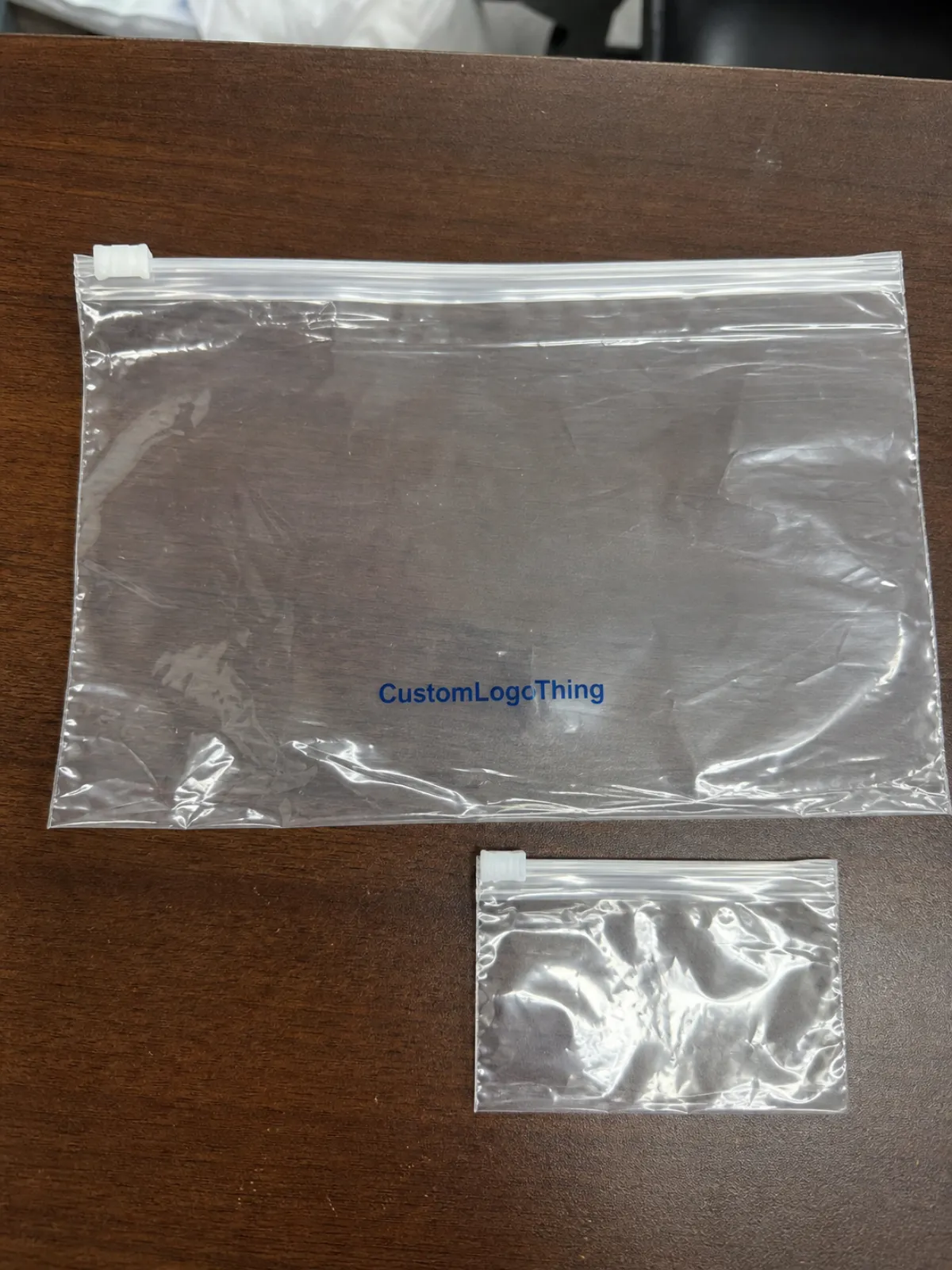
A fitness slider lock bag makes sense when it replaces unnecessary overpackaging. One well-sized pouch can stand in for a carton, tissue, a second polybag, and loose filler. The environmental benefit is real, but so is the operating benefit: fewer materials to buy, fewer components to stock, and fewer touches on the line.
Size is a waste driver as much as material choice. Oversized pouches use more film than necessary and can feel loose in hand. Undersized bags strain the closure and can damage the product inside. The best fit is usually snug enough to keep the pack neat but not so tight that the contents force the seal apart.
The use case should drive the spec. Gym accessories need quick access and repeated opening. Apparel sets usually need a cleaner front panel and enough room for folded volume. Subscription kits often need consistent packout so every item lands in the same place. Retail merchandising adds another requirement: the bag must look orderly under store lighting and still work for the end user.
A bag that opens cleanly, holds its shape, and presents the item consistently can also reduce repacking time. Across thousands of units, even a few seconds saved per pack becomes meaningful labor savings. A bag that sticks, buckles, or closes unevenly creates the opposite problem, especially on a line with seasonal volume or multiple SKUs.
For broader waste-reduction context, see EPA guidance on reducing waste.
Slider Closure Features That Matter for Daily Use
Not all sliders behave the same. A standard reseal zipper can be fine for storage, but a true slider closure is usually easier to open and close, and more forgiving in high-touch settings. That matters for fitness packaging, where the product may be handled in a locker room, warehouse, or consumer bag after a workout.
Single-track sliders are usually the simplest and most cost-conscious option. Double-track sliders can improve the feel of the seal and give users more confidence in closure strength, especially when the bag will be opened repeatedly. Grip size matters too. If the bag will be opened with sweaty hands or rushed through fulfillment, the slider needs enough tactile presence to guide the user without fuss.
Transparency versus opacity changes the buying decision. Clear film makes SKU identification easier and helps packers check contents quickly during assembly. Opaque or tinted film can create a more private or premium look, but it may slow line checks and increase the chance of mis-picks if the contents are hard to see.
Durability should be evaluated against the real handling path. If the bag will travel through distribution, a test plan that reflects drop, compression, and repeated opening is worth reviewing. See ISTA for packaging test methods that are useful when a slider bag has to survive shipping as well as shelf use.
Gauge, Size, and Print Specs That Keep Orders Consistent
Size comes first. The bag should fit the packed item, not the empty version imagined on a spec sheet. Folded apparel, bands, cords, and accessory bundles all have thickness, and that thickness changes the real dimensions needed for an orderly pack. Oversizing wastes film and can make the bag look sloppy. Undersizing creates pressure on the closure and can distort the print area.
Gauge affects feel, clarity, puncture resistance, and price. For many fitness applications, buyers compare ranges rather than absolutes: a lighter gauge for simple apparel, a medium gauge for mixed accessory sets, and a heavier gauge when the bag will be reused or handled repeatedly. If the contents are sharp-edged or dense, the film needs more protection. If the product is soft and light, extra material usually adds cost without improving performance.
Material selection should match the product, not the marketing deck. Low-density film tends to feel softer and more flexible. A stiffer structure may hold shape better on shelf or in pack-out, but it can also add cost and reduce easy-open feel. Recycled content, resin mix, and clarity targets can all change the final result.
Print coverage deserves the same discipline. A single-color logo on the front panel costs less than full-coverage art, but it creates a different visual effect. A clean logo lockup often works well for retail kits and promotional packs. Full print coverage may be worth it for a subscription program, but the buyer should expect more setup complexity and a higher cost per piece. Registration tolerance, ink coverage, and the usable print window matter as much as the artwork itself.
Consistency matters when the order includes multiple SKUs. Ask for a defined print window and approval against actual packed dimensions so the flat proof does not look good while the final pack looks crowded. If the program relies on recycled-content claims or certification language, documentation should be reviewed early. The Forest Stewardship Council details its standards at FSC.
Fitness Slider Lock Bags Unit Cost, MOQ, and Quote Drivers
Here the review becomes practical. The main inputs are film resin, bag dimensions, slider component, print complexity, order quantity, and finishing requirements. Once those are clear, the numbers are much easier to compare honestly.
A simple rule helps: the more standard the bag, the faster the cost per piece falls as volume rises. The more custom the bag, the more likely tooling fees and setup charges appear in early runs. That does not make the project poor; it just means the buyer should know which costs repeat and which are one-time.
| Option | Typical Use | Indicative Unit Cost | MOQ | Lead Time |
|---|---|---|---|---|
| Unprinted clear slider bag, standard size | Simple apparel, accessory kits, internal packing | $0.09-$0.16 per piece | 5,000-10,000 pieces | 10-15 business days after approval |
| Single-color printed bag | Retail merch, branded fitness sets, subscription packs | $0.14-$0.24 per piece | 10,000-20,000 pieces | 12-18 business days after approval |
| Heavier gauge, custom size, multi-color print | Premium kits, repeated handling, higher presentation value | $0.22-$0.38 per piece | 20,000+ pieces | 15-25 business days after approval |
Those numbers are not universal. Resin pricing moves, slider hardware can vary, and freight can change the landed total more than a small shift in quoted unit price. A bag that is one cent cheaper at the factory gate can cost more after cartons, pallets, and shipping are added.
MOQ usually rises when the order includes custom printing, unusual dimensions, special slider colors, or multiple artwork versions. If you need more than one size, ask for quotes using the same film grade and print assumptions across all versions. That keeps the comparison clean and avoids hiding the real cost difference behind a spec change.
Freight and packing configuration matter too. A bag packed in bulk cartons is not the same as a bag nested with retail-ready counts, and the carton count influences shipping cost and warehouse handling. Buyers often focus only on the bag itself, but landed cost is the number that pays the bill.
One useful comparison is to look at labor impact alongside material cost. If a better slider cuts a few seconds from pack-out, the savings can offset a higher unit price quickly. On large runs, that difference becomes measurable. At 10,000 units, a five-second change per pack is almost 14 labor hours.
Good quote comparison also means watching for hidden differences. One supplier may include a sturdier closure, tighter print registration, or better defect tolerance. Another may quote lower and recover margin through setup charges, packaging fees, or vague spec language. Compare the same material, size, closure, and print assumptions side by side.
Production Steps, Timeline, and Lead Time Expectations
A typical order moves through final specs, artwork review, sample or mockup approval, production, inspection, and shipment. The early steps decide whether the run stays on schedule. If the artwork is not sized correctly or the packed-item dimensions are still vague, the quote may be delayed before production even starts.
Send the right information up front: dielines, Pantone targets, packed-item dimensions, carton counts, and shipping destination. If the bag must fit a specific folded garment or bundle, share the actual product dimensions rather than a rough description. That prevents back-and-forth that quietly burns days.
Timeline is usually driven by print setup, material availability, order size, and whether the job needs special packing instructions. A standard unprinted bag can move relatively quickly. A printed, custom-sized order with a unique closure usually needs more coordination. Repeat orders tend to move faster once the approved spec sheet is already on file.
Approval lag is one of the most common delays. A sample can sit waiting while internal teams review it, and the production clock does not start until final signoff lands. If the item is tied to a seasonal launch or subscription cycle, build a buffer into the schedule rather than assuming the first quote date is also the ship date.
A simple checklist helps:
- Final bag size, gauge, and slider style
- Artwork file and print location
- Packed-item dimensions and target fit
- MOQ and reorder quantity
- Ship-to address and carton preference
Why Buyers Reorder Slider Lock Bags From a Packaging Partner
The value of a packaging partner is practical guidance that keeps the bag aligned with the use case. Buyers should expect help choosing the right thickness, closure feel, and print method before production begins. That matters even more on a reorder, because the first run becomes the benchmark for every run that follows.
Good partners think about quality control the way a line operator does. If a bag will be used in fulfillment, retail handling, or recurring kit assembly, small defects become expensive fast. A slider that does not travel smoothly or a print that drifts out of position can create rework, and rework is where budgets get eaten.
Quality checks should cover the details buyers actually feel: closure alignment, seal integrity, print registration, film clarity, count accuracy, and carton consistency. A clean-looking sample means little if the bulk run varies enough to disrupt the packing process. A reliable vendor keeps those tolerances tight enough that the second order behaves like the first.
Reorders are easier when the supplier keeps a clean file history. The approved spec sheet should preserve the film grade, size, closure style, print layout, and packing method so the next run does not turn into a new engineering discussion. That consistency is often worth more than a small difference in quote price because it protects the format that already worked.
Honesty matters here. Not every job needs premium film. Not every brand needs full coverage print. Sometimes the best answer is a straightforward clear bag with a reliable slider and a well-placed logo. That is often the best balance of presentation, function, and cost.
Next Steps for Samples, Artwork, and Reorder Planning
Start with a sample request and send the packed-item dimensions. That single step saves a lot of guesswork, especially if the bag needs to hold folded apparel, a training accessory set, or a mixed kit with uneven shapes. If you are still deciding between printed and unprinted versions, say so early so the quote reflects the real path.
Next, provide target quantity, shipping destination, and any compliance or packaging requirements. A quote built on the wrong destination or the wrong packout assumption is not useful. If you want clearer numbers, ask for the price spread between two or three spec versions. Sometimes a slightly smaller size, a different gauge, or a simpler print method changes landed cost more than expected.
That is where a fitness Slider Lock Bags Unit Cost review becomes useful. The choice is not just a pouch; it is the build that best balances pack speed, presentation, and reorder reliability. If the sample feels right, the film supports the product, and the quote lines up with the volume, the decision is usually straightforward.
For most programs, the next move is simple: approve the sample, lock the spec, and plan the reorder path before the first shipment leaves. A good spec sheet does more than describe the product; it protects the margin on the next order.
FAQ
What affects fitness slider lock bags unit cost the most?
Bag size and film gauge usually move price more than artwork alone. Slider style, print coverage, and color changes can add cost quickly, and freight often has a bigger effect on landed cost than a small shift in quoted unit price. The biggest surprise for many buyers is not the pouch itself but the handling around it.
What MOQ should I expect for custom slider lock bags?
MOQ depends on the bag size, print method, and whether the slider is standard or custom. Unprinted orders can often start lower than fully printed programs, and multiple SKUs should always be quoted using the exact same spec. If the quote changes between sizes, check whether the change is real or just a different assumption set.
How long is the production timeline after approval?
Timeline starts after artwork and sample approval, not at the first quote request. Print setup, material availability, and order quantity are the main variables, while repeat orders usually move faster when the spec sheet is already locked. A realistic buffer is wise if the order supports a launch date or seasonal campaign.
Can I get samples before placing a bulk order?
Yes, and it is the best way to check closure feel, clarity, and fit. Send the packed-item dimensions so the sample reflects the real application, then review it under the same handling conditions your team will use in production. That catches sizing problems before they become expensive.
Which specs matter most in a fitness slider lock bags quote?
Size, gauge, slider style, and print coverage are the core pricing inputs. Ask for material and closure samples if the bag will be handled often or reused, and compare quotes on identical specs rather than headline numbers alone. If two quotes look close, the differences in tolerance, QC, and packaging details are usually where the real value sits.

