A soap bar that scuffs in transit, loses fragrance, or arrives with a loose closure costs more than the packaging line item suggests. A soap slider lock Bags Unit Cost Review has to start there, because the bag is not just a container; it is part of the product's shelf life, presentation, and damage control.
Procurement teams often begin with the quoted unit price and only later notice the rest of the bill: repacking, spoilage, freight, customer service, and discounting. That sequence is backwards. The better question is whether the pouch keeps the soap protected, visible, and easy to handle from filling through final sale.
Soap is a deceptively sensitive product. Handmade bars can carry surface oils, molded edges, or fragile finishes that pick up marks quickly, while scented bars can lose impact if the film and closure do not hold up. A low-cost bag can still be expensive if it creates waste downstream.
Why Soap Packaging Costs More When Closure Fails
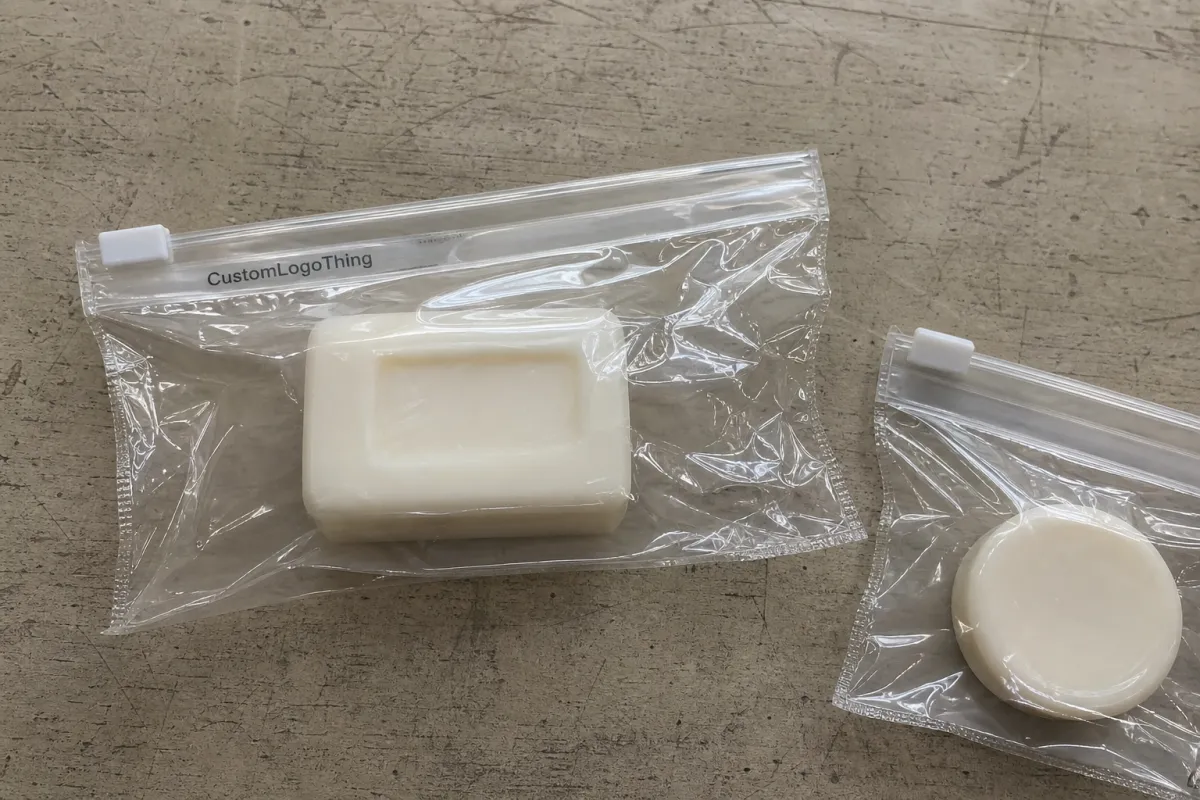
Closure failure is expensive because it usually shows up after the shipment leaves the building. A bag that opens during transit can trigger returns, repacking, customer complaints, and in retail settings, a quick markdown if the shelf appearance looks tired or messy.
The math is straightforward. Saving two or three cents per unit means very little if the pack creates labor at the warehouse, or if a damaged bar has to be replaced. That is why a soap slider lock bags Unit Cost Review should be treated as a margin review, not a line-item hunt.
There is also a presentation problem. Customers decide quickly, especially with soap, where the packaging has to communicate cleanliness, scent, and value in a few seconds. A clear bag with a closure that sits straight and a print area that is not crowded near the track tends to read as more deliberate than a cheap bag with a sagging seal or misaligned artwork.
Retail teams care about browsing damage too. Slider locks are often chosen because they reopen and reseal more cleanly than ordinary poly bags, and because they make the pack feel more finished during handling. That advantage disappears if the lock is weak or the bag tears at the seal line after a few opens.
A closure that looks fine on a sample but fails in distribution can erase weeks of savings in a single shipment.
For gift sets and subscription kits, the stakes rise further. A loose pack inside a box makes the whole set feel cheaper, even when the soap itself is high quality. The bag has to carry some of the brand's perceived value, not just the product.
Closure, Film, and Finish Details Buyers Should Verify
The slider should feel deliberate, not vague. A good closure opens without fighting the track and closes with enough resistance to tell the user the seal engaged. If it feels loose on the sample, repeated use usually makes that worse rather than better.
Ask how many open-close cycles the bag is designed to handle. That number is more useful than a general claim that the closure is "strong." Reusable packs for soap do not need the same performance as medical packaging, but they do need enough consistency to survive handling in a basket, a bag, or a drawer.
Film choice changes both performance and price. LDPE remains common because it is flexible, available, and familiar to production teams. Mono-material recyclable structures have gained interest where brands want a cleaner sustainability story, but those films should be tested for feel, clarity, and closure behavior before committing.
Finish matters more than many buyers expect. Clear film works best when the bar itself is visually attractive. Frosted or matte finishes can look more premium, but they need enough stiffness to stand in display bins without collapsing. The wrong finish can make a handcrafted soap look generic.
These features are worth checking before final approval:
- Hole punches or euro slots for peg display.
- Hang tabs when the pack needs more shelf visibility.
- Tamper-evident tear lines for retail or subscription use.
- Print windows that keep artwork away from the closure track.
- Seal margin that leaves enough room for a reliable lock.
Scent retention deserves a realistic view. Most Slider Lock Bags are not true barrier pouches unless the spec says otherwise, so they will not stop fragrance loss the way high-barrier laminates can. Even so, a tighter closure and cleaner seals can reduce odor fade enough to matter over normal merchandising and shipping windows.
If the order will be tested across distribution routes, ask for references to standard film methods and shipping validation aligned with ISTA protocols. That will not guarantee a perfect result, but it does make supplier comparisons less subjective.
Material Gauge, Size Specs, and Fit Tolerances
Bag size affects cost twice: first in the packaging purchase, then in shipping density and product movement. A bag that is too large wastes carton space and lets the soap shift around. A bag that is too tight can distort the closure track, especially if the soap has sharp corners or a molded edge.
Film gauge is the other major lever. Thicker film usually improves puncture resistance and the hand feel of the pack, but it can also raise unit cost and make closure action less forgiving if the design is not balanced. For that reason, buyers should ask for actual thickness in microns or mils, not a generic "heavy-duty" description.
The spec sheet should name the usable interior size, not only the outer dimensions. That distinction matters when the soap is wrapped in paper, carries a label, or has decorative shaping that pushes against the corners. A bag sized from the middle of the bar often fails at the ends.
Useful details to confirm early:
- Usable interior size, not just outside dimensions.
- Closure track width and slider style.
- Seal margin above and below the product area.
- Print area and any restricted zones near the lock.
- Gusset depth, if the soap bundle is thick or uneven.
Fit tolerance is where many reorder problems begin. A bare glycerin bar behaves differently from a paper-wrapped bar, and a two-pack needs more corner space than a single bar of the same total volume. If the soap is handmade, the broadest point should drive sizing, not the neatest point on the dieline.
There is a freight angle too. Better fit usually means tighter carton packing and less dead air in transit. That can lower landed cost even if the quoted bag price looks slightly higher. In other words, a bag that fits properly can outperform a cheaper one on a total-cost basis.
Brands that sell wrapped and unwrapped bars often need two size families. Wrapped bars may sit better in a tighter retail pouch, while unwrapped bars usually need a little more breathing room to protect the surface. The same logic applies to promotional bundles, where the extra load on the closure can justify a heavier gauge or a wider track.
Soap Slider Lock Bags Unit Cost Drivers and MOQ
The cleanest soap Slider Lock Bags Unit Cost review compares landed cost, not the quote in isolation. Material, print, closure hardware, cartons, freight, sampling, and setup all affect the final number. A low quote that hides extra charges is not low cost; it is deferred cost.
Here is a practical pricing frame for buyers requesting quotes:
| Option | Typical unit cost | MOQ | Best fit | What changes the price |
|---|---|---|---|---|
| Plain stock slider lock bag | $0.16-$0.28 per piece | 3,000-5,000 units | Fast replenishment, simple soap lines | Bag size, film gauge, carton quantity |
| Light branding, one-color print | $0.24-$0.42 per piece | 5,000-10,000 units | Retail shelf presence with controlled setup | Print coverage, color count, setup charges |
| Full custom retail pack | $0.38-$0.68 per piece | 10,000+ units | National distribution, tighter visual standards | Tooling fees, color control, special finishes |
Film thickness usually moves price first, followed by print complexity and closure hardware. More colors mean more registration risk and more setup time. Custom dimensions and unusual gusset shapes can push the quote higher because they require more careful tooling and production control.
MOQ changes the math quickly. Stock sizes often have a lower entry point because the supplier is working from an existing spec. Custom dimensions usually need a larger run to absorb tooling and setup. A 5,000-piece order may look reasonable until the buyer sees how much the unit price drops at 10,000 pieces.
That drop can be meaningful. Depending on the spec, a larger run may reduce unit cost by 20% to 35%, which is enough to change the purchase decision if storage and forecast support the volume. The buyer then has to balance cash flow, warehouse space, and launch timing against the lower per-piece price.
Ask for a cost breakdown. Material, print, closure hardware, packaging, and freight should be separated whenever possible. If a supplier will not break out those lines, comparison becomes difficult and quality risk becomes harder to spot. Transparency matters because it shows whether the savings come from efficiency or from downgraded inputs.
Sample and artwork charges belong in the landed-cost calculation too. They are often minor on a single order, but they affect first-time custom work more than buyers expect. A quote that looks best on paper can become the most expensive once proofing, freight, and redesign work are included.
Production Steps, Proofing, and Turnaround Expectations
A sound process usually runs in a fixed order: size confirmation, artwork review, proof approval, production, inspection, and packing. If any of those steps is skipped or rushed, the risk moves back to the buyer. That is how launch dates slip and costs rise.
Custom print is the stage most likely to add time. Brand color matching can take a round or two, especially if the artwork includes a specific tint or a metallic effect. Die-line corrections also create delay, because a design that looks fine on screen may not leave enough room for the closure track and seal margin.
Lead times vary, but buyers can use a useful working range. Stock-format reorders often move in about 7-12 business days after confirmation. First-time custom jobs usually need 12-20 business days, and complex artwork or specialty finishes can stretch longer. Seasonality and plant load can move those numbers either way.
These items should be signed off before production begins:
- Final dimensions and tolerance allowance.
- Film type, gauge, and finish.
- Closure style and slider color.
- Artwork placement and print colors.
- Carton count, labeling, and ship mode.
Inspection deserves more attention than a vague "QC checked" note. Ask whether the supplier checks closure function, print registration, count accuracy, and carton condition before shipment. If the bags are going through distribution testing, ask whether the packing method fits the intended transport profile rather than just the product spec.
Special requests can slow the line. Inner polybags, barcode labels, dividers, and mixed-SKU packing all add handling steps. Those are valid requirements, but they should be priced and scheduled up front. Surprises near the end usually mean the schedule will slip.
What a Reliable Supplier Proves Before the Quote
First contact tells you a lot. Fast replies are useful, but speed alone does not mean the supplier understands soap packaging. Better signals include questions about bar size, closure preference, print area, shelf format, and distribution needs. Good questions cut revisions later.
Samples matter even more. If the sample bag feels different from the described spec, or if the slider closes unevenly, repeat-order risk rises. Suppliers that handle repeat work well tend to send cleaner samples and explain limits before the order is placed. That kind of honesty is usually worth more than a polished sales pitch.
A strong supplier lowers risk by controlling variation. They should be able to explain expected gauge tolerance, print registration limits, and closure consistency. Those details help procurement set realistic expectations and avoid disputes when the second or third run arrives.
Reorder continuity is another practical test. Can the supplier reproduce the same spec six months later? Can they keep the dieline and color references on file? Can they source the same closure style without a fresh restart? Those questions matter more than a glossy sample set because they determine whether the packaging program stays stable.
Stable film supply and documented inspection are especially important for soap, which is often reordered on tight schedules and with little room for variation. A supplier who understands that rhythm will talk about repeatability before talking about embellishment.
Low price matters, but predictable output matters longer.
Samples, Artwork, and Approval Checklist
Request samples and test them with the actual soap bar. Check fit, closure feel, shelf appearance, and how the bag behaves after a few open-close cycles. A pouch that looks right in a photo can still fail once the soap starts shifting inside it.
Then compare at least two quote tiers. One should match the target spec; the other should change one variable, such as film gauge or print coverage. Side-by-side pricing makes the cost driver visible. It is easier to approve a 10% or 12% increase when that increase clearly buys puncture resistance or stronger shelf presentation.
Ask for a final approval set that includes artwork, dimensions, material, quantity, and delivery terms. If FSC-certified cartons or paper inserts are part of the order, those details should be listed as well. Documentation across the whole pack reduces surprises when the pallet is opened.
A short approval checklist keeps the review disciplined:
- Bar dimensions measured from the widest point.
- Film gauge verified in microns or mils.
- Closure tested for smooth open and secure lock.
- Artwork cleared near the seal and slider area.
- MOQ, freight, and sample charges included in landed cost.
If the numbers still feel unclear after samples, run one final review on landed cost, not the headline unit price. Confirm freight, setup, and sample fees, then check whether the MOQ fits forecast and storage. That final pass usually prevents the most common purchasing mistake: buying the cheapest quote that cannot support the real order volume.
Soap packaging should do quiet work. It should hold the bar, protect the finish, keep the closure useful, and present the product cleanly without asking for extra labor. When the dimensions are correct, the film suits the bar, and the closure behaves as expected, the bag earns its place in the product's total cost.
Frequently Asked Questions
What affects the unit cost of soap slider lock bags most?
Film gauge, bag size, print complexity, and closure style usually move the price more than minor artwork edits. MOQ matters too, because larger runs spread setup and tooling across more units. Freight and extra packaging can change the landed cost even when the quoted unit price looks attractive.
What MOQ should I expect for custom soap slider lock bags?
MOQ is usually lower for stock sizes and higher for custom dimensions or printed orders. A simple one-color job often has a different threshold than a full-color retail pack. Ask whether the supplier can rerun the same spec later without a fresh setup charge.
Do slider lock bags work better than standard poly bags for soap?
Yes, when the buyer needs a reusable closure, better shelf presentation, and less risk of the product opening in transit. They also help with scent retention and cleaner retail handling. Standard poly bags may be cheaper, but they usually offer less utility for repeat opening and closing.
How long does production usually take after proof approval?
Stock-format orders typically move faster than custom-size or custom-print jobs. Artwork revisions, color matching, and inspection requirements can extend the schedule. Ask for a clear lead-time range before approving the order so the launch date is realistic.
Can I get samples before I place a bulk order?
Yes, and it is the safest way to confirm fit, closure feel, and bag clarity before committing to volume. Use the sample to test actual soap dimensions and packaging speed on your line. Request the same material and closure style you plan to order so the sample reflects production.

