Fitness Slider Lock Bags bulk order planning is a packaging decision with operational consequences. The bag is often the last thing a packer touches and the first thing a customer feels, so small flaws show up fast: a slider that binds, a mouth that is too narrow, a film that wrinkles under pressure, or a closure that behaves differently from one carton to the next. Those are not cosmetic issues. They affect labor, damage rates, and the buyer's confidence in repeatability.
For apparel brands, resistance bands, recovery tools, sample kits, and bundled accessories, the right bag has to do three jobs at once. It needs to protect product, move quickly through the line, and present cleanly on shelf or in a mailer. That combination is why fitness slider lock Bags Bulk Order Planning should be handled as a spec exercise rather than a style choice. The useful questions are practical: how much clearance does the product need, how strong does the film need to be, and how much variation can the pack line tolerate before efficiency starts slipping?
Bulk buyers also benefit from thinking beyond the unit price. A bag that looks cheaper on paper can become expensive if it slows down packing, creates rework, or causes customers to struggle with reuse. A better spec sometimes costs a little more upfront and saves more in labor, shrink, and customer complaints than the line item suggests.
Why Fitness Slider Lock Bags Reduce Packing Friction on Busy Lines
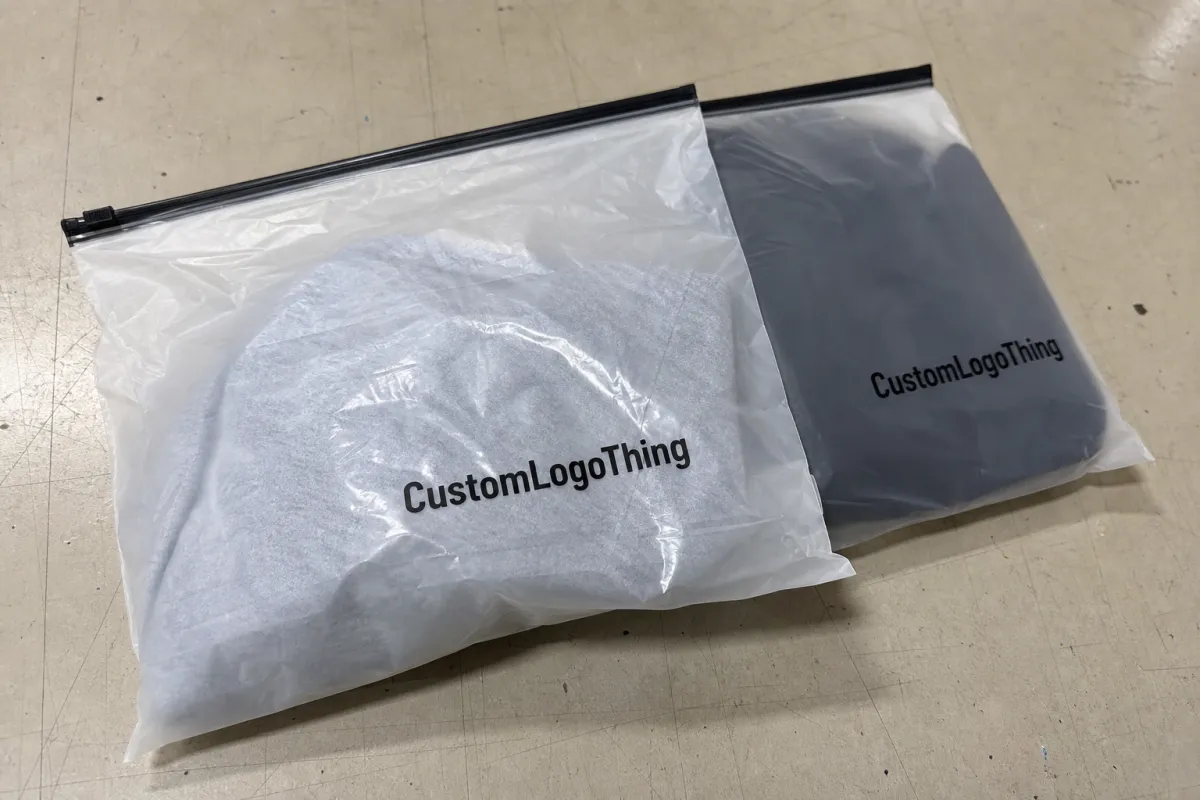
On a busy packing table, the package can be the bottleneck. If workers have to pry open a zipper by feel, chase a collapsing film edge, or stop to check whether the slider is fully seated, the line loses time on every unit. Multiply that by a production day and the cost becomes visible. A bag that behaves consistently is not a luxury; it is a way to preserve throughput.
Slider Lock Bags solve a specific problem better than many basic reclosable options. The slider gives the operator a clear, tactile path to open and close the bag, which is useful when gloves are involved or when the contents are soft, flexible, or oddly shaped. The user experience matters too. After purchase, the end customer usually wants to keep the contents organized, not transfer them into another container. A bag that reopens cleanly and closes without guessing feels more credible and less disposable.
There is a hidden variable in most buyer programs: consistency across cartons. One shipment that packs smoothly does not prove the spec is right. A supplier has to hold closure feel, seal strength, and film behavior across the whole run. If the opening force changes too much, the packing team notices first. If the closure track is inconsistent, the customer notices later.
The cheapest bag is not the cheapest order if it jams the line, forces rework, or arrives with inconsistent closure behavior.
For that reason, the best procurement conversations start with process behavior. Ask how the bag opens, how it closes, how it stacks in the carton, and how it behaves when product is inserted at speed. Those details matter more than a polished sample photo. A supplier who can explain process limits in plain language is usually more useful than one who only talks about appearance.
Closure Feel, Load, and Product Fit Details
The slider itself deserves scrutiny. A good closure feels even from one end to the other, with enough resistance to confirm engagement and enough smoothness that it does not fight the operator. Too loose, and the bag feels flimsy. Too tight, and workers begin compensating with extra force, which can damage the film or slow the rhythm of packing.
Product fit is where many programs go sideways. A bag sized on paper can still be awkward in practice if the item has seams, corners, tags, or rolled edges. Folded apparel needs more room than flat measurements suggest. Resistance bands and straps can spring back and steal space inside the bag. Recovery tools may be compact but dense, which changes the way the top section closes. If the fill line is too high, the slider has to fight the product instead of gliding over it.
It helps to think in terms of usable interior space, not just outer dimensions. The bag should accept the item cleanly, leave enough clearance for the slider path, and close without trapping product at the seal line. One of the more common failure modes is a bag that technically fits but forces the contents to bulge near the closure. That creates wrinkles, weak seals, and a presentation that looks rushed even when the product itself is good.
Some features are only useful if they match the channel. Euro slot hang holes help if the bag will hang on peg display. Reinforced seams are useful for denser kits that would otherwise distort in transit. Barcode panels matter for teams running internal scan or inventory systems. A retail kit with a cluttered top edge looks improvised; a layout with clear zones for product, branding, and machine-readable information looks planned.
A buyer should also test the bag with a realistic packing sequence, not just a single hand-loaded sample. Fill the bag the way the line will fill it. If the operator has to angle the product, flatten it too much, or stop halfway to reposition it, the spec needs adjustment. That one practical test often reveals more than a drawing or a size chart ever will.
Film Gauge, Finish, and Print Specs to Lock In
Most fitness slider lock bags use low-density polyethylene or linear low-density polyethylene because both materials offer clarity, flexibility, and enough forgiveness to handle normal packing pressure. Gauge is where the real tradeoff sits. For lighter accessory packs and sample kits, 2.5 to 3 mil can be enough. For heavier or more frequently handled contents, 4 to 6 mil is often a safer choice. Very thin film can puncture or distort; very thick film can feel stiff and add unnecessary cost.
The right gauge should follow the product's actual use, not a generic rule of thumb. If the bag will be shipped in a dense carton or handled several times before reaching the buyer, a stronger structure may be justified. If the bag is mostly visual packaging with limited stress, over-specifying the film can make the package feel heavy without adding much value. Buyers sometimes focus on product weight and ignore carton compression, stacking, and shipping distance. Those forces matter just as much.
Finish changes the perception of the package before anyone reads the label. Clear film gives maximum product visibility and works well for visual merchandising. Frosted film softens the look and can hide minor inconsistencies in contents. Printed panels add room for logo placement, care instructions, usage notes, or sizing details. The visual choice should match the product story. A clean accessory line often benefits from a restrained print area; a premium kit may need more branding space to avoid looking underdescribed.
Print specs should be settled early. Artwork placement, barcode location, registration tolerance, copy length, and any reserved zones for hang holes or sealing area need to be clear before the proof stage. Late artwork changes are one of the most common reasons bulk orders stall. If a bag is carrying multiple SKUs, leave room for label application or variable data so internal operations do not have to improvise after production starts.
Packaging trade groups and test organizations often evaluate clarity, processability, and end-use handling together for a reason: the package only works if those pieces stay in balance. That is also where sustainability claims need discipline. Recycled content, recyclable structure, or paper-based components should be documented carefully and stated precisely. Vague green language is easy to print and hard to defend. Better to keep the claim narrow and accurate than to overstate what the package can prove.
| Spec choice | Best for | Typical unit impact | Buyer note |
|---|---|---|---|
| Clear unprinted LDPE | Simple accessory packs, fast turns | Lowest | Works best when visibility matters more than branding |
| 3-4 mil printed bag | Retail fitness items and branded kits | Moderate | Good balance of cost, hand feel, and shelf presentation |
| 4-6 mil heavy-duty bag | Dense kits, frequent handling, heavier contents | Higher | Useful when puncture resistance and structure matter |
| Frosted or specialty finish | Premium positioning, softer visual look | Moderate to higher | Check barcode readability and ink contrast before approval |
Pricing, MOQ, and Quote Drivers for Bulk Runs
Price is shaped by a handful of concrete inputs: bag size, film gauge, print coverage, closure style, carton count, and any special handling. Larger bags use more material. Heavier gauge uses more resin. More print coverage increases setup complexity and press attention. None of that is mysterious, but buyers often compare quotes without aligning those variables first.
MOQ usually follows setup economics and run efficiency. Once film, printing, and finishing are staged, larger orders usually spread the setup burden across more pieces. That can lower unit cost, but only if the buyer can actually consume or store the inventory. Chasing the biggest order to win the lowest price often creates a different problem later: cash tied up in stock that sits too long or gets revised before it is used.
For rough planning, a basic unprinted bag generally sits below a custom printed version of the same size, and a small order of 5,000 pieces will price differently than a 20,000-piece run. In many buyer scenarios, a printed fitness slider lock bag may fall around $0.18 to $0.40 per unit depending on size, gauge, and artwork coverage. Heavier builds, specialty finishes, and more complex print layouts can push above that. Those numbers are directional, not a promise, but they are useful for early budgeting.
Quote comparisons only make sense on the same baseline. Check size, gauge, closure style, print method, carton pack count, shipping terms, and lead time assumptions before judging one offer against another. A lower quote can simply mean thinner film, less print coverage, fewer quality checks, or a slower schedule. If the terms are not aligned, the prices are not comparable.
Hidden costs deserve attention because they often show up late:
- art changes after approval
- rush production charges
- split shipments to multiple locations
- revisions after material has been staged
- late requests for inserts, labels, or additional packaging
Those costs are not always avoidable, but they can usually be predicted. A clean brief, approved artwork, and a realistic delivery window reduce surprise fees more effectively than negotiating a few cents off the unit price.
Process, Timeline, and Lead Time Expectations
The process should be straightforward: request specs, confirm dimensions, review artwork, approve sample or proof, then release production after final sign-off. The order of those steps matters. Problems often start when a team asks for pricing before size is settled or sends artwork as a screenshot instead of a usable print file.
Quote turnaround can be fast. Production timing is usually slower because it depends on artwork revisions, sample approval, and material availability. A small change in copy or a shifted barcode can delay a run more than buyers expect. It is better to separate lead time into two parts: the factory production window and the transit window. The first can be fairly predictable; the second depends on freight mode, destination, and how much buffer the buyer built in.
In many bulk orders, production lands around 12 to 18 business days after proof approval, though the actual timeline will move with quantity, print complexity, and current workload. Shipping adds its own clock. If bags support a launch, subscription shipment, or store reset, the date that matters is the dock date, not the day the run leaves the floor. Working backward from the real need date gives a more honest plan.
One of the easiest ways to protect the schedule is to send a complete request in one pass: target quantity, product dimensions, print files, required features, and delivery window. Piecemeal communication creates avoidable back-and-forth because someone has to stop and confirm missing details. Buyers often think they are moving quickly by sending partial information early. In practice, a complete brief moves faster.
Testing standards from groups such as ISTA can be useful if the order is expected to survive rough distribution. That does not mean every bag needs formal transport testing, but the carton and package should be considered as one system. The bag may be a small part of the chain. It is still part of the chain.
How to Judge a Supplier for Repeat Orders
Repeat orders tell the real story. The first run may look fine, but a dependable supplier should be able to hold the same closure feel, print quality, and carton count on the second and third cycle without forcing the buyer to start over. If one shipment feels noticeably different from the last, that is not a minor variation. It is a sign the process controls are loose.
Communication is a quality-control tool, not an afterthought. A good supplier will flag artwork problems, tolerance conflicts, or schedule risk before production begins. That kind of warning saves money because it prevents the worst kind of surprise: a completed run that technically meets the order but does not work the way the packing team expected.
Documentation keeps repeat business from drifting. Approved dimensions, gauge, print layout, closure details, and carton count should live in one clean record so future reorders do not depend on memory. This matters more when several people touch the program or when the SKUs change by season. A good spec sheet protects consistency even when staff changes.
Watch for concrete answers. A supplier who can explain how they check closure consistency, how they handle print registration, or how they confirm bag count is giving you useful information. Broad promises are cheap. Specific process detail is a stronger sign of control. That is the kind of support that makes fitness slider lock bags Bulk Order Planning easier to repeat.
Sustainability claims need the same level of discipline. FSC applies only where paper components are genuinely in scope, and recycled-content language should reflect the actual material structure rather than a marketing wish. Buyers do not need glossy environmental language; they need claims that can survive review. Clear labeling is harder to write and easier to trust.
Next Steps to Build a Clean Reorder Plan
Start with three inputs: the finished product dimensions, the target monthly quantity, and the branding assets that will appear on the bag. Those details anchor the quote and keep the conversation focused. Without them, the buyer and supplier are both guessing, and guesswork is expensive once tooling and print are involved.
Then confirm the closure preference, film thickness range, and any retail-ready features such as hang holes, reinforced seams, or barcode space. If the bag will be handled often, choose a gauge that supports real use instead of the thinnest option that barely clears the spec sheet. If the bag is mostly visual display, a lighter structure may be enough as long as the product stays protected and the closure still feels deliberate.
It helps to request two or three quote paths. A standard printed version, a heavier-gauge version, and a plain unprinted version will show how MOQ, price, and lead time shift when the spec changes. That comparison usually reveals the best value faster than a single quote ever can. It also exposes which features are essential and which are just habit.
Once the team agrees on the direction, send the dimension sheet, artwork, and delivery window together so the next step can move from estimate to approved plan. A tight brief reduces revision risk, shortens the approval cycle, and gives production enough detail to quote accurately the first time. That is the practical core of fitness slider lock bags Bulk Order Planning: enough structure to keep the order stable, enough flexibility to match the product, and enough documentation to make the next run easier than the last.
How do I size fitness slider lock bags for apparel or accessories?
Start with the folded product dimensions, then add enough clearance for easy loading and slider movement without leaving excessive empty space. If the item is bulky or irregular, check usable interior width and height rather than relying only on the outer bag size.
What affects the MOQ for printed slider lock bags in bulk?
MOQ usually follows setup costs for film, printing, and finishing. Standard sizes and simple print layouts generally support lower MOQ pressure than highly customized artwork, specialty finishes, or unusual closure requirements.
Can I get samples before placing a large order?
Yes. Sampling is the best way to confirm closure feel, clarity, size, and the way the product loads into the bag. Use the sample to check artwork placement and make sure the final run matches the packing workflow.
What files should I send for artwork approval on fitness slider lock bags?
Send editable vector artwork when possible, along with logo placement notes, size callouts, and any barcode or copy requirements. Include a clear proof contact so revisions can be approved quickly and production does not stall.
How long does a bulk order usually take from quote to delivery?
Timing depends on how quickly specs and artwork are approved, then on production lead time and shipping distance. A complete request with dimensions, quantity, print details, and a needed delivery window is the fastest path to a usable schedule.

