A Five Panel Caps wholesale supplier for bakery buyers should make one thing easy: give you a cleaner logo field, a sensible fit for long shifts, and a repeatable spec that can be reordered without drama. In bakeries, caps move between prep tables, packing stations, and counter service, so that smooth front panel matters more than many buyers expect, especially when the team needs to look consistent without adding heat or bulk. That is why so many bakery groups order in batches for new locations, seasonal promotions, or phased uniform rollouts through our Wholesale Programs.
The right supplier does more than quote a cap price. It should help you compare fabric, decoration, closure style, packing, and lead time before the order is placed, because the cap that looks fine in a mockup can still feel wrong after eight hours on the line. A good buying process removes guesswork early, which is exactly what busy bakery managers need.
Five panel caps wholesale supplier for bakery buyers and bakery team programs
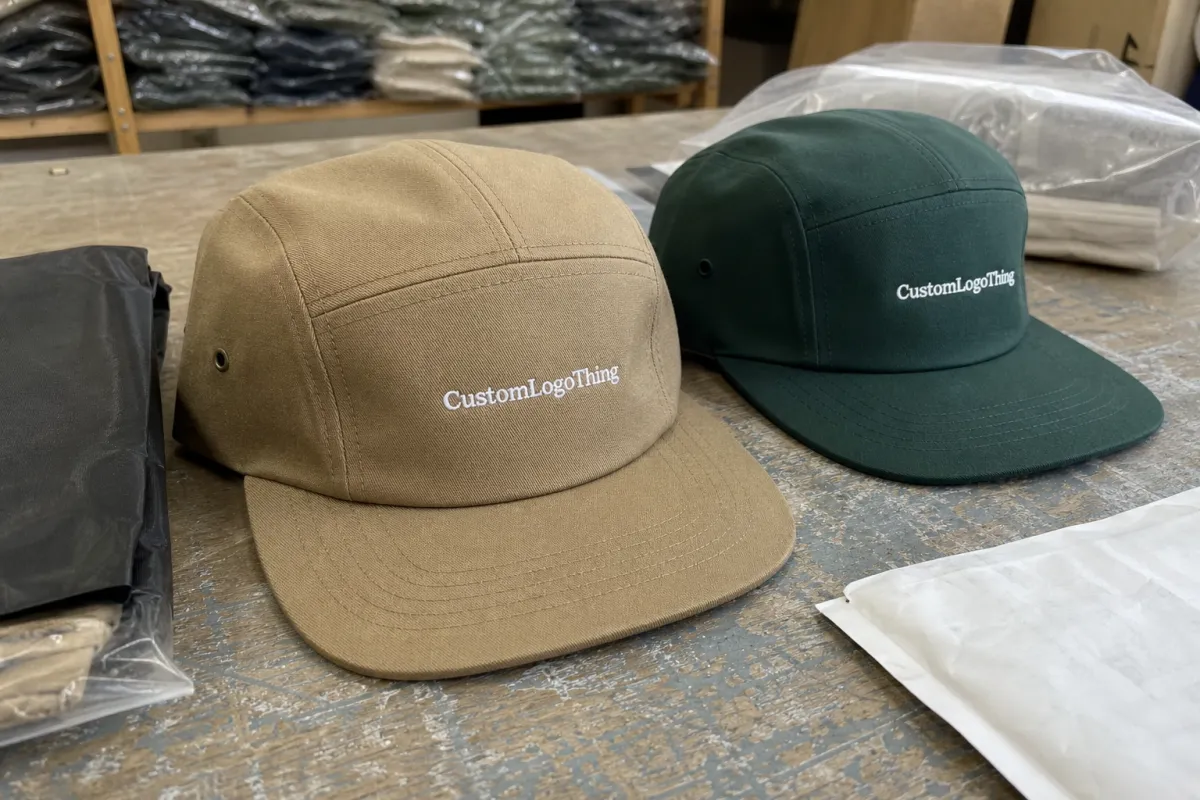
Five-panel caps work well for bakery uniforms because the front panel is smooth, broad, and free of a center seam. That gives the logo more room to read clearly from across a sales counter or an open production area, and it usually looks cleaner than a six-panel cap when the art includes a wordmark, icon, or a short line of text. From a packaging buyer's point of view, the appeal is simple: one cap style can carry a consistent brand image across prep staff, decorators, delivery teams, and front-of-house employees without making the uniform feel heavy or overly sporty.
Bakery environments are unforgiving in small ways. Production rooms can run warm, staff move fast, and people often wear the same cap through mixing, finishing, packing, and customer service. A five-panel cap sits a little flatter and usually feels less bulky around the crown, which helps when a team needs a practical uniform piece rather than a fashion accessory. Honestly, that is what most buyers want: a cap that behaves like part of the workwear, not a separate item that needs constant adjustment.
Most bakery programs are not buying a single run for a single store. They are ordering in batches for multiple locations, a holiday window, a grand opening, or a rebrand that rolls out in stages. In that kind of program, consistency matters as much as price. One batch should match the next in color, panel shape, stitch density, and logo size, otherwise receiving gets messy and store managers spend time sorting small differences that should never have existed in the first place. A supplier that understands those realities will ask better questions before quoting and will document the cap spec in a way purchasing teams can use later.
That buying frame keeps the order grounded. The best wholesale supplier makes it easy to compare the fabric, decoration method, and unit cost side by side, then decide whether the cap is being used for daily uniforms, a retail-facing team, or a promotional giveaway tied to bakery branding. The cap itself is small, but the decision behind it affects how the team presents the business every day.
Materials and fit details that matter on the line
Material choice changes how a cap feels after the first hour and how it looks after fifty wears. Cotton twill is a common starting point because it has enough body to hold shape, it breathes better than many heavier synthetics, and it gives embroidery a firm surface. A typical cotton twill cap in the 240-300 gsm range feels familiar and dependable, though it may need a little more care if the team works near heat, steam, or frequent flour dust. Poly-cotton blends, often in 65/35 or 80/20 ratios, dry a little faster and can be easier for shared staff use because they resist shrink better and tolerate repeated laundering with less drama. Brushed canvas gives a more structured, premium look, but it can feel stiffer at first and usually suits front-of-house programs more than long shifts in hot prep areas.
Fit is not just about size. The crown height changes how the cap sits on different heads, while the panel shape affects how sharply the front panel stands up for branding. A lower-profile five-panel cap tends to feel more relaxed and less boxy, while a mid-profile version gives the logo a more upright face. The brim matters too: a slightly pre-curved visor looks informal and familiar, while a flatter brim reads a bit more contemporary and can show off a centered mark more cleanly. For bakery buyers, the practical question is simple: does the cap stay comfortable during a full shift, or does it end up in a locker by midweek?
Closures are worth comparing carefully because shared uniforms need fast adjustment. Self-fabric straps feel clean and understated, but they take a few extra seconds to set. Hook-and-loop closures are easy for quick fitting, though they can snag lint over time if they are not made well. Snapback closures are familiar and durable, while buckle adjusters often look a little more polished for retail-facing teams. Ventilation eyelets, a soft sweatband, and tight stitching around the panel seams make a real difference on long bakery shifts, especially when people work near ovens or proofing areas and need a cap that stays comfortable without getting sloppy.
A cap that feels good for eight hours is usually the one people keep wearing. A cap that only looks good on day one tends to disappear into a locker drawer.
If you are comparing options through our bulk headwear ordering page, ask for the fabric weight, closure type, and crown profile in writing. Those three details often explain why two caps that look similar on a quote sheet feel very different in the hand.
Logo decoration and bakery-ready branding options
Decoration method should match the artwork, the budget, and how hard the cap will be used. Embroidery is the most common choice because it has depth, wears well, and stands up to daily use on the production floor. It also gives a bakery uniform a neat, finished appearance without looking overly flashy. For logos with simple lettering and a clear shape, embroidery is usually the safest first option. If the logo has thin lines, tiny text, or detailed gradients, a stitched version may simplify the art more than the buyer would like, so it helps to check the artwork early.
Woven patches are useful when the logo needs finer detail than thread can carry cleanly. They preserve small shapes and sharp edges better than direct embroidery, and they can give the cap a tidy, premium feel without making the front panel too stiff. PVC patches are stronger visually and can work well for bold brand marks, though they are not the right answer for every bakery. They read more modern and are easy to clean, but they may look too glossy for a brand that wants a softer, more traditional look. Print methods are better for simple artwork or short-run promotional caps, especially when the logo is flat, minimal, and does not need raised texture.
Front-panel space matters more than many buyers realize. A five-panel cap usually gives you a cleaner field for a centered logo, but there is still a practical limit to how large the mark should be before it starts crowding the seams or the curve of the visor. As a rule, clean vector art works best, with Pantone or comparable color references called out in the file. If the logo includes very small text, ask for a proof that shows the minimum legible size before production starts. A bakery logo that reads clearly from ten feet away is more valuable than one that looks busy up close and disappears in a real work environment.
Good artwork files save time and money. For quoting, a supplier usually wants vector formats such as AI, EPS, or PDF with outlined fonts and no unnecessary effects. If the brand uses a specific red, black, or cream, confirm that shade before the sample stage so the first proof is not already off-target. A digital mockup is enough for many straightforward runs, but a stitched sample or color swatch is worth requesting if the order is large, the logo is new, or the team is trying to match existing bakery uniforms.
Pricing, MOQ, and quote factors for wholesale orders
Cap pricing depends on more than the decoration line. Fabric choice, closure type, logo size, stitch count, number of thread colors, and whether the supplier is using stock materials or custom-built components all affect the final unit cost. A simple embroidered cap on stock fabric may price very differently from a brushed canvas cap with a stitched patch, even if the two samples look similar from a distance. That is why buyers should compare quotations on the same spec, not just the same photograph.
| Build | Typical MOQ | Indicative Unit Cost | Best Fit |
|---|---|---|---|
| Stock cotton twill, 1-color embroidery | 50-100 pcs | $2.80-$4.50 | Pilot runs, staff trials, simple bakery logos |
| Poly-cotton blend, woven patch | 100-200 pcs | $3.20-$5.80 | Shared uniforms, easier care, sharper artwork detail |
| Brushed canvas, 2-3 color embroidery | 100-300 pcs | $4.00-$6.50 | Retail-facing teams, premium brand look |
| Fully custom colorway with PVC patch | 300+ pcs | $5.50-$8.00+ | Large rollouts, strong brand presence, custom programs |
MOQ often changes with decoration complexity and color matching. A basic stock cap with one-color embroidery can support a lower minimum, while a custom-dyed body or a patch with several colors usually pushes the order higher. Smaller test runs also cost more per piece because setup is spread across fewer units. That is normal, and it is one reason bakery teams should weigh reorder flexibility against the first-run price. A lower MOQ can be worth paying for if the program is still being tested across stores.
Ask every supplier whether sampling, artwork setup, freight, and packaging are included or billed separately. A quote that looks attractive on unit price can become less attractive once proofing, shipping, and carton prep are added. If your bakery is rolling out in phases, ask whether the supplier can lock the same cap spec for future reorders so the next batch matches the first in color, panel line, and logo placement. That kind of consistency often saves more than a small discount on the initial order.
For broader packaging context and handling language, the reference material at Packaging Professionals resources can be useful, especially if the uniform program includes carton labeling or distribution notes. On transit and distribution testing, ISTA is a practical benchmark for shipping expectations.
Process and lead time from sample approval to shipment
The cleanest buying process starts with a clear request. First, send the quantity, cap color, fabric preference, logo file, and any packaging requirements. Then the supplier should confirm the spec, provide a mockup, and flag anything that could affect the run, such as thin text, tight registration, or a color that is hard to match in thread or patch material. After that comes the sample or proof step, which is where most buyers should slow down a little and inspect the details carefully. A few extra minutes here often saves several days later.
Lead time depends on order size, decoration method, and how quickly approvals come back. A simple stock cap with direct embroidery may move faster than a patch program or a custom colorway, while an order with multiple locations or split delivery points may need additional coordination. In practice, many bakery buyers should plan for roughly 12-15 business days after artwork approval for straightforward production, then add freight time on top of that. More complex runs can take longer, especially if a physical sample is required or if the logo needs one more revision before release.
Most delays are avoidable. Unclear artwork is one of the biggest problems, followed by late color changes after the proof has already been approved. Sample revisions can also slow a project if too many people are weighing in without a single decision-maker. If the cap is tied to a store opening or a seasonal launch, build buffer into the schedule and do not treat production time as the only timeline that matters. Transit, receiving, and store distribution all take time, and each step needs room.
For a launch with a hard date, the safest plan is not the fastest possible quote. It is the quote that leaves enough time for proofing, shipping, and one clean correction if the artwork needs it.
Buyers who use our custom logo wholesale program usually get better results when they approve one spec sheet and keep it as the reference for every reorder. That reduces confusion later and gives purchasing a paper trail that is easy to use.
Quality checks, compliance, and packing for distribution
Bulk headwear should be checked like any other uniform program, not treated as a throwaway item. The key inspection points are straightforward: seam strength, logo placement, crown symmetry, color consistency, sweatband finish, and closure function. On a bakery floor, a crooked panel or a loose stitch shows up quickly. So does a sweatband that twists after the first wash. If the supplier has a real quality process, they should be able to explain how they check the first pieces off the line and what they do if a logo lands slightly off-center or a cap color shifts between batches.
Packing matters because bakery operations usually move fast once cartons arrive. Ask whether the caps will come individually poly bagged, bundled by dozen, or sorted by size, store, or department. If each location needs a different split, the packing plan should be confirmed before production starts, not after the cartons are on a truck. Carton counts, size labels, and outer marks should be clear enough for receiving teams to distribute product without reopening every box. That simple detail saves a lot of time in a multi-store rollout.
Compliance depends on the destination and the program structure. If the order crosses borders, the label information, carton documentation, and origin details should be checked carefully. Some corporate uniform programs also require vendor paperwork, country-of-origin marking, or carton specifications that must be matched exactly. If the program has sustainability goals, ask whether the packing materials can be sourced from FSC-certified paperboard or documented in a way the buyer can track later. For shipping and distribution expectations, the handling guidance from the ISTA standards library is a sensible place to compare requirements.
One more practical point: consistent packing makes the receiving side look organized. When every carton is marked the same way and the units are packed the same way, store managers can get the right caps to the right people without sorting through mixed bags and loose inventory. That is a small detail until you are the person trying to launch a uniform change on a busy morning.
What bakery buyers should ask before placing volume orders
Before you place a volume order, ask the supplier a few direct questions and listen for specific answers. Vague replies usually mean the order will need extra work later. A supplier that understands bakery uniforms should be comfortable talking through fabric weight, decoration options, lead time, and reorder consistency without hiding behind generic sales language.
- What fabrics are available? Ask for the exact blend, weave, and approximate weight so you know how the cap will feel and wear.
- Which decoration method fits this logo best? A good supplier should explain embroidery, patch, and print options in plain terms.
- What is the sample-to-shipment flow? Confirm whether you are approving a digital proof, a stitched sample, or both.
- Can future orders match the first run? Reorder consistency matters if the bakery is adding locations over time.
- Can you support mixed colors or phased delivery? That is useful if uniforms need to roll out by department or store group.
Also ask what is included in the quote. If the supplier does not specify material weight, closure type, logo size, setup cost, and packing method, the quote is not really complete. A low unit price can hide extra charges in sampling, freight, or artwork changes, and those surprises usually show up after approval, not before. That is why the better buying habit is to compare like with like and insist that every quotation be based on the same cap spec.
If the bakery is growing, ask about the path from first order to reorder. Can the same stitching template be reused? Will the patch be archived? Is the cap color a stock match or a one-off lot? Those questions are not paperwork for the sake of paperwork. They are how a team protects brand consistency across several stores and several buying cycles.
Next steps to order five-panel caps for your team
Start with the basics: quantity, preferred fabric, logo file, target cap color, delivery deadline, and any packaging or labeling needs. If you already know whether the caps are for prep staff, front-of-house, or a mixed team, say so early. That context helps the supplier recommend a build that fits the work rather than just the mockup. The cleaner the brief, the easier it is to control cost and timing.
A simple buying sequence works well: request a spec sheet, review the mockup, compare the sample, confirm pricing by quantity, and approve the production proof before the order is released. If you have several internal stakeholders, assign one person to artwork, one to budget, and one to final receiving checks. That prevents the common problem where three people approve different parts of the same order without a single point of control.
For bakery buyers, a cap program succeeds when comfort, consistency, and brand clarity all line up. The cap should feel light enough for long shifts, look clean enough for customer-facing work, and reorder predictably when the next location opens or the next seasonal run starts. If you want that balance handled with fewer surprises, begin with our Wholesale Programs page and compare suppliers on documented specs, not just a thumbnail image. That is the difference between a one-off purchase and a repeatable uniform program. A dependable Five Panel Caps wholesale supplier for bakery buyers will give you the details in writing, keep the production path clear, and ship on the schedule your team needs.
What MOQ should a bakery expect from a five-panel caps wholesale supplier?
MOQ depends on the decoration method, fabric choice, and whether the cap is stock or fully custom. Embroidery and patch work often support lower minimums than fully custom construction, and some suppliers can combine colors or locations into one production run if the spec stays the same.
Which material works best for five-panel caps in warm bakery kitchens?
Cotton twill and poly-cotton are common choices because they balance comfort, structure, and day-to-day durability. A soft sweatband and ventilation eyelets help a lot during long shifts near ovens, proofing cabinets, or busy packing lines. If faster drying matters, a blended fabric is often the practical choice.
Can bakery logos be embroidered on wholesale five-panel caps?
Yes, embroidery is one of the most common decoration methods for five-panel caps. A clean vector logo with limited small text usually gives the best stitched result. If the design is detailed or has very fine lines, a woven or PVC patch may preserve the artwork more clearly.
How long does production usually take after artwork approval?
Lead time depends on order size, decoration method, and whether a physical sample is needed. A clear proof, fast approval, and a stock fabric choice usually move the job faster. Shipping time should be added separately, especially for multi-location bakery rollouts.
What should I compare when reviewing quotes from bakery cap suppliers?
Compare unit price, MOQ, sample cost, decoration setup, freight, and packing method. Check whether the quote includes artwork revisions and whether the supplier has confirmed fabric weight and closure type. Make sure every quote is based on the same logo size and the same order specs before you decide.