Buy Custom Five Panel Caps for Trade Show Giveaways
A cap keeps working after the handshake ends, and Custom Five Panel Caps for Trade Show Giveaways do that better than most short-lived handouts. One well-timed giveaway can turn into hours of walking billboard exposure across the show floor, in the hotel lobby, on the ride to the airport, and sometimes in office photos long after the event is over.
The appeal is practical, not decorative for its own sake. Five-panel construction gives the front a smoother, flatter shape than many casual cap styles, so logos read more clearly and sit with less interruption from seams. Trade show floors move quickly. People glance, decide, and keep walking. A cap front has to work like a small sign: one main message, fast to read, easy to remember.
Why Five-Panel Caps Work On The Show Floor
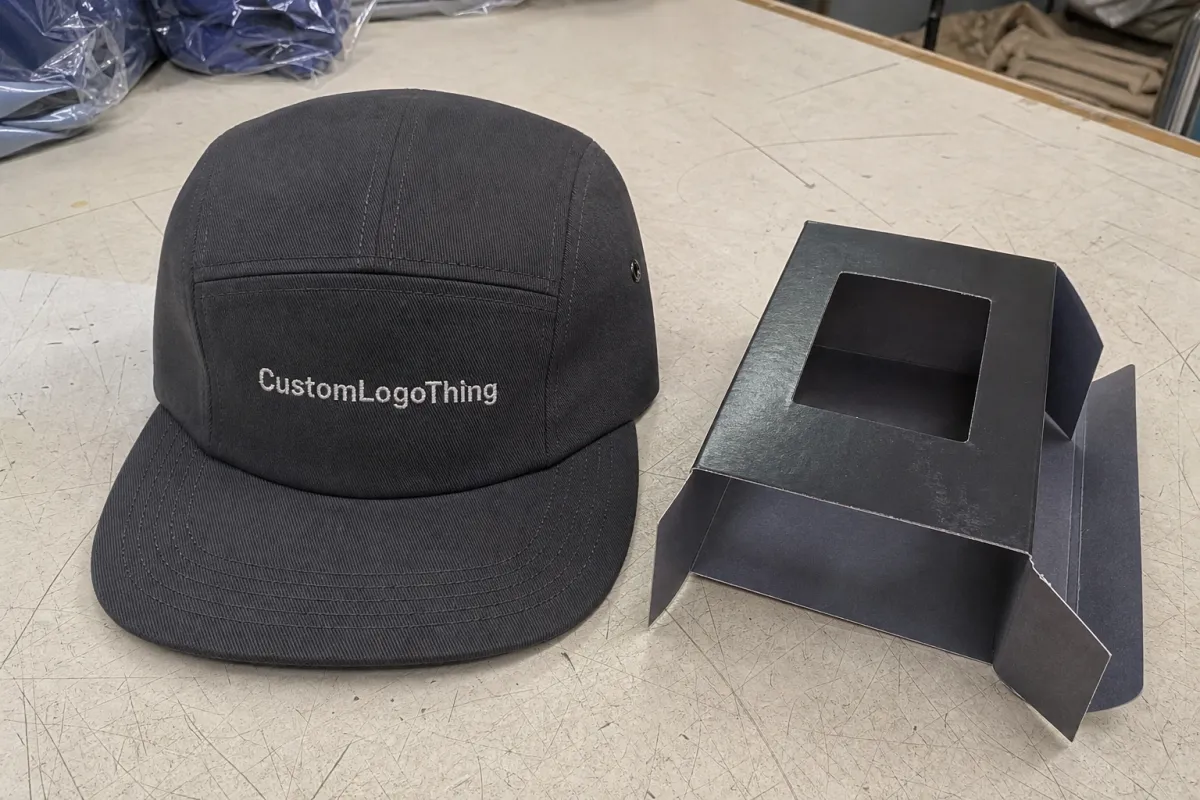
Trade show attendees are already carrying badges, sample bags, notebooks, catalogs, and a lukewarm coffee. That is why wearable giveaways tend to outlast most tabletop items. People can put a cap on immediately, keep it through the day, and still use it after the event. A flyer rarely gets that kind of second life.
The strongest argument for Custom Five Panel Caps for trade show giveaways is repeated exposure. A cap can leave the booth, reappear in a hallway photo, show up in a taxi line, and get worn on the way home. That is visible media without paying for ad space by the hour. The cost only makes sense if the item stays in circulation, and caps are one of the few giveaway formats that can do that naturally.
The front panel matters just as much as the wearability. Five-panel caps usually have a cleaner decorating zone because the center seam is moved out of the main logo area. That gives embroidered marks, woven patches, and printed patches a more open field. On a six-panel cap, a front seam can interrupt a logo or make centered artwork feel cramped. On a five-panel, the same artwork often looks more deliberate.
For buyers, that translates into three real advantages: easier logo placement, better long-term visibility, and a giveaway that feels useful rather than disposable. If the cap is comfortable enough to wear beyond the show floor, the brand keeps traveling. That matters more than a flashy concept that gets left in the swag bag.
The giveaway that keeps moving on day three usually earns more value than the one that looks busy for ten seconds at the booth.
The same thinking applies to package branding and product packaging. Keep the message short, keep the hierarchy obvious, and do not ask the decoration to carry too much information. A cap should not try to tell the entire brand story. It should carry one clear mark well.
How Build Affects Fit, Comfort, and Decoration
Five-panel caps are not only about appearance. The build affects whether people actually wear them. A smoother front gives the decoration more room, but it also changes the feel of the crown and the profile on the head. For trade show use, that matters because comfort usually decides whether the item gets used or packed away.
Closure style changes the audience fit. Strapbacks tend to feel relaxed and adjustable. Snapbacks are easy to size across a mixed crowd and are familiar to most attendees. Buckle closures can feel a little more polished and are often chosen when the brand wants a cleaner finish. None of these is best in every case. The right choice depends on the event, the expected crowd, and whether the cap is going to staff, VIPs, or walk-up visitors.
Fabric has a real impact on both comfort and brand perception. Cotton twill is a dependable choice because it holds shape, takes decoration well, and feels familiar. Washed cotton softens the look and can make the cap feel more casual and approachable. Polyester blends usually hold structure better in warm rooms and can dry faster if the cap is worn outside, though they may feel less natural for all-day wear. That tradeoff is worth thinking through before ordering in volume.
Decoration should match the cap style instead of fighting it. Embroidery remains the most durable and recognizable option for a bold logo. Woven patches are useful when the mark has fine detail that would lose clarity in stitches. Printed patches or direct print work for flatter artwork, but they need a careful size check. Tiny type, fine rules, and soft gradients are the first things to simplify, not the last.
A flatter front panel creates more options, but it also makes weak artwork easier to spot. Crowded logos look crowded faster. Good cap art usually starts with restraint: one focal point, one readable mark, and enough breathing room to make the cap feel intentional rather than forced.
Cost, MOQ, and Quote Drivers
If you are pricing custom Five Panel Caps for trade show giveaways, the unit cost usually comes down to quantity, blank cap quality, decoration method, stitch or print complexity, proofing, and freight. Rush schedules and split shipping can change the number faster than people expect. For a straightforward run of 250 to 500 units, a common working range is roughly $4.25 to $9.00 per cap, with premium blanks and heavier decoration pushing higher.
Minimum order quantity changes the economics. Small runs are useful when the show is highly targeted, the audience is narrow, or the caps are reserved for VIP meetings and staff. The tradeoff is a higher unit cost. Larger runs usually lower the price and make reorders easier, which matters if the same cap will be used across multiple events or by several teams. If the item has reuse potential, that future value should be part of the budget conversation.
A clean quote should break out the blank cap, setup or digitizing, decoration, packaging, proofing, freight, and any sample charges. Without that split, comparing vendors gets messy fast. A low base price can hide the real cost in setup and shipping. That is especially true if the caps are being ordered alongside Custom Packaging Products or other booth materials that have their own freight considerations.
Tiered pricing is worth asking for. Seeing 100, 250, and 500 units side by side makes it easier to spot where the break actually happens. Sometimes the cap itself is driving the price difference. Sometimes the setup cost is. Sometimes the decoration method is the real swing factor. A tiered quote also answers a quieter question that procurement teams often need to answer: do we need enough caps for the event, or do we need enough caps to make the budget work?
| Option | Typical Price Impact at 250-500 Units | Best For | Watchout |
|---|---|---|---|
| Embroidery | About $0.75-$2.00 added to the blank | Bold logos, durable wear, premium feel | Fine text and tiny details can close up |
| Woven Patch | About $1.25-$2.50 added | Sharper detail, texture, stronger perceived value | More setup and usually longer lead time |
| Printed Patch | About $0.90-$1.80 added | More color, simpler flat graphics | Needs careful sizing on the front panel |
| Direct Print | About $0.60-$1.50 added | Simple logos, tighter budgets | Less texture and sometimes lower perceived value |
If the order includes carton labels, kitting, or distribution to more than one location, ask how the caps will be packed. Trade show logistics are rarely just about production. They are about receiving, labeling, stacking, and getting the product to the right place in one piece. That is where packaging discipline pays off.
Production Steps and Turnaround
The production clock starts long before the factory begins sewing or printing. A typical order for custom five panel caps for trade show giveaways moves through brief, artwork cleanup, digital mockup, approval, production, quality check, packing, and transit. Miss one approval step and the timeline slips before production really begins.
Lead time should be planned backward from booth install, not from opening day. If the caps arrive on the same day the team is building the booth, there is no margin for a freight delay, a carton mismatch, or a receiving problem. A safer plan is to have the order in hand before installation starts. For a simple embroidery run, that can mean about 10 to 15 business days after proof approval. Patch decoration, color matching, and split destinations can stretch that window.
Artwork readiness matters more than many buyers expect. Vector files in AI, EPS, or PDF format are easier to review, easier to digitize, and less likely to cause problems during proofing. If the logo only exists as a screenshot or a low-resolution PNG, someone has to rebuild it. That is not a minor office task. It can affect stitch count, edge quality, and the final price.
Quality control should not be treated as a formality. A good supplier will check placement, color consistency, closure function, stitching tension, and the shape of the front panel before packing. That is especially useful on caps where the logo sits close to the seam or where the artwork uses thin lettering. If the front panel is off-center by a little, you will notice it immediately once the caps are lined up in a booth display.
Shipping deserves the same care as decoration. If the caps are moving with event kits, ask whether cartons are packed for transit stress or for simple storage. The ISTA resources are useful if you want a reality check on carton strength, stacking pressure, and drop risk. Event freight still has to survive handling. A crushed carton of caps can do just as much damage to a launch plan as a broken sample display.
There is also a difference between a ship date and an actual usable delivery window. Freight may reach the building and still sit in receiving. Internal sign-off can add another delay. If the caps are being packed with brochures, sample cartons, or a larger branded kit, those counts and delivery instructions should be aligned early. That avoids the common problem where the product arrives, but the booth team cannot touch it yet.
Choosing Fabrics, Colors, and Decoration
Color is a strategy choice, not a finishing detail. The cap should either tie into the booth system or stand out from it in a controlled way. If your display uses navy, white, and orange, a cap that repeats those colors will feel coordinated. If the booth is bright and visually busy, a cap that borrows one accent color can bring order to the whole setup. The same principle drives package branding: the eye needs a clear path, not a pile of competing signals.
Material choice should track the event setting. Breathable cotton twill works well for long convention days because it feels familiar and holds shape. Brushed cotton gives the cap a softer, more casual tone. Polyester blends are often useful if the cap needs to keep structure in heat or during heavy use. None of those choices is automatically right. The better option depends on climate, audience, and whether the cap will be worn by staff, VIPs, or broad foot traffic.
Decoration has to suit the material. Embroidery is the most reliable choice because it wears well and reads clearly at a glance. Woven patches are useful when you want texture or sharper detail. Screen print or heat transfer can work if the artwork is simple and the front panel is large enough to hold it without distortion. For custom five panel caps for trade show giveaways, the best results usually come from simplifying the logo for the cap instead of trying to preserve every detail from the master file.
Think about how the cap will photograph. Trade show teams post recap shots, staff photos, and booth images constantly. A cap that looks good in person but goes muddy on camera is a missed opportunity. Strong contrast, readable type, and one obvious focal point matter more than clever detail. If the cap is part of a broader package branding system, keep the same spacing and color discipline used on the rest of the event materials so the presentation feels coherent.
This is also where the cap should fit into the rest of the event kit. If you already have custom printed boxes, sample cartons, or a branded handout set, the cap should feel like part of that family. A few consistent visual rules go a long way. If you need a wider supply view, our Custom Packaging Products page is a useful starting point for planning matching event materials.
The strongest cap designs are rarely the loudest. They are usually the ones that look deliberate from six feet away and still feel wearable after the event. That balance is what gives custom five panel caps for trade show giveaways real staying power.
Ordering Mistakes That Waste Budget
The biggest mistake is choosing style before audience. A premium-looking cap can be wasted if the show needs volume and fast distribution more than a high-end presentation. The reverse is true too: a stripped-down cap can feel too plain if the brand is positioned as polished and technical. Decide what the giveaway has to do before deciding how it should look.
Artwork is the next trap. Tiny text, thin linework, gradients, and crowded icon stacks do not always survive decoration well. A logo may look perfect on a monitor and still read poorly on a five-panel front. For custom five panel caps for trade show giveaways, simplification should happen early. If the mark needs a slogan, test whether that copy belongs on the cap or somewhere else in the booth system.
Fit and comfort are easy to underestimate. If the crown is too shallow, too stiff, or too warm, attendees may take the cap only because it is free. They may never wear it. A giveaway that stays in a bag does not do much work. A cap that fits well and feels easy to wear has a better chance of leaving the venue on someone’s head.
The cheapest cap is not the one with the lowest quote. It is the one people actually wear after they leave your booth.
Logistics errors can hurt just as much as artwork errors. Ordering to the exact count leaves no buffer for staff, VIPs, or replacements. Skipping carton-count planning can slow receiving. Ignoring overrun can leave you short on day two, which is often when the show still needs giveaways. A modest cushion, often 5% to 10% depending on the audience mix, is usually wiser than a bare-minimum order.
One more miss: not asking what happens if the shipment splits. If the booth has multiple destinations, or if some caps need to go to headquarters while others go to the venue, that needs to be built into the plan. Split shipping is not glamorous, but it is cheaper than solving a distribution problem on the eve of the show.
Practical Next Steps Before You Request Samples
Start with the numbers. Define the audience, estimate booth traffic, and separate caps for staff, VIP meetings, and walk-up visitors. That gives you a real quantity target instead of a guess. It also tells you whether the order should cover one event or support several shows.
Then gather the files people always scramble for too late. Have vector logo art ready, confirm brand colors, decide on placement, and write down any text that must stay on the front panel. If the cap needs to coordinate with booth signage, branded packaging, or sample kits, list those assets too. A cap order goes smoother when it is treated as part of the full event package rather than a standalone item.
Request two or three mockup directions. That comparison is more useful than approving one version in isolation because it shows how decoration method, contrast, and unit price move together. A quote that looks acceptable on paper can change once the artwork is placed on a real cap front. Mockups reveal those tradeoffs before money is committed.
- Lock the quantity based on the booth plan, not a rough guess.
- Use vector files and brand colors before asking for proofs.
- Compare embroidery, patch, and print options on the same cap style.
- Build in time for approval, freight, and receiving before the booth opens.
Set the deadline around delivery, not production alone. If the caps need to arrive before install day, say so early. If the order is part of a larger event kit, mention that too so the shipping plan can match the rest of the materials. That is the practical side of buying custom five panel caps for trade show giveaways: plan the cap, plan the freight, and plan the handoff. Done well, the item keeps working long after the booth lights go off.
Frequently Asked Questions
Are custom five panel caps for trade show giveaways better than trucker caps?
Five-panel caps are usually the better choice if you want a flatter front for logos and a cleaner, more modern profile. Trucker caps make more sense if breathability matters more than a smooth decoration area. The right answer depends on the audience, the booth image, and how long the cap is likely to be worn.
What decoration method works best for custom five panel caps for trade show giveaways?
Embroidery is the safest default because it is durable and reads as polished without much extra effort. Woven patches are useful if you want texture and finer detail, while printed options can work for simpler artwork. The logo should always be reviewed on the actual cap shape before final approval.
How many caps should I order for a trade show booth?
Base the quantity on booth traffic, scheduled meetings, and how aggressively you plan to hand them out. Most teams should keep a small buffer for late-day traffic, staff replacements, and unexpected demand. If the event spans multiple days, running out on day two usually points to planning, not production.
How far in advance should I order custom five panel caps for trade show giveaways?
Give yourself enough time for artwork cleanup, proofing, production, shipping, and receiving before booth setup begins. Simple embroidery may move faster than patch construction or special color matching, but freight and approval delays still affect the schedule. A safer plan is to have the caps in hand before installation starts.
What artwork file do I need for custom five panel caps for trade show giveaways?
Vector files such as AI, EPS, or PDF are the best starting point because they scale cleanly and are easier to mock up. Brand colors should be supplied too, especially if the cap has to match booth graphics or other event materials. Small text and fine detail should be checked carefully because cap decoration has real size limits.

