Flat Bill Snapbacks Sample Checklist for Bulk Buyers
A Flat Bill Snapbacks sample checklist saves more money by catching shape problems than by catching color problems. One cap that sits too tall, too stiff, or too curved can change the feel of the entire order. The logo may still look clean on screen. The problem shows up the moment someone puts the sample on, turns their head, and feels the crown fight back.
From a buyer’s point of view, the sample is not ceremonial. It is the one chance to verify crown stiffness, visor shape, snap placement, thread tension, and how the cap sits on different head shapes before you commit to hundreds or thousands of pieces. A polished mockup can still hide a weak production run if the sample never gets checked against the actual wear experience. That is why a Flat Bill Snapbacks sample checklist should act like a risk filter, not paperwork.
Bulk hat programs tend to fail in small, unglamorous ways. The front panel is a little too soft. The bill has memory in the wrong place. The closure lands just outside the comfortable range. None of those problems looks dramatic in a product render, but all of them become obvious in hand. The fastest way to waste money is to approve a cap because the artwork looked right and ignore the shape that will actually be worn.
What the checklist catches first
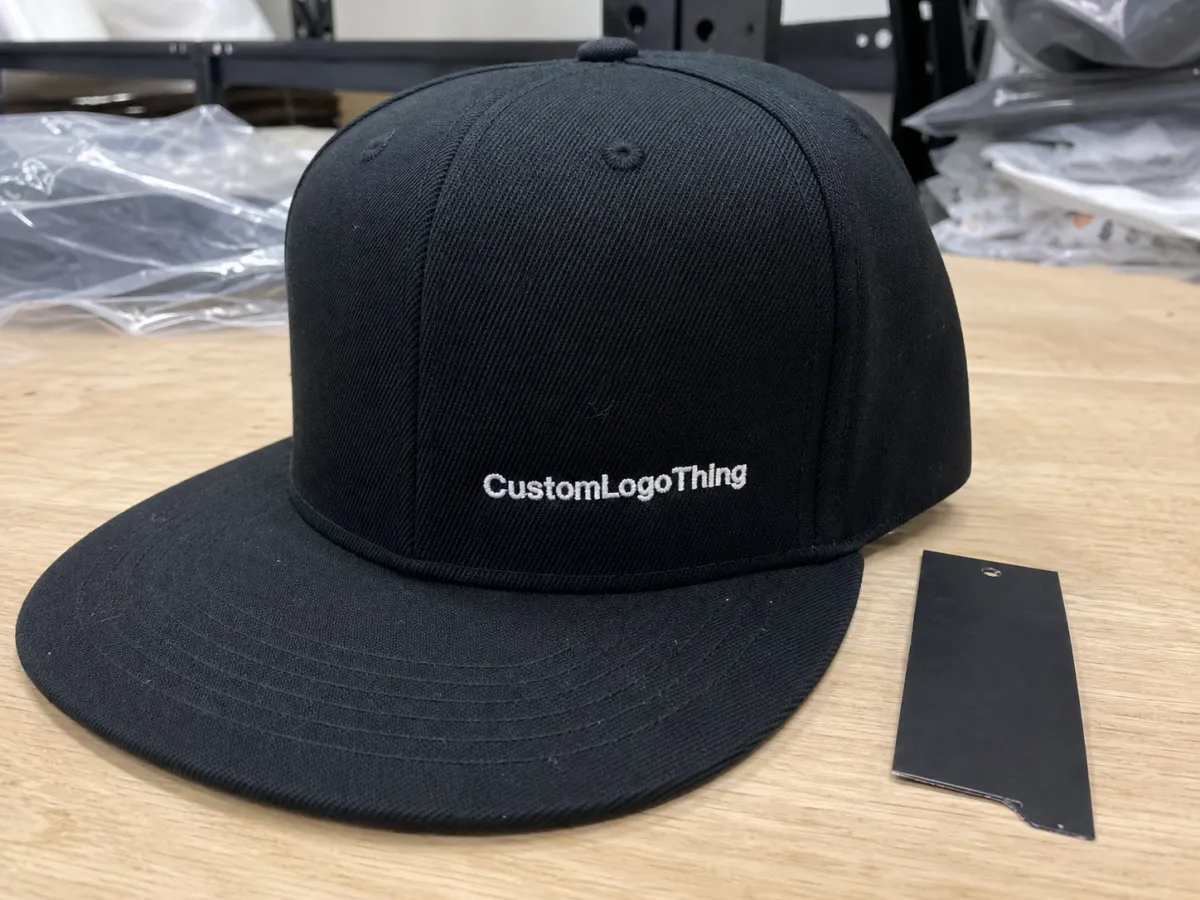
The first issues are usually structural, not cosmetic. Buyers often expect the main problem to be logo color or stitch count, but the thing that changes the feel fastest is the front panel. If the crown sits even slightly higher than planned, the cap can feel boxy. If the bill does not hold its line, it can look slack instead of crisp. Flat bills are unforgiving that way: small shape differences read loudly.
A good sample shows what a digital proof cannot. You can see whether the front panel has enough stiffness, whether the visor edge lies flat without waviness, and whether the snap closure lands in a comfortable range. You can also see how the cap behaves on a narrow head, a wider head, and someone with more hair volume. That matters more than many buyers admit during the quote stage.
The earliest review should answer a simple question: does the sample still look like the approved design once it is built as a real object? A mockup may promise a sharp streetwear profile, but the sample may land softer, shallower, or more curved than expected. If that happens, the order can still be saved, but only if the buyer notices early enough to ask for a correction instead of approving on instinct.
"A sample is where the margin lives or dies."
That is the practical value of a flat bill snapbacks sample checklist. It turns a subjective reaction into a measured review. The question is not only whether the cap looks good. It is whether it fits the brief, whether it will hold up across a run, and whether it feels premium in hand rather than merely acceptable in a photo.
From mockup to sign-off
The cleanest approval flow starts with a digital proof, but it should not end there. The proof confirms layout, logo scale, color intent, and decoration placement. The sample confirms the physical version of those decisions. If the sample differs, the revision round should isolate the exact issue instead of reopening every choice. That is how projects keep moving.
Different people should weigh in at different stages. A buyer may judge cost and timeline, while a merch team cares more about consistency and resale potential. A brand owner may be focused on visual identity, and a decorator may know the practical limits of stitch density or patch size. If all four are commenting at once, feedback gets noisy fast. One decision-maker should synthesize the notes before the supplier receives them.
A useful sign-off package usually includes four things:
- Annotated photos showing the front, side, back, and inside of the cap.
- Measurement notes for crown height, visor length, and logo placement.
- Color references tied to a Pantone callout or approved fabric swatch.
- Written exceptions if the buyer accepts a deliberate variation.
The last item matters more than people expect. If the sample is approved with one known deviation, that exception needs to be documented so the production run is not judged against an invisible standard later. A flat bill snapbacks sample checklist works best when the sign-off says exactly what is locked and what is still flexible.
For broader packaging language and supplier education, the Institute of Packaging Professionals is a useful reference point. The lesson carries over cleanly here: clear documentation reduces expensive assumptions.
Pricing, MOQ, and unit cost drivers
Bulk buyers usually ask for the unit price first, but the sample story starts earlier. There is the sample charge itself, then decoration setup, then shipping, then any revision fee if the first version needs rework. On a simple custom snapback, a sample may land around $35-$120 depending on artwork complexity, with freight separate. That range is normal. The real price pressure shows up in production.
MOQ changes the math quickly. A cap that costs more per unit at 300 pieces can drop noticeably at 1,000 or 3,000 pieces because setup is spread across a larger run. A straightforward flat bill snapback with one embroidery location might fall in the $4.20-$6.50 range per unit at higher volume, before freight. Add puff embroidery, a woven patch, or special fabric, and the range can climb to $6.50-$9.00+. Those are planning numbers, not promises, because every spec sheet pulls the price in a different direction.
Here is a simple way to compare the usual cost drivers:
| Option | Typical sample impact | Typical unit impact | Best for | Watch-out |
|---|---|---|---|---|
| Flat embroidery | Lower setup, quicker approval | Often the lowest decoration cost | Clean logos and simple branding | Fine detail can fill in at small sizes |
| Puff embroidery | Extra sample review needed | Usually higher than flat stitch | Bolder streetwear looks | Density and edge cleanup matter a lot |
| Woven patch | Patch artwork must be approved closely | Moderate to high, depending on size | Sharper detail and controlled edges | Patch thickness can change cap feel |
| PVC or rubber patch | Extra prototype time is common | Usually higher than flat embroidery | Bold branding with strong color blocks | Can feel heavy on a light crown |
| Multi-location branding | More approval points, more chance of revision | Highest of the group in many runs | Retail programs and premium merch | Small placement shifts stand out immediately |
Other cost drivers hide in the details. Special fabrics, custom trims, extra thread colors, rush handling, retail-ready packaging, and label changes can all nudge the quote upward. If the order needs each cap poly-bagged, size-stickered, or packed for shelf display, those instructions belong in the quote stage, not after sample approval. A good flat bill snapbacks sample checklist protects the budget by forcing those decisions into the open early.
If the order needs shipping validation or carton testing, standards from ISTA are worth reviewing. Not every cap program needs formal distribution testing, but the cartons still need to survive the trip.
Fit, crown shape, and decoration details
Fit comes first because it is the part people feel in the first 10 seconds. Check crown depth, headband comfort, and snap closure range on more than one wearer. A cap that fits one person perfectly can feel tight or shallow on another. That is normal. The question is whether the range is broad enough for your audience, especially if the order is going to retail, event staff, or mixed-size giveaway distribution.
Then look at the crown shape and visor line. Flat bill snapbacks usually live or die on silhouette. A cap that is technically well-made can still look cheap if the crown collapses in the wrong place or the bill arrives with uneven stiffness. A simpler decoration on a clean-shaped cap often looks better than a highly detailed logo on a crown that looks tired.
Decoration placement should be measured, not eyeballed. Use a ruler, a placement template, or a marked sample photo. Check the distance from the top seam, side seam, and centerline. Even a 3-5 mm shift can make a logo look off-center on a flat-front cap. That is especially true for small front graphics, side hits, and back embroidery, where symmetry becomes part of the quality signal.
Texture matters too. Run a hand over the front panel. Feel the fabric weight, the patch edge, the stitch density, and the interior finish around the backing. If there is visible backing, rough seam tape, or a label that scratches, those issues can hurt repeat wear. For packaging buyers and merch teams alike, comfort is not a bonus detail. It is part of the product.
Material choice sets the tone more than many teams expect. Common flat bill snapbacks use cotton twill, acrylic blends, brushed canvas, or structured polyester. Cotton twill usually feels familiar and holds embroidery well, but it can show wear sooner. Polyester and blends resist wrinkles better and often keep a cleaner retail look. Heavier fabrics support a crisp profile, but they can also trap heat. That tradeoff matters if the caps will be worn for long shifts or outdoor events.
Inside construction deserves the same attention. Look for neat seam taping, secure sweatband attachment, and clean finishing around the crown seams. Loose threads on the inside are not just cosmetic noise; they often signal rushed sewing. A buyer who ignores the inside is usually the buyer who gets surprised by comfort complaints later.
Timeline and turnaround
Most sample timelines move through the same sequence: artwork submission, proof confirmation, sample production, shipping, review, revision, and final approval. The exact pace depends on decoration complexity and how quickly feedback comes back. A simple embroidered sample might move in about 7-12 business days before transit. A more complex cap with patches, custom trims, or several decoration locations can take 12-20 business days or longer.
Shipping method matters, but internal response time matters just as much. If a buyer takes five days to circulate comments, another three days to settle disagreements, and two more days to ask for a resample, the clock stretches even if the supplier is ready. That is why a tight flat bill snapbacks sample checklist should include a feedback deadline as well as a product checklist. Otherwise the project drifts.
Build buffer time into the plan. One rework round is common when the first sample is close and the feedback is specific. Two or more rounds usually signal that the spec was too loose, the artwork was not fully ready, or the team changed direction midstream. None of that is rare. It just needs to be planned for, especially if the caps are tied to a launch date, a trade show, or a retail window.
One practical rule: do not start production approval until the buyer knows the next step if the sample is rejected. If the factory needs to revise a crown panel, change a closure, or shift embroidery placement, the new timeline should be stated plainly. Ambiguity here causes the worst kind of delay: the kind that feels like progress until the shipment date slips.
Freight also deserves more respect than it usually gets. A sample sent by express courier can arrive fast, but a production order may move by air, sea, or ground depending on the lane and the budget. Transit time is only part of the story. Customs holds, carton consolidation, and holiday congestion can turn a good schedule into a bad one. That is another reason the sample checklist should capture the final packing assumption, not just the cap construction.
Mistakes that derail approval
The first mistake is approving from photos alone. Lighting can flatten texture, cameras can distort visor angle, and phone screens can hide small problems in stitch density or placement. A cap that looks perfect in a shared album can feel different in hand. If the run is important, someone should physically inspect the sample before final sign-off.
The second mistake is vague feedback. "Make it better" does not tell a supplier what to change. Neither does "looks off" unless the buyer can point to the exact problem. Better language sounds more like this: "Move the front logo 4 mm higher," or "Reduce the crown height," or "Use a firmer bill insert." Specific comments shorten revision time because they reduce guesswork.
The third mistake is skipping measurements. Buyers sometimes assume all snapbacks fit the same, then discover the closure range or crown depth is outside the intended band. That creates trouble later, especially if the caps are meant for a team, retail shelf, or broad giveaway audience. A flat bill snapbacks sample checklist prevents this by forcing the team to measure, not assume.
The fourth mistake is changing too many variables at once. If you alter the crown, switch the patch, change the thread color, and move the logo all in one resample, you will not know which fix improved the cap. Keep revisions tight. One or two controlled changes tell you more than a full redesign. That is the difference between a useful sample cycle and an endless one.
The fifth mistake is treating the sample like a one-off object instead of the blueprint for the full run. The approved cap should define the bill curve, the closure type, the stitch style, the label, the packaging, and any acceptable variation. If any of those pieces are left vague, production fills in the gaps on its own. That is how small omissions become expensive arguments later.
Quality-control checks that pay off
Side-by-side comparison is the fastest way to spot drift. Put the sample next to the approved artwork and, if possible, a known-good reference cap. Look at crown height, logo scale, patch balance, and the line of the bill. In a good review, the team is not searching for vibes. It is checking differences.
Ask for the correction list in writing. Not because email is fancy, but because it freezes the decision. A written list keeps the next sample focused on the issues that actually matter, and it reduces the common problem of one stakeholder adding a new request after the team already approved something else. That kind of churn costs time and money.
It also helps to treat a few items as measurable instead of subjective. Thread color can be matched to a reference. Patch edge finish can be inspected under good light. Logo scale can be measured against seam lines. Even something like inside label visibility can be documented with a photo and a note. The more measurable the review, the less likely the approval will get stuck on opinion alone.
Keep one decision-maker in the loop. That does not mean one person does all the thinking. It means one person collects the comments and resolves conflicts before they go back to the supplier. The fastest apparel and accessory buys are usually not the ones with the loudest debate. They are the ones with the clearest handoff.
For buyers running larger programs, it helps to create a simple pass/fail list before the sample arrives. Pass/fail items are faster to judge than open-ended notes and make it easier to compare revisions across multiple styles. Typical items include crown shape, logo placement, panel symmetry, stitch quality, closure function, and interior finish. A few disciplined checks can prevent a lot of expensive interpretation.
Moving from sample to production
Once the sample is approved, turn it into a production spec sheet immediately. Lock the measurements, decoration placement, color references, closure type, packaging notes, and any accepted exceptions into one document. Do not leave the approved sample trapped in a photo folder where nobody can find it later. If the order repeats next season, that spec sheet becomes the fastest route back to consistency.
Before giving the green light, confirm four commercial details: quote, MOQ, turnaround, and freight method. Those numbers should match the approved build, not the first rough estimate. A buyer who checks them after approval can still catch a mismatch, but it is cleaner to settle them first. The production schedule is easier to trust when the commercial terms are already aligned.
Archive everything: approved photos, measurement notes, correction comments, and final sign-off. That archive pays off when a reorder comes in, when a new team member inherits the account, or when someone asks why the cap was built a certain way. Documentation is not bureaucracy here. It is memory.
And yes, reuse the flat bill snapbacks sample checklist as the handoff document for production. That is where it earns its keep a second time. The same list that caught the mismatch at sampling should now tell the factory exactly what to build, what to pack, and what not to change.
A final caution: a sample can be approved and still not be ideal for every use case. A retail program may tolerate a more fashion-forward silhouette than a corporate giveaway. A staff cap may need more comfort and durability than an event-only piece. The checklist should reflect the actual job of the cap, not just the design mood that started the project. That is the difference between a cap that photographs well and one that earns reorder business.
What should a flat-bill snapback sample checklist include?
Measure crown height, visor shape, closure range, and logo placement before approving anything. Check stitch density, patch edges, fabric feel, and inside label visibility under good light. Document every change request in writing so the supplier can revise the correct detail.
How many sample revisions are normal for custom flat bill snapbacks?
One revision is common when the first sample is close and feedback is specific. Two or more rounds usually mean the initial spec was too vague or the artwork needs tighter measurement rules. More rounds add time and cost, so narrow the correction list before resampling.
What drives the price of flat bill snapback samples most?
Decoration complexity, sample setup, and freight usually move the price more than buyers expect. Small orders carry higher unit cost because setup fees are spread across fewer caps. Special fabrics, patch styles, and rush timing can add extra charges fast.
How long does the sample-to-production timeline usually take?
It depends on artwork readiness, factory workload, shipping speed, and how quickly feedback is returned. Simple samples move faster than caps with multi-step decoration or custom trims. Build buffer time for revisions so one small issue does not delay the full order.
What should I do right after I approve the sample?
Lock the approved measurements, decoration notes, and color references into one production spec. Confirm the final quote, MOQ, and turnaround so the factory can schedule the run. Save the approved sample photos and checklist for reorders and future comparisons.