Flat Paper Bags for Retail do a lot of quiet work. A shopper may forget the receipt, the cashier’s name, and the playlist overhead, but the bag is still there in hand on the walk out, in the car, and sometimes on the kitchen table later that night. That makes it one of the last branded objects a customer actually touches, which is a larger job than the format suggests.
For buyers, the challenge is not finding a bag that looks polished in a mockup. It is matching the structure to the item, the pace of the store, the feel of the brand, and the realities of production. The wrong stock or a tight opening can slow staff, crease corners, or create a bag that looks neat until it is filled. The right spec does the opposite: it disappears into the transaction and makes the purchase feel more intentional.
That is why flat paper Bags for Retail tend to reward disciplined decisions. Paper weight, fold accuracy, print coverage, and sizing all matter more than the logo alone. Small choices compound fast.
Flat Paper Bags for Retail: Why They Punch Above Their Weight
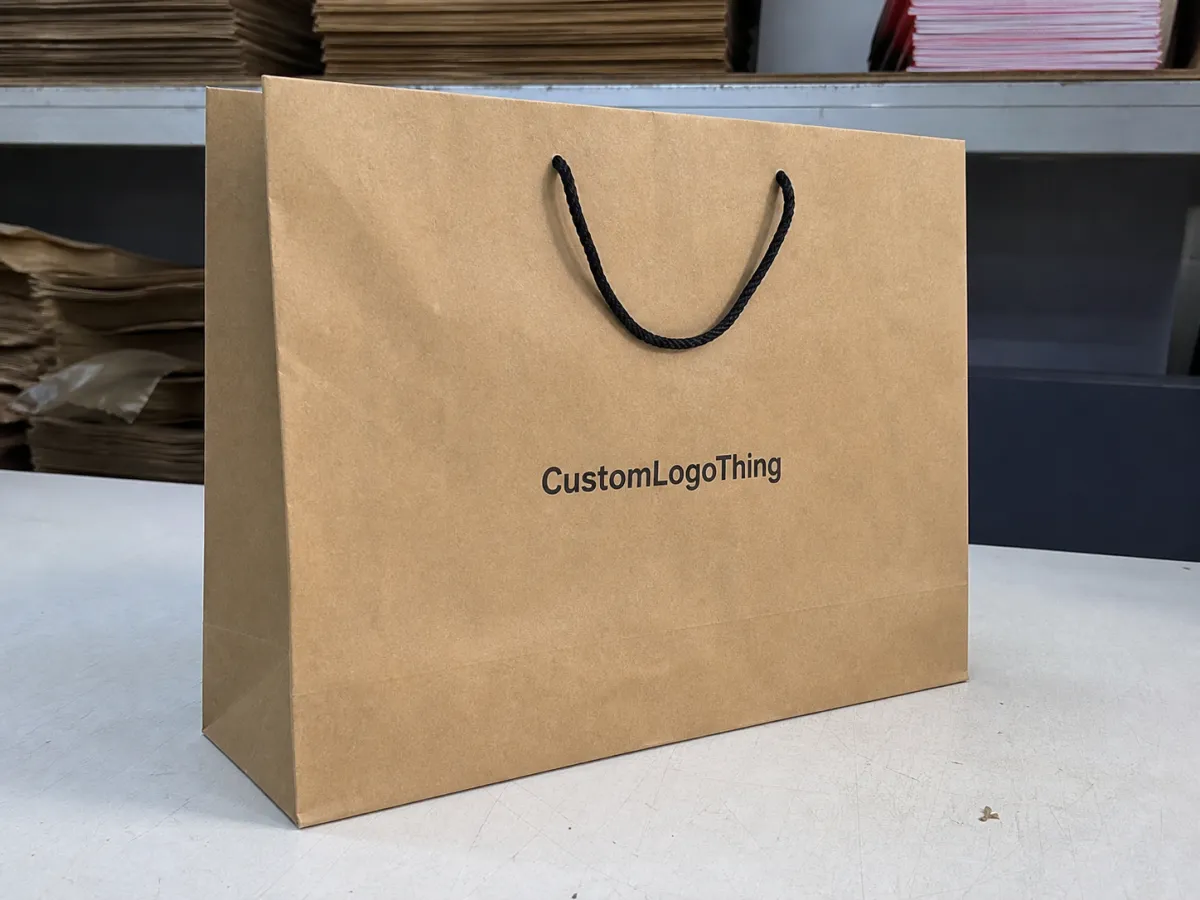
A flat paper bag is a simple folded carrier with minimal depth, built to store compactly and open quickly at the counter. It is not trying to be a heavy shopping sack or a rigid presentation box. Its value comes from efficiency: low storage volume, fast handling, and a clean surface for branding.
That simplicity makes it useful in a surprising number of retail settings. Apparel shops use it for folded garments, jewelry stores for small boxes, bookstores for slim purchases, and gift shops for light, tidy items that should not rattle around in oversized packaging. If the product is already boxed or wrapped, the bag becomes a presentation layer rather than a structural one.
There is a reason experienced buyers often prefer a slightly understated bag over an ornate one. Overdesign can create friction. Extra coatings, heavy graphics, and special effects may look strong on screen, but they also add setup time, cost, and opportunities for color drift or scuffing. A well-proportioned flat bag tends to age better across a retail chain because it is easier to standardize.
A bag that is slightly overbuilt usually costs a little more up front; a bag that is underspecified often costs later in tears, reprints, slower checkout, or complaints at the register.
That tradeoff matters more than most first-time buyers expect. A carry bag does not need to be heavy to be effective. It needs to be right for the load and consistent from unit to unit. Flat paper bags for retail often succeed precisely because they avoid unnecessary structure.
For sustainability or sourcing claims, verification matters more than language on a sales sheet. FSC certification details are available at fsc.org, and transport or distribution testing references can be compared against ista.org. Those resources are useful when packaging decisions need more than marketing copy to justify them.
How the Flat-Bag Structure Works on the Line
The production logic is straightforward. Paper is cut, folded, glued, printed, and finished so the bag lies flat until use. That flatness is not just convenient for storage; it affects every operational step. Cases stack cleanly, backroom space is used more efficiently, and staff can pull inventory near the register without creating clutter.
The format also shapes how the bag behaves at checkout. A flat carrier opens quickly, which matters during peak periods when a few seconds per transaction add up. It is easier to keep a consistent handoff style across multiple registers because the bag is predictable. That predictability matters in multi-location retail, where one store’s improvisation can become another store’s problem.
There is a tradeoff, though. Because the bag has limited depth, capacity is lower than in a gusseted or SOS design. That is not a flaw; it is a design boundary. If the product is bulky, irregularly shaped, or heavy enough to shift in the bag, another format is usually a better fit. Flat bags are strongest when the contents are neat, light, and easy to stack.
Precision shows up in the folds. The crease line, glue placement, and panel alignment all determine how the bag opens and how it looks once filled. A small misalignment can make a logo sit awkwardly across a fold or turn a clean edge into a visibly crooked one. That is why proof review should include fold mapping, not only artwork approval.
Quality checks on the line are usually practical rather than flashy. Operators look at glue integrity, panel squareness, print registration, and whether the bag opens without sticking. If the bag is meant to be used quickly by retail staff, the test should mimic real handling: open it with one hand, place the product, and see whether the top edge deforms under normal pressure. A bag can pass a visual check and still fail that basic use test.
Materials, Sizes, and Print Choices That Change Performance
Paper stock is the first decision that changes the feel in hand. Kraft paper gives a natural, straightforward look and is often a strong fit for brands that want the packaging to feel practical rather than glossy. White or bleached paper reads brighter and gives higher contrast for logos and seasonal graphics. Coated papers can sharpen print detail, but they also change the tactile impression and may show scuffs differently.
Recycled content deserves a careful look. It is useful for brands that need the material story to match the brand story, but recycled sheet quality varies more than many buyers realize. Fiber mix, caliper, moisture behavior, and finish all affect how the bag performs. A recycled bag can be excellent, average, or disappointing depending on the run; the label alone does not tell you enough.
Paper weight affects stiffness, tear resistance, and perceived quality. As a practical guide, lighter stocks around 80-100 gsm are often enough for inserts, gift cards, and very light items. For folded apparel or compact boxed goods, 120-170 gsm usually offers better body and corner strength. That range is not a hard rule. A coated 120 gsm sheet can behave very differently from an uncoated kraft sheet at the same weight.
Size selection matters just as much. Width, height, and depth have to reflect the actual product footprint, not the way the bag looks in a rendering. If the opening is too tight, staff slow down and edges catch. If the bag is too tall, the purchase can slide around and lose the tidy appearance the format is supposed to create. The most successful specs leave just enough room for easy insertion without making the contents look lost.
Grain direction and fold behavior are worth checking too. Paper that fights the fold can crack earlier at the crease line, especially near the top edge where customers grip the bag. Humidity makes this worse. A bag that seems fine in a dry sample room can behave differently on a humid sales floor or after a long freight leg. That is one reason sample testing should happen in the environment where the bag will actually be used.
Print and finish choices influence both cost and presentation. One-color logos often look cleaner than buyers expect because they avoid registration problems and keep the design simple. Full-coverage graphics can be striking, but they also make paper variation and print inconsistency easier to see. A matte finish usually feels understated and premium enough for retail, while gloss and soft-touch effects should be chosen only when the brand needs that specific look and can justify the added complexity.
- Kraft paper: practical, warm, and often best for natural or eco-forward branding.
- Bleached or white paper: crisp for retail graphics, seasonal promotions, and higher-contrast logos.
- Recycled paper: useful when the material story matters, assuming the sheet quality supports the job.
- Coated paper: helpful for sharp graphics, bold color blocks, and a smoother printed surface.
Cost, Pricing, MOQ, and Quote Drivers
Pricing usually tracks a handful of variables: paper grade, sheet size, print coverage, color count, finishing steps, and packing format. A basic flat bag in a standard size with one-color print is far easier to quote than a custom size with specialty coating, tight registration, or unusual packing requirements. The more the spec deviates from the factory’s normal setup, the more labor and material it consumes.
MOQ is tied to setup economics. Press time, cutting, folding, gluing, and inspection all need to be dialed in before the run is stable. That means a shorter run often carries a higher unit price because those setup costs are spread over fewer pieces. It is not a penalty. It is the arithmetic of converting.
For planning purposes, a straightforward order of 5,000 pieces can often land around $0.18-$0.28 per unit for a basic one-color bag before freight. Heavier stocks, multiple colors, or specialty finishes can move pricing into the $0.35-$0.60+ range, depending on the spec and the size of the bag. Oversized formats usually cost more because they consume more paper and can slow the line. Very small bags can still be expensive if they need nonstandard tooling or unusually precise print.
Freight can change the economics almost as much as print. A quote that looks attractive at the unit level can become less appealing if it ships under rush timing, by air instead of sea, or in packaging that wastes space. Landed cost is the number that matters. Buyers who focus only on the bag price often miss the part that hits the budget later.
There is also a hidden cost in unstable specs. If artwork keeps changing, or if the size is still in discussion while pricing is being requested, the estimate becomes less reliable and usually less favorable. Standardizing the bag dimensions where possible can save more than squeezing a few cents out of a fragile stock. In packaging, consistency often beats cleverness.
| Option | Typical Use | Print/Finish Impact | Indicative Unit Cost Trend |
|---|---|---|---|
| Light kraft, one-color logo | Gift cards, inserts, very light apparel | Lowest setup complexity | Lower end of the range |
| White or bleached paper, two-color print | Branded retail handoff, small boxed goods | Moderate setup and better graphic contrast | Mid-range |
| Heavier recycled or coated paper | Premium presentation, higher perceived value | More rigid feel, better surface consistency | Mid to higher range |
| Special finish, full coverage artwork | Seasonal campaigns, elevated brand touchpoints | More press time and finishing steps | Higher end of the range |
For buyers comparing sustainability terminology or material claims, industry references at packaging.org help separate useful language from vague claims. That matters when paper sourcing, recycled content, or compliance language has to hold up internally and in front of customers.
Production Steps, Proofing, and Lead Time
The production path usually begins with artwork review, then proofing, then scheduling. After approval, the job moves through printing, folding, gluing, finishing, inspection, packing, and freight coordination. None of these steps are glamorous, but each one can introduce risk if the brief is vague or the approval cycle drags.
Most delays come from a familiar set of problems: missing dielines, low-resolution files, a late change to the logo placement, or signoff that arrives after the production slot is already booked. A revision that looks tiny in email can still affect plate setup, color matching, or trimming alignment. Once the line is set, even a small adjustment can ripple through the schedule.
Lead time should be read as two separate numbers. Production time and shipping time are not the same thing. A factory may quote 12-15 business days after proof approval, but the freight leg can add several days or several weeks depending on the route. A retail launch date does not care why the bag is late; it only cares whether it arrives on time.
Special finishes need their own timeline. Lamination, varnish, or unusual coating steps can add curing or inspection time. Custom packing can also slow things down if the bags have to be counted, wrapped, or packed a specific way. Buyers who need a fixed date should confirm the full calendar window early rather than assume the fastest production estimate includes transit.
In practice, the cleanest orders are the ones where the spec is locked before the sample round begins. Once the paper, size, print count, finish, and packing method are set, the job is easier to schedule and less likely to pick up rush charges. A precise spec sheet is not bureaucracy; it is a way to keep the order moving without surprises.
Step-by-Step Ordering: From Product Load to Final Spec
Start with the product, not the bag. List the item’s size, shape, weight, and whether it is rigid, soft, boxed, or stacked. A folded sweater, a jewelry box, and a candle carton all need different handling even if the final “bag size” sounds similar. That basic product profile usually tells you more than a vague small/medium/large label ever will.
Next, define the retail use. Will the bag be handed out at checkout, packed ahead of time, or used for a presentation-style purchase? The answer changes how much opening speed matters, how much room you need for insertion, and how refined the finish should be. A fast checkout bag needs functional simplicity. A presentation bag can carry a little more visual detail.
Then lock the spec sheet. Confirm dimensions, paper stock, print colors, finish, quantity, and packing configuration before asking for a sample or price. If one of those details is missing, the quote will be approximate at best. A complete brief shortens back-and-forth and reduces the chance of a revision later in the process.
Samples are the real test. Fold the bag, open it, fill it with the actual product, and check how it behaves in the hand. Look at the glue lines, top edge, corners, and how the logo reads once the bag is full. A sample should answer a simple question: does the bag support the purchase, or does it merely look acceptable on a flat sheet?
- Identify the product load and weight.
- Decide how the bag will be used in store.
- Confirm dimensions and paper stock.
- Review artwork placement and finish choice.
- Test a sample under real handling conditions.
- Approve the final spec and production timeline.
Common Mistakes That Create Weak Bags or Surprise Charges
Undersizing is one of the most expensive mistakes because it shows up late. If the opening is too tight or the height is too short, packing slows down and the top edge can tear under normal retail handling. This often slips past the screen stage because a dimension that sounds close enough turns out to be awkward once the actual item is in hand.
Another trap is assuming all paper weights behave the same. Two bags can have identical dimensions and still feel very different if the fiber mix, coating, or glue pattern changes. That is why a sample matters. It reveals stiffness, creasing behavior, and how the bag tolerates repeated handling far better than a line item on a quote.
Late artwork creates another chain reaction. If files are not ready, proofing takes longer, the production slot can move, and freight may need to be upgraded to recover time. A small delay in design can become a real cost in logistics. It is a simple reminder that packaging timelines rarely stay isolated from the rest of a retail schedule.
Unit price tunnel vision causes problems too. Freight method, packaging format, and rush timing can shift the true landed cost more than a small difference in base price. A quote that looks inexpensive at first glance may turn out to be the costliest once shipping and rework are counted.
Finally, buyers sometimes approve a visually attractive sample without testing the way staff will actually use it. A bag can look polished and still be too narrow for quick packing, too slick to grip easily, or too soft at the top edge. The sales floor exposes those flaws fast.
- Undersizing: slows packing and increases tear risk.
- Weak stock assumptions: paper family and coating change performance.
- Late artwork: creates avoidable proof and schedule delays.
- Unit-price tunnel vision: hides freight, packaging, and rush costs.
Expert Checks Before You Request Samples or Place an Order
Before requesting pricing, verify the basics: product dimensions, estimated fill weight, target quantity, artwork files, and the delivery date. If those five items are missing, the quote is usually incomplete. A good request gives the supplier enough information to judge size, structure, print layout, and timing without chasing details for days.
Ask for a sample that reflects actual use rather than a visual placeholder. If the bag will hold a rigid box, test with a rigid box. If it will carry folded apparel, use folded apparel. Appearance matters, but function matters more. A working sample should show whether the bag opens quickly, sits straight, and keeps its shape after filling.
There should also be a clear fit between brand and function. Flat paper bags for retail are part of the customer’s memory of the purchase, even if they are not the most glamorous part of the packaging system. A matte kraft bag can suit a natural, restrained brand. A brighter coated stock can fit a more graphic and fashion-forward identity. The point is not to make the bag louder than the product. The point is to make the handoff feel deliberate.
For buyers who need a clean, dependable result, the best checklist is not complicated: compare sample performance, confirm the spec sheet, ask for a realistic production timeline, and check the freight method before approval. Do those four things well and the ordering process becomes much less risky. Flat paper bags for retail work best when the spec is simple, the artwork is disciplined, and the load is real rather than imagined.
Are flat paper bags for retail strong enough for apparel and small boxed goods?
Yes, if the paper weight and size are matched to the actual load. They work best for lightweight apparel, folded textiles, gift items, and compact boxed products. For heavier goods, ask for a real-use sample and check the corner strength before you place a larger order.
What paper weight is best for flat retail paper bags?
There is no single best weight. Lighter stock can work for inserts and very light items, while heavier paper usually feels stiffer and more premium. Matching the stock to the load is the safest move, especially if the bag will be handled often.
How do flat paper bags for retail differ from gusseted or SOS bags?
Flat bags store more compactly and are often faster to handle at the counter. Gusseted and SOS bags stand up more easily and usually offer more volume for bulkier purchases. Flat bags are often chosen when presentation, speed, and storage efficiency matter more than maximum capacity.
What affects MOQ for flat paper bags for retail?
MOQ usually comes down to setup time, converting requirements, and print preparation. Custom colors, special finishes, and nonstandard sizes can push minimums higher. Standard dimensions and simpler artwork can sometimes improve MOQ options.
What should I send to get an accurate quote and timeline?
Send product dimensions, estimated fill weight, target quantity, artwork files, and the delivery date you need. Include finish preferences, packaging requirements, and whether samples are needed first. The more complete the brief, the easier it is to quote pricing and estimate lead time without extra back-and-forth.


