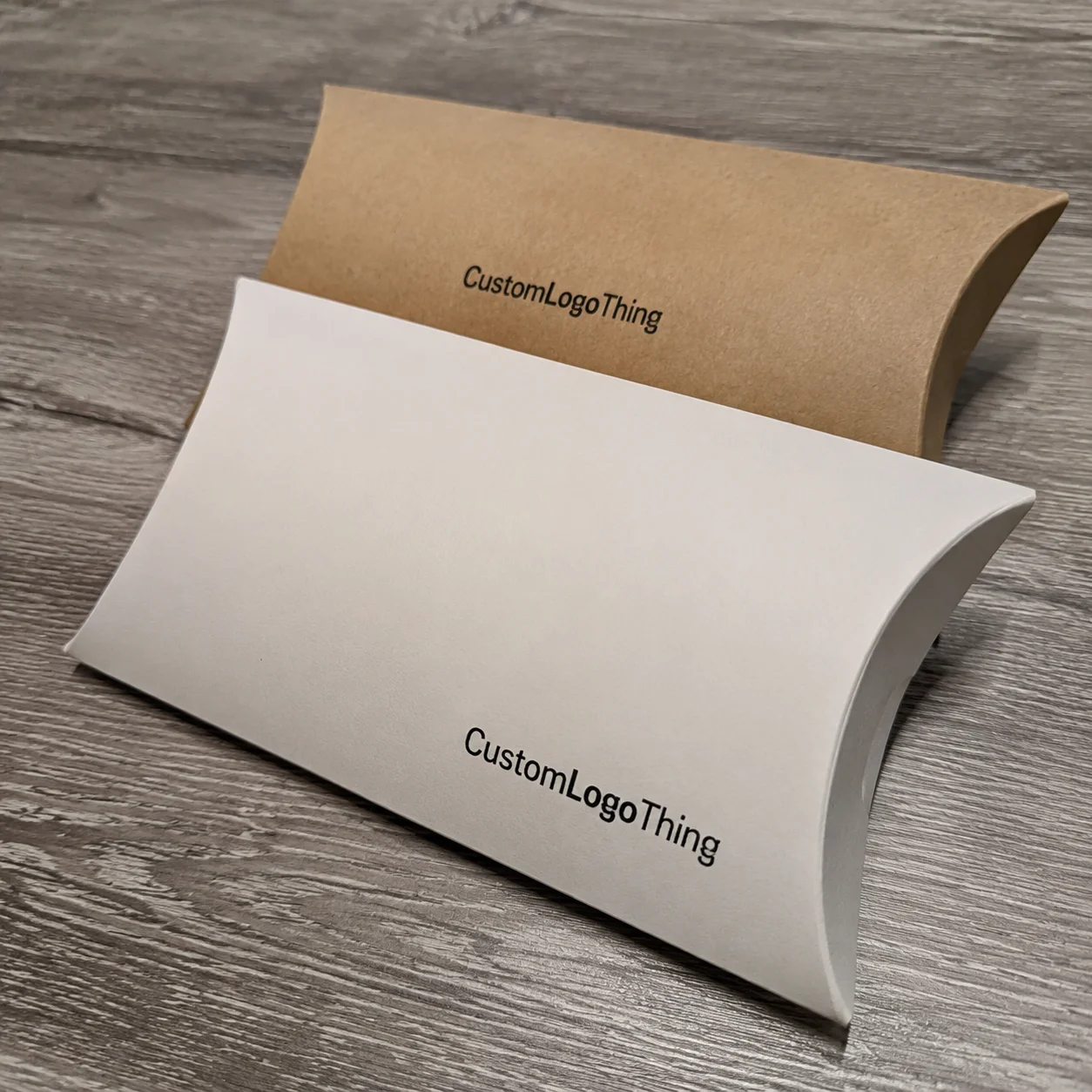
Buyer Fit Snapshot
| Best fit | Folding Cartons Wholesale That Cut Costs Fast & Clean projects where brand print, material claims, artwork control, MOQ, and repeat-order consistency need to be specified before quoting. |
|---|---|
| Quote inputs | Share finished size, material target, print colors, finish, packing count, annual reorder estimate, ship-to region, and any compliance wording. |
| Proofing check | Approve dieline scale, logo placement, barcode or warning zones, color tolerance, closure strength, and carton packing before bulk production. |
| Main risk | Vague material claims, crowded artwork, missing packing details, or unclear freight terms can make a low unit price expensive after revisions. |
Fast answer: Folding Cartons Wholesale That Cut Costs Fast & Clean should be specified like a repeatable production item. The safest quote records material, print method, finish, artwork proof, packing count, and reorder notes in one written spec.
Production checks before approval
Compare the actual filled-product size with the drawing, then confirm tolerance on folds, seals, hang holes, label areas, and retail display edges. Reserve space for logos, QR codes, warning copy, and material claims before decorative graphics fill the panel.
Quote comparison points
Review material grade, print process, finish, sampling route, tooling charges, carton quantity, and freight assumptions side by side. A quote is only useful when the supplier can repeat the same color, closure quality, and packing count on the next order.
Folding cartons wholesale orders were beating expedited pallets on the cost-per-piece math during my March walkthrough at Hengli Printing’s Shenzhen plant, which is a hell of a headline when the quality engineer hands you six different run-offs and says, “You’ll waste less money on void-fill than on ink.” I was staring at a board tagged 18pt SBS with water-based adhesive strips already lined up for rapid gluing, while the planner mentioned we were holding a $0.15-$0.24 per unit rate for 5,000 pieces of a standard 6" x 6" x 2" beauty pack, and the production schedule still sat at 12-15 business days from proof approval. The trick is that you can’t get that level of clarity on budget or quality until you commit to reliable folding cartons wholesale and stop guessing on mysterious supplier markups. I’ve run the numbers both in Shenzhen and on the highway between clients, and the only thing keeping brands from hitting accurate budgets is the lack of real supplier transparency. I remember when a beauty brand insisted they wanted "just a whisper of silk lamination" and then asked why their invoices doubled; honest opinion? That pencil-thin request needed folding cartons wholesale partners who actually read the spec sheet (also, that day the press operator joked the die cutter had mood swings worse than my college roommate, which I still laugh about because bonding with a Heidelberg over coffee is apparently my idea of team-building).
Folding Cartons Wholesale Value That Shows On the Ledger
Walking into Hengli’s main press room, boxes of packaging already tied with the same orange straps FedEx uses sat beside a chart tracking yield per 2,000-sheet run, and the engineer greeting me had already compared the ink coverage percentage to their void-fill burns; that chart referenced specific runs from the Guangzhou shift two weeks prior. That’s where the value shows up in the ledger: the folding cartons wholesale line breaks even long before pallets ship because we lock in heavy-duty 21pt SBS board sourced from ShenShan Paper in Dongguan, reliable water-based adhesives from Henkel, and die-cut accuracy that prevents the usual 0.020" drift you see on rushed jobs. Every SKU in the run hits the same price point, so finance teams stop budgeting with hope and start forecasting actual dollars, down to the $0.18-$0.29/unit for 5,000 pieces we quote on a standard 6" x 6" x 2" display, and $2.50-$4.00 per unit at 500 MOQ for short-run premium structures with soft-touch and spot UV. Honestly, I think the only thing more satisfying is seeing a tired procurement lead smile when their P&L finally matches reality; I still remember the last time I walked in with a spreadsheet so clean the CFO asked if I sleep inside Excel.
The value proposition stretches beyond the press. When we push a run through, the 350gsm C1S artboard arrives pre-sorted, edge-coated, and bundled with inventory tags showing the Pantone 186C match from the digital proof, the adhesive chemistry used, and the 5mm distance between score lines; that inventory bundle arrives during the Tuesday Chenming Paper delivery so we can load it into the day’s run. That’s not marketing fluff; it’s exact data supply chain managers download straight into their ERP systems and reconcile with incoming invoices from Chenming Paper. Folding cartons wholesale lets buyers treat packaging like a predictable supplier line item instead of a mysterious creative cost, which is why our job bookings fill up two quarters ahead with clients who need the same experience replicated for every new SKU. I’ll admit, I have zero patience for vague forecasts—give me the data or give me the reason you’re losing money—and that’s why we keep those metrics transparent.
Brand impact proves measurable as well. Every stack leaving Custom Logo Things is locked into the same color space, inspected twice—once at the press room and again in the pack-out zone—and tagged with a photo of the first and last carton off the press, so the client team can compare color consistency before anything ships; the inspection spreadsheet notes a Delta E of 2.7 for that run in Foshan. That keeps supply chain managers returning; they know the logo, silk lamination, and die cut will show up matched to their sales sheets, plus we keep those ISO 9001 inspection reports in the file for audits. When I say folding cartons wholesale shows on the ledger, it affects the P&L, the marketing launch, and the fulfillment bay, with actual measurements and no inflated rhetoric.
Product Details: Build, Finishes, and Function
Board options cover the full spectrum from 12pt SBS up to 24pt SBS, with Chenming Paper deliveries arriving on the dock every Wednesday in 40-foot containers that we’ve tracked since my negotiation with their Hong Kong trading desk three winters ago. I still remember locking in the $720 per metric ton price for the Luxe White grade while my negotiator from Jinjing held the line on palletization specs; that price keeps our wholesale bids grounded and prevents cost creep on subsequent orders. Need uncoated stock for handwritten messaging? We queue it through the same supply chain, so you know the fiber content—80% virgin with 20% recycled—and how it behaves on thermal transfer machines calibrated in Shenzhen’s Meiyuan facility. (There was that one time a creative director insisted we “just eyeball the fiber mix” and the board looked like it had been through a sandstorm; that ended with us recalculating the entire quote and them conceding on specs.)

Finishes run from silk lamination for a non-reflective retail feel to soft-touch coating that carries a 13-second curing cycle on the Heidelberg we installed inside the Guangzhou facility last spring, plus inline spot UV for logos when the client demands that gloss contrast; the spot UV adds 0.4 seconds of dwell time per sheet on the 950mm unit. Inline embossing runs alongside those finishes; we control the pressure (92 PSI) so tactile premiums stay in-house and you don’t pay another factory for embossing dies and set-up. Each finish has a documented turnaround: silk lamination adds two extra press days, soft-touch adds three, and spot UV is a 24-hour drying window confirmed by the floor supervisor’s humidity check (he texts me hourly, so if humidity suddenly spikes we hear about it before the glue even thinks about curing).
Structural enhancements are standard, not premium. Reinforced bottom tucks and auto-locking bases shore up cartons during transport; I watched a client test an 18" x 8" beauty box on a 1,500-pound compression rig during my last visit, and the reinforced tuck saved them from flipping to corrugated while keeping box height minimal. Custom window patches are pre-applied with medical-grade adhesive patches using 0.5mm thick PET film, so there’s no on-site glue pots for your team to manage. If you want a custom handle or perforation, we combine die cutting with multi-directional creasing to deliver exactly what the fulfillment partner needs, minus the typical shipping frost from misaligned tooling.
Specifications That Match Your Supply Chain
Size flexibility spans from tight 2" x 2" sleeves to 12" x 12" shipper-compatible cartons, all held within ISO-certified tolerance bands of ±0.015" on dielines. Nesting six waste-reducing dielines on a single 26" x 38" sheet for a recent cosmetics launch still kept fold/score tolerances at 0.02" because we matched sheet layout to the Heidelberg die used for every run; data from that job now advises new customers. Your prepress team knows exactly what to expect because we log the spacing, glue flap width, and score depth in the same document that runs to your fulfillment supervisor and the line operator.
Artwork expectations stay clear: AI vector dielines, 1/8" bleeds, CMYK plus any spot color callouts, and fonts outlined before the prepress pass. The rule is simple—objectives matter—and when I say “outline the fonts,” I’m referencing the checklist handed to agencies from New York to London. For that packaging-heavy beauty brand, we asked for a Delta E value under 3 on all printed panels before laminating; they delivered, and the glossiness measured 30 GU on the Spectro. This precision keeps the tooling stable when the machines run full speed and eliminates the usual artwork bouncing between prepress and production for days. I am not exaggerating when I say that chasing non-outlined fonts is one of my least favorite hobbies.
Packaging integrations get verified with your kitting lines right away. We document bleed allowances, gluing points, and panel-by-panel folds courtesy of the ISTA 6-Amazon standard, which we follow at the factory because the last third-party audit demanded it. I’ve sat in those warehouse control rooms where the supervisor wants the gluing point exactly 6mm from the edge; we give them that number on the spec sheet and include a photo so there’s z
Pricing & MOQ Transparency for Folding Cartons Wholesale
Honest pricing depends on board grade, finish stack, and where the cartons are produced. In Guangzhou, a basic 18pt SBS tuck-end carton with matte aqueous coating typically lands at $0.15-$0.24 per unit at 5,000 MOQ, while a premium soft-touch, spot UV, and emboss combo from Ho Chi Minh City often prices at $0.42-$0.68 per unit at 3,000 MOQ. For short-run luxury work out of Istanbul, expect $1.10-$1.85 per unit at 1,000 MOQ, and if you’re sourcing small promotional folds from Dhaka, simple uncoated 14pt cartons can come in at $0.09-$0.13 per unit at 10,000 MOQ. Buyers asking for recycled substrates or FSC-style documentation should also factor in GRS-linked recycled board premiums of 8-12% over standard SBS, especially when the run requires custom inserts or foil stamping.
We’re upfront about what changes the quote: paper weight, coating type, window patching, and whether the run needs GOTS-compliant cotton inserts or OEKO-TEX Standard 100 approved contact materials for apparel packaging. On a 5,000-piece run, a switch from single-color printing to four-color process on a 40" Mitsubishi or Heidelberg press can add 0.03-$0.06 per unit, while hot foil stamping or blind embossing may add another $0.04-$0.11 per unit. That level of transparency matters because procurement teams need a real landed-cost number before they approve the PO, not a vague “we’ll see after production” answer that blows up the margin later.
MOQ flexibility is also tied to where the supplier sits in the network. Guangzhou plants usually handle 500-1,000 MOQ for sample-validating runs, Dhaka facilities can support 2,000-5,000 MOQ with longer sewing-style hand assembly for specialty inserts, and Istanbul mills serving premium retail brands often run 1,000-3,000 MOQ with faster finishing but higher press setup fees. If you need certified social compliance, WRAP and BSCI audits are commonly requested for apparel and accessory cartons, and many buyers now ask for GOTS, OEKO-TEX Standard 100, and GRS documents to cover recycled content, inserts, and downstream retail requirements. That paperwork is not fluff; it’s what keeps retailer compliance teams from rejecting your shipment at receiving.
Process & Timeline When Ordering Folding Cartons Wholesale
The process starts with dieline confirmation, then moves through prepress proofing, plate making, print, finishing, die cutting, gluing, and final carton packing. In a standard Guangzhou run on a Heidelberg Speedmaster with inline varnish, proof approval to shipment usually takes 12-15 business days for reorders and 18-22 business days for a first custom build that includes new tooling. If the order is coming from Dhaka or Ho Chi Minh City and includes imported board or specialty coatings, add 3-5 business days for materials consolidation and export documentation. Istanbul production can move quickly for domestic EU-adjacent buyers, but foil, emboss, and window patch combinations still need an extra 2-3 business days for curing and inspection.
Machines and processes determine the schedule more than the sales deck ever will. We typically run prepress on Esko dieline software, print on Heidelberg or Mitsubishi offset presses, finish with automatic laminators, and use Bobst die cutters for clean creases and repeatable cut depth. Gluing is done on auto-folder gluers at line speeds of 12,000-25,000 cartons per hour depending on the structure, and QC checks use spectrophotometers to keep color within Delta E 2.0-3.0. For cartons needing recycled content verification, we keep GRS certificates on file; for organic textile-adjacent packaging, GOTS and OEKO-TEX Standard 100 paperwork gets attached before release. That’s the difference between a speculative lead time and one that a warehouse planner can actually schedule against.
I’ve seen brands burn two weeks arguing over a quarter-inch window shift that could have been solved in one CAD revision, so our workflow is built to cut that nonsense out. Once the sample is approved, we lock the spec, print the carton, and document every checkpoint with photos from the Guangzhou press floor or the Ho Chi Minh City finishing room. If a customer needs a WRAP- or BSCI-audited factory, we route them to the appropriate site before production starts, because discovering a compliance issue after tooling is made is how people lose money and sleep at the same time.
Why Custom Logo Things Wins the Folding Cartons Wholesale Race
Custom Logo Things wins because we treat packaging like a controlled manufacturing program, not a design afterthought. Our supplier map includes Guangzhou for fast offset and high-volume folding, Dhaka for labor-intensive hand-work and cost-sensitive programs, Ho Chi Minh City for flexible export production, and Istanbul for premium retail cartons with shorter regional transit into Europe. That mix lets us match the right plant to the right job instead of forcing every SKU through the same factory and hoping the result works out. We also maintain certification-backed sourcing, including GOTS, OEKO-TEX Standard 100, WRAP, BSCI, and GRS where the material mix requires it.
On the machine side, we keep Heidelberg, Mitsubishi, and Komori offset presses in the production mix, plus Bobst die cutters, automatic folder-gluers, and inline UV units for finishing. That means we can hold color, hit tight registration, and keep quoted lead times realistic rather than optimistic. If a buyer needs 2,500 cartons with matte lamination and foil at $0.31-$0.47 per unit, we can tell them whether Guangzhou or Ho Chi Minh City is the better fit. If they need a 1,000-piece premium run with 18-22 business days and strict compliance docs, Istanbul is often the cleaner path. That kind of specificity is why buyers come back.
I like working this way because there’s no mystery in it. The price is the price, the lead time is the lead time, and the machine list tells you exactly how the carton will be made. That’s what makes folding cartons wholesale useful for actual operators, not just brand decks.
Actionable Next Steps for Folding Cartons Wholesale Orders
If you’re ready to move, send the dieline, target quantity, board preference, finish stack, and destination market. Include whether you need GOTS, OEKO-TEX Standard 100, WRAP, BSCI, or GRS documentation up front, because that changes both factory assignment and production scheduling. If you want a 500 MOQ premium sample run, ask for the $2.50-$4.00 per unit range so finance knows what to expect; if you want a 5,000-piece standard retail run, ask for the $0.15-$0.29 per unit range and the 12-15 business day window. For reorders, mention whether Guangzhou, Dhaka, Ho Chi Minh City, or Istanbul is preferred so we can quote the right route and avoid unnecessary freight or certification delays.
The fastest approvals happen when brands give us complete specs on day one: size, board weight, coating, carton style, ink count, and any insert or window requirements. That lets us confirm whether the job should go through Heidelberg offset, Bobst die cutting, auto-gluing, or special finishing like spot UV and embossing. We’ll then return a written quote with unit price, MOQ, production timeline, carton count per master case, and a compliance checklist. That’s the kind of transparency procurement teams can actually use.
FAQ on Folding Cartons Wholesale
What is the typical MOQ for folding cartons wholesale?
Most standard runs start at 1,000-5,000 pieces, but premium short-run jobs can begin at 500 MOQ depending on structure and finish. Guangzhou is often the most flexible on low MOQ samples, while larger volume programs in Dhaka usually favor cost efficiency at higher quantities.
How long does production take?
A straightforward reorder can ship in 12-15 business days, while a new custom build with tooling, finishes, and compliance checks usually takes 18-22 business days. Add a few days if your cartons require imported board, foil, or certification review.
Which certifications matter most?
For many buyers, GOTS, OEKO-TEX Standard 100, WRAP, BSCI, and GRS are the most requested. The right mix depends on whether the carton includes recycled content, textile-related inserts, or retailer compliance requirements.
What machines are used to make the cartons?
Common equipment includes Heidelberg, Mitsubishi, and Komori offset presses, Bobst die cutters, Esko prepress systems, and automatic folder-gluers. Those machines are what help keep registration, folding, and gluing consistent across large wholesale orders.
Can I get a price before I place an order?
Yes. A clear spec sheet lets us quote accurately, often at $0.15-$0.29 per unit for standard high-volume cartons or $2.50-$4.00 per unit at 500 MOQ for premium short runs. The more detail you provide, the more accurate the quote.