Buyer Fit Snapshot
| Best fit | freight packaging custom printed for packaging buyers comparing material specs, print proof, MOQ, unit cost, freight, and repeat-order risk where brand print, material, artwork control, and repeat-order consistency matter. |
|---|---|
| Quote inputs | Share finished size, material target, print colors, finish, packing count, annual reorder estimate, and delivery region. |
| Proofing check | Approve dieline scale, logo placement, barcode or warning zones, color tolerance, and any recyclable or compostable wording before bulk production. |
| Main risk | Vague material claims, crowded artwork, or missing packing details can create delays even when the unit price looks attractive. |
Fast answer: Freight Packaging Custom Printed: What Actually Works should be specified like a repeatable production item. The safest quote includes material, print method, finish, artwork proof, carton packing, and reorder notes in one written spec.
What to confirm before approving the packaging proof
Check the product dimensions against the actual filled item, not only the sales mockup. Ask for tolerance on folds, seals, hang holes, label areas, and retail display edges. If the package carries a logo, QR code, warning copy, or legal claim, reserve that space before decorative graphics fill the panel.
How to compare quotes without losing quality
Compare board or film grade, print process, finish, sampling route, tooling charges, carton quantity, and freight assumptions side by side. A lower quote is only useful if the supplier can repeat the same color, closure quality, and packing count on the next order.
Freight packaging custom printed is not decoration for people with too much budget and too little discipline. It solves a real logistics problem: loads need to be identified fast, handled the right way, and kept intact while they bounce between docks, trailers, and storage racks. Plain kraft cartons and plain stretch wrap can work. They can also create confusion, misroutes, and damage claims when the floor gets busy. Freight packaging custom printed earns its place by cutting that nonsense down.
From a packaging buyer's angle, the question is never whether the print looks pretty in a mockup. The real question is whether the load reads correctly from ten feet away, survives handling, and keeps receiving teams from playing detective. That puts freight packaging custom printed much closer to product packaging and warehouse operations than to pure package branding. It has a visual job, sure. It also has a practical one. That part matters more.
I have seen a pallet get parked in the wrong lane because the label panel sat under film glare and nobody could confirm the destination without peeling back wrap. Not dramatic. Just expensive. The fix was not more color. It was better placement, stronger contrast, and a spec that matched how the freight actually moved.
If you are weighing options, start with structure and handling before you get lost in artwork. A clean spec for Custom Packaging Products usually saves more money than a clever graphic ever will. Nice design helps. Correct design pays the bills.
“If a pallet needs a decoder ring, the packaging failed. Good freight packaging custom printed makes the right move obvious before anyone touches the load.”
What Freight Packaging Custom Printed Actually Solves
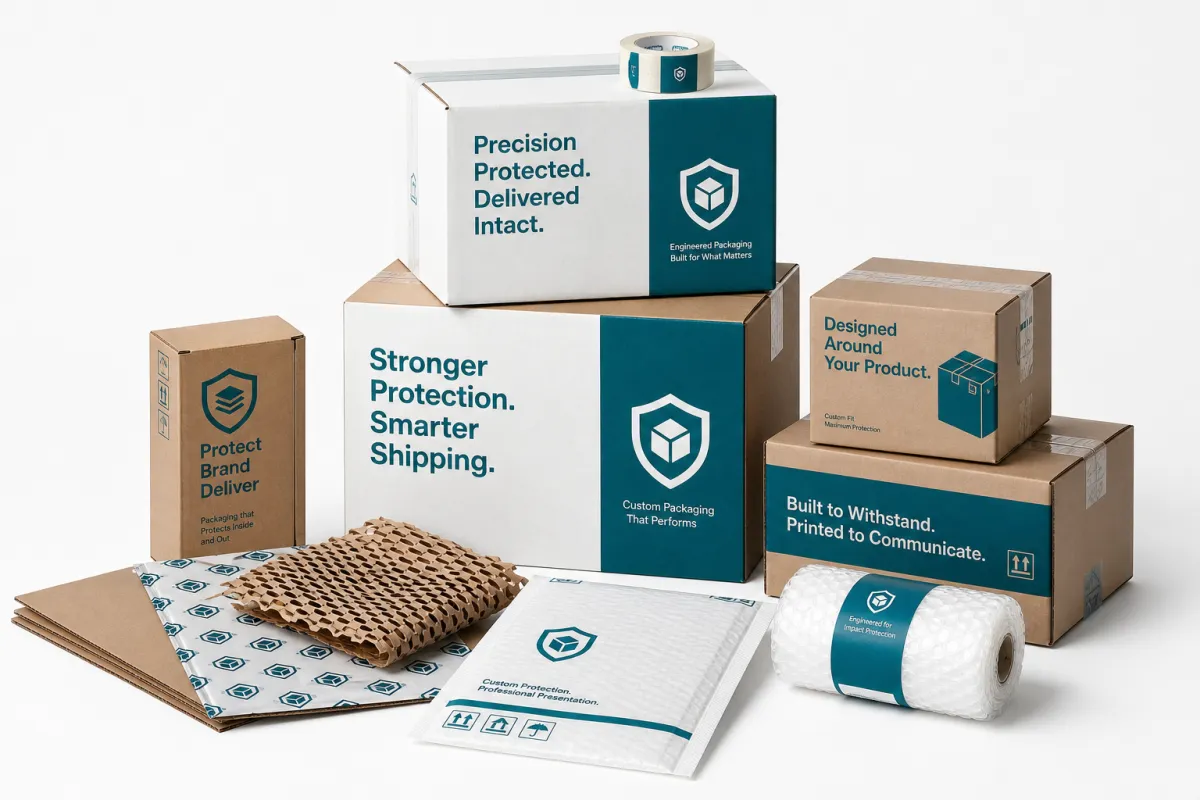
A plain freight box, an unmarked pallet wrap, or a generic slip sheet can end up costing more than a print upgrade ever would. One damaged shipment can erase the savings from skipping print across dozens of loads. One pallet sent to the wrong zone can sit all day. One receiver guessing at the label can slow an entire dock. Freight packaging custom printed is less about decoration and more about preventing that kind of mess.
Good freight packaging custom printed helps people decide quickly. Is the load fragile? Top-load only? Which side faces the aisle? Does it need dry storage or refrigeration? Those are not marketing details. They change how a pallet gets stacked, wrapped, staged, and scanned. On a busy floor, clear print reduces unnecessary touches. Fewer touches usually means fewer problems.
That becomes even more useful when pallets change hands repeatedly. A shipment may leave production, get wrapped, sit in a warehouse, move onto a truck, pass through a cross-dock, then land with a receiving team that has never seen the order before. Freight packaging custom printed gives each stop a visual cue. Without it, the load turns into a mystery box. Nobody needs that.
There is a quieter benefit too. Freight packaging custom printed can support traceability and compliance. Some shipments need lot numbers, handling icons, destination codes, or a scan-friendly panel. Others need the printed freight packaging to stay consistent with a broader program so the outbound load looks intentional instead of stitched together. That does not mean every pallet needs a showroom finish. It means the package should answer the questions before anyone starts guessing.
A lot of buyers still treat print as a branding decision that happens after the “real” packaging work is done. That order is backwards. Freight packaging custom printed belongs in the same conversation as board strength, load stability, and carrier handling. If the print helps the warehouse, the freight team, and the customer at the same time, it is doing its job. If it only photographs well, it is probably overpriced.
There is also a practical truth most slide decks skip: the cheapest-looking spec can become the most expensive one once labor is involved. If a dock team has to stop, turn, inspect, and guess, the packaging failed. That is not theory. It is Tuesday.
How Freight Packaging Custom Printed Is Built
Freight packaging custom printed can take a few forms, and the right one depends on what the load has to survive. Common building blocks include corrugated cartons, pallet shrouds, stretch wrap, slip sheets, corner boards, labels, and inserts. Some jobs need one printed layer. Others use a printed carton and a printed pallet wrap so the load stays readable after it is stacked and filmed. For larger freight programs, that mix is often smarter than trying to turn every surface into a billboard.
Corrugated cartons are still the workhorse. If you need a box that handles compression and prints cleanly, corrugated is usually the right place to start. For pallet-level visibility, Printed Stretch Wrap or shrouds can be more practical because they remain visible after stacking. Corner boards and slip sheets are not usually thought of as branding pieces, but they can carry handling marks, SKU groupings, or destination information. Freight packaging custom printed works best when the format matches the handling problem instead of the artwork fantasy.
The print method matters just as much as the structure. Flexographic printing usually makes sense for higher volumes because setup costs get spread across more units. Digital printing works better on short runs or when artwork changes often. Litho-lam gives a sharper surface and a more polished finish, which matters when the package also faces the customer. That might sound like retail territory, but freight programs still need clarity when the shipper doubles as the customer-facing carton.
The tradeoffs look like this:
| Print Method | Best Fit | Typical Run Size | Typical Cost Range | Tradeoff |
|---|---|---|---|---|
| Digital | Short runs, variable artwork, fast approvals | 250-2,000 units | $0.35-$1.10 per unit | Less setup, higher unit cost |
| Flexographic | Repeat orders, consistent graphics, volume freight | 2,000+ units | $0.12-$0.45 per unit | Lower unit cost, plate setup required |
| Litho-lam | Premium presentation, strong image clarity | 1,000+ units | $0.60-$1.80 per unit | Better appearance, usually higher total spend |
Those numbers are not universal. Board grade, print coverage, color count, and ink coverage can swing the quote hard. A one-color mark on a heavy corrugated shipper costs very differently from a full-coverage design on a pallet shroud. Freight packaging custom printed is about matching the method to the route, not picking the fanciest option because it sounds good in a meeting.
The production path is usually simple, but every step is a place where mistakes like to hide. It starts with a spec sheet. Then a dieline. Then artwork prep. Then proofing. If the job is new or structurally unusual, a sample comes next. Production follows after that. Skip the middle part and jump straight to print, and the order often comes back with a surprise attached.
Artwork basics matter more than many teams expect. Large packaging surfaces need readable logo placement, type that works from a distance, and enough contrast to survive warehouse lighting. If the file was built for a phone screen instead of a 48-inch panel, it is gonna look muddy, stretched, or just plain awkward. Freight packaging custom printed should be designed for legibility first and polish second. That order actually works.
For quality and transit testing, it helps to know the standards behind the scenes. Many packaging teams use ISTA test protocols for shipment simulation, and ASTM references like D4169 come up often when a load needs structured performance testing. If the packaging includes paper-based materials, FSC certification may matter too, especially for buyers watching sourcing claims and sustainability reporting. That does not mean every order needs a lab report. It means the spec should match the risk, not the mood of the room.
Key Cost and Pricing Factors for Freight Packaging Custom Printed
Pricing for freight packaging custom printed usually comes down to six things: size, board grade, print coverage, color count, sides printed, and order quantity. Increase any one of those and the price usually moves up. Increase three of them and the budget starts wheezing. That is normal. The mistake is thinking unit price tells the whole story.
Setup costs can matter a lot, especially on smaller runs. Plates, dies, tooling, and prepress work may add a visible bump to the first order. Depending on the structure and print method, those charges can land anywhere from under $100 for a simple digital job to several hundred dollars per color for more traditional setups. On a 500-piece run, that overhead can feel ugly. On a 10,000-piece run, it starts to look sensible.
Minimum order quantities matter too. Freight packaging custom printed often looks expensive on paper when the run is too short, not because the supplier is being tricky, but because the fixed setup costs get spread across fewer pieces. If you only need a small batch, digital or a simplified print spec may be the better move. If you have repeating freight lanes and stable dimensions, flexo usually starts to make more sense financially.
Freight and storage are part of the price, even when they do not show up in the per-unit quote. A package that ships flat but stores badly can create hidden costs in the warehouse. A design that saves a dime on the box but adds damage in transit is not cheap. It is expensive with better artwork. Freight packaging custom printed should be judged on landed cost, not just the carton or wrap number on the quote sheet.
The tradeoff between durability and spend is where buyers usually get burned. Underbuilding a shipper creates damage claims, replacement orders, and customer complaints. Overbuilding it wastes money on board weight, ink coverage, and freight cube. The right spec sits in the middle: strong enough for the route, simple enough to produce, and clear enough to support operations. That is the sweet spot for freight packaging custom printed, and it rarely comes from guesswork.
Here is the basic logic:
- Low volume, frequent artwork changes: Digital often saves money by reducing setup waste.
- Higher volume, repeatable specs: Flexo usually lowers the unit cost once the run grows.
- Premium presentation on freight-facing cartons: Litho-lam can justify the spend if the package is also customer-facing.
- Long-distance or rough handling: Stronger board grades cost more up front, but reduce replacement spend later.
That last point matters. A quote that looks clean on paper can get ugly once a shipment is damaged. Replacement product, rush freight, rework labor, and customer service time can blow past the original packaging savings fast. Freight packaging custom printed should be evaluated with the whole shipping lane in mind, not just the print line on the invoice.
One more wrinkle: if your print coverage is high, ask how much of the budget goes to ink, how much goes to setup, and how much goes to the actual board. That breakdown makes it easier to trim cost without gutting the spec. A lot of buyers skip that question and then wonder why the quote moved so much.
Process and Timeline for Freight Packaging Custom Printed Orders
The timeline usually starts with discovery, which is where most teams either save time or waste it. Give the supplier the actual dimensions, expected weight, pallet pattern, stack height, shipping lanes, and any retailer or carrier rules. If that information is fuzzy, everything after it drifts. Freight packaging custom printed is not the place to be vague and hope the printer reads minds.
After the brief comes the quote, then artwork prep, then proofing. That sequence sounds ordinary, but the delays usually show up in approvals. Marketing wants the colors right. Operations wants the handling marks obvious. Procurement wants the unit price under control. Somebody in the middle wants the logo nudged two inches left. None of that is unusual. It just means the calendar needs room for actual humans, not ideal ones.
For simple freight packaging custom printed jobs, the total timeline can be short once artwork is approved. More complex structures, large quantities, or multi-location deliveries need more buffer. A practical window is often 12-15 business days from proof approval for straightforward runs, and longer if the job needs tooling or structural samples. If the spec is custom, the run is large, or the freight has to arrive in phases, build extra time. The packaging should not land on launch day and trigger a panic.
Sampling is where many problems get caught before they become expensive. A sample tells you whether the print reads clearly, whether the seams interfere with the artwork, and whether the packaging still behaves after wrapping or stacking. Freight packaging custom printed can look great in a flat mockup and still fail on a pallet. That is not the supplier being difficult. That is the difference between a graphic and a working package.
Use the timeline below as a rough planning guide:
- Brief and spec gathering: 1-3 business days if the team has the measurements ready.
- Quotation and supplier alignment: 1-3 business days for standard jobs.
- Artwork and dieline prep: 2-5 business days, longer if the file needs rebuilding.
- Proof review and corrections: 1-4 business days depending on how many stakeholders are involved.
- Sample approval: 2-7 business days for physical samples.
- Production and freight delivery: often 5-15 business days once everything is signed off.
That may sound slower than people want. It is still faster than fixing a bad order. Freight packaging custom printed usually needs a little patience up front to avoid a lot of cleanup later. The buyers who plan receiving windows well are the ones who do not end up paying for emergency freight or last-minute substitutes.
One more thing: if the package is part of a wider packaging design system, the approval chain should be clear before print starts. A carton that matches the product packaging, the shipper label logic, and the internal warehouse process is much easier to scale than one-off artwork that only one department understands.
Common Mistakes with Freight Packaging Custom Printed
The first mistake is designing for the box and ignoring the pallet. A freight package does not live alone. It sits in stacks, gets compressed, wrapped, slid, and sometimes shoved into place by equipment. If the artwork crosses a seam that gets crushed or a panel that gets buried under film, the design is probably not ready. Freight packaging custom printed should follow the load behavior, not just the layout grid on a screen.
The second mistake is low-resolution artwork and tiny type. This shows up constantly. A logo that looks fine in a PDF can turn into mush once it is scaled onto a large carton. A part number that seems readable on a monitor can disappear under warehouse lighting. If someone has to squint at a dock to identify the shipment, the design is failing its main job. Freight packaging custom printed needs strong contrast, clean vector files, and type sizes that respect distance.
The third mistake is too many design versions. Teams do this because they want to personalize every SKU, lane, and department. The problem is that production gets slower, more expensive, and more error-prone. One solid master spec is usually better than six slightly different versions that each need their own check. Freight packaging custom printed works best when the graphics system stays disciplined.
The fourth mistake is choosing the cheapest print method without checking handling conditions. A nice-looking print can still fail if it rubs off, smears, or fades under moisture and abrasion. If the load is going through long-haul freight, cold storage, humid docks, or repeated transfers, the surface treatment matters. Paper-based branded packaging is one thing. A freight environment is another. They are not the same, and pretending they are is a quick way to buy a problem.
The fifth mistake is skipping the sample. This one is almost impressive in how often it happens. A sample catches line-of-sight issues, panel confusion, awkward artwork placement, and print distortion before the full run gets locked in. For freight packaging custom printed, that small delay can save thousands in rework. A polished mockup on a white background does not tell you how the load will read after it is wrapped, stacked, and covered in real dock dust.
There is also the classic paperwork mistake: unclear instructions. If the supplier has to guess where the logo sits, which side carries the handling icons, or whether the destination panel needs extra contrast, the job slows down. If the instructions are vague enough, the wrong version gets approved because nobody wants to be the person who speaks up. Freight packaging custom printed rewards clarity. Anything else is expensive optimism.
I've also seen teams approve a beautiful front panel and forget that the shipper gets rotated 90 degrees in transit. That kind of oversight is maddening, but it is common. Build for the route, not for the presentation board.
Expert Tips for Better Freight Packaging Custom Printed Results
Design for a three-second read. That is the rule I would keep if I had to reduce the whole topic to one sentence. On a dock, nobody wants to study the carton like it is a museum label. Big product name. Strong destination cue. Obvious handling mark. If the important information is not visible at a glance, the packaging is doing too much work and the people around it are doing too much work too. Freight packaging custom printed should make the next move obvious.
Use contrast on purpose. Dark ink on a pale panel, or a bold block of color with white type, usually beats a busy layout every time. Dust, glare, stretch wrap, and bad warehouse lighting all fight readability. A simple color system often performs better than a clever one. That may sound boring. It also tends to work better. Freight packaging custom printed is not the place to prove how many gradients a designer can cram into a layout.
Put critical information on more than one face. If the load needs to be recognized from two sides, print two sides. If the top should not be inverted, say so. If the carton needs a scan panel and a human-readable label, separate them cleanly. The point is to reduce searching. Freight packaging custom printed should support warehouse flow, not force a worker to spin a pallet like a puzzle box.
Ask for real-world sample photos, not just polished mockups. A mockup can hide scale problems and contrast issues. A photo taken in warehouse lighting, with actual stretch film and actual pallet height, tells the truth faster. That matters even more for Custom Printed Boxes that sit inside a larger freight program. You want to see how the art behaves where it will actually live.
Compare landed cost, not unit cost. A slightly more expensive shipper can reduce damage, speed receiving, and cut labor if the print is easier to read and the structure is better matched to the route. That is not theory. It is how freight economics usually work. Freight packaging custom printed should pay its way through fewer touches, fewer errors, and fewer replacement shipments.
Keep the design system reusable. The best package branding setups usually have a clean template for size, placement, and handling language. That makes reorders cleaner and keeps the freight lane from turning into a design guessing game. If the brand wants polish and operations wants speed, a reusable system is how both sides stop arguing.
Here is a simple rule set that tends to hold up:
- Big text first: make the product or shipment identity readable at dock distance.
- Simple color logic: one or two strong colors usually beat a crowded palette.
- Repeat key marks: put destination and handling information on multiple panels.
- Test under wrap: verify readability after film, dust, and stacking.
That sounds basic because it is. Basic is not bad. In freight, basic often wins. Fancy is fine if it still works after a forklift, a cross-dock, and a night in a humid trailer.
Next Steps: Build a Freight Packaging Custom Printed Spec
The fastest way to get a useful quote is to send a real spec, not a vague wish list. Start with dimensions, weight, stack height, pallet pattern, shipping lanes, and any carrier or retailer requirements. If the load rides long-distance, sits in cold storage, or sees rough dock handling, say so. Freight packaging custom printed gets much better when the supplier knows the actual abuse the package has to survive.
Then gather the operational details. How many times does the load change hands? Is it scanned by humans, systems, or both? Does the warehouse need a side-facing label panel? Does the shipment sit under lights that wash out color? These details shape the material choice, the print method, and the artwork placement. Freight packaging custom printed is not one-size-fits-all, and pretending otherwise usually produces a quote that is only useful as a headache.
Once the spec is set, request quotes against the same exact sheet so the numbers are comparable. If one supplier quotes a heavier board, another quotes lighter stock, and a third assumes a different print coverage, the pricing comparison is basically fake. Ask for lead time, minimum order quantity, and any setup charges in writing. Then ask which parts of the setup are reusable on repeat orders so you are not paying for the same prep twice.
Before you place the full order, ask for a proof and a sample, then pilot the packaging on one real shipment lane. Check three things: damage rate, receiving speed, and readability after wrapping and transit. If the load arrives intact and the markings still make sense, scale the spec. If not, adjust the board grade, print placement, or handling instructions before you commit to volume. Freight packaging custom printed is easiest to fix while it is still a small test.
That process also makes it easier to align custom printed boxes, shippers, labels, and pallet wrap into one coherent system. The more consistent the visual language, the easier the freight is to handle. That is true for B2B programs, subscription shipments, and retail packaging that has to survive a freight journey before it ever reaches the shelf.
For teams that want to reduce guesswork, a good starting point is a one-page internal brief plus a supplier-facing spec sheet. Keep it simple, keep it measurable, and keep the artwork tied to function. Freight packaging custom printed works best when everyone agrees on what the packaging has to do before anyone argues about what it should look like.
How much does freight packaging custom printed usually cost?
Price depends on size, board strength, print coverage, color count, and whether the run uses digital or flexo. Short runs usually cost more per unit because setup gets spread across fewer pieces. The cheapest quote is not always cheapest overall once damage, rework, and freight inefficiency are included, which is why freight packaging custom printed should be evaluated as a landed-cost decision.
What is the typical lead time for freight packaging custom printed orders?
Simple runs can move quickly, but proofing, sample approval, and production all add time. Add buffer if the order needs custom sizing, multiple print colors, or cross-functional approval. Build extra time before launch or peak shipping so receiving does not become the bottleneck, especially when freight packaging custom printed has to support a launch window or a seasonal shipment wave.
Which materials work best for freight packaging custom printed?
Corrugated board is the most common choice because it balances strength, printability, and cost. For pallet-level visibility, printed stretch wrap, labels, and shrouds can be more practical than printing every carton. Pick the material based on handling, stacking, moisture exposure, and how far the package must be read. That is the honest answer, even if somebody wants a prettier one for the slide deck.
Do I need a custom die or plate for freight packaging custom printed?
Many printed freight packages need a die, plate, or other setup if the structure or artwork is custom. Those upfront costs matter most on smaller runs, because they raise the first-order price. Ask suppliers what is reusable on repeat orders so you are not paying setup twice. With freight packaging custom printed, repeated orders are where the economics start looking sensible.
How do I make freight packaging custom printed safer for stackable pallets?
Start with the pallet pattern, top-load weight, and stack height before you design the graphics. Keep critical handling information visible without covering edges, seams, or weak points. Test one pilot shipment and check whether the print stays legible after wrapping, stacking, and transit. If the load still reads clearly and survives the trip, your freight packaging custom printed spec is probably doing its job.
Done well, freight packaging custom printed helps the team move faster, cuts avoidable damage, and gives every shipment a cleaner, more intentional presentation. Start with the lane, the load, and the read distance. Get those three right, and the packaging stops acting like decoration and starts doing real work.

