Frosted Zipper Bags reorder planning guide. Repeat orders seem easy until inventory gets tight and every small decision starts affecting cost. A late PO can force premium freight, squeeze production slots, and create avoidable pressure on receiving and fulfillment. The real risk is not just paying more per bag; it is losing time, stock continuity, and control over the next shipment.
Frosted Zipper Bags work well for retail kits, apparel accessories, hardware, and sample packs because they look clean and reseal neatly. That value only holds when the repeat run matches the last approved bag. If the size, zipper feel, or frost level changes, the bag may still function, but it will not behave like the previous order.
Frosted zipper bags reorder planning guide: when delay starts costing money
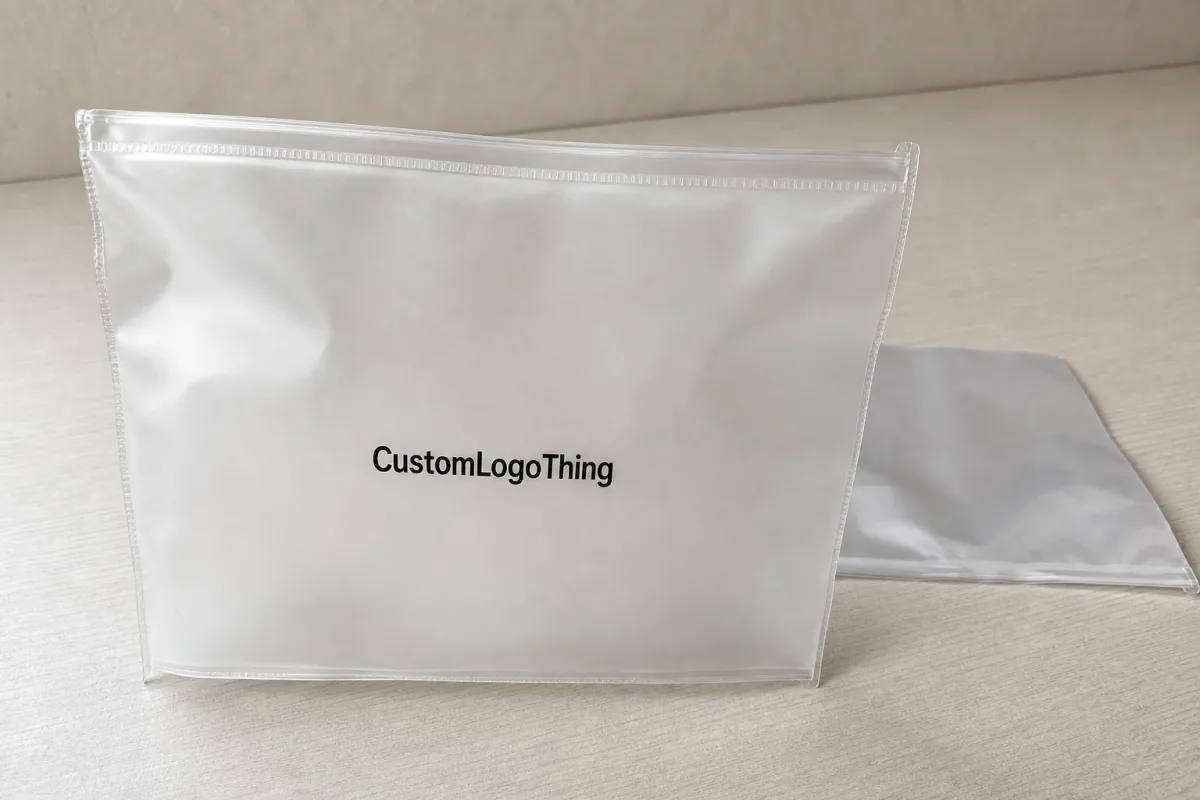
The most expensive reorder is the one placed after stock has already crossed the safe line. Buyers often wait because sales still look healthy, then discover the warehouse has less time than expected. Once the order is rushed, the quote can change fast. Air freight, split shipments, and schedule overrides can erase any savings from waiting.
The damage is often operational before it is financial. A delayed PO can create empty shelves, missed ship dates, and extra coordination between purchasing, sales, and fulfillment. For steady-moving SKUs, even a short stockout can cost more than a rush fee because the lost sales are harder to recover than the shipping charge.
A practical reorder point should include production lead time, transit time, approval time, and a buffer for delays. That buffer matters because artwork approval, carton changes, and seasonal capacity can slow a job even when the supplier is otherwise efficient. If the trigger is based only on average weekly consumption, it will miss the weeks that matter most.
“A reorder is only cheap if the spec is frozen and the timing is honest.”
Specs that must stay fixed between runs
Repeat orders work best when the physical spec stays locked. Start with dimensions: width, height, gusset depth, and opening size. If the bag is used for folded apparel, accessory packs, or small retail assortments, even a modest change can affect fit, seal behavior, and shelf presentation.
Film build matters just as much. Frosted opacity, thickness, zipper style, tear notch placement, and any hang hole or clear window should match the approved sample. “Frosted” is not one look. A lighter frost and a denser matte finish can change how the product reads on shelf and how the branding shows through.
Thickness also affects durability and hand feel. Common Custom Frosted Zipper Bags often fall around 2.5 mil to 4 mil, but the right choice depends on the contents and how often the bag is reopened. A heavier film can improve stiffness and perceived quality. A lighter film can reduce cost, but it may feel more flexible than the last run.
- Seal strength if the bag will be opened and closed many times.
- Gusset depth if the packed product has become bulkier.
- Tear notch placement if first-open convenience matters.
- Matte level if the finish needs to stay soft or clear.
- Print coverage if the artwork spans most of the front panel.
The safest source of truth is the last approved spec sheet and sample, not an old email thread. If the approved sample is missing, reconstruct the spec from measured dimensions, the proof file, and final carton notes. That takes time, but it is cheaper than ordering bags that are close enough on paper and wrong in use.
Artwork, labeling, and compliance checks for repeat orders
Artwork drift is one of the easiest repeat-order mistakes to miss. A logo moved a few millimeters, a barcode placed too close to a fold, or a warning line trimmed by the wrong template can turn a routine reorder into a reprint. The cost is not only the new print run; it is also lost time and a higher chance of mismatch.
Use the last approved artwork file, not the newest file someone uploaded. File names should match the proof version, and the version history should make it clear which file was approved. Packaging files are often stored in shared folders, so “latest” is not always the same as “correct.”
Before releasing a repeat order, check the items most likely to cause trouble:
- Logo placement and safe margins from the edge.
- Barcode position so scanners can read it without glare or folds.
- Warning copy if the product uses age, material, or safety language.
- Color tolerance if brand consistency depends on repeatable tone.
- Version control so the approved proof and the production file match.
If regulatory text is involved, confirm who owns final sign-off before production begins. Packaging may sit inside a broader compliance chain, and a repeat run should not rely on memory from the previous quarter. A shorter proof cycle is fine for repeat orders, but a PDF proof and first-article review still help catch small changes before they become receiving problems.
Pricing, MOQ, and landed cost before you request a quote
Pricing for frosted zipper bags is shaped by quantity tier, material weight, print complexity, and whether the order needs fresh setup work. If the repeat order matches the previous run exactly, the quote should be easier to compare. If the artwork, zipper construction, or carton pack-out changes, the price can move even when the bag looks similar.
MOQ matters because low-volume reorders often look attractive until setup and freight are spread across too few units. A 2,000-piece order usually costs more per unit than a 10,000-piece order, even when the material is identical. That gap is simply the cost of changeover, prepress, inspection, and packing being divided across fewer bags.
For planning purposes, many custom frosted zipper bag orders land in these rough ranges:
| Reorder scenario | Typical unit price range | What usually drives the number |
|---|---|---|
| 5,000 bags, simple single-color logo | $0.22-$0.38 | Setup spread across fewer units, standard film, basic packing |
| 10,000 bags, same spec as last run | $0.16-$0.28 | Better quantity tier, lower setup burden, steadier production flow |
| 25,000 bags, heavier print coverage | $0.11-$0.20 | Higher volume, more print time, tighter carton and freight planning |
Those numbers only help if buyers compare them to landed cost. A lower unit price can become a worse deal once freight, palletization, split delivery, or rework enter the picture. Ask whether the quote includes packing, whether cartons are suitable for warehouse handling, and whether extra charges apply if the order is split or rescheduled.
Production steps, timeline, and lead time checkpoints
A standard reorder follows a familiar sequence: quote, spec confirmation, artwork proof, sample approval if needed, production, QC, packing, and shipment booking. The job moves quickly when each step is already clean. It slows down as soon as one piece is missing, usually because of approval gaps, unclear revisions, or payment timing that holds release.
For straightforward custom frosted zipper bags, a realistic lead time is often 12-15 business days after proof approval. That is a baseline, not a promise. Large quantities, special zipper configurations, heavier print coverage, or a busy production calendar can extend the schedule. If the order needs new plates, a different film weight, or a revised pack-out, the timeline should be adjusted before the PO is issued.
If the warehouse has only two weeks of supply left, the reorder is already late. A safer trigger is to place the order while there is still enough inventory to cover production, transit, and receiving delays. Split shipments should also be decided before the purchase order goes out so the schedule, freight, and warehouse plan stay realistic.
Quality control that protects repeat-run consistency
First-article checks matter on repeat orders because they catch the kind of deviation that looks minor until it lands in the warehouse. A zipper that closes with too much resistance, a seal that feels weak near the edge, or a print shift that the proof did not reveal can all pass unnoticed if no one compares the first bag to the last approved sample.
Good QC on frosted zipper bags should cover the basics that affect use, not just appearance:
- Zipper function opens and closes smoothly across multiple bags from the lot.
- Seal integrity holds under normal handling without weak edges.
- Print alignment stays within the approved placement window.
- Thickness consistency feels even across the batch.
- Carton counts match the receiving plan.
If a deviation is approved, document it. Record the dimension change, the artwork note, the carton pack-out, and the person who signed off. That record becomes the reference point for the next reorder. For larger shipments, outer carton strength should also be considered so the bags survive transit as well as production.
What a reliable repeat-order process looks like
A good repeat-order supplier does more than quote quickly. It keeps the record clean. The prior spec is easy to retrieve, the artwork history is clear, the approved changes are documented, and the buyer does not have to rebuild the order from scattered emails. That saves time on every reorder and reduces friction for the purchasing team.
Consistency also reduces sampling waste. Buyers should not have to pay for multiple sample rounds to rediscover the zipper width, thickness, or finish already approved last quarter. When the record is organized, repeat orders move with less back-and-forth and fewer surprises. That matters more than sales language.
There is a quieter benefit too: planning gets more accurate. Once the real lead time, carton count, and reorder trigger are documented, inventory stops bouncing between shortage and overstock. The packaging line becomes easier to manage because the assumptions are fixed instead of guessed.
Next reorder actions that prevent a rush order
Before the next PO goes out, audit current inventory, compare it with open orders, and set the reorder trigger now. Waiting until the last pallet is open is how rush charges show up. If the logo, barcode, warning text, or carton count has changed, treat the order as a fresh approval step rather than a copy of the previous run.
Then confirm the last approved dimensions, film thickness, zipper style, and delivery window. If any of those items moved, handle the order as a modified repeat, not a blind reorder. That distinction saves money by preventing the small mistakes that create rework later.
The practical habit is simple: keep the reorder plan tied to every repeat cycle, not just the first purchase. Reorders go faster and cost less when the spec is locked, the artwork is current, and the timeline is set before the warehouse is forced into a rush.
How early should I reorder frosted zipper bags before stock runs out?
Reorder while you still have enough inventory to cover lead time plus a buffer for delays. If demand varies, use the highest realistic weekly burn rate instead of the average. That gives you a safer trigger and reduces the chance of a premium shipment.
What specs should stay unchanged on a frosted zipper bags reorder?
Keep dimensions, thickness, zipper style, and frosted finish locked unless the product fit or presentation has changed. Use the last approved artwork and carton spec so production does not have to guess.
Why does pricing change on a frosted zipper bags repeat order?
Price moves with quantity tier, print complexity, film weight, and whether the order needs a new setup. Smaller reorders usually carry a higher unit cost because setup and freight are spread across fewer bags.
Do I need a new sample before a reorder of frosted zipper bags?
Not always, but a current proof or first-article sample is wise if anything changed. Use one when dimensions, artwork, zipper style, or thickness have been updated, or when the previous run had a quality issue.
Can frosted zipper bags reorders be split into multiple shipments?
Yes, if production and freight planning support it. Ask about split-shipment timing before the PO is issued so the schedule stays realistic. Splits can help with warehouse space or cash flow, but they may add handling or freight cost.

