A custom frosted zipper Bags Bulk Order is a practical choice when packaging has to look clean, protect the product, and pack efficiently. The frosted finish softens what is inside without making the bag fully opaque, so the customer still gets product visibility without seeing every crease, label, or odd shape. That balance is why this format works across retail, beauty, wellness, accessories, and small kit packaging.
For buyers, the format matters because it affects more than appearance. Frosted Zipper Bags are lightweight, flat to store, and easier to pack than rigid boxes. They also help standardize a product line: one bag style can work for samples, accessories, and bundled sets with only the artwork or insert changing. That reduces packaging sprawl and keeps the system easier to reorder.
Why frosted zipper bags create a cleaner retail presentation
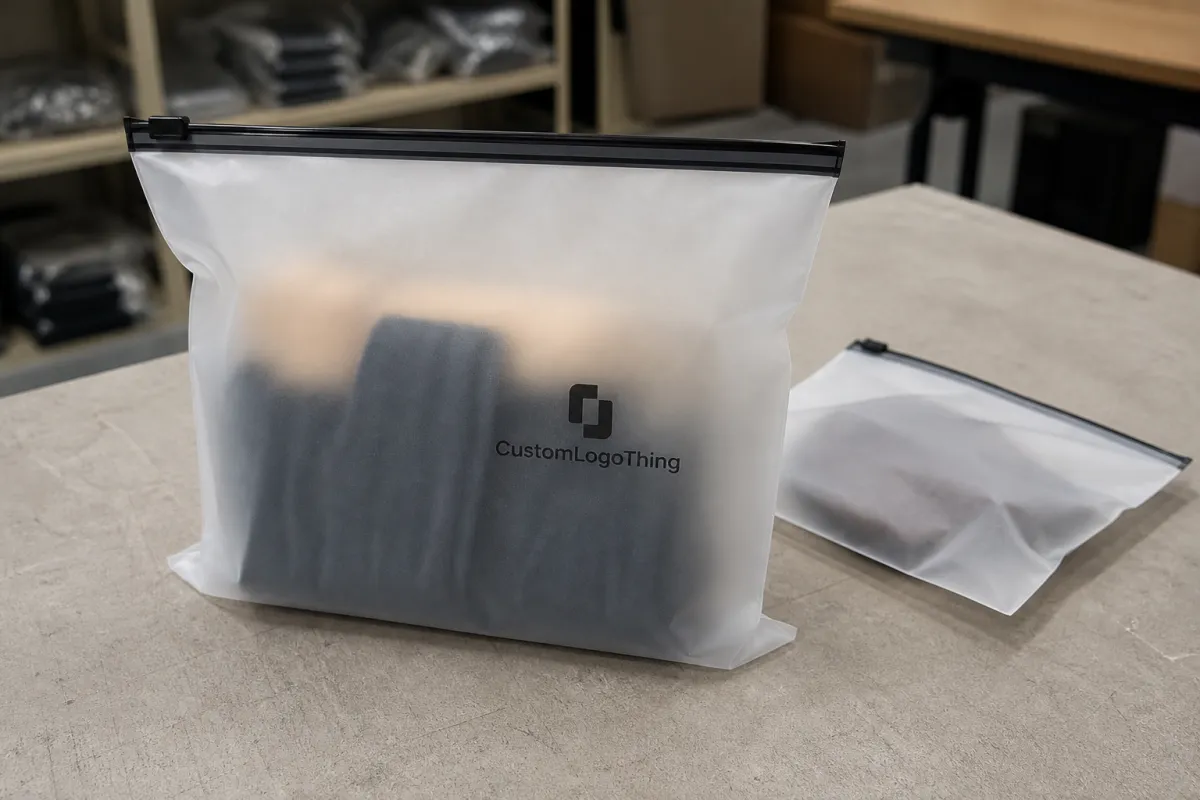
Frosted film removes visual noise. Clear bags show every wrinkle and mixed component; boxes hide too much and cost more. A frosted zipper bag sits in the middle and usually looks more intentional than either extreme.
This is especially useful when the product itself is not visually tidy. Folded accessories, cable sets, sample kits, and multi-piece bundles can look cluttered in clear packaging. The frosted surface hides enough of that clutter to make the presentation feel controlled without obscuring the contents completely.
Common uses include:
- Apparel accessories such as socks, scarves, belts, and small add-ons
- Beauty and personal care sample sets or travel sizes
- Wellness and supplement packs that need a sealed, tidy presentation
- Hardware, parts, and small components that benefit from partial visibility
- Gift sets and promotional bundles that need a cleaner first impression
The same format also helps with line consistency. A brand can use the same bag shape across several SKUs and vary print, insert, or size rather than redesigning packaging every time. That is useful when the goal is a consistent shelf look with controlled cost.
Film, zipper, and finish details that affect daily use
Most Frosted Zipper Bags use LDPE or an LDPE/LLDPE blend. The material choice matters because it determines flexibility, feel, and cost. The frosted look comes from the film finish itself, not from a surface coating. A good bag should fold cleanly, hold shape reasonably well, and not feel overly limp in hand.
The zipper is just as important as the film. It needs to open with controlled resistance, close cleanly, and keep working after repeat use. A zipper that feels too stiff makes the bag seem cheap; a loose zipper can feel unreliable. That is a real problem for products customers will open more than once.
Small functional features can make a major difference in retail and fulfillment:
- Hang holes for peg display
- Tear notches for a cleaner first open
- Gussets for thicker or bulkier contents
- Euro slots for hanging and warehouse handling
Print on frosted film behaves differently than on glossy clear plastic. Fine type, thin lines, and low-contrast artwork can soften more than expected. Bold marks usually reproduce better. If the design depends on a premium look, the placement matters too; moving the logo a few millimeters can improve balance around the zipper and make the bag feel more deliberate.
Size, thickness, and print specifications to lock in
Before requesting a quote, define the actual spec. Interior dimensions, opening width, film thickness, zipper type, and whether the bag is flat or gusseted should all be clear. If those basics are vague, the quote and the final result will be vague too.
Thickness should match the product. Light samples do not need the same gauge as heavier kits, and overbuilding the bag adds cost without helping the buyer. For many retail applications, 3-4 mil is enough for lighter contents, while 5-6 mil gives a sturdier hand feel for heavier or more frequently handled packs.
Printing choice should be equally deliberate. Front-only print is usually the cleanest option for simple branding. Front-and-back print makes more sense when instructions, compliance text, or extra product information need space. The wrong choice is extra ink coverage that does not improve the package.
| Spec choice | Best for | Practical note |
|---|---|---|
| 3-4 mil film | Light retail items, sample packs | Lower cost, fine for low-weight contents |
| 5-6 mil film | Accessory sets, heavier kits | Better structure and less flimsy in hand |
| Front-only print | Simple branding | Usually the cleanest shelf presentation |
| Front-and-back print | Instructions or compliance text | Useful when both sides face the customer |
| Gusseted bag | Bulkier items or kits | Adds volume, but changes stacking behavior |
Tolerance matters if the bag has to fit an insert card, divider, or specific pack-out tray. Confirm the approved spec sheet before production begins so the opening width, zipper profile, and print position stay within the needed range. A few millimeters of drift can create fit problems that only show up when the cartons arrive.
For reorders, a documented spec sheet is essential. It protects the bag from drifting in size, seal feel, and print placement between runs. Once the package changes shape or closes differently, customers notice even if they do not say it directly.
Custom frosted zipper bags bulk order: pricing and MOQ
Pricing for a custom Frosted Zipper Bags bulk order usually comes down to five variables: size, thickness, zipper style, print coverage, and quantity. Larger bags use more film. Thicker film costs more. More print colors or full coverage add setup and press time. If the order needs special carton labeling or kitting, that can affect the total as well.
MOQ moves with the spec. Plain bags often allow smaller runs. Printed bags, gusseted styles, and special zipper profiles usually need a higher minimum because setup costs must be spread across more units. Any firm MOQ should be tied to a specific spec, not given as a generic number.
Budget on landed cost, not just unit price. Freight, cartons, sample charges, and proof revisions can change the real spend quickly. A lower unit price can still be the more expensive option once shipping and handling are added. Comparing different specs under one quote is more useful than chasing the lowest headline number.
Typical pricing behavior looks like this:
- Low-volume printed runs usually cost more per unit because setup is spread across fewer bags
- Repeat bulk orders often reduce unit cost once artwork and tooling are approved
- Heavier film, larger sizes, and more print colors push pricing up quickly
As a rough market range, small custom runs may sit around $0.30 to $1.00 per bag depending on size and print complexity, while larger repeat orders can fall below that. The range is wide because the spec drives the number more than the product name does. A tiny printed pouch and a large frosted retail bag are not comparable jobs.
MOQ and price should be evaluated together. A lower MOQ can help a launch, but the per-unit cost may be too high for a profitable rollout. A larger order improves pricing only if the bags will be used before the product or packaging plan changes. Overstock in packaging is still overstock.
Production steps, proof approval, and lead time planning
The workflow is straightforward: artwork intake, dimension confirmation, proofing, production, quality checks, and shipment. In practice, delays usually happen before the order reaches the press. Missing measurements, unclear copy, and late artwork changes slow things down more than anything else.
If the order needs to move quickly, send final dimensions, print files, quantity targets, and any fit references together. If the bag has to work with an insert card, tray, or product bundle, include that information at the start. The less guessing required during proofing, the faster the job moves.
Lead time depends on quantity, print complexity, and whether the order is plain or custom printed. A simple plain bag generally moves faster than a multi-color print. A common planning window is 2-4 weeks for production after approval, plus shipping time on top. Samples usually take less time, but they still need review before the full run starts.
Late changes are the biggest schedule risk. A moved logo, revised copy block, or shifted zipper position can require a new proof and add days. If the bags support a launch, seasonal reset, or event shipment, build in a buffer. Tight schedules and packaging revisions do not mix well.
Quality checks should focus on the parts buyers actually use: seal integrity, zipper function, print registration, and color consistency. Packaging standards often borrow from transit and shipping references such as ISTA, while material or sustainability questions may overlap with guidance from EPA. If the package includes paper inserts or labels, FSC is a useful reference for that component.
How we keep print, seal, and reorder consistency
Consistency is the real test. A sample that looks good is not enough if the final run drifts on seal strength, zipper feel, or print alignment. Reorders expose those problems immediately, and the package starts working against the brand if the second shipment looks or closes differently from the first.
Good quality control starts with repeatable checks. The zipper should open and close cleanly. The seal should hold without weak spots. Print should stay centered within the approved area. Color should remain within an acceptable range, especially for logos placed against the frosted base.
Documentation matters because it prevents drift. Keep the approved dimensions, film spec, print layout, and zipper details on file so the next order matches the first. That is basic, and basic is what keeps packaging repeatable.
It also helps to make trade-offs early. A second print color may look good in a mockup but add little value on frosted film if the material already softens detail. A gusset may improve volume but make stacking worse. The best spec is usually the one that solves the packaging problem without creating three new ones.
What to prepare before you request samples or a final quote
The cleaner the brief, the faster the quote. Before asking for samples or pricing, gather the bag size, product weight, target thickness, artwork files, quantity target, and any display requirements such as hang holes or euro slots. A reference photo also helps if the product shape is awkward or the pack-out is unusual.
A useful checklist looks like this:
- Final bag size and opening width
- Product weight and contents
- Desired film thickness
- Print file and branding details
- Quantity target and reorder expectation
- Display, shipping, or hanging needs
If there is a launch date, share it early. That is not about pressure; it is about matching the work to the schedule. A packaging order for a retail reset does not move on the same timeline as a replenishment run, and treating them the same usually creates avoidable stress.
The goal is a bag that looks right, seals right, and reorders without drama. That is the point of a custom Frosted Zipper Bags bulk order: fit the product, control the cost, and keep the spec stable from the first run to the next.
FAQ
What is the usual MOQ for frosted zipper bags bulk orders?
MOQ depends on bag size, thickness, and whether the order is plain or printed. Plain bags can often start lower, while custom printed or specialty styles usually need a higher minimum to cover setup. A supplier should confirm the MOQ alongside the exact spec, not after the artwork is already finished.
How do I choose the right thickness for custom frosted zipper bags?
Match the gauge to the product weight, how often the bag will be opened, and whether it will be shipped loosely or packed tightly. Light samples usually do fine with thinner film, while accessory sets and multi-piece kits often need more structure. If the bag feels too soft in sample form, it will feel worse in production.
Can custom frosted zipper bags be printed on both sides?
Yes. Front-only print works well for simple branding, while front-and-back print is useful for instructions, compliance text, or broader branding. The proof should show both sides clearly so the logo, text, and zipper line all make sense together.
What affects the price of a custom frosted zipper bag order the most?
Size, thickness, zipper style, print coverage, and quantity have the biggest impact. Freight and packaging extras can also move the total. If two quotes look close, compare the full spec and landed cost instead of just the unit number.
How long does a frosted zipper bag bulk order usually take?
After approval, production often runs about 2-4 weeks for standard printed orders, with shipping time added on top. Simple plain bags can move faster, while detailed artwork or late proof changes can slow things down. Sample approval is the easiest way to keep the schedule from slipping.

