If you are comparing Frosted Zipper Bags Wholesale private label options, the real question is not whether you can buy bags. You can. The question is whether the bag will look branded, protect the product, and still make sense on landed cost. Plain poly bags are cheap. They also look cheap. That is usually why buyers move to frosted zipper bags in the first place.
From a packaging buyer’s point of view, frosted film gives you a cleaner shelf read, better product photos, and a more premium feel without jumping straight to rigid boxes. That matters if you sell apparel, cosmetics, stationery, accessories, snack inserts, or subscription items. A decent frosted zipper bag can do a lot of work for very little weight.
That said, not every frosted bag is a good buy. Some feel soft and premium. Some feel like someone simply sandblasted a plastic pouch and hoped for the best. The difference usually comes down to film structure, zipper quality, and print discipline.
Why frosted zipper bags sell better than plain poly bags
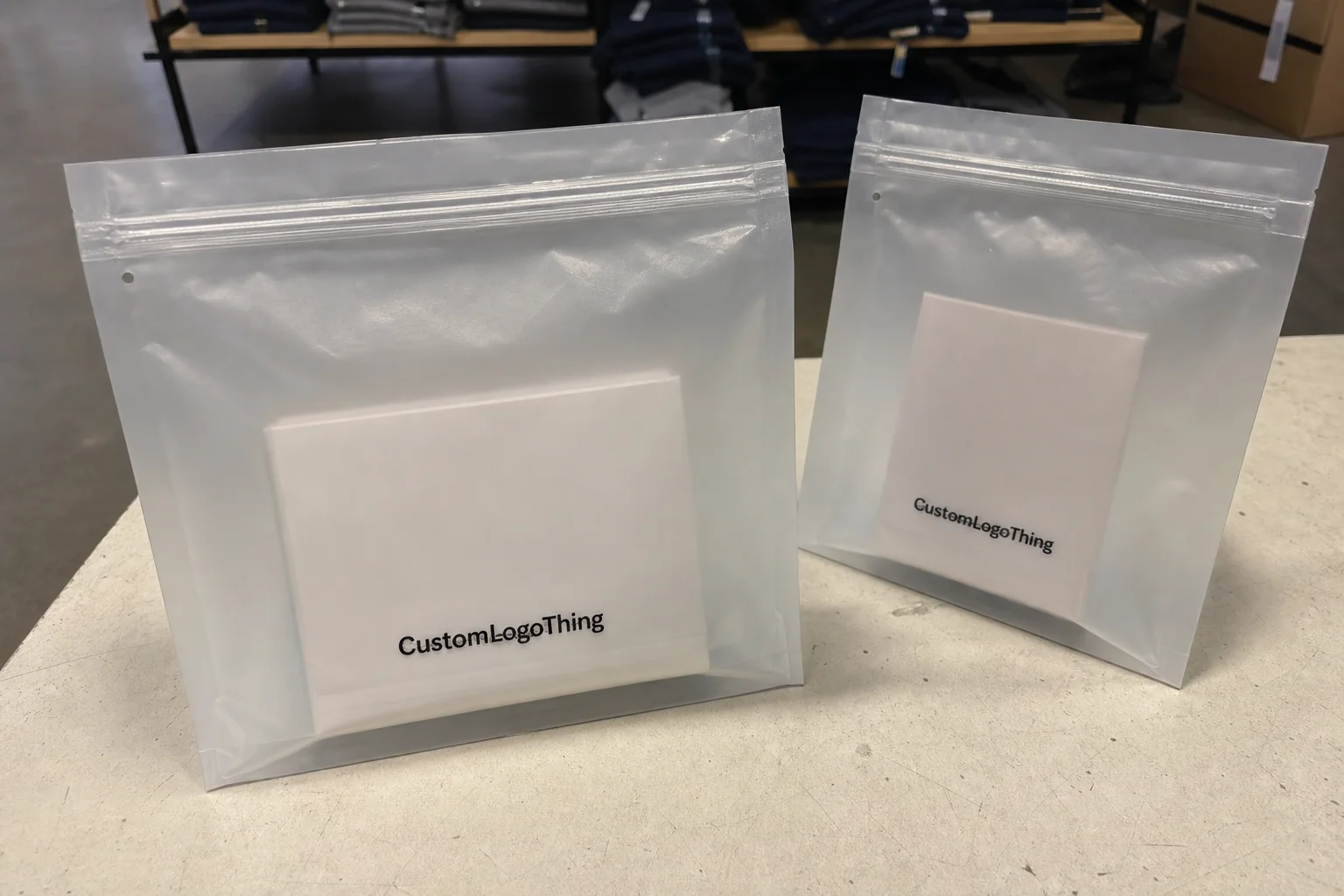
Frosted film has one job: make the packaging look intentional. It diffuses light, softens the plastic shine, and hides fingerprints better than clear poly. That sounds small. It is not. On a retail peg or in a DTC unboxing photo, those details change how the product is perceived in about two seconds.
Brands use Frosted Zipper Bags when they need packaging that protects the item but still feels presentable. They are common for tees, socks, swimwear, jewelry pouches, skincare sets, stationery bundles, and small promotional kits. They also work for subscription inserts that need to arrive flat, clean, and organized.
The practical appeal is straightforward:
- Lower shipping weight than cartons or rigid boxes
- Easy storage because bags ship flat
- Wide size range for small SKUs and medium products
- Better visual consistency across repeat orders
That last point matters more than people admit. Private label packaging is not just decoration. It becomes a repeatable brand asset. Once your logo placement, bag size, and opacity are set, you stop improvising every re-order. That saves time and keeps the product line from looking random.
Buyer reality: if the packaging looks like an afterthought, customers assume the brand runs that way too. Harsh, but true.
For many brands, Wholesale Programs are the easiest way to get consistent packaging without building a complicated sourcing process from scratch. If you also need matching hang tags or product stickers, Custom Labels & Tags can help carry the same visual system across the line.
Private label options that make the bag feel custom
Private label is where a basic zipper bag starts acting like branded packaging. The strongest options are usually simple, not flashy. A clean logo in the right place beats a crowded design nine times out of ten. Especially on frosted film, where too much ink can kill the soft premium look.
Core customization choices
Most frosted zipper bag orders allow some mix of these details:
- Logo placement on the front center, lower corner, or repeated pattern
- One-color or multi-color print depending on artwork and budget
- Matte or glossy finish if the film build allows it
- Tinted frosted film for a subtle brand tone
- Custom zipper pulls for higher-end presentation
What matters most is contrast. A white or dark logo on frosted film usually reads well. Thin lines and tiny text are risky unless the supplier has strong registration control. If your brand mark has fine detail, simplify it before production. Packaging is not the place to prove how clever your designer is.
Product-specific features
For some categories, you need more than print. Hang holes help retail display. Euro slots are common for peg hooks. Reinforced seams matter if the bag will be opened and closed often. Tamper-evident features can be useful for cosmetics or food-related inserts, though not every bag style supports them cleanly.
There is always a tradeoff between decoration and durability. Heavy ink coverage can make the bag feel less open and less frosted. Extra hardware can increase cost and complicate lead time. So the best setup depends on your SKU count, your retail positioning, and whether the packaging is meant to be reused by the customer.
If you run a small product line, a simple logo print may be enough. If you sell at a premium price point, full-surface print or a more specialized zipper pull can justify the extra spend. Just do not pay for decoration that the customer will never notice.
Material, thickness, and zipper specs buyers should lock in
Material choice is where many orders go sideways. The bag looks fine online, then shows up too flimsy, too cloudy, or weirdly stiff. That is why you should confirm the structure before anyone starts printing. For Frosted Zipper Bags, the common material choices are PE, EVA, or mixed film constructions depending on flexibility and desired feel.
PE is common for cost-sensitive packaging and general use. EVA often feels softer and more premium, though it may cost more. Mixed films can improve hand feel or durability, but the exact result depends on the supplier’s formula and processing. There is no magic material that fixes bad spec planning.
Specs to confirm before you approve an order
- Width and height of the finished bag
- Gusset depth if the product needs volume
- Usable interior space after seal allowances
- Zipper style and closure strength
- Film thickness, usually quoted in microns or mils
- Seal integrity and straightness
Thickness should match the product. Lighter apparel inserts and accessory packaging often work in the lower thickness range. Heavier items, repeated opening, or thicker bundles usually need a sturdier build. As a practical reference, many buyers use thinner film for presentation items and thicker film for products that will be handled multiple times. Exact numbers depend on the bag format, but the logic stays the same: thinner saves money, thicker saves complaints.
For many retail and ecommerce uses, a bag in the roughly 2.5 to 6 mil range is a common starting point, but that is not a rule. A soft accessory pouch and a heavy bundled kit are not the same job. Ask for a sample that matches the real product weight, not the optimistic version of it.
Moisture resistance is another reason buyers choose frosted zipper bags. They are not Waterproof Shipping Mailers, and nobody serious should pretend they are. But they do give decent protection against dust, fingerprints, and light handling during storage or retail display. Print adhesion also matters here. Frosted surfaces can be more forgiving than glossy poly, but poor ink setup still smears or rubs off.
Ask for sample checks on three things: zipper engagement, seam strength, and print adhesion. If the zipper feels sloppy on a sample, it will not magically improve in bulk. Physics remains annoyingly consistent.
For product testing and shipment durability, many brands also reference standards and guidance from groups such as ISTA for transport testing and EPA guidance when evaluating material and waste considerations. Not every order needs full lab testing, but the standards exist for a reason.
Frosted zipper bags wholesale private label: cost, MOQ, and quote drivers
Let’s talk money. Frosted zipper bags wholesale private label pricing usually comes down to size, thickness, print colors, quantity, and any custom hardware. Bigger bags use more material. Heavier film uses more resin. Multi-color print adds setup and production complexity. And yes, all of that ends up in the unit price.
For practical buying, the rule is simple: smaller runs cost more per unit, larger runs lower the unit cost but increase inventory risk. That is why a brand ordering 500 pieces and a brand ordering 20,000 pieces will never see the same price structure. Nor should they.
| Order profile | Typical MOQ | Unit cost tendency | Best for |
|---|---|---|---|
| Standard size, one-color logo | 500-1,000 pcs | Lower setup, moderate unit price | New brands, seasonal tests |
| Custom size, one- or two-color print | 1,000-3,000 pcs | Better pricing after setup is spread out | Growing product lines |
| Fully custom size and multi-color branding | 3,000+ pcs | Best unit cost, higher inventory commitment | Established brands, repeat orders |
As a rough buying range, many frosted zipper bag programs land somewhere around $0.12-$0.35 per unit depending on size, print coverage, film thickness, and quantity. Very small runs or heavy customization can sit above that. Large repeat orders can go below it. If a quote sounds unusually low, check what is missing. Often it is either the setup fees, the print quality, or the real freight cost.
When you request a quote, ask for the exact dimensions, material, thickness, print colors, packaging method, and shipping destination. If you do not define those details, the quote is basically decoration. Ask also whether artwork cleanup, printing plates or screens, and rush charges are included. Hidden costs usually show up in prepress or freight, not in the headline unit price.
For brands comparing suppliers, it helps to request three versions of the same quote: a low MOQ option, a best unit cost option, and a recommended production quantity. That gives you a better picture of where the price break really sits.
The landmine most buyers miss is packing method. Ten bags in a poly bundle, 100 bags per inner carton, or flat-packed bulk all affect labor and shipping cost. A quote that ignores packing can look cheap on paper and expensive in the warehouse.
Production process and timeline from artwork to shipment
A normal custom packaging run follows a predictable path. The suppliers who make it look complicated are usually hiding weak process control. The basic sequence is quote review, dieline confirmation, artwork setup, sample approval, mass production, quality check, packing, and shipment.
If your artwork is press-ready and the specs are fixed early, things move faster. If the logo file is a low-res screenshot and the size keeps changing, the schedule gets ugly. That is not the factory being difficult. That is bad input.
Typical timing expectations
- Artwork setup and proofing: 1-3 business days when files are clean
- Sample approval: 3-7 business days, sometimes longer for custom builds
- Mass production: often 12-15 business days after approval for straightforward runs
- Quality check and packing: 1-3 days depending on order size
Complex printing, thicker film, special zipper parts, or busy production seasons can extend the timeline. That is normal. What is not normal is a supplier pretending every order ships yesterday. Be suspicious of anyone who gives a miracle schedule without asking about artwork, quantity, or finishing.
Before mass production starts, approve one master sample for color, zipper feel, and logo placement. One sample. Not a screenshot. Not a vague yes in chat. A physical or clearly documented approval that both sides can reference later. If a future repeat order drifts, that sample and the final approved spec sheet protect you from re-litigating the basics.
Shipping choice changes the total timeline a lot. Air freight is faster and more expensive. Sea freight is slower and cheaper. For bulky cartons, sea usually makes more sense if you can plan inventory ahead. For urgent launches, air can be worth it, but only if the margin supports it.
For packaging that may go through transport tests, ISTA standards are a useful reference point. Not because every zipper bag needs formal certification, but because packaging failures usually show up during movement, stacking, and handling, not in a neat warehouse photo.
Quality checks and supplier proof points that reduce risk
The supplier proof points you ask for should be boring and specific. Material spec sheet. Finished sample. Factory QC process. Clear tolerance ranges. If the supplier cannot provide those, the order is already on shaky ground.
Common quality problems are not dramatic. They are annoying. Color drift. Zipper misalignment. Weak seals. Print smudging. Uneven frosted opacity. Off-center logos. None of this is glamorous, but all of it costs money once the cartons are on the floor.
What to inspect on arrival
- Finished dimensions match the approved spec
- Seal straightness is consistent
- Zipper closure opens and closes cleanly
- Print registration is centered and sharp
- Carton count matches the packing list
Pay attention to how the supplier communicates. Fast replies matter, but clarity matters more. A good supplier tells you where the tolerances sit, what defect rate they expect, and whether sample revisions are part of the process. A vague supplier sends cheerful messages and surprise problems.
If you are planning repeat orders, keep one approved spec sheet with the exact bag dimensions, material, thickness, print file version, and packing method. That one document can save you from the classic “this is close enough” problem. Close enough is not a spec.
Also inspect how the bag behaves under real use. A zipper that closes neatly once can still split after several cycles. A seal that looks straight may fail at the corners. Samples should be opened, closed, stacked, and packed with the actual product, not just held up to the light and admired.
For buyers concerned with material sourcing or environmental claims, organizations such as FSC are useful references if your broader packaging program includes paper components. Plastic zipper bags are a different category, of course, but responsible sourcing should still be part of the conversation.
Next steps to order branded frosted zipper bags
If you want branded packaging without wasting time, prepare five things before requesting a quote: target size, product weight, logo file, preferred quantity, and any special features such as hang holes or matte finish. That gives suppliers something real to price instead of forcing them to guess.
Ask for three quotes in one pass: low MOQ, best unit cost, and a recommended production quantity. That makes the tradeoff visible. You can see whether the lower price is actually worth the larger cash outlay, or whether a smaller order is smarter for your current inventory plan.
For first-time private label orders, ask for a pre-production sample or at least a digital proof before deposit. I would not skip that step unless the design is trivial and the supplier has a long, proven record with your exact spec. Even then, it is cheap insurance.
Use a simple decision path:
- Choose stock dimensions if speed matters most.
- Choose custom sizes if fit and shelf presentation matter more.
- Choose simpler print if you are testing the market.
- Choose fuller branding once the SKU proves itself.
That is usually the smartest way to buy frosted zipper bags wholesale private label without overcommitting. Compare unit cost, lead time, and sample quality side by side. Then place the order that actually fits your product, your margin, and your launch schedule. Fancy packaging is nice. Packaging That Sells and repeats is better.
What is the typical MOQ for frosted zipper bags wholesale private label?
MOQ depends on size, print complexity, and whether the bag is a stock dimension or fully custom. Simple logo printing on a standard size usually has a lower MOQ than a custom size with multi-color print. Ask for both the minimum order and the best-price quantity so you can compare real cost breaks.
Can frosted zipper bags be printed with a private label logo?
Yes. Common options include one-color logo print, multi-color branding, and simple text placement. Print coverage should be balanced with the frosted look so the bag still feels clean and premium. Artwork quality matters; vector files usually give the best result.
How do I choose the right thickness for frosted zipper bags?
Match thickness to product weight, how often the bag will be reopened, and how much protection you need. Lighter items can use thinner film, while heavier or repeated-use packaging benefits from a thicker build. Always test zipper feel and seam strength on a sample before ordering in volume.
How long does private label production usually take?
Timing depends on sample approval, print complexity, and order size. Straightforward orders move faster when artwork is final and specifications are fixed. Shipping method also changes total delivery time: air is faster, sea is cheaper.
What should I ask for in a quote before buying wholesale?
Request exact size, material, thickness, print colors, MOQ, production time, and shipping cost. Ask whether artwork setup, plates, or rush fees are included or billed separately. Compare at least two quantity levels to see the real unit cost difference.


