Swimwear packaging has to do two things at once: protect the product and make it look worth the price tag. That is why the Frosted Zipper Bags unit cost breakdown for swimwear brands matters so much. The right bag can look premium without dragging you into rigid-box pricing or a packaging spec that makes fulfillment annoying.
A frosted zipper bag gives you a clean, semi-translucent finish that feels more elevated than a plain clear poly bag. It still lets color, print, and sizing cues show through, which is useful when the customer needs to identify the item quickly. The question is not just what the bag costs. It is what drives that cost, which details change the quote, and where the “small extras” quietly stack up.
There is also a functional side. Swimwear is a moisture-prone category, so a resealable bag helps keep garments together during storage, packing, and shipping. It also supports returns and reuse, which many buyers quietly appreciate even if they never put it in the brand deck. Packaging that looks good and works hard tends to survive repeat orders. Fancy is nice. Useful is better.
Why Swimwear Brands Choose Frosted Zipper Bags for Premium Presentation
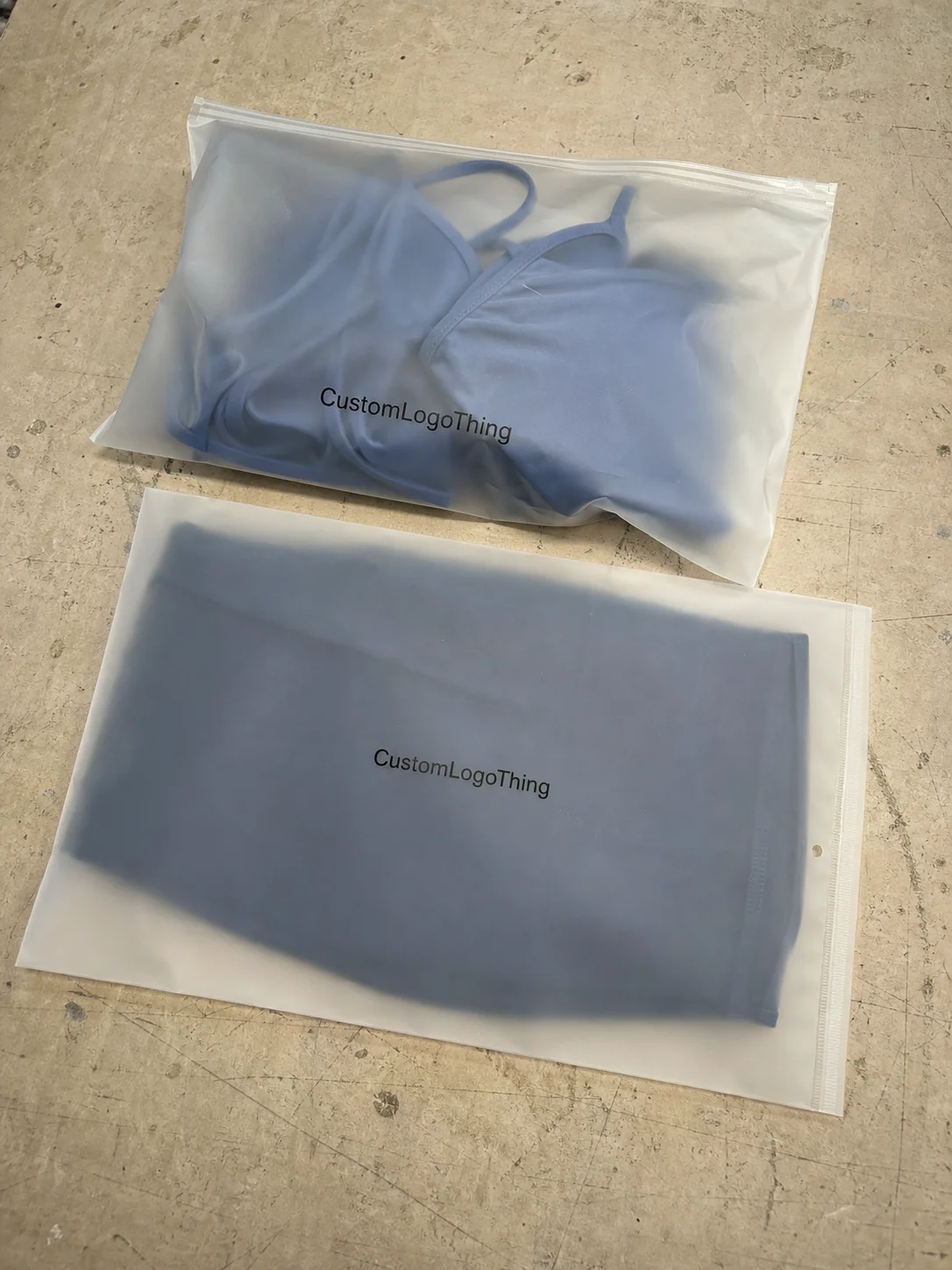
Swimwear is a category where presentation gets judged immediately. Customers compare similar-looking products fast, and the packaging often shapes the first impression before they touch the fabric. A frosted zipper bag helps signal a more polished brand position without the bulk or freight penalty of a rigid carton.
The semi-translucent look is the sweet spot. You can still identify the garment inside, which helps with color matching, size checks, and SKU handling, but the bag keeps the product partially concealed. That makes the unboxing feel more intentional. It also explains why buyers ask for the Frosted Zipper Bags unit cost breakdown for swimwear brands instead of just asking for “the bag price.” The bag is doing branding work, not just containment.
These bags work in both DTC and boutique settings. For e-commerce, they keep sets organized and easy to pack. For retail display, the frosted surface looks more disciplined than a loose folded garment in a basic sleeve. The bag itself does not need to be dramatic. It just needs to look clean, stay consistent, and not embarrass the product inside.
That consistency matters more than brands sometimes expect. If one batch looks hazy, another looks too glossy, and the zipper closure varies from run to run, customers notice. Maybe not consciously. But they notice. Packaging quality is one of those quiet signals that either supports the price point or undermines it.
Materials, Finish Options, and Functional Build Details
Most frosted zipper Bags for Apparel are made from LDPE or a similar flexible film. LDPE works well for swimwear because it has enough give to fold, compress, and handle warehouse movement without cracking like a stiffer plastic can. Typical thickness ranges are about 60 to 120 microns, depending on how premium the bag needs to feel and how much protection it needs.
The frosted effect can come from the film structure itself or from a surface treatment. A matte-leaning finish hides scuffs better and usually looks more refined under retail lighting. A slightly clearer frosted look can make the garment inside easier to see. Both can work. The better choice depends on whether the brand wants more visual privacy or more product visibility.
Zipper style is another small detail with a bigger impact than people expect. A standard press-to-close zipper is common because it is economical and easy to use. Some brands ask for a wider closure track for a more substantial feel. Tear notches can improve opening convenience, and hang holes matter if the bag is going on a peg or hook in store. None of that is flashy. All of it affects the user experience.
Bag size needs to match the product. A bikini set does not need the same footprint as a one-piece suit, and bundled sets or cover-ups may need extra room so the film is not overstretched. Oversizing is not free. It raises material use and can hurt freight efficiency once quantities scale up. A good spec is large enough to fit the product cleanly and small enough to avoid wasting plastic and carton space.
Common optional features include:
- Hang holes for retail display
- Vent holes to release trapped air in packed sets
- Custom labels for size or SKU identification
- Spot printing for logos or care messaging
- Thicker film for better puncture resistance
None of these is mandatory. But each one changes the build, the labor, or the final quote. Packaging buyers learn fast that “just add one more thing” is how a simple order turns into a budget line with attitude.
Specifications That Affect Fit, Protection, and Shelf Appeal
When comparing custom frosted bags, the first thing to check is the spec sheet. Not the mockup. Not the pretty render. The spec sheet. That is where you see the actual differences in thickness, dimensions, zipper width, tolerance range, and finishing details. If one supplier quotes 80 microns and another quotes 100 microns, those are not the same package, even if the sample photos look nearly identical.
Thickness affects more than durability. Thicker film usually feels more substantial in hand and offers better resistance to puncture, edge stress, and scuffing. The tradeoff is cost and flexibility. Too thick, and the bag can feel stiff, take up more freight space, and slow down packing at the folding table. In practice, many swimwear brands settle in the middle because they want a polished feel without overbuilding the package.
Print coverage is another major driver. A simple one-color logo on frosted film keeps setup manageable. Full-surface branding increases labor, registration work, and the chance of rework if the artwork does not line up cleanly. More ink coverage usually means more cost. A small logo can be very efficient; a detailed wraparound layout is a different purchase entirely.
Seal quality matters too. A zipper that closes unevenly or drifts off line creates an immediate cheap impression. For swimwear, where packaging often stands in for product quality before the garment is touched, that matters. Clean edge finishing, consistent zipper alignment, and stable bag dimensions help reduce complaints and returns, especially in DTC orders where the customer handles the packaging directly.
Some buyers also need compliance or material documentation. If you want recycled-content options, low-odor film, or a more controlled packaging environment, say that early. If shipping performance is a concern, ask for transport testing that references common methods such as ISTA protocols. For paper-based inserts or secondary components, FSC guidance may matter as well; see FSC for current chain-of-custody information.
Frosted Zipper Bags Unit Cost Breakdown: What You Pay For
The frosted zipper Bags Unit Cost Breakdown for swimwear brands starts with the obvious drivers: resin grade, film thickness, bag size, zipper style, and decoration method. But the quote rarely equals raw material plus labor. More often, it is a mix of direct production cost, fixed setup charges, and order-specific handling spread across the run.
Here is the practical breakdown. A lower-cost bag may use lighter film, a standard zipper, and minimal printing. A premium build may use thicker LDPE, tighter dimensional control, custom printing, and more inspection. On top of that, setup charges, plate or tooling fees, and sample preparation can move the total. Two quotes can look similar at the unit level and still land very differently once the full order is counted.
| Cost Element | What It Covers | Typical Impact on Unit Cost |
|---|---|---|
| Material | LDPE or similar film, thickness, frosted finish | Usually the biggest base driver |
| Zipper | Standard press-to-close, widened closure, specialty tracks | Moderate increase for upgraded styles |
| Printing | Logo, color count, coverage area, registration complexity | Low to high depending on art |
| Setup and tooling | Plate charges, artwork prep, machine setup | Higher on small runs |
| Packing and freight | Carton config, bulk packing, shipping mode | Can change landed cost a lot |
Unit cost usually falls as volume rises because fixed costs get spread across more pieces. If artwork prep costs the same for 2,000 units and 10,000 units, the per-piece impact drops at the larger quantity. That is basic math, but it is also the part many buyers forget when they focus only on the headline quote.
To give a realistic range, a simple frosted zipper bag with minimal branding will price very differently from a larger, thicker, fully printed version. For a custom swimwear run, the pricing gap between quantity tiers can be wider than the gap between two suppliers quoting the same spec. So the real task is to compare landed cost, not just the number printed next to “unit price.”
Hidden costs deserve attention. A quote can look competitive until you add artwork edits, sample courier charges, carton requirements, or export freight. If you are ordering internationally, those items can change the total enough to alter the buying decision. Ask for a clean separation of base price, tooling, sampling, and shipping before you approve anything. Otherwise you are comparing half a story.
“A bag looks cheap or premium long before the customer checks the garment inside. In packaging, finish and consistency often matter more than a tiny difference in raw material cost.”
For a swimwear label, the smart move is to build a pricing model that includes the printed bag, sample cost, freight, and any packaging prep before it reaches your warehouse. That is the only way the frosted zipper bags unit cost breakdown for swimwear brands becomes useful for actual purchasing decisions instead of just being a quote sheet with confidence issues.
Pricing, MOQ, and Quote Factors Swimwear Buyers Should Compare
MOQ is usually the first surprise for new buyers. A stock-style bag with a simple logo may carry a lower minimum order quantity, while a fully custom size, custom zipper color, or higher print complexity usually pushes MOQ upward. That is normal. The factory has to cover setup time, plate preparation, and production calibration before the line runs efficiently.
Price breaks usually appear at specific volume tiers. Sometimes ordering a bit more than your original target improves the effective unit cost enough to justify the extra inventory. That can make sense if the bag spec will stay the same across several drops. If packaging changes every season, though, a smaller run may be the safer play. Lower inventory risk beats shaving a few cents if the spec is going to be obsolete in three months.
When comparing quotes, ask for the variables that actually move the number:
- Bag dimensions
- Film thickness
- Zipper type
- Print coverage and color count
- Packing method
- MOQ
- Shipping terms
That list looks basic because it is. It is also where quote comparisons go wrong. One supplier may quote bulk-packed bags with no retail inserts, while another includes a different carton configuration or extra handling. If those details are not normalized, the pricing is misleading. Cheap on paper is not always cheap in the warehouse.
For seasonal swimwear drops, order quantity should follow your replenishment rhythm. If you are testing a new style, smaller quantities protect cash flow. If a core suit sells through reliably, larger volumes can reduce the cost per piece and protect margin. Thinking in collections rather than isolated purchases usually produces better packaging decisions, because the bag spec can carry across more than one launch.
For clearer purchasing decisions, ask for three separate figures: unit price, sample cost, and freight. That keeps the conversation clean and makes it easier to compare suppliers on the same basis. It also gives you a more accurate view of how the frosted zipper bags unit cost breakdown for swimwear brands affects your margin model.
Production Steps, Sample Approval, and Lead Time Expectations
The normal workflow starts with spec confirmation. Dimensions, film thickness, zipper style, print artwork, and packing requirements all need to be agreed before production begins. Then comes artwork review, proofing, and sometimes a pre-production sample if the bag is highly customized. Only after that does mass production make sense.
Time is usually lost in two places: artwork revisions and approval delays. If the logo file is low-resolution or the print area is not defined clearly, the quoting stage slows down. If the color needs to match a strict brand standard, the proof stage may take another round or two. That is not a problem. It just affects lead time, and buyers should plan for it instead of pretending it will sort itself out.
There is a difference between a digital proof, a physical sample, and production signoff. A digital proof shows layout and content. A physical sample shows feel, zipper action, and film appearance. Production signoff means the buyer approves the exact version that will run on the line. For premium swimwear packaging, skipping the physical check can be an expensive mistake.
Lead time depends on order size, print complexity, factory loading, and shipping method. A simple bag can move faster than a multi-color, custom-sized build, and air freight obviously arrives sooner than ocean freight. As a planning range, many Custom Packaging Orders move through production in roughly 12 to 15 business days after proof approval, though larger or more complex runs can take longer.
Good communication checkpoints help prevent launch problems. A brand should know when the proof is ready, when production starts, when inspection is complete, and when cartons ship. That visibility helps with launch dates, influencer seeding, and inventory planning, especially when the collection has a fixed drop window. Nothing ruins a launch like packaging arriving after the product.
How to Compare Suppliers and Build a Smarter Packaging Order
A useful packaging supplier should do more than quote a price. They should understand film quality, zipper performance, print registration, and how the bag will actually be packed on your line. If the supplier cannot explain the difference between a lighter film and a heavier one, or if the quote leaves out packing details, that is a warning sign.
Price matters, but it is not the only thing that matters. Check zipper smoothness, bag clarity, carton packing efficiency, and how stable the spec is from sample to repeat order. If the first run looks fine and the second run drifts in color or fit, the short-term savings vanish quickly. That is especially true for brands that reorder core styles every season.
When budgets are tight, a good supplier should suggest adjustments rather than just pushing a cheaper quote. Maybe the print can be reduced to one color. Maybe the film can stay at a practical thickness instead of going heavier than necessary. Maybe the bag can be resized slightly to use material more efficiently. Those small changes can lower the quote without wrecking the presentation.
Ask for a sample pack or physical reference before committing to a full order. That is one of the easiest ways to see whether the frosted finish, zipper action, and print quality actually match brand standards. For premium swimwear, the tactile experience is part of the product story.
If you have a repeatable spec, protect it. A supplier that can run the same bag consistently helps you avoid color drift, fit inconsistency, and last-minute redesigns. If you need a more formal reference point for packaging comparisons, our Case Studies page shows how practical spec decisions affect order control and repeatability.
Next Steps to Request a Quote and Lock the Right Spec
Before requesting pricing, prepare three things: bag dimensions, target quantity, and artwork files. If the bag will hold one suit, a bikini set, or multiple pieces, say that clearly. That detail changes the size recommendation, which changes material usage and the quote.
It also helps to ask for one or two alternate specs. Compare a lighter film against a heavier one. Compare a small logo against a larger print area. Compare a standard zipper against a wider closure. Those small tests make the cost difference visible and help you see what is actually worth paying for.
Request a full breakdown that separates unit price, MOQ, sample options, production time, and shipping terms. That way you can compare suppliers on the same basis and avoid hidden costs creeping in later. For swimwear brands, the best packaging decision usually balances fit, presentation, and landed cost. Cheap is not a strategy. It is just a number with a deadline.
For buyers comparing the frosted zipper bags unit cost breakdown for swimwear brands, the strongest result comes from choosing a spec that protects the product, supports the brand image, and stays efficient in bulk pricing. Get those three pieces aligned, and the package starts working for the line instead of slowing it down.
What affects frosted zipper bag unit cost most for swimwear brands?
Material thickness, bag size, zipper style, and print complexity are usually the biggest drivers. MOQ and setup charges matter too because they spread fixed costs across the order. Freight and packing configuration can also change the landed cost in a meaningful way.
What MOQ should I expect for custom frosted zipper bags for swimwear?
MOQ usually depends on whether the bag is closer to stock-style or fully custom. More customization generally means a higher minimum order quantity. Ask for tiered pricing so you can compare the cost at different quantities before committing.
Can frosted zipper bags be printed with a logo for bikini packaging?
Yes, they can usually be printed with one-color or multi-color branding. Print area, ink coverage, and artwork detail affect both Cost and Turnaround. A simple logo often keeps the unit price lower than full-surface decoration.
How do I choose the right size frosted zipper bag for swimwear?
Match the bag to the product mix: one-piece suits, bikini sets, and bundled pieces need different dimensions. Leave enough room for easy insertion without wasting space. A sample or mockup is the best way to confirm fit before mass production.
What should I ask for in a quote before placing an order?
Request unit price, MOQ, sample cost, production lead time, and shipping separately. Also ask for material thickness, zipper type, print method, and carton packing details. Compare total landed cost, not just the base bag price.


