For hotel buyers, Frosted Zipper Poly Bags for hotel groups moq planning usually starts with a plain problem: how do you keep presentation consistent across several properties without ordering packaging that sits in a warehouse for half a year? The answer is rarely the fanciest bag on the market. It is the one that holds up in daily use, looks decent under guest-facing lighting, and fits a reorder plan that does not require three approval cycles and a miracle.
Frosted zipper bags stay popular in hospitality because they solve a few different problems at once. They look cleaner than a basic clear poly bag, they hide contents just enough to make the presentation feel deliberate, and they are fast for staff to fill. That combination matters at front desks, in spas, in housekeeping carts, and in retail areas where packaging is part of the experience, not just a container.
The real challenge is not picking something attractive. It is choosing a format that can be standardized across properties, ordered in sensible quantities, and reordered without rewriting the spec every time a new team gets involved. That is where packaging either becomes a quiet operating tool or a recurring headache. Nobody wants the second one.
Why Hotel Groups Choose Frosted Zip Bags for Multi-Property Programs
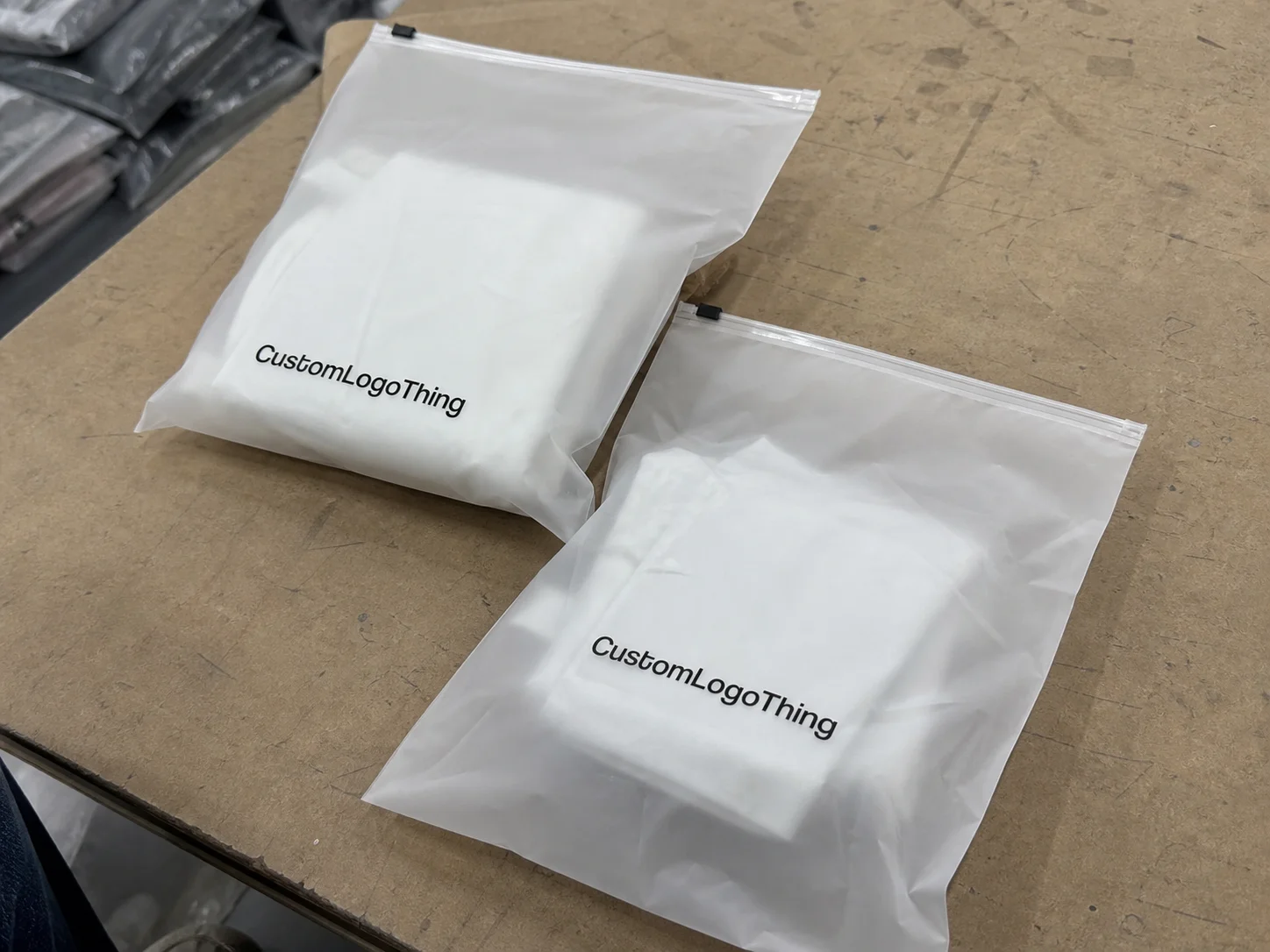
Hotel groups often need one packaging format to cover several different uses. A bag that works for a welcome amenity kit at one property may also need to hold spa items at another, retail accessories at a third, and toiletries or collateral at a fourth. In that kind of setup, consistency matters more than novelty.
The frosted finish helps because it softens the contents without making the bag feel opaque or heavy. It reduces the commodity look of a plain clear film bag and gives the package a more intentional presentation. Guests usually see the packaging first, then the contents. That makes the bag part of the product whether procurement likes it or not.
The zipper closure is the other reason this format keeps showing up. Staff need a bag that opens quickly, closes reliably, and does not split at the seams after a few handling cycles. A press-to-close zipper is common because it is familiar and efficient. There is no learning curve, which is a nice change for once.
Standard sizes also simplify replenishment. If every property wants a different bag shape, the program becomes harder to forecast and harder to stock. A small number of controlled dimensions usually works better than a long list of special sizes that only one department remembers ordering.
“The best hotel packaging is usually the least dramatic one. It does its job, looks consistent, and does not create extra work for operations.”
For most groups, the planning sequence should be simple: decide what goes inside, choose the size, confirm the closure, then match the quantity to the rollout schedule. That order matters. If you start with artwork before you know the actual use case, the project gets expensive for no good reason.
Product Details That Matter in Daily Hotel Use
Most frosted zipper bags used in hospitality are made from soft polyethylene film, usually low-density or a similar flexible poly material. Buyers do not usually ask for a chemistry lesson. They care about feel, durability, and whether the bag looks decent after shipping, unpacking, and daily handling.
Film thickness is one of the first things that affects performance. A lighter gauge may be fine for folded stationery, lightweight toiletries, or small amenity inserts. Heavier contents or bags that get handled more often usually need a thicker wall. In practice, 2 mil can work for light applications, while 3 mil or 4 mil is more appropriate for heavier kits or retail use. Thicker is not automatically better, though. If the bag is overbuilt for the contents, you are just paying for plastic you do not need.
The frosted finish does more than change the color tone. It diffuses light, hides fingerprints better than glossy clear film, and gives the bag a softer, more premium appearance. That is especially useful when logos or labels need to stand out. A cleaner background usually improves readability, but printed results still depend on ink choice, print method, and whether a white underprint is needed.
The zipper style matters more than people expect. A standard press-to-close zipper is usually enough for amenity and guest-use applications. Pull-tab closures or specialty zipper styles can improve convenience, but they also change cost and may affect MOQ. If the bag is going through a lot of hands, closure consistency becomes more important than clever design.
Common hotel uses include:
- amenity kits
- welcome gifts
- toiletry presentation bags
- slipper or robe accessories
- stationery or collateral sleeves
- spa and gift shop retail packaging
Optional features can help, but every extra feature has a cost. Side gussets increase capacity and help the bag stand or hold bulkier items. Hang holes make sense for retail display. Print zones help with branding. Each one adds complexity, and complexity tends to show up later in pricing, proofing, or lead time.
For buyers comparing Custom Packaging Products, frosted zipper bags usually sit in a useful middle ground. They offer a better presentation than a plain stock bag without moving into the weight, fragility, or cost structure of rigid packaging.
Specifications to Lock Down Before You Request Samples
Before asking for samples or quotes, write down the core specification fields. That should include bag width, height, gusset depth if needed, film thickness, zipper style, and whether the bag will be blank or printed. If those details are vague, every quote ends up being a different product dressed up as the same one.
Size is the first decision that affects everything else. A bag that looks fine on paper can be too small once folded towels, toiletries, or inserts are actually packed inside. Oversizing is not free either. Larger bags use more material, raise freight by volume, and sometimes make the presentation look loose rather than premium.
Thickness should follow the contents and handling conditions. A heavier film can improve the feel and reduce accidental tearing, but the right gauge depends on use. For light amenity kits, extra thickness may only add cost. For bags that move through multiple touchpoints, a slightly stronger build is usually worth it.
Printing adds another layer of decision-making. A simple one-color logo is often the most cost-efficient branded option. Multi-color art may look sharper for a flagship property or a retail-facing program, but it usually brings more proofing time and a higher setup burden. Frosted film can also change how ink appears, so a white underprint may be needed if the logo has to stay sharp and visible.
Compliance can matter too. If the bag touches cosmetics, linens, or consumables, procurement may want material documentation or food-contact information where relevant. Not every hotel program needs the same paperwork, but the approval path should be clear before production starts. Neutral industry references from the Packaging Association can help teams sanity-check material terminology without chasing vendor marketing copy.
Sample requests should match the real job. Ask for the exact size and closure style, not something vaguely similar. Then test the sample in actual use: fill speed, zipper feel, shelf appearance, and whether the bag still looks presentable once the contents are inside. A good-looking sample that slows down packout is not a good sample. It is a trap with nice lighting.
- Bag dimensions: exact width and height
- Construction: flat or gusseted
- Film thickness: chosen for actual contents
- Zipper style: standard press-to-close or other
- Decoration: blank, one-color print, or multi-color print
- Testing: sample approval before production
Pricing, MOQ, and Unit Cost Planning for Group Orders
For hotel groups, pricing usually moves with three variables: size, film thickness, and decoration method. MOQ follows the same logic. A blank bag may be available at a lower threshold, while a custom printed version often needs a larger commitment because the run has to be set up, proofed, and scheduled on a production line.
Standardizing one or two bag sizes across properties is one of the easiest ways to keep unit cost under control. If every department wants its own special dimension, the order fragments quickly. That leads to more SKUs, more inventory, and more chances for someone to reorder the wrong version because the spec sheet lives in three different folders.
Blank bags are usually the lowest-friction option. They tend to move faster and often come with lower setup burden. Printed bags can strengthen brand presentation, but they add artwork approval, proofing, and sometimes a minimum quantity that surprises buyers who only looked at the unit price. The per-piece cost drops as the order gets larger, but only if the specification stays stable.
A practical way to think about the main options:
| Option | Typical MOQ Pressure | Cost per Piece | Best Use | Planning Notes |
|---|---|---|---|---|
| Blank frosted zipper bag | Lower | Lower | General amenity use, fast replenishment | Best for core stock and broad multi-property use |
| One-color printed bag | Moderate | Moderate | Branded guest kits, spa packaging, welcome items | Usually needs proof approval and clean artwork files |
| Multi-color printed bag | Higher | Higher | Flagship properties, retail presentation | May add tooling fees or longer setup time |
| Multiple sizes under one program | Highest | Varies | Specialized departmental use | Useful operationally, but harder on inventory planning |
Many hotel groups use a two-tier strategy. One core bag handles most of the replenishment volume. A branded or specialty version is reserved for flagship properties, VIP arrivals, seasonal programs, or retail use. That keeps the base program stable while still giving marketing teams something nicer to point at.
If the use case involves shipping or off-property delivery, Custom Poly Mailers may be worth comparing. For guest-facing presentation inside the hotel, frosted zipper bags are usually easier to fill, easier to standardize, and less expensive to handle.
Process and Lead Time: From Artwork to Delivery
The production path is fairly predictable when the buyer has the spec under control. It usually goes like this: inquiry, spec confirmation, artwork review, proof approval, production scheduling, quality check, and shipment. The fastest orders are the ones that arrive with exact dimensions, target quantity, artwork files, and destination details already sorted out.
Delays most often happen during approval. Missing dielines, low-resolution logos, unclear color targets, or a last-minute switch in bag size can stall the order even after pricing is agreed. Multi-property programs make this more painful because different stakeholders tend to comment at different times. That is how a simple packaging order turns into a committee.
Blank inventory bags usually move faster than custom printed programs because they skip artwork setup and proofing. Printed orders take longer, especially if the brand team wants tight logo placement or a specific shade that needs to be matched carefully on frosted film. A realistic lead-time buffer is smarter than hoping the calendar will cooperate.
It helps to think in business days from proof approval, not from the first email. A simple blank order may move on a shorter timeline, while a custom printed run often needs extra time for setup and review. If one property is ready early and another is still debating logo placement, stage the rollout instead of holding the whole group back.
Shipping should be planned at the same time as production. Multi-property programs work better when carton counts and delivery destinations are known before the run starts. If every hotel needs a different drop point, the supplier has to pack and freight the order differently, and that affects both schedule and cost.
- Send print-ready files when possible
- Confirm exact quantity by property
- Approve samples before final production
- Build in time for internal review
- Share delivery addresses early
For packaging that may travel through distribution or need stronger transit discipline, standards from the International Safe Transit Association can be a useful reference. Not every hotel amenity bag needs formal transit testing, but the same logic helps when the order is being split across multiple sites.
How to Compare Suppliers Beyond the First Quote
The first quote is only the opening number. A low price does not tell you whether the zipper closes consistently, whether the frosted finish matches the sample, or whether the print will stay in the right place across the whole run. For hotel groups, consistency is the real value. A small defect rate becomes a bigger problem once bags are spread across several properties.
Better suppliers ask better questions. They want to know what goes inside the bag, how staff handle it, whether it sits on a shelf or gets handed directly to a guest, and how many locations will receive the order. That is not stalling. It usually means they are trying to prevent spec drift before it becomes expensive.
Compare tolerance ranges, carton pack counts, freight assumptions, and overrun or underrun policy before approving anything. A quote that leaves those details vague can look attractive until the shipment lands short or the freight line item appears later. That is not really a pricing issue. It is a missing-information problem.
Ask for two quote versions if the supplier can provide them: one blank and one branded. That comparison makes the cost impact visible immediately. If branding pushes the program beyond budget, the group can still move ahead with a standard bag and reserve printed packaging for a smaller, more visible program.
Supply chain stability matters here as much as price. A supplier who can repeat the same frosted finish, zipper feel, and print position on reorder is often more valuable than the vendor with the cheapest first run. The cheap quote is only cheap if the second order does not force corrections.
For broader guidance on waste reduction and recycling habits, the EPA recycling resources can help teams evaluate how packaging choices fit internal sustainability goals. Packaging decisions are rarely isolated anymore. Procurement gets asked to consider materials, disposal behavior, and program consistency in the same conversation.
Next Steps to Place a Hotel Group Order Confidently
The cleanest way to move forward is to gather a complete decision set: exact bag dimensions, intended contents, quantity by property, artwork files, and preferred delivery schedule. Once those pieces are in hand, pricing becomes easier to compare and the unit cost estimate stops being guesswork dressed up as planning.
A simple internal spec sheet helps a lot. Purchasing, housekeeping, spa, and brand teams can all approve one version instead of sending different notes back and forth. That is usually where packaging projects lose time. One department wants a larger bag, another wants a darker logo, and the spec slowly mutates until nobody remembers the original request.
Ask for both a blank standard option and a branded option if possible. The difference in price, MOQ, and setup burden becomes much clearer that way. It also makes the trade-off obvious: how much presentation value does the branding actually buy for the intended use?
Sample approval should not be treated like paperwork. If the bags are guest-facing, the sample is the last practical check before committing to volume. A frosted zipper bag can look excellent in a mockup and still need a small adjustment once the real contents go inside. Better to catch that before the full run, obviously.
For hotel groups trying to keep Frosted Zipper Poly Bags for hotel groups moq planning under control, the winning formula is usually boring in the best possible way: stable specs, realistic quantities, clear artwork, and a supplier that can repeat the same build on reorder. That is what keeps costs predictable and the packaging program from turning into a recurring fire drill.
For teams sorting through packaging options, a simple product comparison and a clean spec sheet usually get further than another round of “can we make it nicer?” Packaging does not need to be dramatic. It needs to work every time.
FAQ
What should hotel groups confirm before ordering frosted zipper poly bags?
Confirm the bag dimensions, closure style, film thickness, print requirements, and the exact contents the bag must hold. Ask for samples or proof images so procurement and operations can verify fit and appearance before production.
How does MOQ affect frosted zipper poly bags for hotel groups?
MOQ is usually influenced by size, print complexity, and whether the bags are blank or custom branded. Standardizing one or two SKUs across properties often lowers MOQ pressure and improves unit cost.
Are frosted zipper poly bags suitable for guest amenity kits?
Yes, they work well for amenity kits, welcome gifts, spa items, stationery, and retail packaging. The frosted finish gives a cleaner presentation while the zipper closure supports repeated opening and closing.
What information speeds up pricing for hotel group packaging orders?
Provide exact size, quantity by property, artwork files, target delivery date, and whether you need blank or printed bags. Including contents and handling details helps the supplier recommend the right thickness and closure style.
Can hotel groups mix multiple properties under one order?
Yes, but split SKUs can change MOQ and pricing, especially if sizes or artwork differ. A core standard bag with a consistent specification is usually the easiest way to support multiple properties.


