If you are comparing Frosted Zipper Poly Bags for apparel brands moq planning, the real question is not whether the bag looks nice. It is whether it protects the garment, supports the brand, and fits your replenishment pattern without forcing you into awkward inventory piles. That matters for folded tees, swimwear, intimates, knitwear, and accessory bundles. Packaging sounds simple until it starts slowing down the line.
From a buyer’s perspective, the best apparel bag is the one that packs quickly, stacks cleanly, and keeps presentation consistent from launch to reorder. Frosted Zipper Poly Bags do a decent job of all three. The frosted finish softens the plastic look of a standard clear bag. The zipper adds reclosability. And the format is easy to standardize across a product line if you build the spec around folded dimensions instead of trying to guess every variation by eye.
That is where frosted Zipper Poly Bags for Apparel brands moq planning gets practical. The bag has to look premium, but it also has to work inside a real production schedule. No one needs another packaging choice that looks good in a mockup and creates a mess in fulfillment.
Why frosted zipper poly bags fit apparel packaging without creating inventory chaos
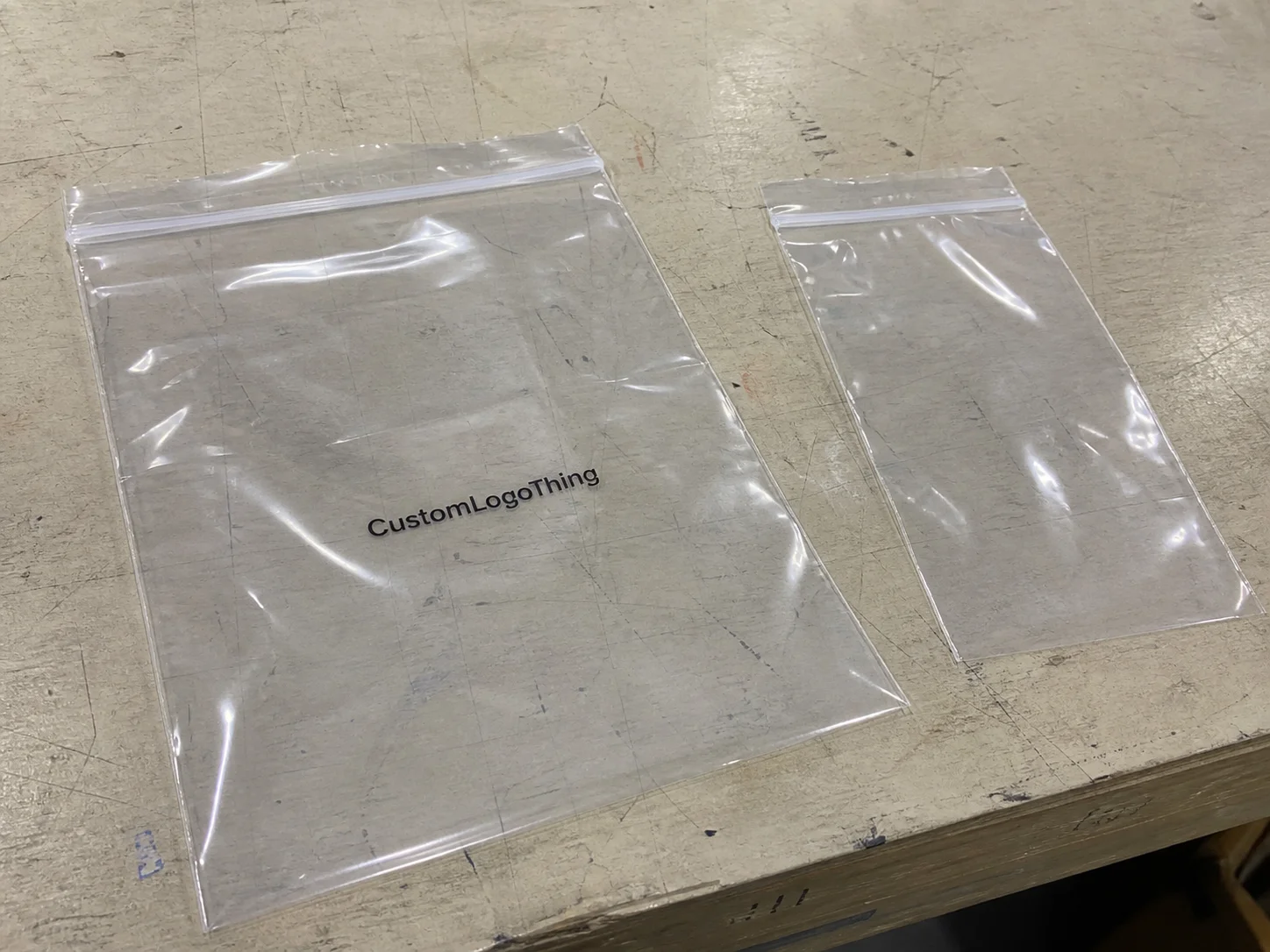
A frosted finish changes the first impression immediately. Clear poly bags read as purely functional. Frosted Zipper Poly Bags feel cleaner and more intentional, which is why they show up often in boutique apparel, DTC fashion, and subscription programs. You still see the folded garment shape, but the packaging does not scream commodity.
The closure matters more than many teams expect. A zipper gives the end customer a reusable bag for storage, travel, or product separation. That matters for items like swimsuits, underlayers, socks, and light knits. It also helps in retail because the garment can be handled and reopened without destroying the package. A sleeve without a closure may be cheaper up front, but it often gives you less value once the customer actually uses it.
Inventory planning gets easier when one bag spec can cover more than one style. A properly sized frosted zipper bag can work across a seasonal color run or a family of products if the folded dimensions stay within a practical range. That reduces the number of SKUs a warehouse has to manage and cuts down on last-minute packaging substitutions.
There is a catch. “Premium” does not automatically mean “better for every product.” A heavier garment that needs more room may make a bag look stretched and cheap if the spec is too tight. A very light item can float inside an oversized bag and feel poorly planned. The bag needs to match the fold, the hand feel, and the channel it is sold through.
“A packaging spec should help the product sell and help the warehouse move faster. If it only does one job, it is not doing enough.”
For brands that want to keep the packaging system simple, Frosted Zipper Poly Bags usually sit in a useful middle ground: better presentation than a plain sleeve, less complexity than a fully rigid package, and easier to store than layered packaging with inserts and outer wraps.
Material, finish, zipper, and closure details that affect performance
Most frosted zipper poly bags are made from flexible polyethylene film, commonly LDPE or a similar grade used for apparel packaging. The film needs enough softness to fold well, but enough structure to avoid wrinkling into a limp mess. Frosting is usually created by the film formulation or surface treatment, which diffuses light and reduces the sharp transparency of a clear bag.
That finish changes the visual read immediately. The garment is still visible, but the bag feels less like bulk packaging and more like part of the product presentation. It can also improve consistency in photography because reflections are less harsh than they are on glossy clear film. Not magic. Just less glare.
Thickness is one of the first specs to settle. Lightweight tees, socks, and underlayers often work in the 2.5 to 4 mil range. Heavier hoodies, denim, and multi-piece packs usually benefit from 4 to 6 mil film, especially if the bag will be handled repeatedly in a retail or warehouse setting. Too thin and the bag feels flimsy. Too thick and you may be paying for stiffness you do not need.
The zipper is not a minor detail. A single-track zipper is common and usually fine for apparel, but the engagement has to feel right. If it closes too loosely, the bag feels cheap and can pop open. If it is too stiff, customers and warehouse staff will hate it by the third pack. The best zipper is the one that closes with light pressure and stays shut during ordinary handling.
Print and finishing options also matter. Logos, hang holes, euro-slots, and reinforced edges all change how the bag performs in retail or e-commerce use. On a frosted surface, strong contrast helps. Dark inks typically read well. Lighter inks may need a white underbase or a simplified layout to avoid looking faint once printed on film.
| Option | Typical use | Visual effect | Cost impact |
|---|---|---|---|
| Clear poly zipper bag | Basic retail or warehouse packing | Maximum product visibility | Usually lower |
| Frosted zipper poly bag | Fashion, boutique, DTC apparel | Soft premium appearance | Moderate |
| Printed frosted zipper bag with hang hole | Retail display and branded presentation | More polished shelf impact | Higher due to print and finishing |
For teams that care about shipping performance and distribution standards, industry references such as ISTA can be useful when you are reviewing how the package holds up under handling, compression, and transit stress. The bag itself may not be a certified test item, but the mindset is useful: if a package cannot survive normal movement, it is not ready.
Size, gauge, and print specs to confirm before requesting a quote
The fastest way to slow a quote is to send a vague request. If you want useful pricing for frosted zipper poly bags for apparel brands moq planning, start with the actual folded item dimensions, the intended bag size, whether the measurement is internal or external, and where the zipper sits. Those details sound small. They are not. They change fit more than most buyers expect.
Garment type should drive the spec. A folded T-shirt may fit cleanly in a flatter bag. A hoodie may need extra width and more height so the fold does not crush the product or strain the zipper track. Swimwear, socks, and undergarments each have different packing tolerances. If the bag is sized by guesswork, the result is usually “close enough” on paper and annoying on the line.
Artwork needs the same level of care. Send vector files if possible. Confirm the color count. Decide whether the frosted film needs a white underbase for readability. A logo that looks crisp on screen can print softer on film if the contrast is not planned correctly. That is especially true on lighter marks and fine linework.
Flexible packaging also has normal variation. Film shifts a little. Seals vary a little. That is not a defect by itself. Good planning means allowing a reasonable size range so you do not end up with bags that are technically within spec but functionally miserable because the zipper is under strain or the garment is swimming inside the package.
What to put on your spec sheet
- Garment type and folded dimensions
- Bag width, height, and gusset depth if needed
- Internal versus external dimensions
- Material thickness or gauge target
- Frost level or opacity preference
- Print method, ink colors, and logo placement
- Hang hole, euro-slot, or other retail features
- Target MOQ, reorder expectation, and delivery window
A clean spec sheet reduces back-and-forth more than almost anything else. It keeps design, procurement, and production working from the same assumptions. It also stops the classic “medium size” problem, where three people agree on the word but picture three different dimensions.
Pricing and MOQ planning for frosted zipper poly bags
Pricing usually moves with five variables: bag size, film thickness, zipper type, print coverage, and order volume. A simple unprinted frosted bag may sit in a lower cost band than a fully printed retail version, but once you add branding, extra ink, specialty closures, or reinforced features, the number changes fast. That is normal. Packaging pricing is rarely driven by one factor alone.
For apparel buyers, the more useful number is unit cost at a realistic volume. A bag that costs a little more but reduces packing errors, improves presentation, and removes the need for a second sleeve can be cheaper in the real world. Comparing bag price alone is how teams end up making bad decisions that look smart in a spreadsheet.
MOQ planning is where a lot of apparel brands either protect cash flow or tie up too much of it. Smaller runs usually cost more per piece because setup work, print prep, and changeover time are spread across fewer units. Larger runs usually improve pricing, but they also create storage pressure and add risk if the style changes before the bags are used up. For brands with quick seasonal turnover, a huge order can be more expensive in practice than it looked at quote stage.
Hidden costs deserve their own line item. Sample runs, artwork proofing, shipping, possible tooling or plate charges, and storage all affect the real landed cost. Freight can matter more than expected on bulky packaging, especially if the order ships in cartons that take up space before they hit the shelf or packing bench. A cheap unit price does not fix an expensive freight bill.
As a rough planning reference, a basic unprinted frosted zipper bag often sits in a lower price bracket, while a custom printed version with stronger film and retail features usually lands higher. Exact pricing depends on size and quantity, but the spread between a small test order and a larger production run is often wide enough to change the buying strategy. That is why frosted zipper poly bags for apparel brands moq planning should be tied to sales forecasts, not just the smallest minimum anyone can offer.
Here is the decision framework that usually holds up:
- Estimate sell-through for the next style run, not just annual demand.
- Match MOQ to launch risk, especially for new collections and seasonal colors.
- Budget for setup costs, proofing, and any print-related charges.
- Compare landed cost, not just factory price.
- Plan reorder timing before the last carton disappears.
Production steps, lead times, and proof approval
The production flow is straightforward, but every step matters. It starts with intake and spec confirmation, then artwork review, digital or physical proofing, sample approval, production, quality check, and shipping. If the inputs are clear, the process stays orderly. If one measurement or artwork detail is vague, the schedule starts to drift.
Most delays are predictable. Unclear artwork files. Open size questions. Color corrections. Slow proof approvals. The manufacturing floor is usually not the biggest source of delay. Waiting for decisions is. Buyers who can approve quickly and answer questions without a week-long meeting marathon usually save more time than any promise of rush production.
Lead time depends on how custom the order is. A repeat order with the same size and print can move faster than a first run with new artwork and a new zipper specification. Standard orders are often completed in roughly two to three weeks after proof approval, while more customized projects can take longer depending on quantity, print coverage, and current production load. If your launch date is fixed, quote early. Waiting until the last week is a great way to discover that time does, in fact, exist.
Quality control should cover the basics: zipper function, film clarity, seal consistency, print placement, and overall bag uniformity. If the bags are going into retail, check how the finished pack looks under store lighting and whether the bag stacks neatly on shelves. For shipping-heavy programs, test the bag under normal handling and carton pressure. If your internal packaging standards include distribution testing, that is where references like ISTA become useful in the review process.
Seasonal launches need extra calendar padding. Packaging delays have a habit of becoming product delays, and once that happens the packaging is no longer supporting the line; it is blocking it. A sane production calendar prevents that kind of mess.
How Custom Logo Things supports repeatable ordering
What apparel teams usually need most is not a dramatic promise. They need a repeatable process. That means clear quoting, practical spec guidance, and a packaging recommendation that fits the garment and the MOQ target instead of forcing everything into one generic answer. That is especially true if you are planning reorders and want the next run to match the first one.
Custom Logo Things is built around that kind of support. If you already have a sample, the starting point is straightforward. If you are working from product measurements and artwork, the spec can be shaped around the actual garment, the packaging use case, and the budget. That matters for teams trying to balance presentation with inventory control.
Repeat orders are where consistency starts to matter. Film tone, zipper feel, print placement, and exact sizing should stay stable across replenishment runs whenever possible. Small drift might not sound serious, but brands notice when one batch looks a little lighter, another feels stiffer, or the logo sits slightly off. Warehouses notice too. They may not say much, but they will definitely stack the cartons differently.
The goal is not just to buy a bag. The goal is to lock in a packaging spec that can be reordered without drama as styles evolve. If you are still sorting through packaging formats for your line, our Custom Packaging Products page and FAQ page are useful places to compare options and common buying questions.
Next steps for your apparel line
Start with the product, not the packaging pitch. Gather the garment type, folded dimensions, target quantity, artwork files, and any features you actually need, such as a hang hole, a retail slot, or a thicker film. Those inputs let you compare options fairly and avoid the most common mistake: asking for a quote before the bag size has been tied to the item.
Then compare two or three target sizes against the real folded garment. One size may look correct on paper and still fail in practice because the fold is bulkier than expected or the zipper lands too close to the product edge. A quick sample test tells you more than ten emails. That is not glamorous, but it works.
When you request pricing, ask vendors to quote the same spec sheet. That is the cleanest way to compare unit cost, MOQ, and lead time without getting distracted by different assumptions. If a quote includes setup charges or tooling fees, ask whether those are one-time costs or repeated on reorders. That question saves real money.
If fit is uncertain, ask for a prototype or sample before full production. Check zipper action, visual appearance, and shelf presentation under normal lighting. Make sure the bag does not wrinkle badly, split at the seal, or throw off the fold. Small checks now are cheaper than big mistakes later.
Once the sample is approved, align the order with your sales calendar and replenishment forecast so frosted zipper poly bags for apparel brands moq planning stays tied to inventory reality, not wishful thinking. That is how you get packaging that looks premium, runs efficiently, and reorders without drama.
What MOQ should I expect for frosted zipper poly bags for apparel brands?
MOQ usually depends on bag size, print complexity, and material spec, so the minimum can vary by project. Simpler unprinted bags often start lower, while custom printed bags with special features usually require higher minimums. The best comparison is MOQ plus unit cost plus storage impact, not MOQ alone.
How do frosted zipper poly bags compare to clear poly bags for apparel packaging?
Frosted bags usually feel more premium and soften the visual look of the package without fully hiding the garment. Clear bags maximize visibility and can be cheaper, while frosted bags often improve brand presentation. For fashion, boutique apparel, and DTC programs, frosted finishes usually strike the better balance.
Can I print a logo on frosted zipper poly bags without losing readability?
Yes, but clarity depends on ink color, coverage, and contrast against the frosted surface. Dark inks and white-underbase builds usually read better than pale colors. Artwork should be reviewed on the actual film before production so the logo does not turn faint or muddy.
What details should I send to get an accurate quote for custom apparel bags?
Send folded product dimensions, target bag size, quantity, print requirements, zipper preference, and any special features like hang holes. Include artwork files and color references if printing is involved. A complete spec sheet shortens the quote cycle and improves accuracy.
How long does production usually take after proof approval?
Lead time depends on order size, customization level, and current production load. Repeat orders are usually faster than first-time custom runs. Standard projects are often completed in roughly two to three weeks after proof approval, but more customized jobs can take longer, so leave room for revisions and shipping.


