Campus bookstores need packaging that does more than hold product. It has to look tidy on a shelf, survive student handling, and still make sense when the purchase order lands on your desk. That is where frosted zipper Poly Bags for Campus Bookstores moq planning stops being a decorative phrase and starts being a real buying issue.
The right bag protects the merchandise, supports branding, and keeps unit cost under control. The wrong one does the opposite: it wrinkles, splits, reflects too much light, or quietly eats budget because the order was sized wrong. Retail packaging does not get a prize for being pretty if it creates headaches for staff.
Frosted Zipper Poly Bags are popular in campus retail for a reason. The matte look softens glare, the zipper makes the bag reusable, and the surface gives logos a cleaner print area than a glossy clear film in many store environments. That combination works especially well for bookstores that sell apparel, gift bundles, tech accessories, and welcome kits alongside standard school supplies.
Why frosted zipper poly bags fit campus bookstore merchandising
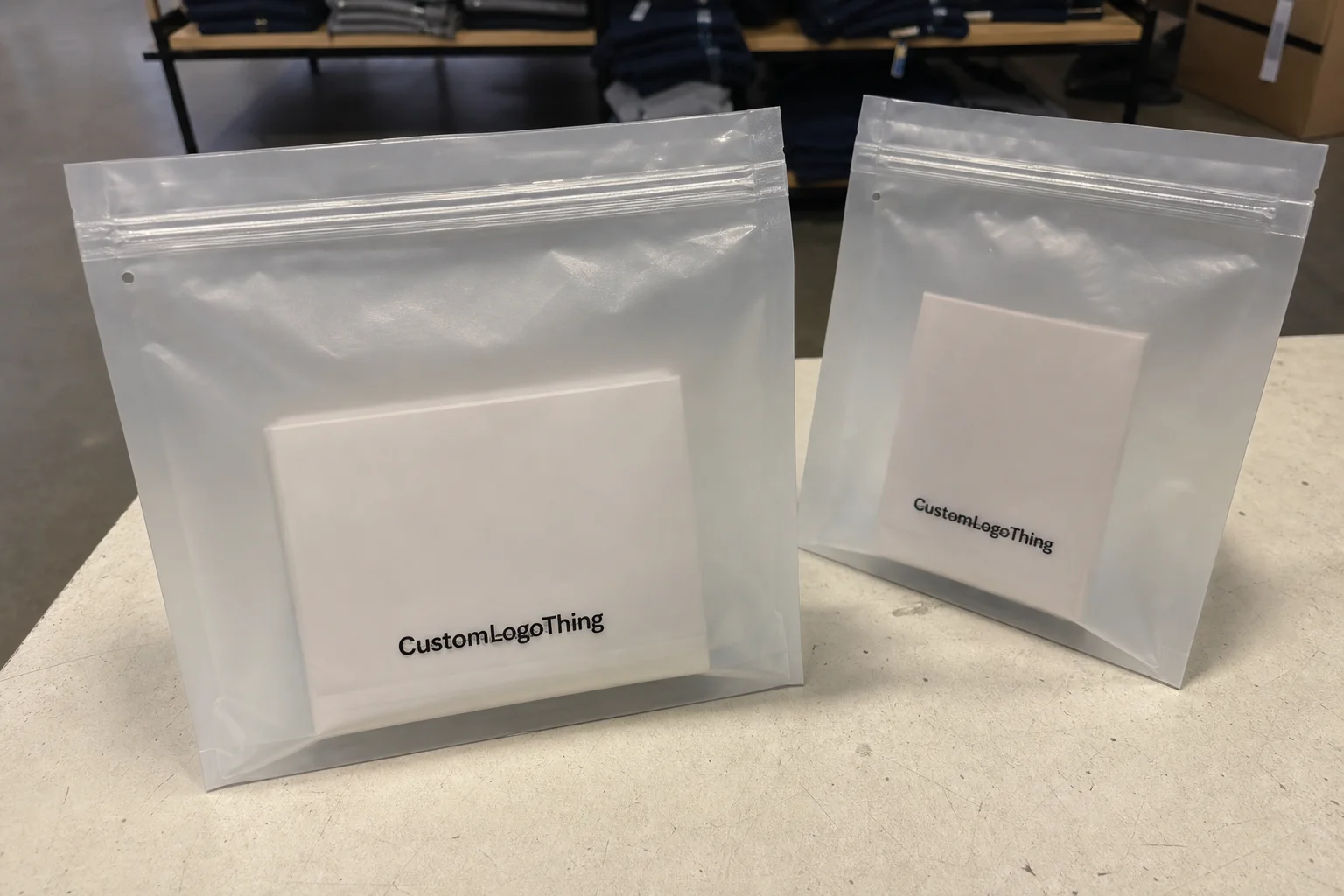
Campus stores rarely package one thing all day long. A bookstore can move from folded hoodies to earbuds to notebook sets to alumni gifts in the same shift. Packaging has to handle that mix without forcing the staff to use three different formats for the same merchandising table.
A frosted zipper poly bag handles the job with less friction than rigid retail boxes and less visual noise than shiny clear plastic. The frosted finish gives the package a softer, more polished look, but it still leaves enough visibility for quick item identification. That matters on a crowded sales floor where staff need to restock fast and students want to see what they are buying without opening every package.
The zipper closure also earns its keep. Students reuse these bags for dorm storage, chargers, toiletries, stationery, or small accessories. Once a package gets reused, the bookstore’s logo keeps moving around campus. Not bad for a piece of packaging that might otherwise be thrown away on the way to the parking lot.
Lighting is another practical issue. A lot of campus stores use strong overhead fixtures, and glossy packaging can throw reflections that make the print look muddy or hard to read. Frosted film cuts that glare down. Logos usually stand out more cleanly, especially with one- or two-color artwork. That makes the bag easier to merchandise, easier to photograph, and easier to keep visually consistent across seasonal displays.
So the buying question is not just whether a logo can be printed. It is whether the bag supports presentation, protects the product, and fits the store’s order rhythm without generating dead stock. That is the part people miss when they focus only on the artwork mockup.
“A good bookstore bag should protect the item, present the brand cleanly, and avoid extra work for staff. If it does all three, it earns its place.”
For buyers comparing packaging families, broader product categories on Custom Packaging Products can help you separate retail packaging from shipping packaging. If your bookstore also ships items, Custom Poly Mailers serve a different purpose and should be treated as a separate program.
Product details that matter for retail use and branding
Most Frosted Zipper Poly Bags are made from polyethylene film, usually LDPE or a similar retail-grade blend. The frosted effect comes from the film finish, which diffuses light and gives the bag a soft matte appearance instead of a high-gloss look. That finish matters more than people expect. It affects how the bag photographs, how the print reads under bright lights, and how premium the package feels in hand.
Thickness usually ranges from about 2.5 mil to 6 mil depending on the product being packed. Light accessories and stationery can often work in a thinner film. Heavier folded apparel, gift bundles, or boxed sets usually need a sturdier bag. Thicker film feels more substantial, but it also raises unit cost, so the spec should match the merchandise instead of being chosen because it “sounds better.” Retail buyers know how that story ends.
The zipper track deserves attention too. A bag with a weak or uneven zipper looks cheap immediately, even if the print is sharp. A good zipper should close cleanly and open repeatedly without snagging. That matters in campus retail because students often reuse the bag, and reusable packaging tends to expose weak closure quality faster than a one-time-use bag.
Printing is usually where budgets go from sensible to irritating. One-color or two-color print is often the best fit for campus branding because it keeps setup manageable and preserves strong contrast on the frosted background. Simple logos look clean. Busy artwork can get mushy if the type is too fine or the ink coverage is underplanned. The frosted finish helps by calming the background, but it does not fix bad artwork.
Common bookstore uses usually include:
- Folded hoodies, tees, and spirit wear
- Notebooks, pens, and school supply kits
- Tech accessories like cables, earbuds, and adapters
- Student welcome packs and orientation bundles
- Gift sets for alumni events, holidays, or campus promotions
Bag structure matters as much as decoration. Some programs need a flat bag for apparel or books. Others need gussets for bulkier kits. Side gussets or bottom expansion improve pack-out, but they change the build and can affect pricing. If the item has real thickness, test it against the actual merchandise before approving the size. Catalog sketches are not substitutes for a packed sample.
Before final approval, confirm the artwork format, print colors, logo placement, and whether there are any material or compliance considerations. If the bag will hold snack-related merchandise or food-adjacent gift sets, ask about material suitability rather than assuming every retail poly film behaves the same way. For general packaging references, the Packaging & Processing industry resources are useful, and they are less dramatic than random internet advice.
Specifications to lock in before you request a quote
If pricing needs to be accurate, the spec sheet needs to be accurate first. A quote should start with width, height, gusset depth if needed, thickness, zipper style, and print coverage. If any one of those fields is vague, the quote usually comes back padded with assumptions or gets revised later. Either way, your schedule gets longer.
Size selection deserves more attention than it usually gets. A bag that is too tight slows packing and can wrinkle folded items. A bag that is too large looks sloppy and wastes film. In a bookstore that may pack the same item hundreds of times during a promotion, even a small fit improvement saves labor and cuts down on rework. The bag is supposed to make packing easier, not force staff to fight it.
Poly bag production also has normal tolerances. Nothing is perfect to the millimeter, and buyers should not expect that. Small variation in finished dimensions can matter if the bag is meant for boxed accessories or thick folded apparel, so ask how the supplier measures the final size and what tolerance range applies. Compare quotes on the same measurement basis or you are comparing fiction to fiction.
Here is the core information to have ready before requesting pricing:
- Exact bag width and height
- Gusset depth, if needed
- Film thickness in mil
- Zipper type and closure feel
- Print colors and print area
- One-sided or two-sided decoration
- Target merchandise type
- Expected delivery date
Material and finish choices also shift the final feel. A matte frosted film looks more subdued and often prints cleanly. A lighter frosted effect shows merchandise more clearly. Side gussets improve capacity. A tear notch helps the end user open the bag, though it is not always necessary for bookstore use. Each choice carries cost, and not every feature earns its keep.
Quality checks should be part of the conversation before production starts. Ask about seal strength, zipper consistency, film uniformity, and print registration. If the run is meant to repeat across several semesters, consistency matters as much as the first shipment. For transit and handling context, ISTA is a useful reference, especially if the packaging will ship before it reaches the store.
| Specification choice | Best for | Typical impact on unit cost | Buyer note |
|---|---|---|---|
| 2.5-3 mil, one-color print | Light accessories, notebooks, small spirit items | Lower | Good starting point for pilot orders |
| 4 mil, one- or two-color print | Most bookstore retail programs | Moderate | Balanced feel, presentation, and pricing |
| 5-6 mil, two-color print, gusseted style | Heavier apparel, gift sets, bundled kits | Higher | Better structure, but plan for higher cost per piece |
Cost, pricing, and MOQ planning for campus orders
MOQ planning starts with three cost drivers: size, print complexity, and order volume. Larger bags use more film. Thicker bags use more resin. More print colors add setup work and can increase screening or tooling charges depending on the production method. A simple logo on a standard size will not price the same way as a large, multi-color layout. That should not be surprising, but somehow it still is.
At lower quantities, setup fees matter more. A bookstore placing a test run may see a noticeably higher unit price than a program that repeats every semester because the fixed production costs are spread over fewer pieces. That does not make the small order wrong. It just means the comparison should use total spend and unit cost together, not one number pulled out of context.
For rough planning, a small custom frosted zipper bag run can often land around $0.18-$0.35 per piece, depending on size, thickness, and print details. Larger or more complex bags can run higher. A better planning method is to request tiered pricing at several quantities, such as 1,000, 3,000, and 5,000 units. That shows the breakpoints clearly and makes Frosted Zipper Poly Bags for campus bookstores moq planning much easier to defend internally.
Some buyers prefer a pilot order first. That is sensible if the bag is tied to a new design, a limited spirit wear run, or an event-specific program. A smaller MOQ lowers risk. If the bag is already part of a core bookstore item line, a larger run usually lowers unit cost enough to justify the storage space. The right answer depends on how fast the product turns and how much room the store has for back stock.
A practical way to frame it:
- Small pilot order: lower risk, higher unit cost
- Mid-size order: balanced pricing and manageable inventory
- Larger program order: best unit cost, but higher storage commitment
Campus calendar timing affects the economics too. If the bags arrive after orientation week, alumni weekend, or holiday merchandising, the order may still be “on time” from a factory standpoint and useless from a retail standpoint. Rush freight and expedited production can erase whatever savings looked good on paper. Early planning usually beats last-minute confidence. Confidence is cheap. Freight is not.
Ask for a quote at the exact size and artwork, then request a second tier at a higher quantity. That shows the MOQ impact on unit cost and helps determine whether to place one larger order or split the program into seasonal runs. For campus buyers, the best order is not the biggest one. It is the one that arrives when the merchandise needs it and does not leave a pile of unused stock six months later.
Process, timeline, and production steps from proof to delivery
The order flow is fairly direct when the buyer has the necessary information ready. It usually starts with spec confirmation, then artwork review, then quote approval, proofing, production, quality inspection, and shipping. If artwork needs to bounce back for corrections, lead time stretches. Vector files save time because they reduce redraw work. That is not glamorous, but it is real.
After proof approval, production timing depends on order size, print method, and factory schedule. Many custom retail poly bag runs are planned around 12-15 business days from proof approval to completion, though larger quantities or more complex specs can take longer. That still leaves transit time, receiving time, and internal distribution time before the bags are actually usable on the floor.
Some things move the job faster:
- Artwork supplied as AI, PDF, or EPS
- Clear PMS targets or simple one-color art
- Confirmed dimensions and zipper style
- Prompt proof approval
- No late-stage design changes
Seasonal backlog is a very real problem in campus retail. Semester starts, homecoming, graduation, and holiday promotions often stack up at the same time. If you wait until the display table is ready, the packaging may arrive too late to matter. The safer approach is to work backward from the floor date and leave room for proofing, production, freight, and receiving. Every step takes longer than the optimistic version of the schedule.
Shipping coordination matters too. Bags may need to land at a central receiving dock, be counted, and then move to a bookstore or warehouse before use. That internal transfer is part of lead time whether the purchase order mentions it or not. Good planning means the packaging is on hand before the merch reset begins, not during it.
If sustainability is part of the buying decision, ask about recycled content options or end-of-life guidance where available. Packaging decisions increasingly intersect with waste goals, and the EPA has general resources that can help procurement teams think about material stewardship in a practical way. Not every frosted zipper bag will fit every campus target, so the conversation should be specific instead of aspirational.
How to choose a supplier for repeat campus bookstore programs
For repeat programs, supplier choice comes down to consistency. You want film quality that stays stable, print that matches from run to run, and proofing that does not drag out every adjustment. A low quote is not much of a bargain if the next semester’s reorder looks and feels different from the last one.
That matters most when buying by season or by department. Even a small change in bag width, zipper feel, or print tone can slow packing and alter shelf presentation. A reliable supplier keeps records clean enough to repeat the same job without forcing the buyer to rebuild the spec from scratch every time. That saves time, reduces mistakes, and keeps reorder planning sane.
Practical guidance matters here. The best packaging partners do not just agree to everything. They help decide whether a side gusset is actually needed, whether one print color is enough, and whether a slightly smaller bag could cut material cost without hurting the look on the shelf. That kind of input is worth more than polished sales copy.
Here is a simple supplier comparison:
| Supplier type | Pricing visibility | Reorder consistency | Support on MOQ planning |
|---|---|---|---|
| Direct manufacturer | Usually stronger | Usually stronger | Often better |
| Trading intermediary | Can vary more | Depends on factory access | Can be helpful, but less direct |
| General distributor | Simple, but less granular | Good for stock items | Limited for custom runs |
Ask how reorders are handled, whether artwork is kept on file, and how spec changes are documented. Repeat campus programs work best when the supplier can reproduce prior work without reinterpreting the order every semester. If you want to see the common questions buyers run into, the FAQ is a useful place to start before requesting pricing.
A direct manufacturer relationship can also make pricing easier to read. Changes in size, thickness, print layout, and zipper style are usually easier to trace in the quote. That clarity helps campus buyers compare options, justify budget decisions, and decide whether to place one larger order or several smaller seasonal runs.
Next steps for ordering frosted zipper poly bags
If you are ready to move ahead with Frosted Zipper Poly Bags for campus bookstores moq planning, gather the basics first: target bag size, estimated quantity, logo files, number of print colors, and the date the bags need to arrive. If you can also identify the main merchandise they will hold, the quote will be more accurate because the size can be matched to the actual product instead of a rough guess.
Start with the most common use case. If folded apparel is the main need, size the first bag for that category and decide later whether a second size is worth adding for accessories or gift bundles. That keeps the first run focused and gives you a cleaner read on sell-through before expanding the program.
Compare pricing across at least two or three quantities so you can see how MOQ affects both total spend and unit cost. A slightly larger order may improve the economics enough to justify the extra inventory. A smaller pilot may protect cash flow if the product is still being tested. The right choice depends on turnover, storage, and how often the bookstore resets merchandise.
If brand accuracy matters, request a sample proof or mockup before production. That step matters when the logo has fine lines, when the campus color needs a close visual match, or when print sits near a zipper track or edge. Small corrections are easy before production. They are annoying after production. Annoying is generous, actually.
A clean ordering process is straightforward: confirm specs, review pricing tiers, approve the proof, and place the order early enough to meet campus deadlines. That is the simplest way to keep frosted zipper poly bags for campus bookstores moq planning under control without overbuying or scrambling for freight.
What MOQ should I plan for frosted zipper poly bags for campus bookstores?
MOQ usually depends on bag size, print colors, and whether the order is standard or fully custom. For planning, ask for tiered pricing so you can see how the unit cost changes at different quantities. If the bookstore is testing a new design, a smaller pilot order is usually smarter than committing to a large run too early.
Are frosted zipper poly bags good for bookstore apparel and gift bundles?
Yes. They work well for folded apparel, accessories, notebooks, and bundled campus gifts. The frosted finish gives the package a cleaner retail look while still showing enough of the contents for quick identification. The zipper closure also adds reusability, which students tend to appreciate.
How do I keep pricing under control when ordering custom frosted zipper bags?
Use the smallest practical number of print colors and avoid unnecessary artwork complexity. Confirm dimensions early so revisions do not add cost. Then compare quoted prices at multiple quantities to find the best balance between bulk pricing and inventory risk.
What information do I need before requesting a quote for custom frosted zipper poly bags?
Provide bag width, height, gusset depth if needed, approximate quantity, and artwork files. State how many print colors you want and whether the logo should appear on one or both sides. If you have a deadline, include the required delivery date so the supplier can check lead time accurately.
How long does production usually take after proof approval?
Lead time depends on order size, print complexity, and the current production schedule. After proof approval, you should also account for quality inspection and transit time. Campus buyers should order early enough to avoid missing semester launches, events, or holiday selling periods.


