Most Garment Bag Delays Start With One Missing Spec
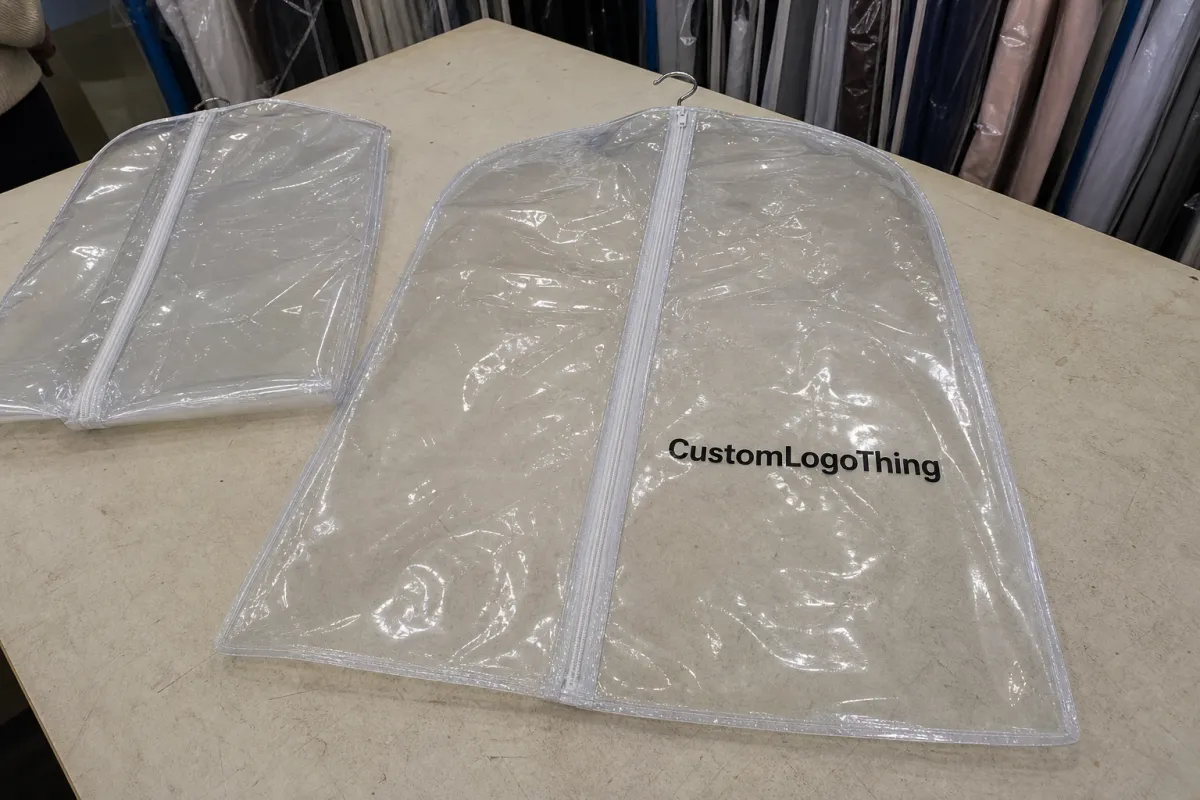
Ask for pvc zipper garment bags Lead Time and MOQ without specs and the answer will sound tidy but mean very little. Lead time and MOQ are not random factory moods. They depend on PVC thickness, bag size, zipper style, gusset depth, print method, packing requirements, and how quickly the artwork gets approved without three rounds of revision theater.
A fashion brand may need Clear Garment Bags for retail presentation. A uniform supplier may need stronger covers that survive warehouse handling and repeat distribution. A bridal shop may need long zippered bags that protect gowns without making them look like dry-cleaning leftovers. Dry cleaners, costume departments, apparel distributors, hotels, robe suppliers, salons, and event wardrobe teams can all buy “garment bags,” but the right construction is rarely identical.
“Can you quote a garment bag?” is a starting line, not a specification. A quote that can actually be trusted needs width, height, PVC gauge, zipper type, hanger opening, gusset depth, print colors, logo file, quantity, destination, and target delivery date. Miss two of those and the quote slows down. Miss five and everyone is guessing, which is charming at a carnival and much less useful in production.
Custom Logo Things prices these bags around real production variables: material, labor, print setup, packing, freight, and order size. A bag with heavier PVC, a longer zipper, a reinforced hanger hole, and branded printing will not cost the same as a light flat cover with one small logo. That is not upselling; it is manufacturing math.
The practical question is not only “How fast?” or “How low is the MOQ?” It is whether the bag construction, quantity, budget, and delivery date are aligned before the order moves into proofing and production.
PVC Zipper Garment Bags Lead Time and MOQ Basics
A PVC zipper garment bag is a reusable protective cover for suits, dresses, uniforms, robes, costumes, coats, bridalwear, and retail apparel that needs more structure than a thin poly cover. Clear PVC gives visibility. The zipper gives access. The bag gives the garment a cleaner handoff, better storage protection, and more perceived value than a loose disposable sleeve.
Typical custom MOQ starts around 500 to 1,000 pieces for basic clear PVC bags with simple one-color printing. More specialized builds often start closer to 2,000 pieces or more, especially if the order uses thicker PVC, custom zipper tape, multi-color printing, gussets, handles, piping, or unusual sizing. Lower quantities may be possible in some cases, but the unit cost usually becomes less friendly.
Setup work does not disappear because a buyer only needs a small run. Print screens, cutting setup, labor planning, proofing, material handling, and machine changeover still have to happen. A 300-piece order carries those costs across far fewer bags than a 3,000-piece order, so the cost per piece climbs quickly.
For a simple approved order, production commonly runs about 15 to 25 production days after deposit and artwork approval. Complex custom bags, special materials, heavier builds, or peak production periods can move closer to 30 to 45 production days before shipping. Sampling adds time, often 5 to 10 business days for a basic pre-production sample after construction and artwork are confirmed.
Production time is not the same as total delivery time. Quote review, artwork proofing, payment, sampling, inspection, freight booking, customs clearance, and final delivery are separate pieces of the calendar. Buyers get into trouble when they treat a production estimate as an in-hands date.
Practical rule: count backward from the required in-hands date, not from the day you wish the bags already existed.
Product Details That Change the Quote Fast
Construction drives price and timing. Flat garment bags are usually the simplest and lowest-cost option. Side-gusset bags hold bulkier garments better. Bottom-gusset bags add room for folded items or thicker apparel. Foldable travel garment bags need more components, more stitching or sealing steps, and usually a sturdier zipper. Full-length zippered covers are common for suits, gowns, robes, uniforms, and outerwear.
PVC finish matters as well. Clear PVC gives strong product visibility and a crisp retail look. Frosted PVC softens the presentation and hides light scuffing better. Tinted PVC can support a brand color or collection theme, but it may require material planning and can increase MOQ if the color is not standard. For buyers trying to protect the schedule, standard clear PVC is usually the easiest route.
Thickness should match the job. Lighter PVC works for basic retail protection, short-term handling, or simple closet storage. Medium gauges feel better for suits, uniforms, robes, and repeated use. Heavy PVC is better for premium apparel, bridal garments, costume storage, and travel-style bags, though it raises material cost, carton weight, and shipping cost. A heavier bag can look better; it can also make freight much less cute.
| Specification Choice | Typical Use | Cost Impact | Lead Time Risk |
|---|---|---|---|
| Clear flat PVC bag | Retail apparel, dry cleaner covers, basic garment protection | Lower | Lower if standard size and material |
| Frosted or tinted PVC | Boutique packaging, branded apparel programs | Medium | Medium if material is not stocked |
| Side gusset or bottom gusset | Suits, uniforms, bulky garments, gowns | Medium to higher | Medium due to added cutting and assembly |
| Travel-style bag with handles | Premium apparel, bridalwear, events, sales kits | Higher | Higher due to components and labor |
Zipper choice is another fast quote changer. Nylon coil zippers are common and cost-effective. Heavier zippers feel more durable for repeated handling, especially on long garment bags or bags carrying bulkier items. Colored zipper tape can support the branding, but custom color matching may add setup time. Metal pulls, rubber pulls, or branded pulls can raise tooling fees and extend the schedule unless a standard pull works for the program.
Useful features include reinforced hanger holes, snap closures, piping edges, carry handles, document pockets, card holders, breathable vents, barcode labels, and bottom folds. Each feature should earn its place. Extras can improve the bag, but they still add labor, components, inspection points, and cost.
The hanger opening is often overlooked. A simple slit may be enough for light retail bags. A reinforced hanger hole makes sense for heavier garments or bags that will be carried frequently. If the opening is too loose, dust protection suffers. If it is too tight, staff may fight the bag every time they load a garment. Small detail, big daily irritation.
Printing, Logo Placement, and Artwork Requirements
Decoration method depends on the artwork, material, and quantity. Screen printing is common for bold one-color or two-color logos and is usually cost-effective at MOQ and above. Heat transfer can help with sharper graphics or smaller details. Full-panel printing creates stronger shelf presence, but it adds ink coverage, setup charges, proofing time, and more room for color discussion.
Simple branding keeps the job moving. A front logo area, lower corner logo, zipper-side mark, back print, or full-width brand panel can all work. The right placement depends on how the bag will be seen: hanging in a store, handed to a customer, stacked in a stockroom, packed into a carton, or stored in a closet. A logo that looks centered on a flat dieline may sit differently once a thick garment is inside the bag.
Artwork should be clean. Vector files are preferred: AI, EPS, or editable PDF. A high-resolution PNG may work for simple marks, but low-resolution screenshots do not become premium packaging because someone says, “It looked fine on my phone.” If the logo has tiny type, gradients, distressed texture, or hairline details, expect a production review before anyone promises the print will behave on PVC.
Color matching needs a plain conversation. PMS references help, but PVC surface, transparency, ink opacity, and print method can shift the final look. White ink underbase may be needed when printing on clear or tinted material. A physical sample or printed proof is smart for color-sensitive retail brands. If “close enough” is acceptable, say that. If exact brand color matters, build proofing time into the schedule.
The normal approval path is quote, dieline if needed, artwork layout, digital proof, optional pre-production sample, then bulk production. Delayed approval equals delayed delivery. The factory clock starts when the buyer stops revising.
MOQ, Pricing, and Unit Cost Factors Buyers Should Know
MOQ and pricing are tied together. Bag size, PVC thickness, zipper length, zipper quality, gusset depth, print colors, print coverage, handles, reinforcement, packing method, order quantity, and shipping destination all affect the quote. A 24-inch by 40-inch basic suit bag is not priced like a long bridal garment bag with gussets, handles, piping, and two-color printing. Same category, different animal.
Quantity breaks matter. A 500-piece order usually carries a higher unit cost because setup is spread across fewer bags. Pricing often improves at 1,000, 2,500, 5,000, and 10,000 pieces because production runs more efficiently and bulk pricing starts doing its job. The improvement is not always perfectly smooth. Material minimums, carton packing, print setup, and component sourcing can create jumps.
Setup costs are real. Print screens, custom dies, branded pulls, proofing, sampling, and labor setup may appear as separate line items or be built into the unit price. Either way, the buyer pays for them. That is manufacturing, not a conspiracy.
For early budget planning, ask for two or three quantities, such as 1,000, 2,500, and 5,000 pieces. The spread shows whether the lower MOQ is worth the convenience or whether a larger run makes more commercial sense. If warehouse space is tight, the lowest landed cost may not be the smartest buy. If the bag is a repeat item, a higher quantity can reduce reorder pressure and improve consistency across batches.
Buyers often want a price range before they have a full spec. That can be useful as a rough screen, but treat it carefully. A basic clear printed PVC garment bag will sit at the lower end. A thicker travel-style bag with handles, gussets, premium zippers, reinforced hanger openings, multi-color printing, and retail packing moves into a higher tier quickly. Shipping can also surprise people because garment bags are bulky even when they are not especially heavy.
If sustainability documentation matters for your apparel program, ask early. PVC is durable and reusable, but it is not the right material for every brand position. Some buyers compare PVC against PEVA, non-woven fabric, or FSC-certified paper-based packaging for specific retail programs. The Forest Stewardship Council is useful for paper sourcing standards, while ISTA testing can help frame shipping performance expectations for packed goods. Different standards, different purpose. Do not mix them up.
Need the short version before sending specs? The custom packaging FAQ covers common quote questions, but the cleanest pricing still comes from a complete bag spec and a realistic quantity target.
Production Timeline From Quote to Delivery
The process is not mysterious. It usually moves through quote request, specification confirmation, artwork review, pricing approval, deposit, proof creation, sample if required, bulk production, quality check, packing, freight booking, and delivery. Skip one step and the risk moves somewhere else, usually straight into the deadline.
Quoting can be fast when details are complete. A clear request may be priced within a short working window. Artwork proofing often takes 1 to 3 business days. Sampling may take 5 to 10 business days after artwork and construction are confirmed. Bulk production commonly runs 15 to 45 days, depending on order size, material availability, print method, and bag complexity.
Several things extend planning for PVC Zipper Garment Bags: custom color PVC, uncommon zippers, large print coverage, repeated artwork revisions, unclear logo files, late deposits, peak production periods, holiday closures, inspection holds, and destination-specific freight delays. None of these are shocking. They are normal reasons schedules stretch.
Air shipping is faster and expensive. It can make sense for urgent launch quantities, sales samples, or a small first batch. Sea freight is slower and more economical for larger orders, especially when cartons are bulky or bags are made from heavier PVC. Split shipments can work: send a small urgent quantity by air and move the balance by sea. It is not always cheap, but it can protect a launch date.
Quality control should be part of the timeline, not an afterthought. Common checks include bag dimensions, PVC clarity, zipper movement, seam strength, hanger opening position, logo placement, print adhesion, color accuracy, carton markings, and packing count. For Bags with Handles or gussets, the inspection should also check stress points and folding behavior. A pretty bag that fails when handled is not a finished product.
Work backward from the in-hands date. If bags are needed for a retail rollout, trade show, uniform launch, bridal delivery window, or distributor shipment, build in approval time and freight buffer. Hope is not a logistics plan. It is just anxiety with nicer shoes.
How to Avoid the Usual Custom Bag Mistakes
The cheapest PVC gauge is not always the best buy. Thin material may be fine for light retail protection, short-term use, or simple storage. It can look weak on premium suits, bridal gowns, heavy robes, or anything handled repeatedly. Cheap gets loud when seams split or zipper stress wrinkles the whole bag.
Sizing mistakes are painfully common. Measure the actual garment on a hanger, including shoulder width, full hanging length, garment thickness, sleeve spread, and any folding requirement. Do not size a bag from a competitor photo unless you enjoy receiving something that almost works. For bridalwear, long coats, ceremonial uniforms, or costumes, add enough length and gusset space so the garment sits naturally.
Zipper stress deserves attention. Full-length zippers, heavy garments, and frequent use require better construction. Reinforced seams, proper zipper placement, and adequate PVC thickness matter more than shifting a logo half an inch. A nice logo on a weak bag is still a weak bag.
Overprinting is another trap. Large logos can look strong, but too much ink on clear PVC reduces product visibility and can increase cost per piece. The best design usually balances brand presence with garment visibility. For retail, buyers often want to see the garment first and the logo second. Shocking concept, I know: the product still matters.
Confirm packing method before production. Individual polybags, carton count, folded packing, flat packing, barcode labels, hang tags, carton marks, and retail-ready packing all affect labor, carton size, shipping cost, and warehouse handling. If your distribution center needs barcode labels, carton weight limits, pallet instructions, or specific carton markings, say so before the goods are packed. More packing questions are answered in the FAQ.
One more practical point: confirm whether the bag will be stored folded or hanging. PVC can hold creases if packed tightly for long periods, especially in colder conditions. Flat packing may protect appearance but increases carton size. Folded packing can reduce freight volume but may require time for the bags to relax before retail use. There is no universal right answer; there is only the right answer for the way the bags will be handled.
Next Steps to Get a Clean Factory Quote
A clean quote starts with a clean request. Send bag width, height, gusset if needed, PVC thickness preference, clear or frosted finish, zipper type and color, hanger hole style, print colors, logo file, quantity, delivery address, and deadline. If you do not know the thickness, describe the use: one-time retail protection, repeated closet storage, heavy uniform handling, bridal presentation, or travel-style use.
Reference photos help. They show construction details, zipper direction, hanger opening style, print placement, and general finish. Still, a photo without dimensions is inspiration, not a specification. If you have a physical sample, measure it flat and note material thickness if known. Even a rough caliper reading is better than “standard thickness,” which means different things to different people.
Ask for two versions if you are unsure: one cost-efficient build and one sturdier premium build. That makes tradeoffs visible. Maybe the cheaper option works for seasonal retail. Maybe the premium option is better for uniforms used every week. Good buying is rarely about chasing the lowest number. It is about matching the bag to the job.
Request a pre-production sample for premium retail bags, bridal garment bags, uniform programs, or repeat-use bags. For simple clear covers, a digital proof plus material confirmation may be enough. This depends on brand standards, timing, and how much risk you can tolerate. Not every order needs a sample. Not every order should skip one.
To confirm pvc zipper garment bags Lead Time and MOQ, send complete specs, artwork, quantity targets, and the required delivery date. That gives Custom Logo Things enough information to quote the actual bag you need, not a factory’s best guess dressed up as confidence.
FAQ
What is the typical MOQ for custom PVC zipper garment bags?
Basic custom orders often start around 500 to 1,000 pieces, depending on size, PVC thickness, zipper choice, and print method. More complex bags with gussets, handles, custom zipper colors, heavy PVC, or multi-color printing may need 2,000 pieces or more. Lower MOQs may be possible, but unit cost usually increases because setup charges and labor are spread across fewer bags.
How long is the lead time for PVC zipper garment bags?
Simple approved orders commonly take about 15 to 25 production days after deposit and artwork approval. Custom materials, samples, larger quantities, or more complex construction can push production toward 30 to 45 days. Total delivery time also depends on proofing, sampling, inspection, shipping method, customs, and final destination.
What affects the price of custom PVC zipper garment bags the most?
The biggest price factors are bag size, PVC thickness, zipper quality, gusset depth, print coverage, number of print colors, and quantity. Added features like handles, piping, pockets, reinforced hanger holes, branded zipper pulls, and retail packing increase cost. Shipping can also change landed cost significantly, especially for bulky or heavy PVC bags.
Can I get PVC zipper garment bags faster if I have an urgent deadline?
Rush options may be possible for simple designs, stocked materials, and quick artwork approval. Air freight can reduce transit time but costs more than sea freight, especially for larger orders. The fastest path is to send complete specs, approve proofs quickly, avoid unnecessary revisions, and choose standard materials.
What details should I send for a PVC garment bag quote?
Send width, height, gusset, PVC thickness, zipper type, finish, print colors, logo file, quantity, packing needs, delivery address, and deadline. Include photos or samples if you want to match an existing bag style. Ask for multiple quantity breaks if you want to compare MOQ pricing against better unit cost at higher volume. For more quote basics, visit the Custom Logo Things FAQ.


