Buyer Fit Snapshot
| Best fit | gloss lamination retail boxes for packaging buyers comparing material specs, print proof, MOQ, unit cost, freight, and repeat-order risk where brand print, material, artwork control, and repeat-order consistency matter. |
|---|---|
| Quote inputs | Share finished size, material target, print colors, finish, packing count, annual reorder estimate, and delivery region. |
| Proofing check | Approve dieline scale, logo placement, barcode or warning zones, color tolerance, and any recyclable or compostable wording before bulk production. |
| Main risk | Vague material claims, crowded artwork, or missing packing details can create delays even when the unit price looks attractive. |
Fast answer: Gloss Lamination Retail Boxes: Benefits, Cost, and Fit should be specified like a repeatable production item. The safest quote includes material, print method, finish, artwork proof, carton packing, and reorder notes in one written spec.
What to confirm before approving the packaging proof
Check the product dimensions against the actual filled item, not only the sales mockup. Ask for tolerance on folds, seals, hang holes, label areas, and retail display edges. If the package carries a logo, QR code, warning copy, or legal claim, reserve that space before decorative graphics fill the panel.
How to compare quotes without losing quality
Compare board or film grade, print process, finish, sampling route, tooling charges, carton quantity, and freight assumptions side by side. A lower quote is only useful if the supplier can repeat the same color, closure quality, and packing count on the next order.
Gloss lamination retail boxes can make a small carton look expensive fast. Put a plain uncoated box beside a glossy one under store lighting, and the gloss version usually wins the first glance without even trying very hard. That visual pull is the reason brands keep paying for it, even when the spreadsheet starts making grumpy noises.
Gloss Lamination Retail Boxes: Why They Stand Out
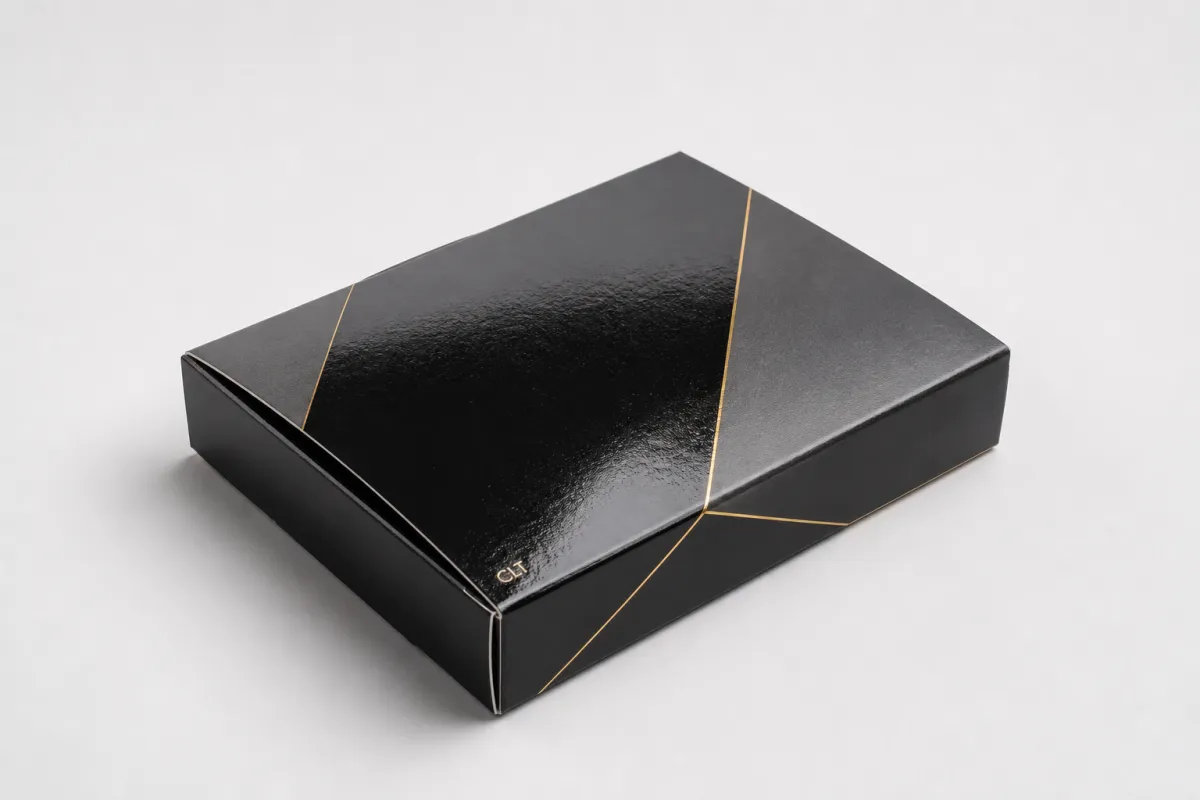
Gloss lamination retail boxes do one job extremely well: they make printed packaging look brighter, cleaner, and more finished under real retail lighting. That matters because shelves are not gentle. Fluorescent strips, warm spotlights, glass cases, and crowded planograms all punish weak packaging. A gloss finish gives the box a reflective surface that pushes color saturation and gives the artwork more punch before anyone even reaches for the product.
What gloss lamination actually does is straightforward. After printing, the carton gets a clear film applied over the surface. That film can be BOPP gloss film or another compatible laminate, depending on the supplier and the board. The effect is not subtle. Reds feel richer, blacks read deeper, photos feel more vivid, and the surface takes on a smoother, more sealed appearance. On gloss lamination retail boxes, that shine becomes part of the selling job, not just a decorative extra.
From a branding point of view, gloss usually reads as bold and retail-ready. It works especially well for cosmetics, supplements, health and beauty, phone accessories, small electronics, candles, and impulse-buy products. These categories depend on quick visual recognition. If the packaging needs to shout a little, gloss lamination retail boxes are a practical choice. If the design is meant to feel calm, tactile, or deeply premium, gloss may be the wrong kind of attention.
The tradeoff is real, and it is not glamorous. Gloss shows fingerprints more easily than matte. It can also reveal scuffs, handling marks, and design flaws that might hide better on a softer finish. If the artwork is already crowded, gloss can make it feel busier instead of better. That is why I usually treat gloss lamination retail boxes as a tool, not a decoration. Use it for shelf visibility, not because the word “premium” sounded nice in a brainstorm.
Production brings its own reality. Gloss lamination changes how the printed sheet behaves, how the colors land, and how the final box holds up in shipping. It affects Cost, Lead Time, and the way the carton folds at the scores. So the real question is not “Do gloss lamination retail boxes look good?” They usually do. The better question is “Will gloss lamination retail boxes help this specific product sell better, or am I just paying extra for shine?”
If the answer depends on product mix, customer behavior, and the retail environment, that is normal. Packaging buyers who think through those details usually end up with better results than buyers who pick finishes by mood board. If you need options beyond this finish, the broader range of Custom Packaging Products can help you compare structures, materials, and decoration methods before locking in one direction.
How Gloss Lamination Retail Boxes Work
Production for gloss lamination retail boxes starts with the printed sheet. The artwork is printed on the chosen board, then the gloss film is applied as a separate finishing step. After that, the sheets move through die cutting, scoring, folding, gluing, and final packing. If the project includes inserts, window patches, embossing, foil stamping, or spot UV, those steps are added around the same core sequence.
The film itself matters more than most buyers expect. BOPP gloss film is common because it is stable, cost-effective, and widely used for retail packaging. Typical film thickness often sits around 1.2 to 1.5 mil, though exact specs vary by supplier and the chosen construction. Adhesive type matters too. Some systems bond better to coated board, while others behave differently on textured stock. On gloss lamination retail boxes, a mismatch between film and substrate can show up as bubbling, weak edges, or a finish that looks fine on day one and tired by week two.
Gloss changes the printed image in a specific way. Dark colors usually look denser. Bright colors often appear more saturated. Small highlights can pop more sharply because the reflective surface catches light. That is good news for product photography, bold graphics, and tight brand marks. It is less helpful for ultra-subtle typography or designs that depend on paper texture to feel complete. A matte or soft-touch finish may support those better.
Compared with unlaminated or simple coated boxes, gloss lamination adds both protection and visual intensity. An uncoated carton can look natural, but it is more vulnerable to light abrasion and surface wear. A standard aqueous coating can add some protection, but it usually does not give the same shine or sealed feel. Gloss lamination retail boxes sit in a useful middle ground for brands that want color pop and a surface that can handle more handling than plain print alone.
There is a design consequence here too. Gloss helps busy graphics survive the distance between a screen mockup and a real shelf. If the package needs to sit under harsh LED retail lights, gloss often looks sharper than a flatter finish. Still, too much shine can flatten texture cues. If the brand wants an understated luxury signal, a full gloss coat may feel too loud. A selective finish strategy can be smarter.
Here is the practical comparison I give buyers:
| Finish | Typical Visual Effect | Common Use | Approx. Added Cost Impact |
|---|---|---|---|
| Gloss lamination | High shine, stronger color pop, crisp retail presence | Cosmetics, supplements, accessories, impulse items | Low to moderate, often $0.03-$0.10 per unit depending on quantity |
| Matte lamination | Soft, restrained, less glare | Luxury, wellness, premium gifting | Low to moderate, usually similar to gloss or slightly higher |
| Spot UV | Selective shine on logos or elements | Premium branding, contrast-heavy layouts | Moderate to higher, often adds setup and extra pass costs |
| UV coating | Glossy protection without film in some applications | Mass retail, fast-run print jobs | Often lower than full lamination, but depends on press setup |
That table is the short version. The longer version is simple enough: gloss lamination retail boxes are not just about shine. They are about how the printed image behaves in the wild, how the package survives transit, and whether the finish helps the product look worth the shelf space it is asking for.
Gloss Lamination Retail Boxes Cost, MOQ, and Quote Basics
Gloss lamination retail boxes usually cost more than a plain printed carton, but not because anyone is having fun in accounting. The extra spend comes from the laminate film, the added production step, and the setup time needed to run the finishing line correctly. The real cost driver is not just the finish. It is the whole package: size, board, print coverage, quantity, structural complexity, and any extra decoration layered on top.
For smaller runs, the per-box price climbs quickly because setup costs are spread across fewer units. That is true for many custom packaging jobs, but it hits harder on gloss lamination retail boxes because the lamination pass adds one more step that needs machine time and quality checks. A run of 1,000 units will almost always cost more per box than 5,000 or 10,000, even if the artwork looks identical.
Here is a realistic budgeting frame I would use as a starting point, not a promise:
- Low tier: simple structure, one-color or light-coverage print, gloss lamination only, around $0.45-$0.85 per unit at 5,000 pieces.
- Mid tier: custom dieline, full-color print, gloss lamination, moderate coverage, around $0.80-$1.40 per unit at 5,000 pieces.
- Premium tier: specialty board, foil stamping, spot UV, embossing, inserts, or complex folding, often $1.20-$2.50+ per unit depending on quantity and detail.
Those numbers move. Sometimes a lot. Board choice alone can swing the quote. So can window cuts, custom inserts, and packaging that needs hand assembly. A small tray insert for a cosmetic or electronics set can add more labor than people expect. That is why gloss lamination retail boxes should be priced on total landed unit cost, not just the headline ex-factory number.
A cheap quote is not cheap if the box arrives late, prints off-color, or needs a re-run. Packaging buyers know this. Sales teams pretend not to.
MOQ also matters. If the supplier wants 3,000 or 5,000 units as a minimum, the quantity is not arbitrary. It helps absorb make-ready, die cutting setup, and finishing labor. Lower MOQ orders exist, but the unit price is usually higher. When evaluating gloss lamination retail boxes, ask whether the supplier is quoting for a true production run or a short-run convenience order. Those are not the same thing, and the price gap can be ugly.
There are also hidden variables that show up after the first estimate. Freight is one. Proofing is another. If the supplier only quoted printing and lamination, but not assembly, shrink-wrapping, or carton packing, the final number will drift. Spot UV, foil stamping, and die cutting additions can also change the economics quickly. Sometimes a project that looked simple becomes a premium build because the brand wants three finishes on one face. That is how budgets get weird.
My best advice is to ask for a quote in layers. First, get the base gloss lamination retail boxes price. Then price the version with one upgrade, such as foil stamping or spot UV. Then compare those numbers against your sales margin and retail position. If the box is selling a $12 item, a $0.10 finish choice can be easy to justify. If the product only has a thin margin, that same finish might be pure vanity.
For suppliers that work to common industry expectations, it is reasonable to ask how their process aligns with packaging and transport testing concepts from groups like the International Safe Transit Association. That does not mean every box needs a formal test program. It does mean the packaging should survive handling, stacking, and normal distribution without falling apart like a bad idea in a boardroom.
Production Process and Timeline for Gloss Lamination Retail Boxes
The production path for gloss lamination retail boxes is predictable if the artwork and structure are locked early. It usually begins with concept and dieline review, moves into artwork setup, proofing, printing, lamination, die cutting, and then folding or gluing. After that comes inspection and packing. If the box includes inserts or special finishing, the schedule grows. It always does. Packaging never stays “simple” for long once three people get involved.
Where do delays happen? Usually in the boring places. Artwork revisions take longer than people admit. Dieline changes create new proof rounds. Color matching can require another print pass. And if the project team sits on approval for a week, the line does not politely wait around. That is why a dated production schedule is better than a vague ship date. A real schedule should show proof approval, print date, lamination date, die cut date, and packing date for gloss lamination retail boxes.
For straightforward packaging, a realistic production window might be 10 to 15 business days after proof approval. More complex jobs often need 15 to 25 business days, sometimes more if the structure is custom or the finish stack includes foil stamping, embossing, or spot UV. If the supplier is promising miracles on a fully custom run, read the fine print. It may be a “ship date” without freight time, not a finished product in hand.
There is one point buyers should not skip: approval checkpoints. A digital proof is good for layout. A physical sample is better for structure, color feel, and surface behavior. Pre-production signoff is the last chance to catch a wrong logo placement or a cut line that is too close to the fold. With gloss lamination retail boxes, those checkpoints matter because gloss can make small artwork mistakes more obvious, not less.
For brands that care about sustainability claims, it helps to ask about board sourcing and recyclability before the job starts. The FSC system is one recognizable standard for responsible forest management, and many buyers ask for FSC-certified board when the market expects it. If you need environmental context beyond packaging alone, the EPA recycling guidance is useful background for thinking about recoverability and material separation. That still does not make every carton easy to recycle, of course. Mixed components can complicate things.
Here is the practical timing checklist I use:
- Confirm dimensions and board spec first.
- Approve the dieline before final artwork.
- Review a digital proof for layout and copy.
- Request a physical sample for finish and fold behavior.
- Lock the schedule only after all signoffs are in place.
If a supplier cannot explain the schedule in those terms, that is a warning sign. Gloss lamination retail boxes may be common, but they still need disciplined process control if you want a clean result.
Key Factors That Change the Look and Performance
Gloss lamination retail boxes only look as good as the board and print behind them. The substrate is doing more work than the finish gets credit for. A smooth, coated paperboard generally gives a cleaner gloss result than a rough or uneven surface. Heavier board weights, such as 300gsm to 400gsm in common retail applications, can improve structure and reduce warping, but the exact choice depends on box size and how much product support the carton needs.
Color management is another big one. Strong blacks, saturated reds, electric blues, and high-contrast branding often look dramatic under gloss. That is good if the design is built for it. It is bad if the file prep is sloppy. Poorly balanced images can look muddy after lamination, especially if the print already leans too dark. The reflective layer does not fix color problems. It just makes them shinier, which is kind of the point and kind of the problem.
Structural design also affects the final result. Large front panels show more surface reflectivity, which can be great for shelf presence. Tight folds, narrow flaps, and stressed corners are where lamination issues show up first. If the board is too light or the fold lines are too aggressive, you may see cracking or edge whitening after die cutting and assembly. On gloss lamination retail boxes, the finish can highlight structural weakness instead of hiding it.
Retail environment matters more than people think. A box that looks perfect in a studio can behave differently under harsh store light. Gloss reflects the environment around it, so the packaging may appear brighter in one store and noisier in another. Handling frequency matters too. High-touch products such as skincare, supplements, or handheld accessories can pick up marks if the gloss finish is too prone to abrasion. A product that is opened once and shelved is a different case from one handled by every customer who walks by.
Brand fit is the part buyers sometimes ignore because they get distracted by finish samples. A playful consumer brand may benefit from the energy of gloss lamination retail boxes. A minimal or high-luxury brand may need restraint, not shine everywhere. In those cases, spot UV can be used on a logo or icon while leaving the rest of the carton matte or satin. That gives contrast without turning the whole surface into a mirror.
There are also production extras worth considering. Foil stamping can add metallic impact. Embossing can give a premium tactile cue. UV coating can add selective protection or gloss in specific areas. Each of those changes the feel of the box and the setup cost. More importantly, each one changes the design balance. Too many effects and the carton starts looking like it is trying too hard. Packaging can absolutely try too hard. It happens every week.
If your product has compliance or logistics requirements, build those in early. Retail-ready packaging may need stronger carton construction, barcode placement, or shipping-safe outer packs. Some products also need specific claims or labeling language that affects the face layout. The finish choice should support those realities, not fight them. For gloss lamination retail boxes, the best result usually comes from one clear visual idea, one disciplined structural plan, and no unnecessary chaos.
Common Mistakes With Gloss Lamination Retail Boxes
The most common mistake with gloss lamination retail boxes is designing for a monitor instead of a shelf. A file that looks balanced on a backlit screen can feel very different in a store. Gloss amplifies that difference because it reacts to light. If the artwork is already crowded, the reflective finish can make it harder to read from three feet away, which is not ideal for packaging that is supposed to sell quickly.
Another trap is ignoring fingerprints and scuffs. Gloss looks fresh when it is new, but high-touch products can mark up fast. If the box will be handled a lot in-store or by the end customer, that matters. A box for a small appliance may see more wear than a box for a gift item that stays on the shelf. Gloss lamination retail boxes are not fragile, but they are not invisible armor either.
Overusing gloss is another classic mistake. When everything shines, nothing gets emphasis. The eye needs contrast. If the entire box is flooded with metallic foil, glossy illustration, and loud color, the result can be chaotic instead of premium. Sometimes a selective mix is better: gloss on the brand name, matte on the background, or spot UV on one design element. That keeps the box organized visually.
Weak die lines cause trouble too. If the board is too thin or the folds are too tight, lamination can make edge cracking more noticeable. This is especially common on small retail cartons with sharp corners or heavy product load. Die cutting must be set cleanly, and the structural layout should respect the board’s limitations. A beautiful finish cannot rescue a box that was built like a compromise from the start.
Skipping a physical sample is a mistake I keep seeing, mostly because people get impatient. Digital proofs are useful, but they do not tell you how the gloss reads under real light. They do not show how the folds behave. They do not reveal whether the box feels too slick to stack comfortably. With gloss lamination retail boxes, a prototype is cheap insurance compared with a full production re-run.
Product category fit matters too. Packaging that works for hair tools may not work for skincare. Electronics accessories may want a sharper, more technical look, while gift items may need warmth or softness. A single finish decision should not be copied from another brand just because it looked good in a catalog. That is how packaging ends up looking generic, which is a polite word for forgettable.
If you want a technical frame for print and finish quality, resources from the packaging industry such as packaging trade references and technical standards groups can help you think in process terms rather than just finish names. Good packaging decisions are usually built on specs, not adjectives.
Here is a simple mistake checklist:
- Designing without shelf testing under store lighting.
- Choosing gloss before defining the product positioning.
- Ignoring board strength at corners and folds.
- Skipping a physical prototype.
- Adding too many premium effects at once.
None of those issues is mysterious. They are just expensive when ignored. That is the packaging business in a nutshell.
Expert Tips and Next Steps for Gloss Lamination Retail Boxes
If the budget allows, test two versions of gloss lamination retail boxes: one full gloss version and one with selective gloss or no lamination. Put them side by side in real lighting, not under perfect studio conditions. The version that wins in the room is usually the one that matters. Packaging exists in the store, not in the approval email.
Start with the product, not the finish. Ask how often the box will be handled, whether it needs moisture resistance, whether the product is a quick impulse purchase or a longer-consideration item, and how much shelf competition it faces. Those answers tell you more than a finish trend board ever will. For some products, gloss lamination retail boxes are the right move because the category needs speed and visibility. For others, the finish only adds noise.
Request a full sample chain whenever possible: dieline review, digital proof, and a physical prototype. That trio catches most production problems before they become expensive. It also gives you a better read on whether the laminate reflects too much, whether the print colors need adjustment, or whether the structure needs a stronger board. A buyer who approves from mockups alone is gambling. Sometimes that gamble pays off. Often it does not.
Use a practical buying checklist before signing off on the quote:
- Board spec: confirm the paperboard type and weight.
- Film type: ask whether the gloss laminate is BOPP or another system.
- MOQ: verify the minimum order quantity and price break points.
- Lead time: get a dated schedule from proof approval to shipment.
- Freight terms: confirm whether shipping is included or separate.
- Finishing: check whether foil stamping, spot UV, embossing, or inserts are included.
One real-world shelf test is worth more than a dozen abstract opinions. Place the box beside direct competitors and compare three things: how fast the eye finds it, how the finish behaves under light, and whether the text stays readable at arm’s length. That is the actual job of gloss lamination retail boxes. They are not there to win a render contest.
If the brand is evaluating decoration beyond lamination, compare the cost of gloss with alternatives like spot UV, foil stamping, embossing, or a matte base with gloss highlights. Sometimes the smartest move is not the shiniest one. Sometimes a restrained box with one sharp detail performs better than a fully glossed carton that looks busy and forgettable. Yes, packaging can be that unromantic.
For many retail programs, the best outcome comes from balancing three things at once: shelf impact, Cost, and Timeline. That balance is where gloss lamination retail boxes earn their keep. They are strong for color, practical for surface protection, and flexible enough to fit many categories. They are not perfect for every brand, but they are rarely a mistake when the goal is bold retail presence.
So the next step is simple: gather the artwork, confirm the dimensions, ask for a real quote, and review two samples under store lighting before you lock the finish. If the glossy version improves readability, supports the product’s price point, and still fits the timeline, use it. If it does not, save the money and put the budget where it helps the product sell. That is the cleanest takeaway for gloss lamination retail boxes.
FAQ
What are gloss lamination retail boxes best used for?
They work best for products that need fast shelf attention, strong color pop, and a clean premium feel. In practice, gloss lamination retail boxes are common for cosmetics, health products, accessories, gift items, and other retail packaging that has to compete visually in a crowded display.
Do gloss lamination retail boxes cost more than matte boxes?
Usually yes, because lamination adds a material and production step. The final difference depends on quantity, board choice, print coverage, and whether you add extras like foil stamping or spot UV. For gloss lamination retail boxes, the price gap is often modest at scale and more noticeable on small runs.
How long does it take to produce gloss lamination retail boxes?
Simple projects can move quickly, but custom boxes with proofing, revisions, and finishing usually need extra lead time. A realistic window is often 10 to 15 business days after approval for simpler work, and 15 to 25 business days or more for complex gloss lamination retail boxes with inserts or multiple finishes.
Will gloss lamination retail boxes protect boxes from damage?
It helps resist light scuffs, minor moisture, and general handling better than an unlaminated surface. It is not a miracle shield, though. Board quality, box structure, and die cutting accuracy still matter a lot on gloss lamination retail boxes.
Should I choose gloss or matte for retail packaging?
Choose gloss if you want bright color, strong contrast, and eye-catching shelf presence. Choose matte if you want a softer, more restrained look or if fingerprints and glare are major concerns. For many brands, the right answer depends on the product, not on a finish trend. That is especially true for gloss lamination retail boxes, where the wrong finish can work against the design.
For brands that need packaging to sell in a crowded aisle, gloss lamination retail boxes can be a smart move when the structure, artwork, and budget all line up. Get the spec right, keep the design focused, and do not confuse shine with strategy.


