Buyer Fit Snapshot
| Best fit | Glossy Coated Mailer Boxes Wholesale projects where brand print, material claims, artwork control, MOQ, and repeat-order consistency need to be specified before quoting. |
|---|---|
| Quote inputs | Share finished size, material target, print colors, finish, packing count, annual reorder estimate, ship-to region, and any compliance wording. |
| Proofing check | Approve dieline scale, logo placement, barcode or warning zones, color tolerance, closure strength, and carton packing before bulk production. |
| Main risk | Vague material claims, crowded artwork, missing packing details, or unclear freight terms can make a low unit price expensive after revisions. |
Fast answer: Glossy Coated Mailer Boxes Wholesale: Specs, Pricing should be specified like a repeatable production item. The safest quote records material, print method, finish, artwork proof, packing count, and reorder notes in one written spec.
Production checks before approval
Compare the actual filled-product size with the drawing, then confirm tolerance on folds, seals, hang holes, label areas, and retail display edges. Reserve space for logos, QR codes, warning copy, and material claims before decorative graphics fill the panel.
Quote comparison points
Review material grade, print process, finish, sampling route, tooling charges, carton quantity, and freight assumptions side by side. A quote is only useful when the supplier can repeat the same color, closure quality, and packing count on the next order.
For a brand shipping premium kits, glossy coated Mailer Boxes Wholesale usually separates packaging that feels intentional from packaging that looks assembled in a hurry. The glossy surface also does a practical job: it softens minor scuffs and handling marks better than many uncoated stocks. That matters after the box has been packed, stacked, sorted, bounced through a carrier network, and dropped on a porch for good measure.
None of that makes gloss magic. It just changes how color, contrast, and perceived value show up in the hand and on camera. A mailer box has three jobs at once: protect the product, carry the brand, and make a first impression people might actually photograph. If the box needs to look polished at scale, glossy coated Mailer Boxes Wholesale is often the smarter starting point than plain kraft presentation packaging.
Custom Logo Things helps buyers sort the decision by the details that move a quote: board grade, finish, insert compatibility, MOQ, and timing. Get those right early and the rest gets much easier. Funny how often that is the difference between a clean launch and a messy round of revisions.
Why glossy coated mailer boxes wholesale converts faster
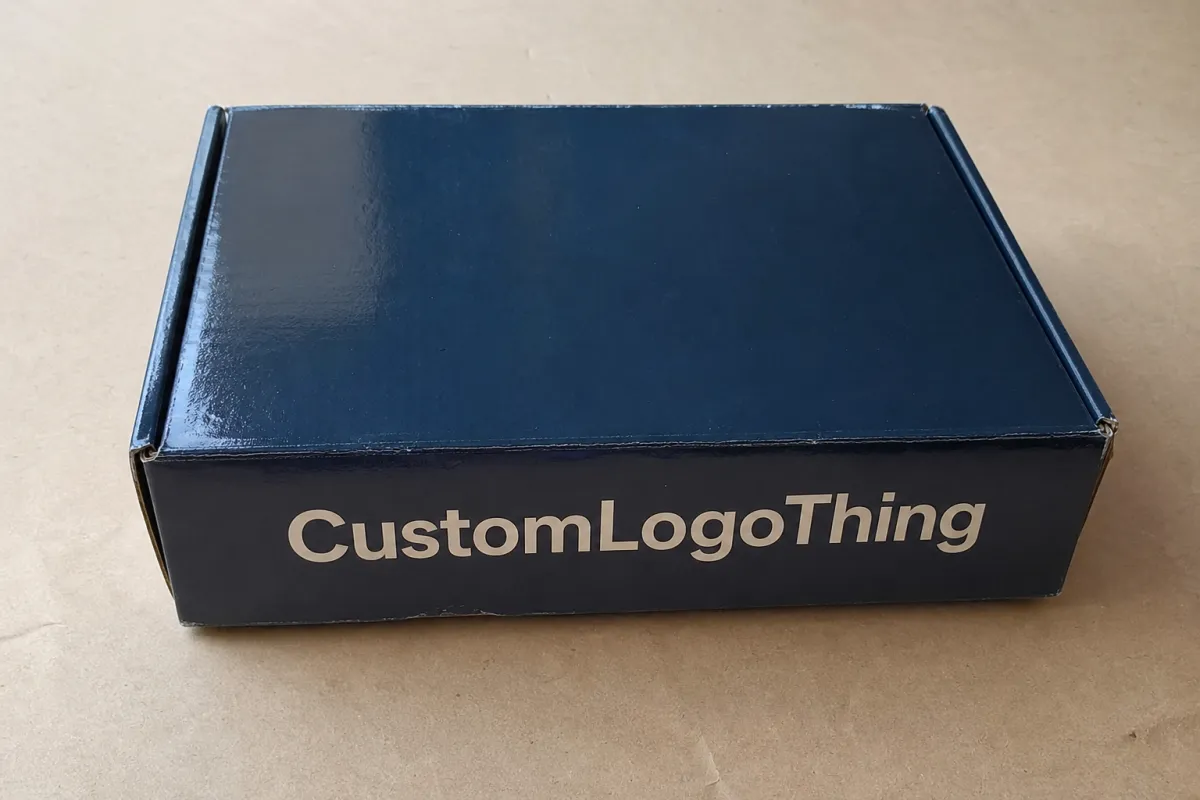
A premium shipping box has a short job and an important one: make the buyer feel good before the product even comes out. Glossy coated mailer boxes wholesale help because gloss sharpens contrast, deepens saturation, and gives artwork cleaner edges. A logo reads faster. A bold color block looks more deliberate. Product photography also benefits because reflected light can make the printed surface look crisper, especially for ecommerce brands that depend on unboxing content and social proof.
There is a practical reason buyers choose gloss too. It usually hides light surface marks better than an uncoated exterior. No, it is not scratch-proof. It does mean dust, rubs, and friction marks often blend into the reflection instead of standing out. For brands shipping through several touchpoints, that visual buffer is worth something.
From a packaging buyer's point of view, the conversion advantage is straightforward: a glossy exterior can lift perceived value without changing the product inside. That is useful for subscription boxes, influencer kits, cosmetics, accessories, and promotional mailers where presentation shapes judgment in seconds. If the box is the first branded object a customer touches, it should feel like part of the offer, not the leftover part.
Not every product belongs in gloss. Rustic brands, natural-food labels, and low-glare utility packaging may look better in matte or kraft textures. Still, if the brief calls for retail polish, glossy coated mailer boxes wholesale usually gets there faster. The finish gives the artwork a harder edge, and that edge tends to translate into stronger shelf presence, better camera performance, and more consistent branding across every shipment.
Packaging takeaway: gloss is not about flash. It is about making the printed surface work harder in the few seconds a buyer spends deciding whether the package feels worth opening.
Before you Request a Quote, define the outcome you want. Is the goal a high-end unboxing moment, a brighter logo presentation, or a tougher-looking outer surface? Once that is clear, the spec conversation gets a lot less messy.
Product details: what glossy coated mailer boxes include
Structurally, glossy coated mailer boxes are still mailer-style packaging: a self-locking box that arrives flat, folds fast, and closes without a separate outer shipper in many ecommerce setups. The difference sits in the exterior treatment. The outside face gets coated for gloss, then printed with branding artwork, while the interior may stay plain or receive a second print pass if the brief calls for a fuller reveal.
The most common build for this type of packaging is corrugated board, often E-flute for a balanced mix of printability and protection. In some presentation programs, a paperboard face is laminated to corrugated to improve the print result. The right choice depends on product weight, stacking needs, and the level of surface refinement you expect. Lightweight beauty kits and apparel accessories do not need the same board spec as heavier sample packs or bundled retail sets.
There is also a process difference worth confirming. Some suppliers use gloss lamination, others use aqueous coating, and some use UV coating for a sharper reflective surface. The name on the spec sheet matters less than the end result. Ask how the finish behaves on folds, whether it shows fingerprints, and how it affects color density on the final printed box.
Typical finish options include:
- Full gloss coating on the outside for a bright, reflective finish and stronger color pop.
- Printed exterior only for straightforward branding with a clean production path.
- Interior print for a more complete reveal when the box is opened.
- Spot gloss in selected areas, such as a logo, pattern, or key callout.
The glossy coating works best when the artwork uses saturated color, photography, bold typography, or logo-heavy layouts. If the design depends on subtle paper texture, gloss can fight the look you were aiming for. That is why the finish decision should happen with the artwork in view, not after the design is already signed off. A finish that looks good on screen can behave very differently once ink, board, and light enter the equation.
Use cases are broad. Brands order glossy coated mailer boxes wholesale for subscription launches, PR drops, influencer campaigns, ecommerce fulfillment, retail-ready packaging, and seasonal promotions. The common thread is presentation. The package has to carry the brand story quickly, and it has to do that at scale. That is where glossy-coated surfaces earn their keep.
Some buyers also pair these boxes with inserts or protective fits so the product does not move in transit. That matters a lot when the item itself has a premium surface, like glass, metal, or coated cosmetic components. The box should protect the contents without forcing the buyer to choose between style and fit. I have seen teams approve artwork first, then discover the insert steals three millimeters of depth and changes the whole closure. That is the kind of mistake that is easy to avoid and expensive to fix.
If your packaging program includes more than one format, compare options across the full line. Our Custom Packaging Products page is a good starting point for matching structural format, print style, and product category before you lock the wholesale spec.
For lighter shipments, some brands split their packaging mix between paper-based glossy mailers and Custom Poly Mailers. That is not a design compromise. It is a cost-control move. Poly handles simple protection; glossy coated mailers do the branding work.
Print, finish, and structural specifications buyers should confirm
The fastest way to slow a wholesale project is to leave the spec sheet vague. If you want clean pricing and fewer proofing rounds, the order details need to be precise from the start. For glossy coated mailer boxes wholesale, the key confirmation points are dimensions, board grade, print coverage, coating choice, and the structural style of the closure.
Start with the measurements. Buyers should confirm inside length, width, and depth, not just the outer shape of the box in a mockup. A product can look like it fits in a rendering and still fail in production if the insert, wrap, or protective padding was not counted in. Board thickness matters too. An E-flute build behaves differently from a heavier board or a laminated paperboard setup, especially at the corners and closure flaps.
On the print side, file prep changes the final result in a very direct way. CMYK artwork is common, but brands with strict color control often need Pantone targets or a defined color tolerance. Bleed, safe area, and image resolution should all be checked before a proof gets approved. Gloss does not rescue weak artwork. In some cases it makes design mistakes more obvious because the finish puts a spotlight on every line, edge, and contrast decision.
The coating decision deserves the same attention. Full gloss creates maximum shine and a strong visual punch. Spot gloss can be more restrained, highlighting only selected brand elements while keeping the rest of the box less reflective. That can help if the artwork includes text-heavy panels or if fingerprint visibility is a concern. Gloss can also increase glare under bright retail lighting, so readability should be checked from more than one angle.
Structural checks matter just as much as print checks. A mailer box may look good, but if the corners collapse too easily or the closure does not hold during shipping, the finish loses its value fast. Buyers should confirm whether the design uses a tuck closure, crash-lock base, or another locking style, and whether the box needs to stack in warehouse conditions. Compression performance matters if cases are palletized. So does the ability to survive conveyor movement and repeated handling.
For teams comparing vendors, a standardized checklist keeps the process honest. Ask each supplier to quote the same:
- inside dimensions
- board or paperboard grade
- print sides
- gloss finish type
- insert requirements
- artwork format
- target delivery location
That list looks basic because it is. Basic does not mean optional. It prevents the common mistake of comparing quotes that are not actually built to the same spec. A lower price is meaningless if the board is thinner, the coating is weaker, or the print coverage was cut back to get there.
Industry testing is worth considering for higher-volume programs. Packaging performance standards such as ISTA procedures help brands evaluate how a pack behaves during distribution, while FSC sourcing can support responsible fiber decisions. Useful reference points are available through ISTA and FSC. If your packaging is headed into a tougher channel, test data matters more than design assumptions.
One more practical detail: confirm whether the coating is applied before or after printing in your supplier's process. That affects color appearance, surface feel, and in some cases the amount of glare visible in proofs. It also affects how quickly a vendor can move from art approval to production. Small production differences can snowball once an order gets big.
If the box carries regulatory text, ingredient callouts, barcodes, or care instructions, test those elements on the actual finish rather than assuming they will read the same way on a PDF. Gloss is honest. It shows what the artwork really is, not what the presentation deck said it was.
Pricing, MOQ, and quote factors for wholesale orders
Wholesale pricing gets easier to read once you break it into the variables that actually move the number. For glossy coated mailer boxes wholesale, the main drivers are size, board grade, print coverage, coating type, insert count, and quantity. A larger box uses more material. A heavier board costs more. Full coverage art and interior printing add press time. Inserts add setup and finishing work. Volume lowers unit cost, but only after tooling and setup are spread across enough pieces.
MOQ is usually the part buyers want answered first. That minimum depends on the structure and print complexity, but the pattern stays the same: smaller runs carry a higher cost per unit because the factory still has to pay for setup, dieline preparation, proofing, and finishing. Larger orders usually unlock a better unit price, especially once the quantity crosses a production tier. The useful question is not just the MOQ itself, but how the price falls across quantity bands.
Realistic quote requests should include the shipping destination too. Factory pricing and landed pricing are not the same thing. Freight can wipe out the gap between two vendors if one quote leaves delivery out of the picture. Buyers comparing quotes only on unit cost often miss that the cheapest production number is not always the best total purchase price. If the order is coming from overseas, also confirm whether duties, customs handling, and import paperwork are included or billed separately.
The table below shows how packaging programs often compare in practice. The numbers are indicative ranges only, because final pricing still depends on size, artwork coverage, and shipping terms.
| Box type | Typical MOQ | Indicative unit range | Best fit | Key tradeoff |
|---|---|---|---|---|
| Basic glossy mailer, limited print coverage | 500-1,000 units | $0.85-$1.45 | Simple branding, compact ecommerce shipments | Lower cost, fewer design extras |
| Full-color glossy coated mailer box | 1,000-3,000 units | $1.20-$2.40 | Subscription boxes, retail-style unboxing | Better visual impact, more print setup |
| Premium glossy box with insert and interior print | 2,000-5,000 units | $1.80-$3.75 | Launch kits, PR boxes, high-value presentation | Highest perceived value, higher spec complexity |
Those ranges can move in either direction. A small box with straightforward one-color printing may land lower. A larger mailer with multiple print faces and custom inserts can move higher. What matters is comparing like for like instead of pretending every quote describes the same thing.
Hidden cost drivers deserve attention too. Special die lines can add setup time. Custom inserts may increase tooling or cutting costs. Rush production changes the economics fast. If a buyer wants a short turnaround or shipping by air instead of sea, the quote should be reviewed as a landed cost, not as a board-only price. The number on the page only matters if the production route behind it is clear.
For procurement teams, the best habit is to request two or three quantity tiers at once. That shows whether moving from one production band to the next lowers unit cost enough to justify the larger commitment. In many cases, the steepest drop sits around the first major volume jump. That is more useful than a single quote because it shows the economics of scale instead of hiding them.
Our Wholesale Programs page is useful for buyers comparing packaging across multiple product lines. It is easier to budget glossy coated mailer boxes when the rest of the wholesale program is priced on the same framework.
If you are benchmarking broader packaging categories too, compare against the total visual and functional value, not just the lowest unit figure. A slightly higher quote can include a smoother proofing process, tighter color control, and better consistency on repeat runs. That often pays back later, especially for brands ordering on a regular fulfillment cycle.
Process and timeline: from artwork approval to delivery
A clean order follows a predictable sequence: inquiry, quote, dieline confirmation, artwork submission, proofing, sample approval, production, and dispatch. The sequence sounds simple. The delays usually come from a few repeat mistakes: late design changes, missing dimensions, color revisions after proofing, or approval delays when several stakeholders need to sign off.
The timeline should be treated as three separate blocks. Sample or proof time comes first. Production time comes second. Shipping time comes last. Buyers often fold those into one estimate and then wonder why the launch date slides. Glossy coated mailer boxes wholesale needs enough lead time for each stage, especially if the design is being reviewed for color fidelity or if the box includes special inserts.
For a first-time order, sampling is especially useful. A digital mockup can prove the layout, but it will not show how the gloss behaves under light or how the printed surface reads at full size. A physical sample answers the questions that matter most: is the logo legible, is the glare acceptable, does the color still look on-brand, and does the box close correctly without strain?
Timeline pressure usually shows up in the proof stage. Glossy coatings can make reflectivity more noticeable, so proof review should include readability checks for small text, barcode areas, and any design element that relies on subtle contrast. If the artwork is packed with fine detail, a good supplier will flag that early instead of waiting until production has already started.
Most delays are preventable. The fastest projects tend to have one decision maker, one final artwork file, and one clearly approved spec sheet. The slowest projects tend to have multiple versions of the same design, uncertain measurements, and a finish decision made too late in the process. Packaging buyers who cut ambiguity out of the workflow usually get faster results.
- Inquiry: send dimensions, quantity, artwork, and finish preferences.
- Quote: review pricing by tier, not just one quantity.
- Dieline: confirm structural lines before design finalization.
- Proof: check color, bleed, and text accuracy.
- Sample: verify finish, closure, and fit if the order is new or complex.
- Production: lock the approval so the line can run without backtracking.
- Dispatch: plan freight separately from manufacturing.
Build in extra time if the box is part of a launch campaign. That advice matters even more if inserts are still being finalized, if product dimensions are changing, or if the brand is coordinating multiple SKUs at once. Packaging can be the last item to finish and still hold up the entire release. Painful. Common. Preventable.
One practical benchmark: a repeat run with final artwork and a confirmed structure usually moves faster than a first run because the proofing and sample steps are lighter. That is one reason many buyers treat the first order as the hardest one. Once the spec is locked, the reorder cycle gets much easier to manage.
Why choose us for wholesale packaging programs
Packaging buyers want two things that are not always easy to combine: visual consistency and operational certainty. Custom Logo Things is built around both. The value is not only in printing a glossy box. It is in making sure the box that arrives in production matches the one that was approved in design.
That matters because glossy surfaces expose differences quickly. A slight color shift, a weak fold, or an off-spec dieline becomes more visible on a reflective finish than on a muted one. A good packaging partner reduces that risk with prepress support, clear sampling, and consistent spec handling. The result is fewer reprints, fewer disputes, and fewer surprises when a repeat order comes back around.
Buyers managing multiple channels also need dependable communication. Launch teams, procurement staff, and fulfillment managers usually care about different things. One wants brand presentation. Another wants budget control. Another wants cartons that stack cleanly in the warehouse. A supplier that keeps the line of communication clear helps all three.
There is also a repeat-order issue that gets overlooked all the time. The second order should match the first. Same finish. Same color behavior. Same structural performance. If the box changes from run to run, the packaging program loses credibility fast, especially across distributed fulfillment. Stable production is often more valuable than a slightly lower quote from a supplier that cannot hold the spec.
For procurement teams, the useful questions are concrete:
- Can the vendor quote multiple quantity bands clearly?
- Can they provide dieline support before artwork is finalized?
- Can they review finish choices against the design?
- Can they track the order from proof approval to shipment?
- Can they keep repeat runs consistent?
If the answer is yes, the buyer spends less time fixing mistakes and more time planning the next release. That is the real business case for a packaging partner. Not hype. Not decorative promises. Just a cleaner operating process.
For brands comparing presentation formats, glossy mailers usually sit between plain shipping cartons and more rigid luxury-style packaging. They offer strong visual value without moving into the price level of premium rigid boxes. That middle ground is useful. It gives growing brands a polished look at a volume-friendly cost structure.
We also encourage buyers to compare glossy mailers with other packaging formats in the line, including broader custom shipping and promotional options through Custom Packaging Products and fulfillment-focused alternatives like Custom Poly Mailers. The right mix is often a portfolio, not a single box type.
What to prepare before you request a wholesale quote
Good quotes start with good inputs. Before you request pricing for glossy coated mailer boxes wholesale, gather the exact dimensions, target quantity, artwork files, coating preference, and shipping destination. If you are working with a product sample or insert, keep that item nearby while you measure. A box designed from a mockup alone can be off by enough to create a production problem later.
It also helps to know how the box will be used. Is it shipping one item or several? Is the goal retail presentation, protected transit, or a subscription reveal? That information affects board selection, closure style, and whether inserts are worth adding. A box for a fragile cosmetic item has different needs than a flat apparel kit.
Request a proof or sample if the design is color-sensitive, if the brand has a strong visual identity, or if the box is part of a launch that cannot tolerate mistakes. Gloss can be unforgiving with weak contrast, and a sample often pays for itself by showing issues before the full order runs. That is especially true for logos, fine text, or artwork that depends on precise color matching.
It is smart to compare at least two or three quantity levels before placing the order. That often reveals whether moving to the next tier significantly lowers the unit cost. A buyer who knows the breakpoints can budget more accurately and avoid paying too much for a small run that could have benefited from a slightly larger commitment.
If your team is still deciding between box formats, ask for a quote that clearly separates unit price, setup, inserts, and freight. That way you can compare the real cost of the packaging itself and the cost of getting it to your door. The distinction matters. A low factory price can look less attractive once shipping is added.
Quick quote checklist:
- inside dimensions
- order quantity or tiered quantities
- board or paperboard preference
- full gloss or spot gloss
- print sides and color targets
- insert or divider requirements
- delivery ZIP or shipping port
- need for sample or proof
Once those details are in place, the conversation gets much more useful. You are no longer asking for a generic box price. You are asking for a production-ready quote that reflects the real job.
That is the smartest way to buy glossy coated mailer boxes wholesale. Lock the structure, confirm the finish, compare quantities, and judge the numbers by total value rather than sticker price. When the specs are clear, the packaging does the selling for you.
What is the minimum order for glossy coated mailer boxes wholesale?
MOQ depends on box size, print coverage, and finish complexity, but wholesale orders usually start at a quantity that covers setup and dieline prep. Ask for tiered quotes so you can see how unit price changes at different volumes before committing.
How does glossy coating affect the price of wholesale mailer boxes?
Glossy coating can add cost because it changes the finishing step and can affect proofing, setup, and inspection time. The biggest price drivers are still size, board grade, print sides, and order quantity, so compare those first.
Does glossy finish work well for full-color branding?
Yes, glossy finish usually boosts contrast and makes saturated colors look sharper, which is useful for logos and photography-heavy layouts. It is especially effective when the brand wants a premium unboxing look instead of a matte or natural-paper feel.
What files should I send for a glossy coated mailer boxes wholesale quote?
Send the dieline, editable artwork, preferred dimensions, and any Pantone or color targets you need matched. Include print sides, insert requirements, and shipping destination so the quote reflects the real job.
How long is the lead time for glossy coated mailer boxes wholesale orders?
Lead time usually includes proof approval, production, and shipping, so the total timeline depends on how quickly artwork is finalized. First-time orders often take longer than repeat runs because sampling and proofing add extra steps.