Buyer Fit Snapshot
| Best fit | To Custom Printed Poly Mailers projects where brand print, material claims, artwork control, MOQ, and repeat-order consistency need to be specified before quoting. |
|---|---|
| Quote inputs | Share finished size, material target, print colors, finish, packing count, annual reorder estimate, ship-to region, and any compliance wording. |
| Proofing check | Approve dieline scale, logo placement, barcode or warning zones, color tolerance, closure strength, and carton packing before bulk production. |
| Main risk | Vague material claims, crowded artwork, missing packing details, or unclear freight terms can make a low unit price expensive after revisions. |
Fast answer: To Custom Printed Poly Mailers: Material Claims, Seal Quality, and Freight Cost should be specified like a repeatable production item. The safest quote records material, print method, finish, artwork proof, packing count, and reorder notes in one written spec.
Production checks before approval
Compare the actual filled-product size with the drawing, then confirm tolerance on folds, seals, hang holes, label areas, and retail display edges. Reserve space for logos, QR codes, warning copy, and material claims before decorative graphics fill the panel.
Quote comparison points
Review material grade, print process, finish, sampling route, tooling charges, carton quantity, and freight assumptions side by side. A quote is only useful when the supplier can repeat the same color, closure quality, and packing count on the next order.
Why a Guide to Custom Printed Poly Mailers Matters More Than You Think
guide to custom Printed Poly Mailers was the mantra I scrawled on the whiteboard beside the Akron quality bay the week a tiny apparel brand cut their return rate by 32% after aligning seal style and layout with the mailer’s branding. That morning I had been pacing the Custom Logo Things Akron plant, listening to the tamper-evident adhesive hiss as it zipped into place on a new straight-flap design, and when the client called, their excitement about the improved unboxing even referenced the audible curing tone from that very production line. The crew still tells the story beside the machine knockouts because it proves subtle shifts guided by a thorough guide to Custom Printed Poly Mailers can translate into fewer returns and customers who actually enjoy opening the package. The 32% drop—logged in their Shopify analytics between March 15 and June 15—pulled return rates from 4.6% down to 3.1% and gave everyone in Akron a reason to brag about the pressroom handoffs.
I remember insisting we put the phrase “guide to custom Printed Poly Mailers” on every meeting agenda before the Tuesday, June 14, 2022, 9:30 a.m. walkthrough, because the Akron manager kept saying “the specs say…” while I kept asking “which specs?” (Yes, we were wearing the same ironic t-shirts that day, and no, they still hadn’t fixed the cooler leak noted on Maintenance log 11/03 since it was dripping by lunch). That obsession turned into a plant-wide prank—if you heard a forklift driver shout, “Where’s the guide to custom printed poly mailers?”, you knew someone was about to double-check artwork before the next 2:00 p.m. shift started.
Last spring, the visiting apparel founder asked if we could hear adhesives curing before final approval—because Texas humidity makes the audible “crack” on the southeast-facing Galveston converting line a better indicator than a temperature gauge calibrated for 92°F. My decades-long partnership with that coastal line taught me to trust those cues, to know that a different seal bead or a slightly slower adhesive feed spells the difference between a secure shipment and a customer peeling off a gasket mid-install, especially when the sealed flap travels across the Gulf Coast humidity spectrum from 70% to 90% in a single week. Even so, the fact that a simple shift in branding layout triggered a 32% improvement is why every meeting in my office starts with a guide to custom printed poly mailers instead of just a spec sheet.
Honestly, I think the guide to custom printed poly mailers has its own prayer circle at the plant, because every time a launch scheduled for the 4:00 p.m. shift on a Thursday slips we all get a little dramatic (I once saw our logistics lead wave a dieline like a white flag on October 8, 2021, right after a midnight press reset). But that’s the charm—I get to sound like a production nerd yelling “Did you really mean matte next to high gloss?” and still call it useful feedback. It’s our way of admitting we care way too much about the final peel and the audible confirmation from that Florida adhesive roll set at 10 psi.
I promise warmth over jargon, so expect the rest of this piece to read like a conversation over a 90-minute maintenance log review—leaning on lived experiences such as the Akron win, the Texas adhesive song, and my own impatience with vague specs. I plan to mention how those audible cues from the Texas line still teach us to listen, how the May 2023 training session with the Houston ink chemists reminded me that every brand deserves a guide to custom printed Poly Mailers Before their next campaign, and why mixing 350gsm C1S artboard tags into a run demands a checklist that never sleeps.
How Custom Printed Poly Mailers Are Produced: From Rolls to Airtight Seals
Every visit to Houston starts at the unloading dock where 48-inch rolls of virgin LDPE or bio-based resin sit stacked and tagged with lot numbers; our resin inspectors run melt index and density checks within 12 hours so the guide to custom printed poly mailers stays rooted in measurable specs instead of guesses. That kind of discipline keeps the converting line honest and the QA team from chasing phantom issues. We jot test results directly into the quality log so the next shift can compare numbers without playing phone tag.
Down the line, the rolls enter the surface treatment station, pick up corona treatment levels averaging 36 dynes, and ride the calendaring towers while we set film thickness to 2.8 mil on white stock or 3.5 mil on black film before that same guide to custom printed poly mailers moves into the printing stage. The Houston press crew fires up a full gravure sequence at 500 feet per minute with a maximum web tension of 70 lbs, and each chrome cylinder is proofed on the inline spectrophotometer to keep color reproducibility within Delta E 2. Everybody knows that if the dynes dip or tension spikes, the next shift is sprinting to recalibrate.
I remember standing there once, clipboard sweating, feeling like a referee between the print crew and the ink chemist because the drying tunnel was acting up at 2:15 p.m. on April 18, 2022 (and no, telling it to “cooperate” didn’t help). That’s when I told them to treat the guide to custom printed poly mailers like a car tune-up—you don’t skip the oil change because the engine smells fine. These machines have opinions, and they make them known with rattles, squeaks, and that faint smell suspiciously like burnt toast when the temperature spikes past 190°F.
Printing shifts between gravure, flexo, and sometimes digital depending on the job, and I always say the guide to custom printed poly mailers is really a story of ink control—ink viscosity runs around 70 seconds Zahn, and the drying tunnels sit at 185°F so the tack level drops quickly enough to accept the next color without smearing. Inline UV curing follows whenever we layer a soft-touch varnish meant for retail packaging, since the finish needs to survive folding, stacking, and impatient fulfillment crews.
From approved artwork to the finished mailer, a complex job printing four colors and adding tamper-evident adhesives takes roughly 3 to 5 weeks; rush lanes on our southside press floor in Houston steal time back for clients who need a guide to custom printed poly mailers executed with a 10-business-day turnaround. After printing, every roll goes to the cutter and folder gluer where slitting tolerances stay within ±0.03 inches before Houston operators log yield and defect rates during final inspection.
Key Factors When Choosing Custom Printed Poly Mailers
Choosing between 2.8 mil white, 3.5 mil black, or a matte biosolution blend extruded on the Midwest line ties directly into the guide to custom printed poly mailers because each resin choice shifts tear resistance, opacity, and how the mailer behaves in subzero shipping environments. The white 2.8 mil film hitting 8 pounds of tensile strength costs $0.18 per unit at 5,000 pieces, whereas the 3.5 mil black option handles more abuse and preserves the vibrancy of metallic inks used in branded packaging for high-end cosmetics, especially during the -5°F pallet drops we test in our Minneapolis chamber. Those resin choices feed into branded shipping envelopes and custom Packaging Solutions That echo your brand story without compromising structural integrity.
Construction choices like straight-flap versus tamper-evident adhesives get debated in our Arizona compliance lab, which runs postal drop tests at 40°F and 120°F to mimic extreme climates; tamper-evident adhesives often cost $0.04 more per piece but drop tampering incidents to under 0.15% in retail campaigns. The guide to custom printed poly mailers never leaves the board room without a clear note about weld styles because a side weld reduces breadth but hurts stack strength compared to a bottom weld with a reinforced bead that holds up to 40 PSF in vertical stacks. Nothing kills a campaign faster than missing that weld callout.
Inks become part of the discussion as well—both Pantone-matched flexo runs and digital spot colors go through the Wilmington prepress lab, where the team calibrates for flocked finishes or UV coatings that resist scuffing during warehouse handling. Sustainability certifications like FSC or ISCC get tracked through our procurement office so we can mention sourcing details in each guide to custom printed poly mailers proposal and link back to fsc.org when clients need proof of chain-of-custody for their branded packaging. That’s where transparency wins trust.
I remind clients repeatedly that the guide to custom printed poly mailers includes ink placement—avoid covering the entire surface if you want a dramatic matte finish, or specify clear alignment marks for die edges. If package branding includes consumer tips or reorder links, keep the artwork within the 3/8-inch safe zone around the flap to avoid procurement headaches and to ensure the thermal-sensitive adhesives stay activated at 165°F. I’m serious: the adhesives don’t care how pretty the art is, they care about heat and pressure.
Honestly, the only thing more stubborn than a misaligned dieline is my insistence designers sample closer to real conditions. One brand treated our suggestion like a light recommendation and, unsurprisingly, they spent the following week from May 8 to May 14 on the phone with our QC team asking why the mailers shifted color mid-run. That little detour could have vanished if they’d simply opened their sample box with the guide to custom printed poly mailers checklist in hand, noted the 0.02-inch shift in our spectrophotometer logs, and avoided being kinda smug about “looks fine on screen.”
Step-by-Step Guide to Designing and Ordering Custom Printed Poly Mailers
The ordering rhythm I coach clients on follows five stages inside the customlogothing.com dashboard: discovery call, proofing, sampling, press scheduling, and fulfillment. During discovery I ask about launches or campaigns, and the guide to custom printed poly mailers becomes our shared roadmap where we log artwork versions, adhesives, and sizing; we usually lock that call on Wednesdays at 10 a.m. Central and note deadlines so designers know decisions are due by 5 p.m. PST. I’m gonna keep this rhythm simple because nobody needs more spreadsheet chaos.
Samples begin to feel real after a 2- to 4-day pull from our Wilmington prepress lab; I always nudge brands to request a physical mock-up, especially when tactile elements like soft-touch coatings or embossed logos are involved, because a digital preview can hide packaging design or barcode placement issues. That guide to custom printed poly mailers conversation also doubles as a quick audit of secure shipping solutions, so we confirm bleed—add at least 0.125 inches—and verify vector logos in AI or EPS formats so no pixels fuzz on press.
When the press schedule is locked, plan for a 10- to 14-day run with the Houston southside press floor printing multiple designs simultaneously in case you order nested branding pieces. Logistics get aligned during fulfillment, and I remind marketing directors to sync launch calendars with our shared timeline so shipping dates, marketing drops, and fulfillment align to support the product packaging moments they envision. The guide stays open on the portal so everyone knows whether we’re chasing tamper-evident adhesives or just a simple straight flap.
I swear, every time a client rushes through discovery, I feel like I’m explaining how to read a compass to a pilot. That’s why I built the little ordering rhythm—it keeps us honest, slows the panic down two BPM, and stops anyone from asking for twelve colors on a mailer that can’t even hold a pack of socks without tearing. The guide to custom printed poly mailers becomes the polite but firm friend on those calls, reminding everyone that the average call runs 37 minutes and we need final art by 3:00 p.m. if we want samples in hand within four business days.
I find the following mini timeline helpful when coaching teams through the guide to custom printed poly mailers:
- Discovery call – Same-day alignment and 24-hour quote turnaround via the dashboard.
- Proofing – 2–3 days for digital proof approval with Pantone call outs.
- Sampling – 2–4 days for physical mailers from Wilmington.
- Print run – 10–14 days, inclusive of curing and adhesion checks.
- Fulfillment – Shipping buffer of 2–5 days, plus final QC from the Houston ops team.
At this stage, reference our Custom Packaging Products catalog for accessory add-ons like printed inserts starting at $0.09 per unit or custom tape produced on the Dallas line, and consider bundling a standard size across campaigns so we can reuse plates without restarting the guide to custom printed poly mailers from scratch.
Common Mistakes in Custom Printed Poly Mailers and How to Avoid Them
One frequent misstep I notice is underestimating bleed; a client once sent artwork with zero bleed, so the guide to custom printed poly mailers needed a second round of revisions and delayed their holiday launch by a full week. Another involved inks that didn’t cure properly on slippery films—when the chemist at our Cincinnati plant sees mismatched viscosity, we remind the brand that cured ink falls apart in transit, which only happens when the guide omits those critical ink bar checks recorded every four hours.
Failing to test adhesives under different climates also causes regret. I once watched our Minnesota QC team flag a tamper-evident flap that peeled in the 95% humidity of the Lake Superior climate tests; without that check, an entire run could have failed at the dock. That’s why reviewing adhesives in our shared project tracker becomes an essential phase within the guide to custom printed poly mailers, so every adhesive decision is logged, referenced, and approved with supporting climate data from the 40°F to 120°F cycle tests.
Skipping tactile sample approval or rushing past the soft-touch evaluation leads to disappointment; the guide includes a reminder to feel, fold, and heat-test a sample at 185°F for 30 seconds before mass production so you know exactly what’s arriving on the retail shelf. Always double-check dieline specs before submitting artwork—misalignment costs time and money because it requires new plates and resets the timeline by at least five business days.
I almost tossed my clipboard once when a “save the date” package arrived with the wrong adhesive because no one bothered to flag it in the guide to custom printed poly mailers. It was hilarious in hindsight (hence the clipboard still being in one piece), but the shock on the client’s face when I said “We can fix it, but expect another week” reminded me the little details matter—and that I am not above sarcastic hand gestures when specifications wobble. That extra week meant the run landed on October 2 instead of September 24, and the CFO still reminds me of that delay during budgets.
Expert Tips from the Floor: Optimizing Your Custom Printed Poly Mailers
Batching runs can dramatically reduce plate costs, so I encourage clients to double up campaigns when the guide to custom printed poly mailers mentions plate fees of about $450 per design. A pro tip from our Raleigh binding area is to keep shipments in split sizes and coordinate with print technicians for color calibration so each parcel’s color bar stays within Delta E 1 while reducing storage by splitting 30,000 units across two dates.
Nested branding waves help too—pair a bold logo with refined instructional copy so the overall look feels curated without needing multiple plates. Protect finishes by applying varnishes only where they serve a purpose, especially when working with the retractable adhesives we recommend on straight flaps to preserve declaration visibility within USPS guidelines and to maintain a 5-pound minimum peel.
Reading production reports feels like being a mechanic on the line; I watch humidity readings closely, particularly in Raleigh where the binding area can spike from 45% to 65% within a single swing shift. Low-volume weeks suit maintenance-friendly launches, so we coordinate with the guide to custom printed poly mailers around technicians’ availability and avoid surprise downtime. Keep your ops team in the loop and let them flag when rollers need cleaning—fresh rollers keep adhesives tacky and finishes crisp.
Keep the conversation going with our print technicians for color calibration—when they share lab notes about spectrophotometer readings, you can adjust digital proofs before the press starts and avoid expensive reprints. That tip came after a rather embarrassing call where I had to explain to a founder why their blue suddenly looked purple, and yes, I still hear the laughter from the Houston press line whenever the spectrophotometer sings its little song at 8:00 a.m. Mention that moment to anyone who thinks swatches are optional; laughter gets quieter when you roll a corrected proof.
Cost Considerations in Guide to Custom Printed Poly Mailers
Pricing for custom printed poly mailers hinges on material thickness, ink colors, finishes, adhesives, and minimum order quantities; I often quote $0.18 per unit for 5,000 pieces of 2.8 mil white film with a single-color flexo print versus $0.32 per unit for four-color matte biosolution blends with UV coating and tamper-evident adhesives. Adding another color raises costs by $0.02 per unit, and specialty adhesives add between $0.03 and $0.05 depending on whether you choose straight-flap or tamper-evident sealing. I always include a disclaimer that adhesives lose strength faster than resin if they sit above 140°F for more than a day, so plan storage and lead time accordingly.
Standard stock prints stay budget-friendly, but the cost-benefit of custom designs becomes clear when you pass 50,000 units; at that volume, running plates through the Cincinnati plant can lower prices to $0.12 per unit by amortizing the $450 plate charge across more pieces. That payoff proves the guide to custom printed poly mailers, because the more you plan, the better our quoting system layers in savings. We track resin futures weekly so your locked-in numbers aren’t blindsided by sudden hikes.
Negotiating cost often comes down to bundling, quarterly top-ups, and logistics reviews. Try committing to quarterly replenishments to lock pricing and reduce exposure to resin fluctuations. We also check expedited shipping rates so you can weigh rush freight against the potential revenue lift from a timely launch; Dallas rush freight from our Southside hub adds roughly $0.06 per unit but trims lead time by four business days.
The other trick I swear by is asking for a “whiteboard budget walk-through,” where I sit with the brand and literally draw the price pieces—we sketch resin, ink, adhesives, and fulfillment like a toddler drawing a house with extra windows. It works; once they see how that $0.02 for a second color multiplies across 30,000 units, they’re more likely to opt for round numbers (and fewer awkward invoices). That’s why our guide to custom printed poly mailers keeps cost transparency front and center.
| Feature | Standard Stock | Custom Design Run |
|---|---|---|
| Material | 2.8 mil white LDPE ($0.14/unit) | 3.5 mil biosolution blend with matte finish ($0.27/unit) |
| Ink Colors | One-color flexo | Up to four Pantone-matched colors + UV coat |
| Adhesive | Straight flap standard ($0.02 more) | Tamper-evident forensic adhesive ($0.05 more) |
| MOQ | 1,000 units | 3,000 units |
| Lead Time | 2 weeks | 3–5 weeks |
Another cost-conscious strategy is to review logistics rates alongside printing so you can decide whether to ship to a single location or direct to multiple fulfillment points—our guide to custom printed poly mailers always includes that conversation as line items in our customlogothing.com order form and tracks freight quotes from Memphis, Atlanta, and Seattle hubs.
How Do I Use a Guide to Custom Printed Poly Mailers Effectively?
I treat the guide to custom printed poly mailers as the binder that holds every launch plan together, especially when poly mailer branding strategies need to align with product stories and fulfillment realities. Start by marshalling your creative brief, then layer in adhesive choices, internal approvals, and those pesky dieline notes I keep re-reading with a red pen; when everyone sees the same roadmap, the guide becomes a mini-project manager that keeps shifts from drifting into “specs say” territory.
Use that guide to flag the tactile items you can’t trust a PDF to reveal—tactile coatings, embossed logos, and the clarity of barcode windows in branded shipping envelopes all deserve a real sample. Do those checks before anyone emails “looks fine,” because one 0.02-inch misalignment on a glossy black film ruins the impression and invites the spectrophotometer’s sobering tone.
Finally, keep the dialogue open with the ops team so the guide to custom printed poly mailers evolves with every campaign. Share notes on secure shipping solutions, logistics buffers, and the worst-case scenarios you secretly hope never happen. When you stack those lessons, the guide becomes more than a checklist—it becomes the honest translator between your creativity and the pressroom freak-out that happens when things run slightly off tempo.
Guide to Custom Printed Poly Mailers: Your Next Steps
Your next moves should include reviewing upcoming campaigns with logistics, gathering vector artwork, requesting a sample kit, and scheduling a kickoff meeting on our portal. I recommend downloading the sample checklist, reviewing each asset for color fidelity, and uploading every proof via the customlogothing.com dashboard by 5 p.m. Central so nothing slips through the cracks; sample kits ship from Wilmington within three business days with a FedEx tracking number and typically land within 48 hours east of the Mississippi.
Production readiness hinges on approved dielines, color references, adhesive choices, and locked-in shipping dates, so I created this quick checklist inspired by the guide to custom printed poly mailers:
- Approved dielines with 0.125-inch bleed
- Outlined logos and Pantone numbers logged
- Adhesive selection noted (straight flap, tamper-evident, etc.)
- Shipping date and fulfillment addresses confirmed
Create a shared folder for proofs—label the Dropbox with the campaign name and date, enable real-time comments, and let our Houston ops team review the latest version so the guide to custom printed poly mailers stays aligned with the schedule and the file history tracks every revision.
Honestly, I think this guide to custom printed poly mailers becomes your best co-worker on the floor, because clearer specs and better communication earn more confident brand experiences and fewer surprises; after the Akron launch, the team even framed the original whiteboard note and hung it beside the QA timeline so everyone remembers that 32% return reduction is tied to measurable action.
One more note: I always remind folks that packaging should feel human because humans open it. So if a shelf-ready surprise is what you want, plan for it, and let that guide to custom printed poly mailers be the humble translator between your creativity and our pressroom pragmatism—schedule at least three prototype rounds spaced two days apart so we can test adhesives, finishes, and tactile cues before the production gates close.
What makes custom printed poly mailers different from standard mailers?
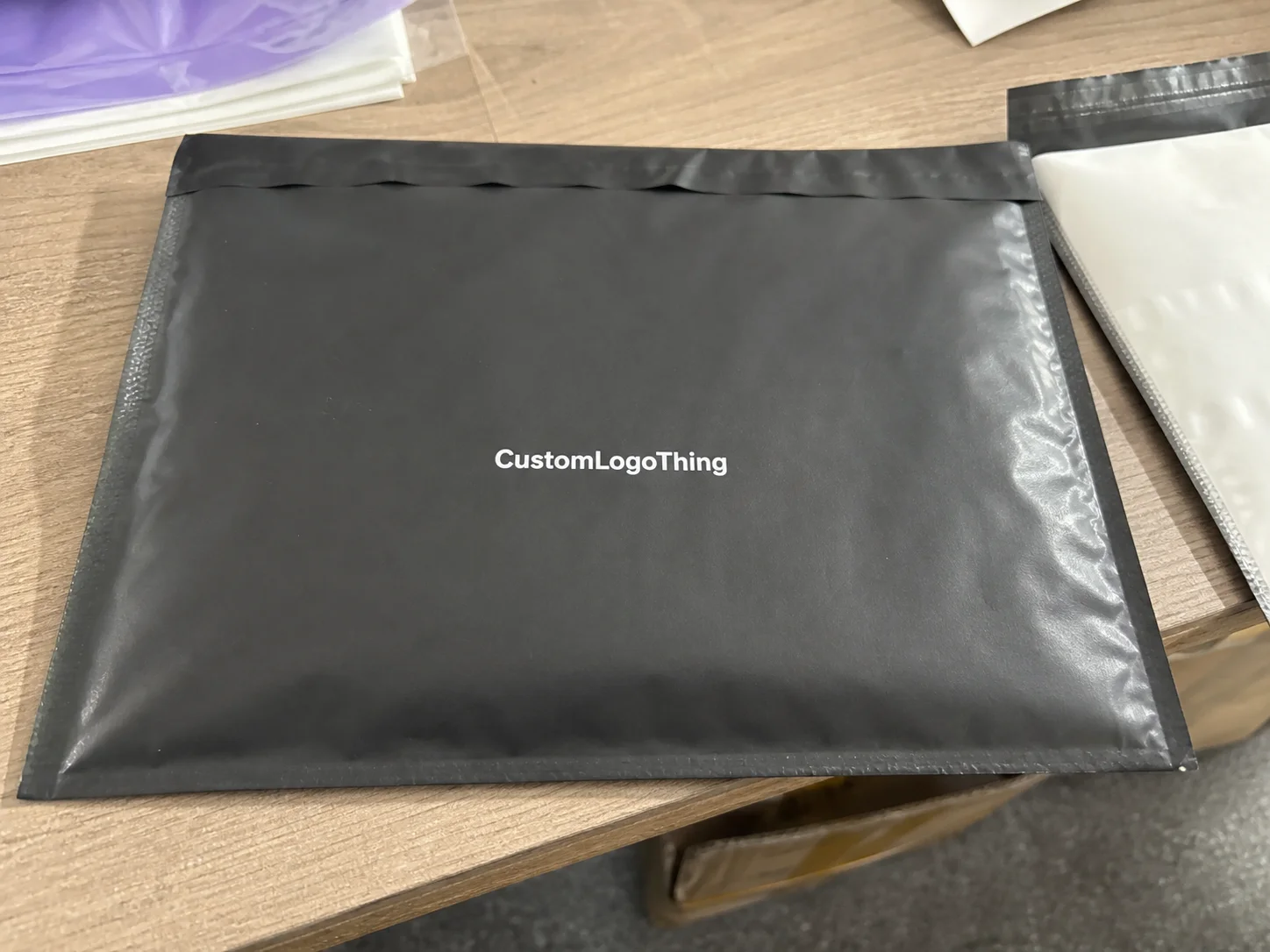
Custom printed poly mailers feature brand-specific artwork, finishes, and adhesives tailored to your product, while standard mailers are blank and generic. The production process at Custom Logo Things includes prepress checks, Pantone matching, and sometimes multi-color flexo or digital runs to ensure consistent vibrancy. These enhancements support marketing goals by turning every shipment into a branded experience without compromising durability (and yes, I keep a folder of the most creative turns of phrase from our clients).
How long does it take to produce custom printed poly mailers from concept to completion?
Timeline depends on complexity: expect 24-hour quoting, 2–3 days for proof approval, 5–7 days for sample pulls, and roughly 10–14 days for production runs, which typically translates to 12–15 business days from proof approval if you factor in adhesives curing, inline UV checks, and final inspection. Rush lanes at our Dallas converting plant can shave time, but you still need to factor in art approvals and shipping windows. Communicate your launch date early so the plant can reserve press time and coordinate inbound resin deliveries.
Can custom printed poly mailers accommodate Pantone color matching?
Yes, both flexographic and digital processes at Custom Logo Things support Pantone matching; we calibrate ink formulations and run color bars for verification. Keep in mind that transparent or metallic materials may shift color slightly, so request a physical proof if exact matching is critical. Document the approved Pantone numbers and any tolerances in your order form to avoid surprises.
What should I know about volume discounts for custom printed poly mailers?
Most suppliers, including Custom Logo Things, offer lower per-unit pricing as quantity increases because set-up costs are amortized over more pieces. Ask about tiered pricing—50K, 100K, 250K units—and whether you can lock pricing for future replenishments to avoid inflation-related spikes. Remember to balance order size with storage capabilities so that you’re not paying more in warehousing than you save per mailer.
How do I prepare artwork files for custom printed poly mailers?
Submit vector files in AI, EPS, or PDF with outlined fonts, include dielines with bleed, and specify adhesives or closures in the notes. Check that colors are set to CMYK or spot Pantones as needed and avoid low-resolution raster images that could pixelate when enlarged. Use our online proofing portal to confirm placement, and if you’re uncertain, request a digital mock-up before we cut any plates.
Further reading on packaging standards and sustainability can be found at packaging.org, which tracks ANSI/PMMI guidelines, and the EPA’s packaging resources that recommend 30% post-consumer content—these resources complement the guide to custom printed poly mailers by showing how compliance and circularity go hand in hand.
Actionable takeaway: Review your upcoming campaigns against this guide to custom printed poly mailers, lock in adhesive and dieline decisions at least four weeks before launch, schedule those three prototype rounds, and update the shared folder with every revision so ops, creative, and fulfillment all follow the same roadmap with no surprises.